
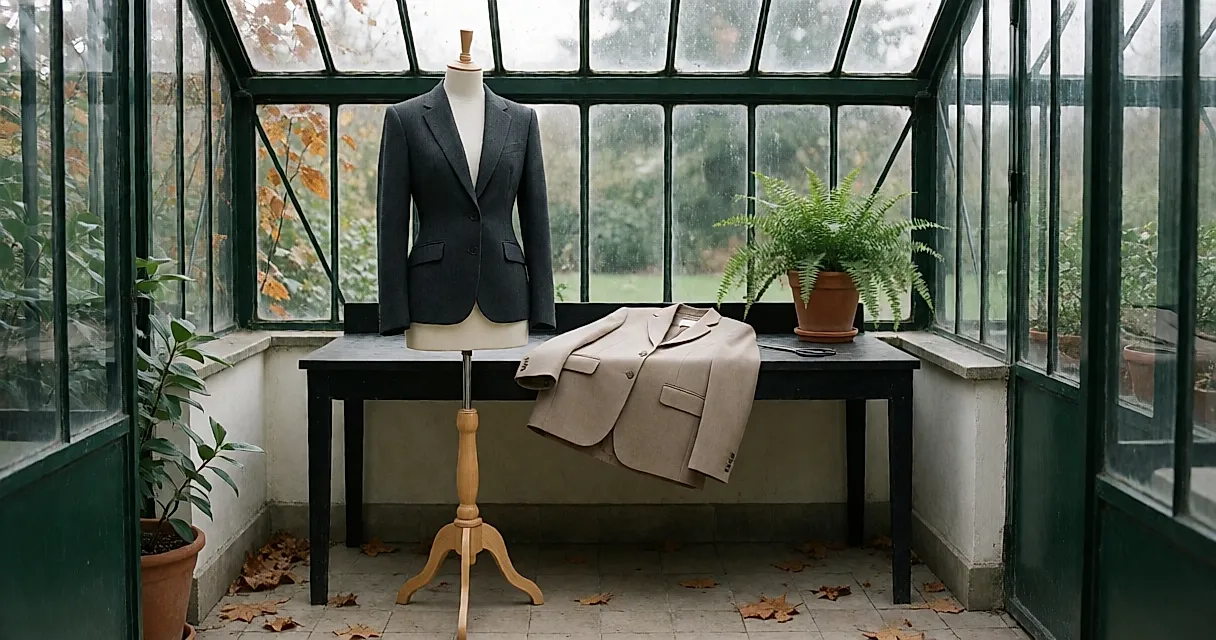
The tailored jacket has changed sides: it no longer protects the shoulders, it marks the waist. Two darts, a line that draws in, sometimes a belt – the silhouette is redrawn in one go. We have nothing against the comfort of an oversized blazer, but admit it: in a meeting, after an hour, it often ended up looking like a jacket borrowed from someone taller.
Where the balance has shifted
For several seasons, the tailored jacket played the volume card: wide shoulders, long sleeves, fabric that floated. A very comfortable look, with no small advantage – it forgave a lot. You could wear it over a sweatshirt, over a dress, over almost nothing.
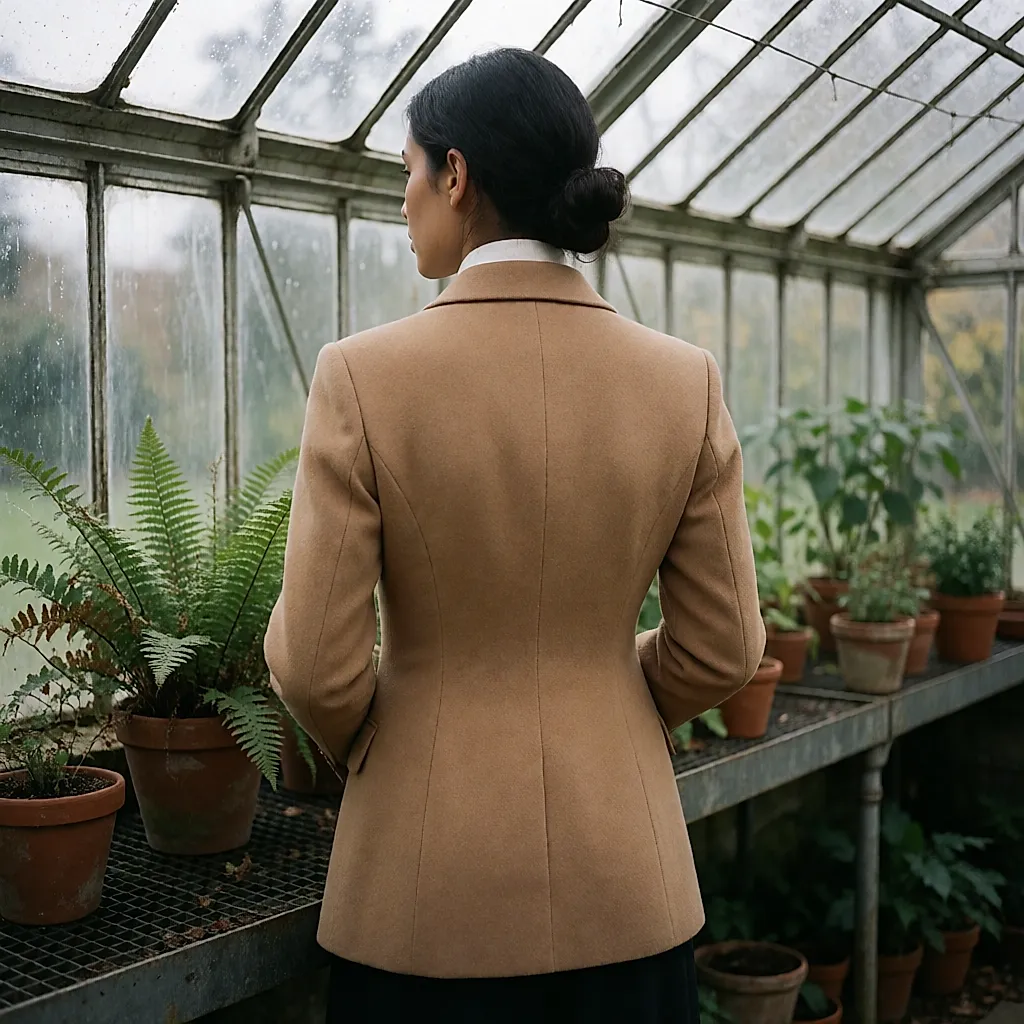
What's moving now isn't the top but the middle. The jacket nips in at the waist, falls closer to the body and returns to a fitted cut, but a softer one. The word to remember is waist shaping: the jacket follows the line of the bust without compressing it. Look closely at a so-called fitted jacket: the darts draw two discreet curves, one at the back and one at the front, and the drape follows the shoulder instead of extending past it.
As a result, the silhouette reads as clearly from the front as in profile. It's no longer the shoulder line that leads the look; it's the waist.
What it's like on a normal day
The theory is lovely; Monday morning less so. A fitted jacket is unforgiving of a thick sweatshirt on mornings when you've slept badly. But it works surprisingly well over a fine poplin shirt, a silk blouse or a fine merino wool jumper – layers that don't create volume at the waist.

One thing to check before you commit: where the dart sits.
And what about a coat? A fitted jacket slips under a straight overcoat without creating a bulge, which is far from true of every cut. A small detail that matters in November, when you pile on three layers before leaving the house.
Structured, belted or lightly nipped
Are all waist-defined jackets equal? No, and the fitting room is where you find out.

The structured fitted jacket, lined and made from a dry, crisp wool, holds its line on its own and gives a very office-ready look. It needs serious care: a wide hanger, regular brushing and rare dry cleaning.
The belted version is softer and can be worn open or tied. It suits anyone who hates feeling held in at the waist and likes to be able to loosen it at the end of the day. Linen and crushed wool work well, provided you can accept the creases.
The lightly nipped version, almost imperceptible, is the easiest to adopt when you're coming from oversized: you keep volume in the sleeves and only draw in the middle. It's the one we'd recommend for a first purchase.
Who it suits, and who it suits less well
Let's be honest: a fitted jacket isn't a magic wand. On a silhouette with no defined waist, it creates a curve that wasn't there before – either a very successful effect or a slight discomfort, depending on what you're after. On broad shoulders and a fuller bust, too much waist shaping can flatten the upper bust; in that case, a discreetly nipped jacket with a narrow lapel is better.

As for when to wear it, it's a city piece. For a weekend, a house move or a day sitting on the floor with children, oversized is still the more honest choice. There's no need to rewrite your whole wardrobe: one well-chosen fitted jacket is enough to change the feel of two or three outfits.
The raised-arm test: put the jacket on and lift both arms. If the armhole seams pull or the collar lifts away from the nape of your neck, the jacket is too tight at the shoulders – and shoulder alterations are tricky. The waist, by contrast, is easy to take in.
The final fitting
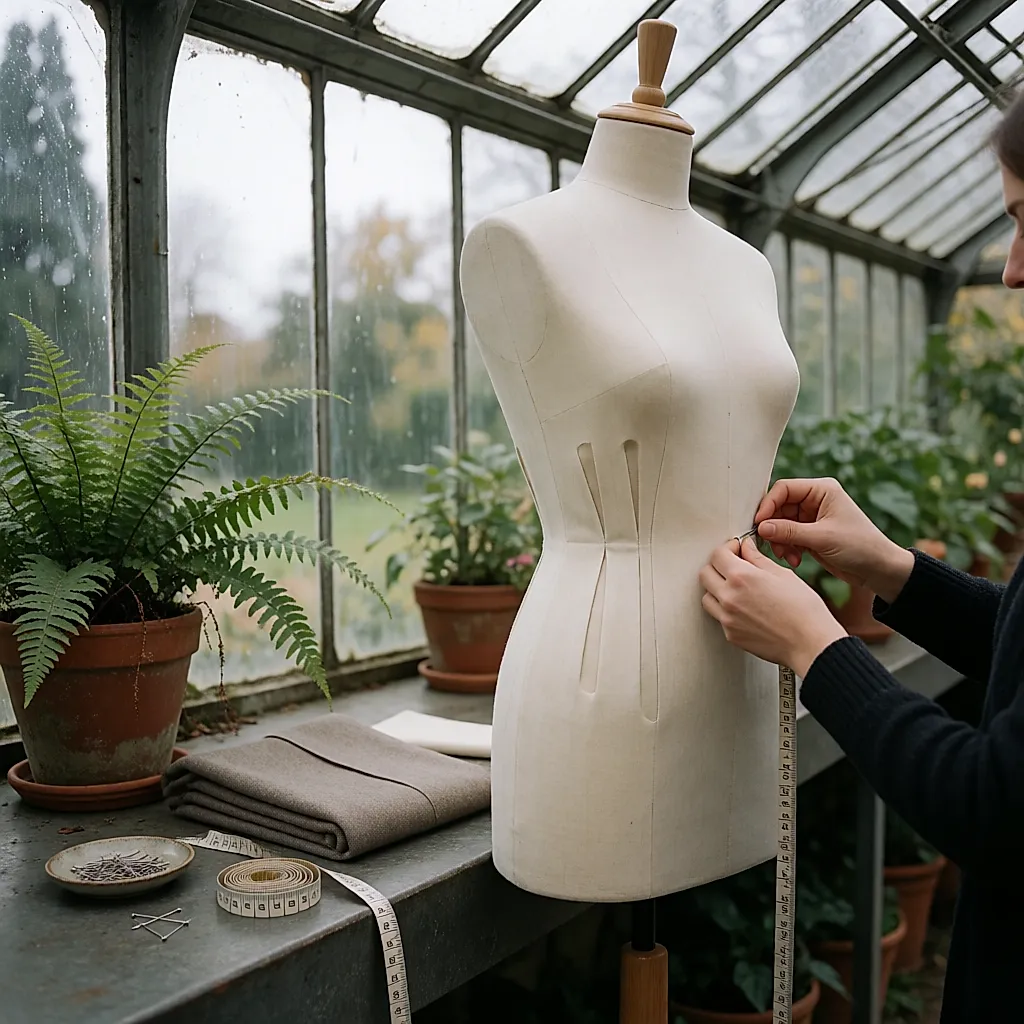
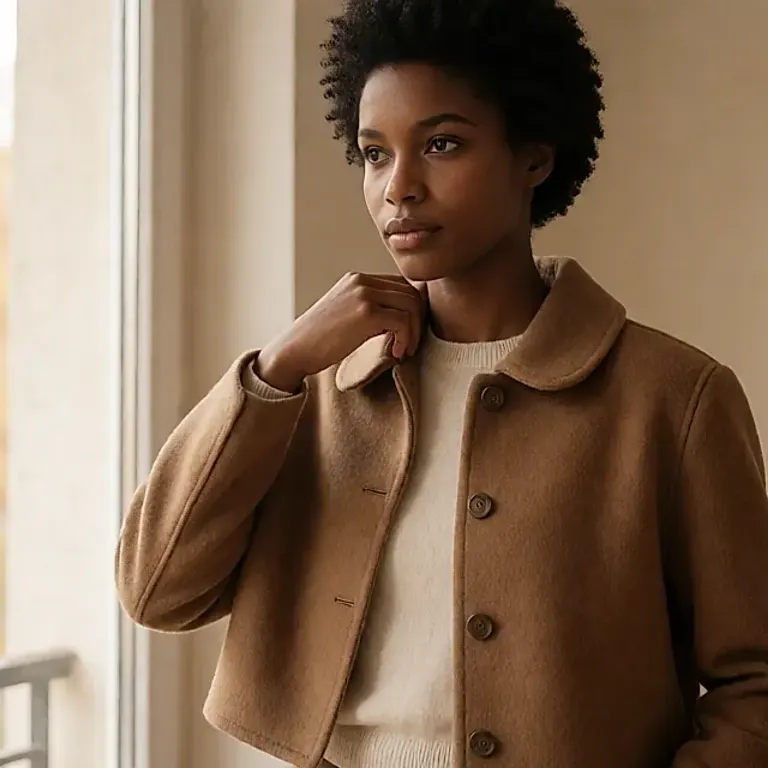
The fitted jacket isn't a disguised step backwards; it's a rebalancing. After years of comfortable volume, we're putting a little definition back into city dressing. To adopt it without replacing everything, choose a neutral shade – anthracite, camel, navy – test it with what you already wear to the office, and let a tailor finish the job. As a rough guide, budget around £120 to £250 for a decent mixed-wool jacket in mid-range ready-to-wear; waist and sleeve alterations, usually around £30 to £60, are often worth it for a piece that's well cut through the shoulders.
And if, deep down, you still like your oversized jacket? Keep it. There's always a Monday when you want a jacket that asks nothing of you.
Comments
Your opinion matters: rate the article, react and reply to comments.
Comments are moderated; AI-assisted comments are flagged. Text emoticons (8-), :-), <3…) are automatically shown as images.