

You open your wardrobe on a September morning, spot last year’s cropped jacket and think it still does the job. That’s rare: a piece that sees you through autumn after autumn without dating. This autumn 2026, the wardrobe is playing the same tune — biker, sleeveless gilet, short coat — but with better-chosen fabrics and a proper capsule-wardrobe logic. So which piece deserves its place in your wardrobe?

The biker jacket: a statement piece with a short cut
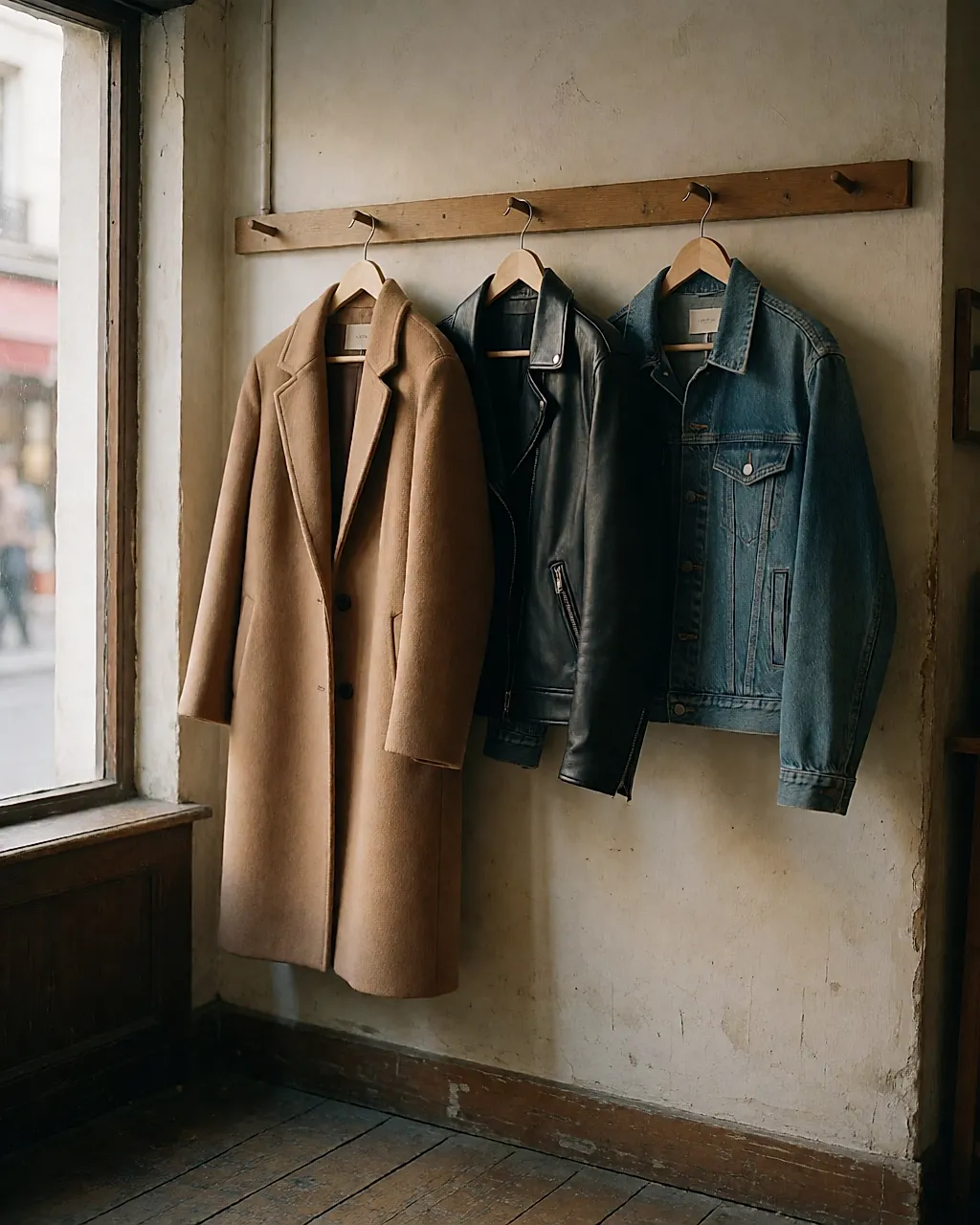
Short, fitted, asymmetric zips: the biker jacket remains the quickest shortcut to a confident look. Its clean hip-length line balances a looser silhouette — wide-leg trousers, a fluid skirt — and that’s exactly what you want from it.

On the fabric front, leather from an audited tannery (Leather Working Group standard) or reclaimed leather costs more, but it can be repaired, develops a patina and ages well. Faux leather, meanwhile, blends polyurethane and polyester: it keeps the budget tight, has a short life, and ends up as plastic waste. An accepted compromise, not an eco bargain.

The sleeveless gilet: layering’s hero
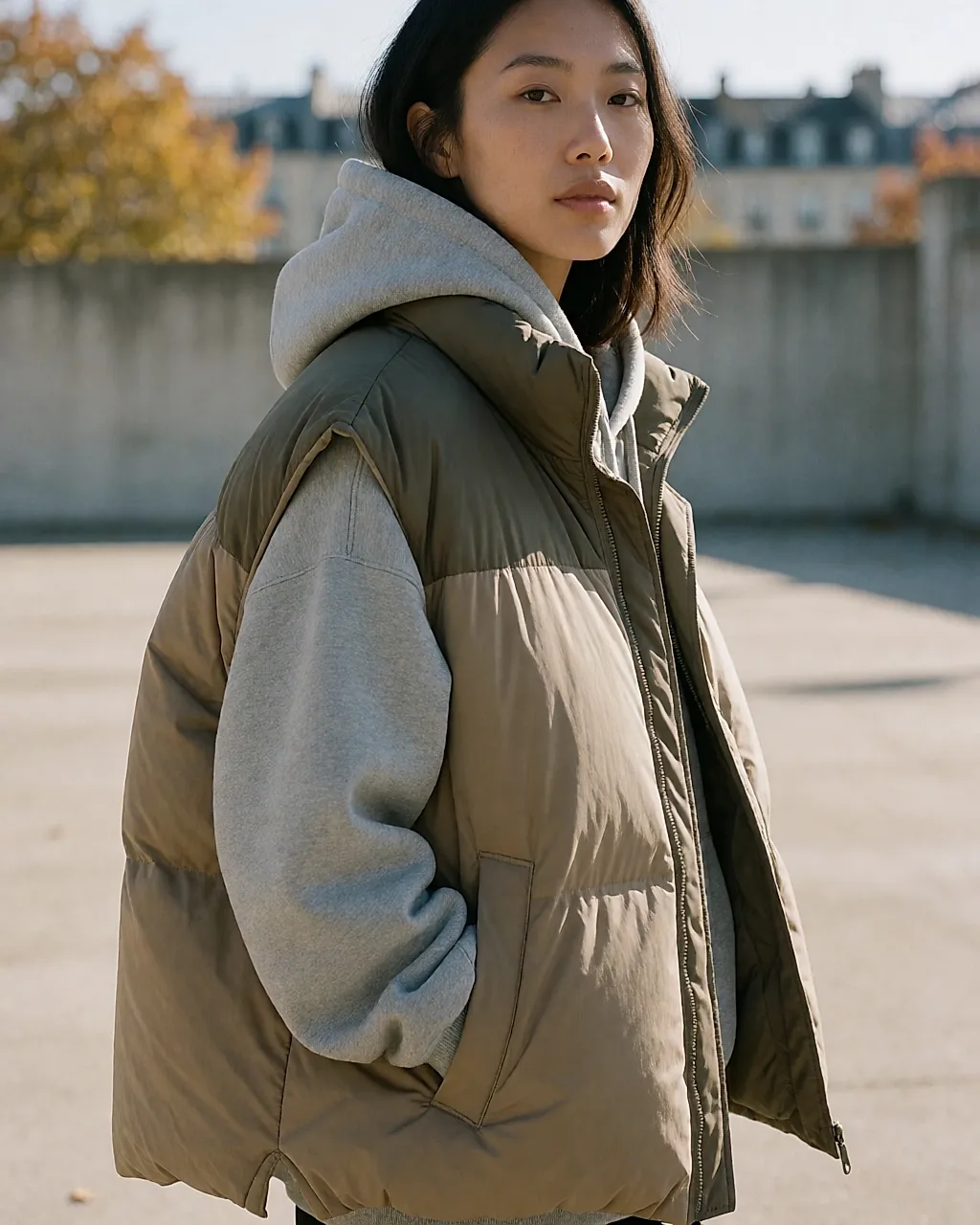
It’s the find of 2026, and the formula still works: a sleeveless jacket slipped over a shirt, a fine sweatshirt or a boho dress. It gives shape without adding bulk at the shoulder, which matters when you’re piling on three layers before 8am.
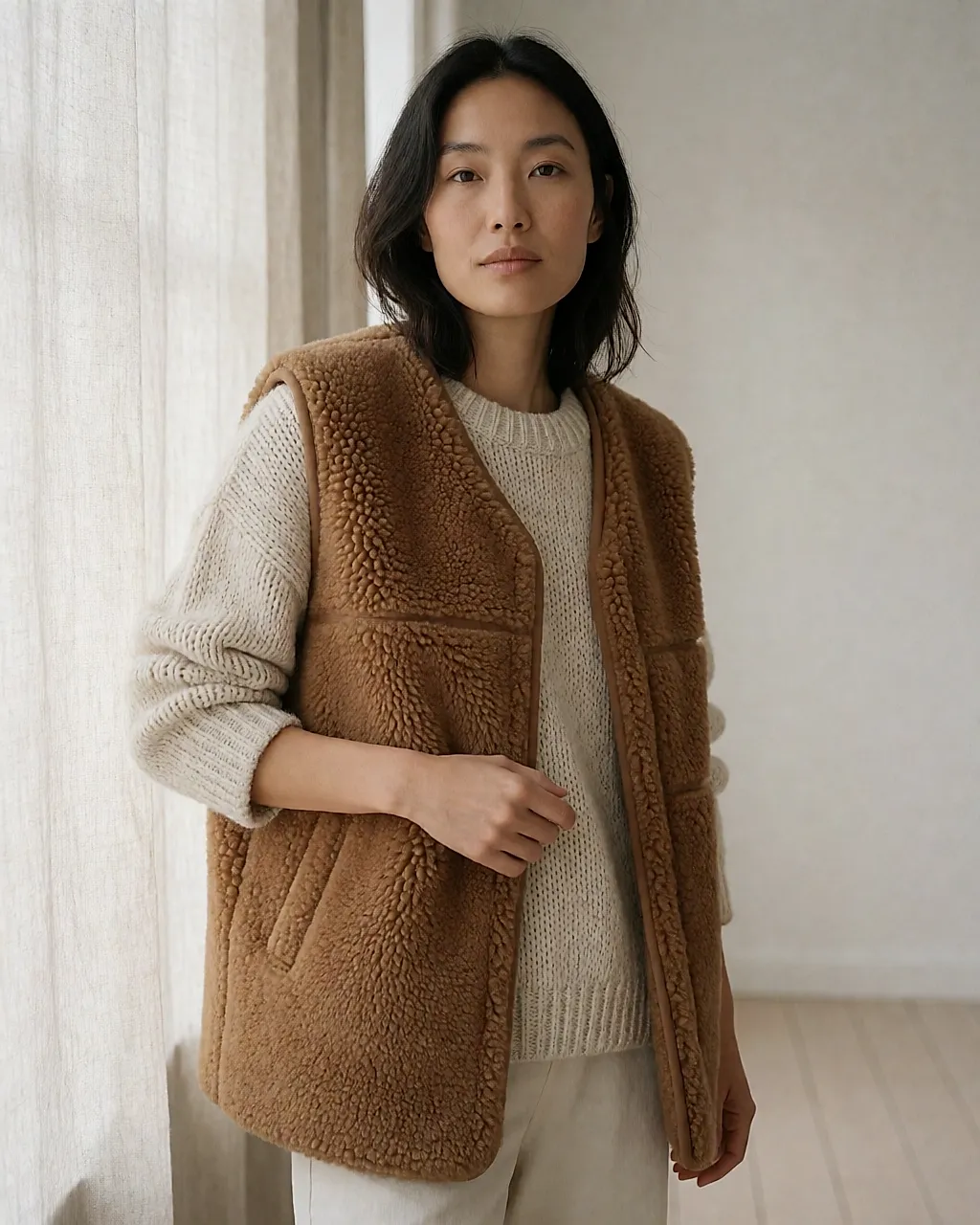
Check the composition before the pattern. RWS-certified wool (Responsible Wool Standard) covers animal welfare and pasture management; an acrylic blend brings the price down but pills quickly at the sleeves and collar. A small detail that decides how long the piece lasts.
Short coat and denim jacket
The flared coat with big buttons returns every autumn, and it’s no accident: it gives a sharp finish over jeans or a knit dress. Choose wool or European linen rather than bouclé polyester, and check the seams at the armholes — that’s where they go first. The drape does all the work.
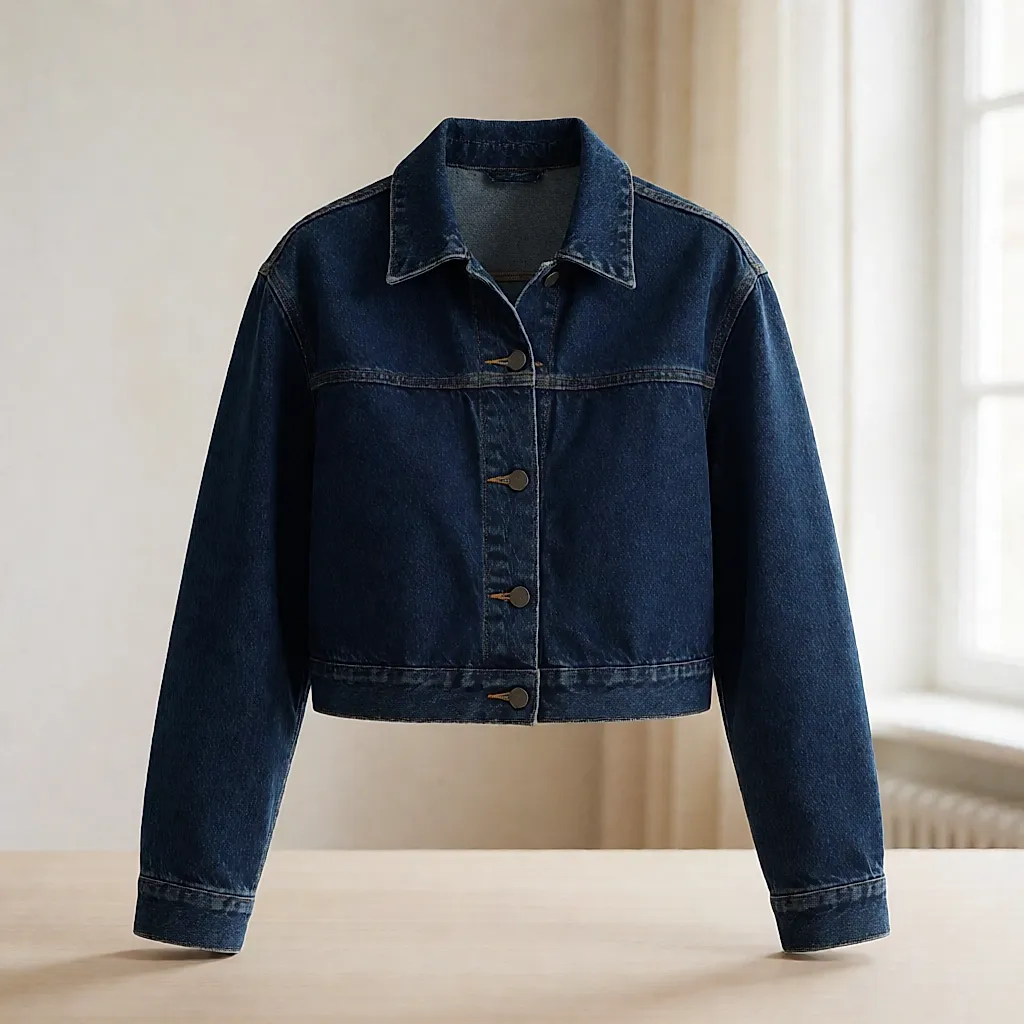
Same logic for the denim jacket: short cut, raw or faded denim, styled with a belt or a vintage scarf. A staple that works across seasons — as long as you don’t cut corners on the seams.

Faux fur: a fabric issue, not a slogan
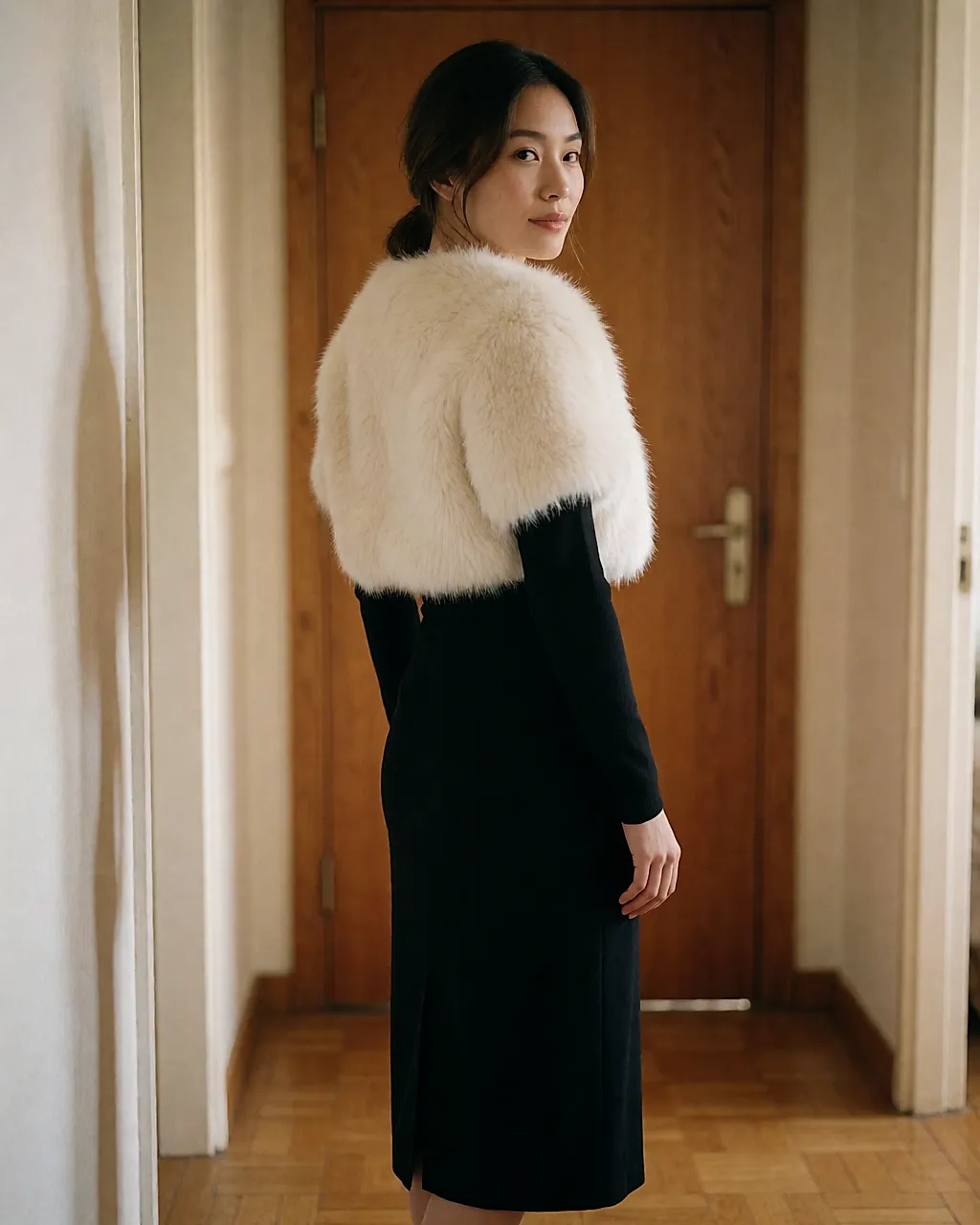
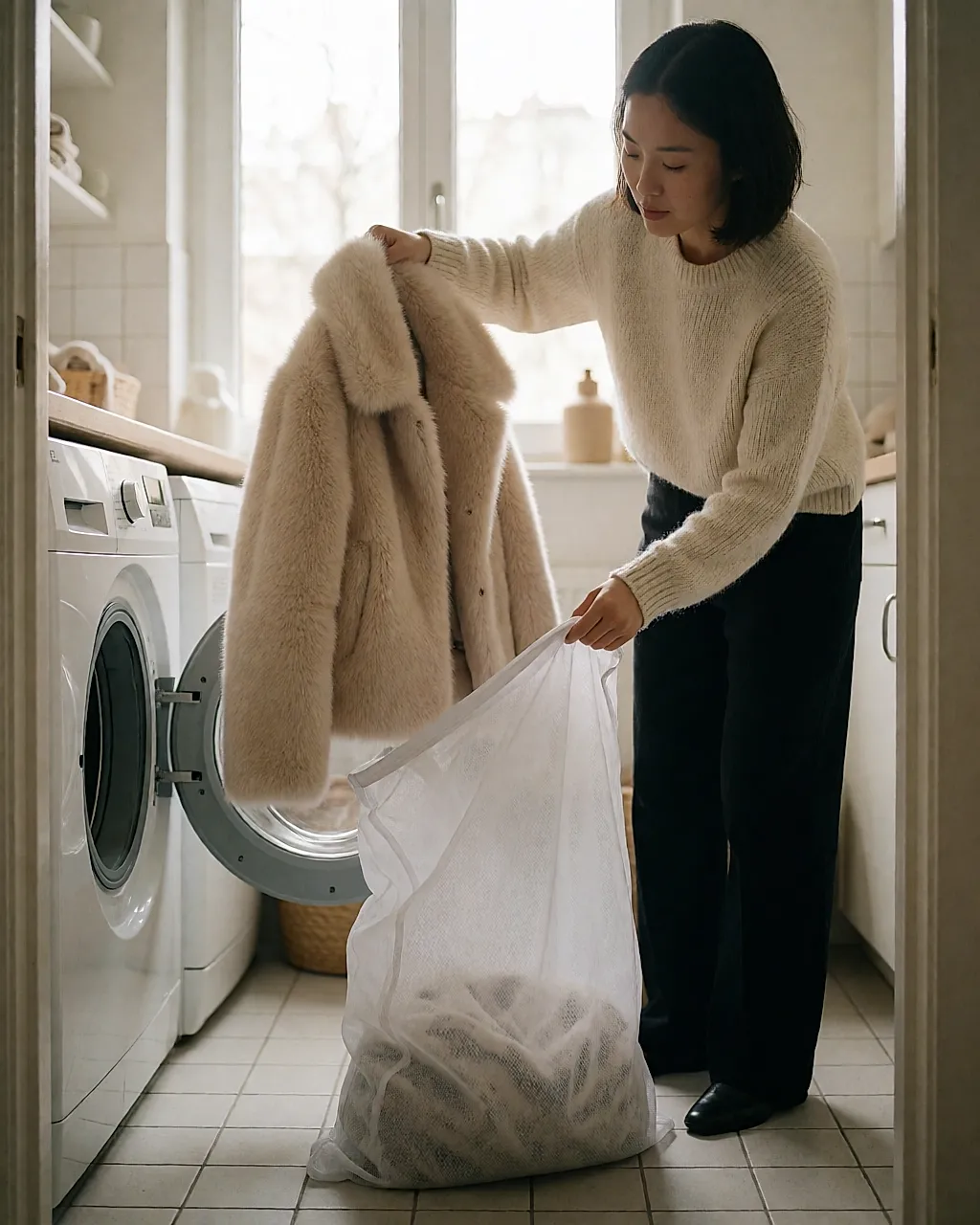
Fluffy trims set the autumn scene, but faux fur is almost always polyester or acrylic, made from petrochemicals, and it sheds microfibres in the wash. The move that changes everything: wash it less often, on cold, in a filter bag, and choose a removable lining over a fixed collar. Take it off, wash it, keep the jacket for longer.
Two standards worth knowing: GOTS requires organic fibres and social criteria throughout the manufacturing chain; Oeko-Tex Standard 100 limits harmful substances but says nothing about where the fibres come from. In both cases, the label is checked on the product itself, never on the shop window.

Budget
In the UK, expect to pay roughly £20–£60 in a charity shop or on resale platforms for an autumn jacket, £60–£150 for a sleeveless gilet or denim jacket from an accessible brand, and £200–£500 for a real leather biker or a well-cut wool coat. Prices vary with fabric, where it was made, city and finish.
Where to find it: charity shops, vintage stores, reuse centres and resale platforms for pre-owned; high-street brands and supermarkets for new; and a local tailor or alterations service for taking up a hem or replacing a zip — often cheaper than replacing the piece.
Sources
- Textile Exchange — international certifier behind the RWS wool standard
- Leather Working Group — environmental audit for tanneries



Comments
Your opinion matters: rate the article, react and reply to comments.
Comments are moderated; AI-assisted comments are flagged. Text emoticons (8-), :-), <3…) are automatically shown as images.