

Thursday, 7.40pm, the usual question in front of the wardrobe: the black blazer — again — or the denim jacket that looks as if it is heading out on the town without asking permission? This time the denim jacket won, and nobody mistook it for a Sunday leftover. It had none of the faded school-years trucker about it: notched lapels, a set shoulder and an indigo cloth dense enough to hold its shape on the hanger. The jeans stayed in the drawer.
The jeans haven't been upgraded. The jacket has simply changed job
For years we've been trying to make jeans dinner-appropriate: black skinny pairs, a blazer, heels, and the hope that it passes. Sometimes it does; often it jars, and the rustle of seams under the tablecloth reminds you where the trousers came from.

The more useful observation is this: it isn't denim that has dressed itself up, it's the jacket cut and finished like tailoring that has taken over the cloth. Same fabric, different architecture. We keep the charm of jeans and borrow the poise of a blazer.
Why does it work? Denim brings what wool doesn't: a texture that catches the light and breaks the seriousness of an evening outfit. And this kind of jacket works over almost everything already in your wardrobe.
The drape comes first, the finishing second
What separates an evening denim jacket from an ordinary denim jacket? The drape. A dense cloth, often non-stretch, that holds the shoulder line instead of collapsing after an hour. In the fitting room, lift the jacket by the shoulders: if it falls back into shape, that's a good sign.
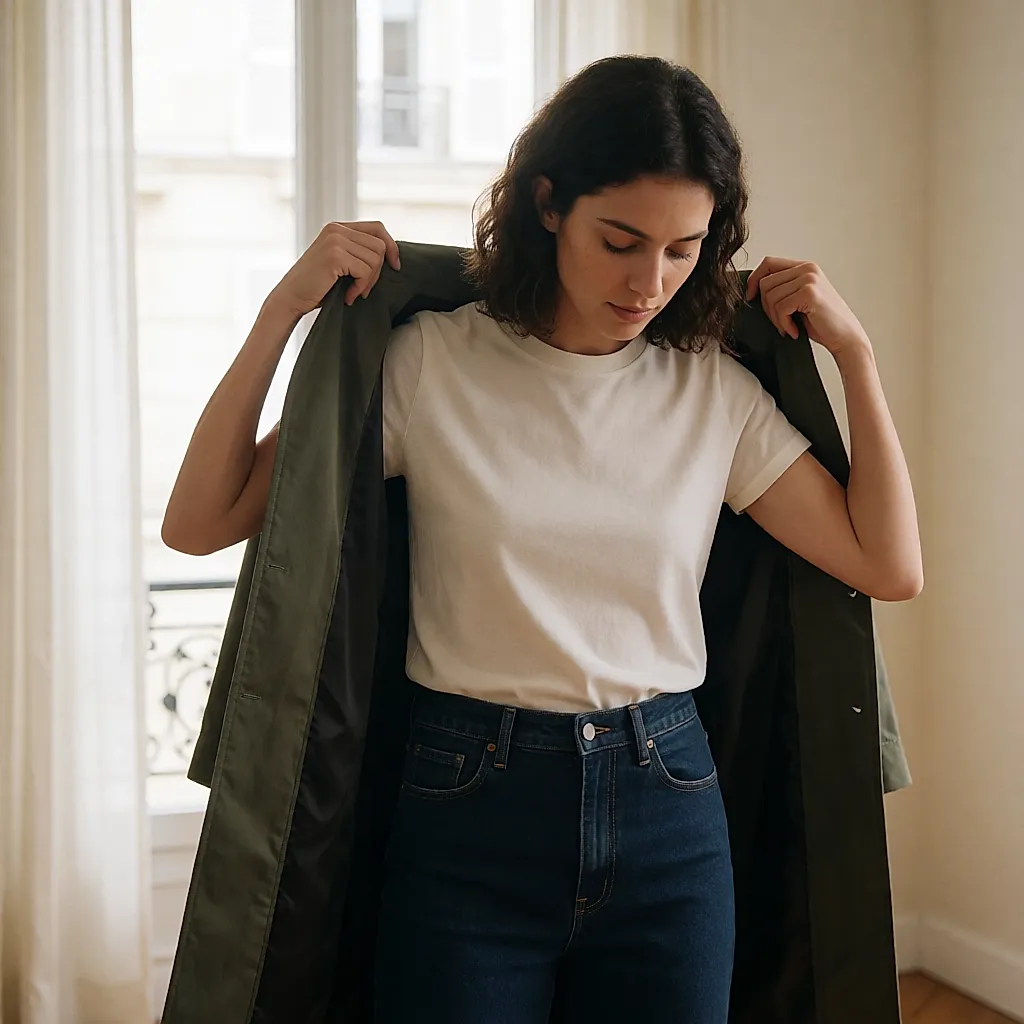
Then comes the cut: notched lapels, a V neckline, back darts, sometimes a lining — details you won't find on a trucker. The finishing gives the rest away: welt pockets rather than flap pockets, understated buttons, tonal topstitching. And the wash should stay deep: once pale fading reaches the elbows, you're back in weekend-jean territory. Charming, but not for dinner.
Three nights out, three ways to wear it
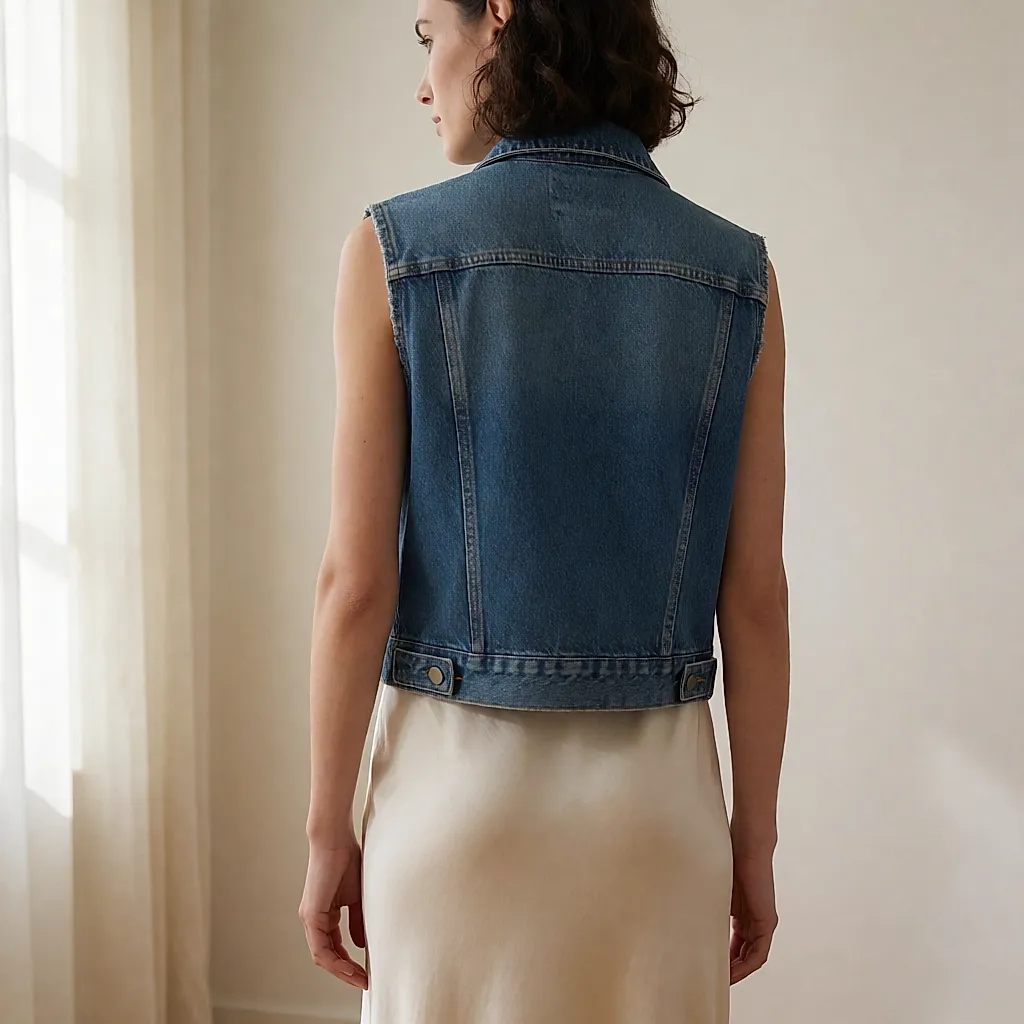
Then there's the big-night question: what to wear it with? The simplest is over a long satin or silk dress with fine straps. The jacket breaks the 'I made an effort' feel; the dress saves the jacket from looking as if you've come straight from the office. With mules, it will see you through to the 1am taxi.
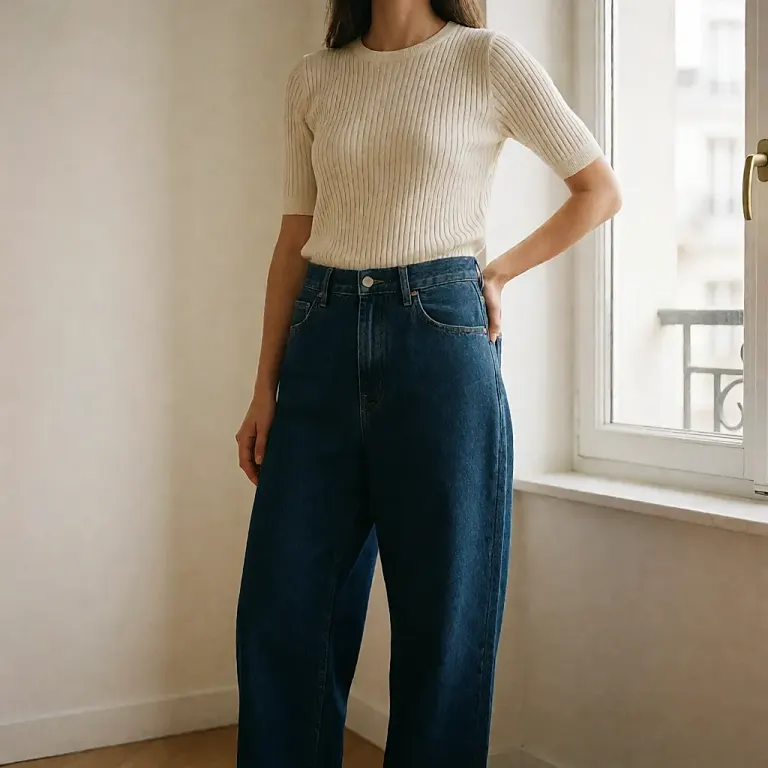
The second option, the one that works in November: wide-leg wool trousers, a white tee, the jacket over the top, fastened at one button. It's a full tailoring look without the seriousness of tailoring. With a fine necklace and a small structured clutch, nobody will ask if you've just left the office.
Third, more playful: a satin or tulle midi skirt, a fine knit tucked in, the jacket draped over the shoulders. The gesture is unforgiving: the shoulder needs enough structure, otherwise the jacket slips and you spend the evening hitching it back up.
What it won't do for you
Should you wear it for everything? Let's be honest for a minute. A denim jacket is still a denim jacket: for a dressed-up wedding, a very formal business dinner or a ceremony, a wool blazer will do the job with less explanation.

A structured shoulder, too, isn't the best friend of already broad frames. And if you're petite, a hip-length cut can break up your silhouette: try a shorter version, or have the hem shortened.
What to spend, from high street to pre-owned
Prices vary widely, which is good. As indicative ballpark figures, not tied to a specific retailer, think around £70 to £130 on the high street and in contemporary ready-to-wear, £180 to £300 at more established labels, where you're paying for the cloth, the lining and the labour. Second-hand, a piece in good condition is often £25 to £70; for sleeve alterations, ask your local alterations service for a quote.
Where to look? At labels that work with denim all year round — COS, Sézane, A.P.C. or Sandro — though styles and prices change with the season. The real criterion isn't the label, it's the drape.
Three checks in the fitting room. First the shoulder: the seam should sit right on the joint, not halfway down the arm. Then the sleeves: they should stop at the wrist, even if you need them shortened. Finally, movement: sit down, raise your arms, cross them. If the jacket rides up in accordion folds across the back, it's too tight — and it won't give much.
One last word on care, because evening denim deserves better than a 40°C cycle. Wash it rarely, cold, inside out, and let it air-dry: the cloth keeps its indigo. The denim jacket hasn't replaced jeans in the wardrobe; it has joined them on the evening front. Whether it's the jacket that goes out tonight is up to you.

Comments
Your opinion matters: rate the article, react and reply to comments.
Comments are moderated; AI-assisted comments are flagged. Text emoticons (8-), :-), <3…) are automatically shown as images.