
Wash a pair of jeans every week in the machine, or hand the same pair to a denim workshop twice a year, and you won't see much difference in the first month. You will by year three, when one has kept its indigo and its drape and the other has that tired, washed-out cast we call wear — even though it hasn't actually been worn that hard. So is the specialist wash worth it, or do you stick with your quick cycle?
What a specialist denim wash actually involves
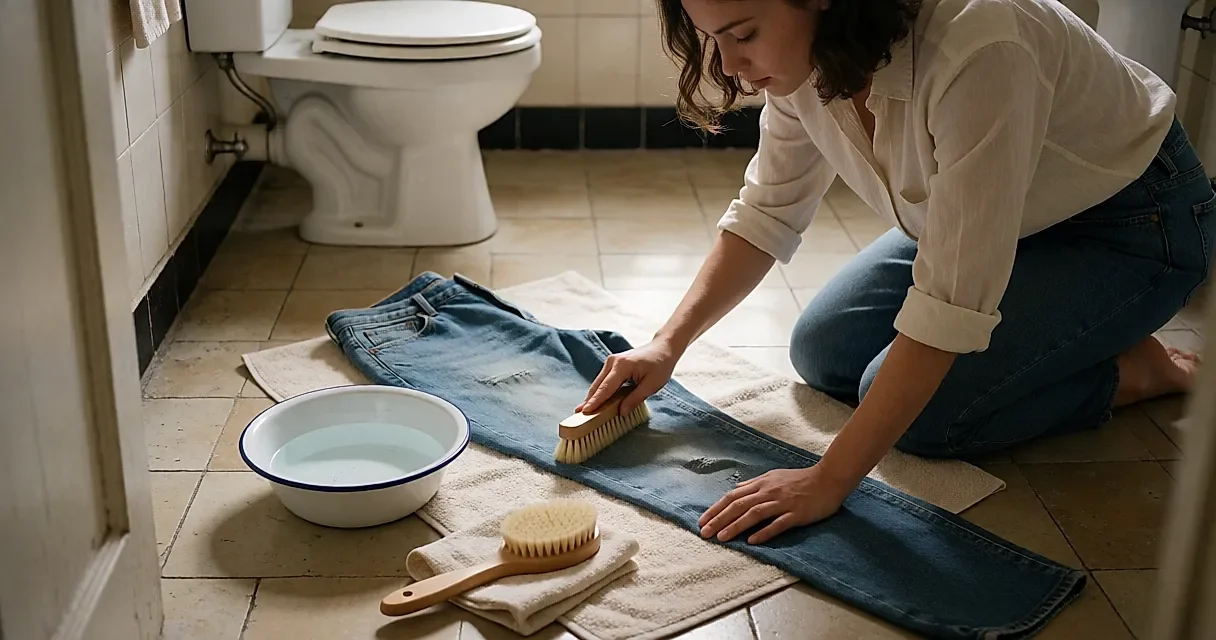
A denim wash is not a dry cleaner's with a fancier price tag. In most workshops the jeans go into cold water, by hand or on a very gentle machine cycle, with a neutral detergent and no fabric softener. Then they are rinsed and dried flat, in the air. No tumble dryer, no spin that wrings the cloth against itself. Some places finish with a steam press to relax the creases left by wearing and put some drape back into the leg.
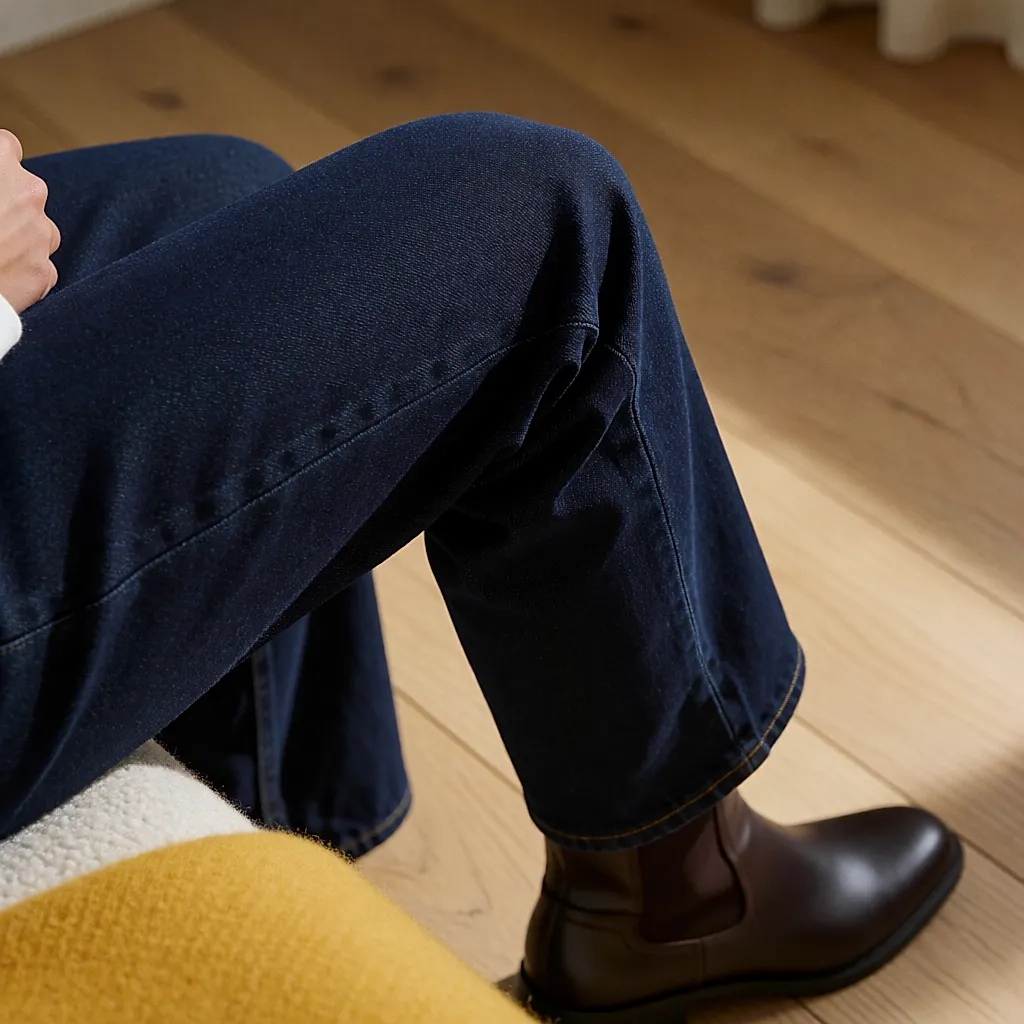
What does that change in practice? The cloth keeps its body, the indigo bleeds less, the seams don't go white before their time. It isn't magic, though: the jeans don't come back new, they come back clean, supple and with their wear marks intact. You know the ones — those creases behind the knee that make a pair look like yours and nobody else's.
Beware one stubborn misunderstanding: this kind of service doesn't repair anything. A worn crotch, a knee that has gone pale, a pocket hanging off — that's a tailor's job, not a wash's. So ask the workshop what they offer in alterations: that is often where the real gain lies, the bit that saves you buying a replacement.
What a wash won't do for you
Smell, for a start. A proper wash deals with it, but it will never do the job of airing. Jeans worn three days running and then abandoned on a radiator do not smell of roses — and the freezer trick, which is everywhere, doesn't clean anything: it chills, that's all. In practice, a night on a hanger by a window left ajar sorts out more situations than you would imagine.
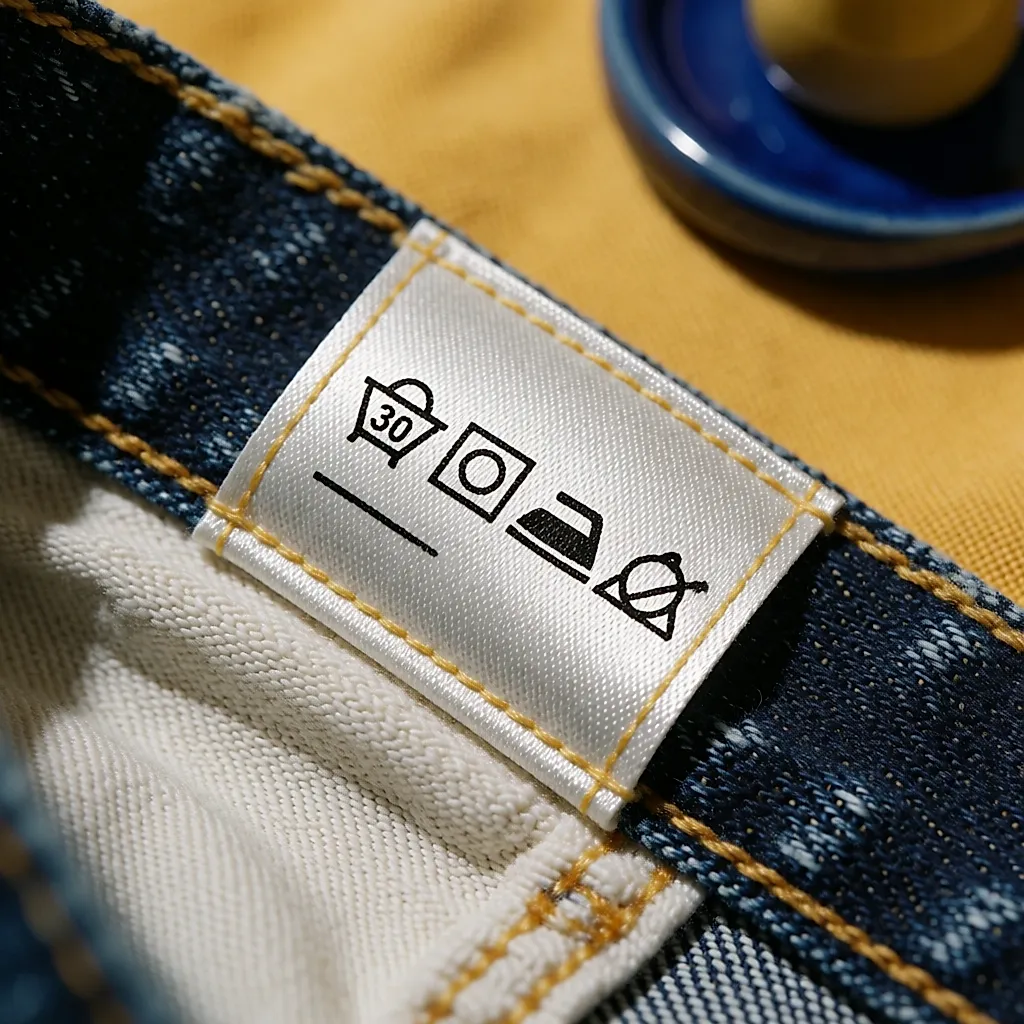
Then there's mechanical wear. No wash, however gentle, will rescue a weave that is thinning or cotton that is about to give. And at that point the real question is no longer "how do I wash it?" but "do I repair it, or do I replace it?". A new pair of jeans is cotton, water and miles already invested in it: the longer you keep the pair, the better the sums look. Have a look at the label while you're there — the higher the share of synthetic fibres, the more of a lottery its longevity becomes.
Sometimes the washing machine is the right answer
Let's be honest: some days a workshop is an absurd little luxury. A tomato sauce stain at Tuesday lunchtime, mud up to the ankles after an improvised walk, a heatwave day — then you need to wash, and fast. The machine does the job very well, provided you turn the jeans inside out, run a cycle at 30°C maximum, skip the softener and use a gentle spin, then take them out of the drum straight away.
Then there's frequency, the real sticking point. In practice, plenty of jeans cope with three or four washes a year, sometimes fewer when you air them and treat stains locally. It isn't a rule set in stone, just a yardstick: a pair worn every day in summer and a raw pair kept for weekends clearly don't run to the same schedule.
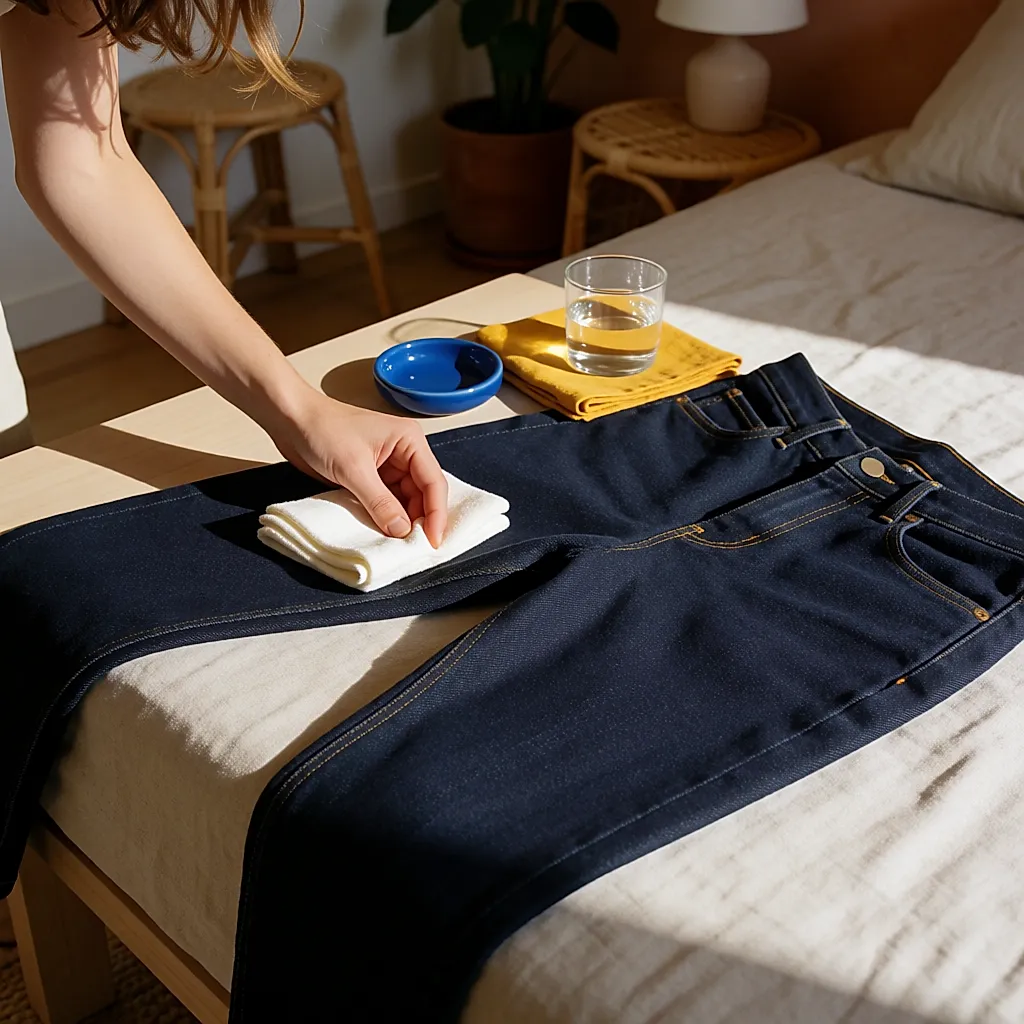
The move that matters: between washes, blot stains with a damp cloth instead of scrubbing as if your honour depended on it. Two minutes saved, a whole cycle avoided.
Budget: what it costs, and where to go
A denim wash at a specialist workshop usually comes in somewhere between £15 and £30, and more at the places that make a point of caring for the garment. A local dry cleaner that will hand-wash denim is generally cheaper: expect £8 to £15. And if you want to revive tired indigo, re-dyeing pushes it up — from £30 to £60 depending on the workshop and the finish you're after, and worth reserving for denim that justifies the spend.
Where do you find these services? Local alterations shops, workshops that work with denim, and some raw denim retailers that outsource their care service. In every case, ask about the method before you hand the jeans over — cold water and drying flat, yes; a hot cycle and a tumble dryer, no. And do the sums: two visits a year often costs less than the new pair you've been eyeing in the shop window.
So the question isn't "workshop or machine?" but "how long am I going to keep this denim?". A pair sent in once or twice a year, aired in between and mended before everything gives out will stay with you far longer than a pair washed by reflex every Sunday. And frankly, denim that ages well is just about the only thing in our wardrobes that actually gains in style as the years go by.


Comments
Your opinion matters: rate the article, react and reply to comments.
Comments are moderated; AI-assisted comments are flagged. Text emoticons (8-), :-), <3…) are automatically shown as images.