
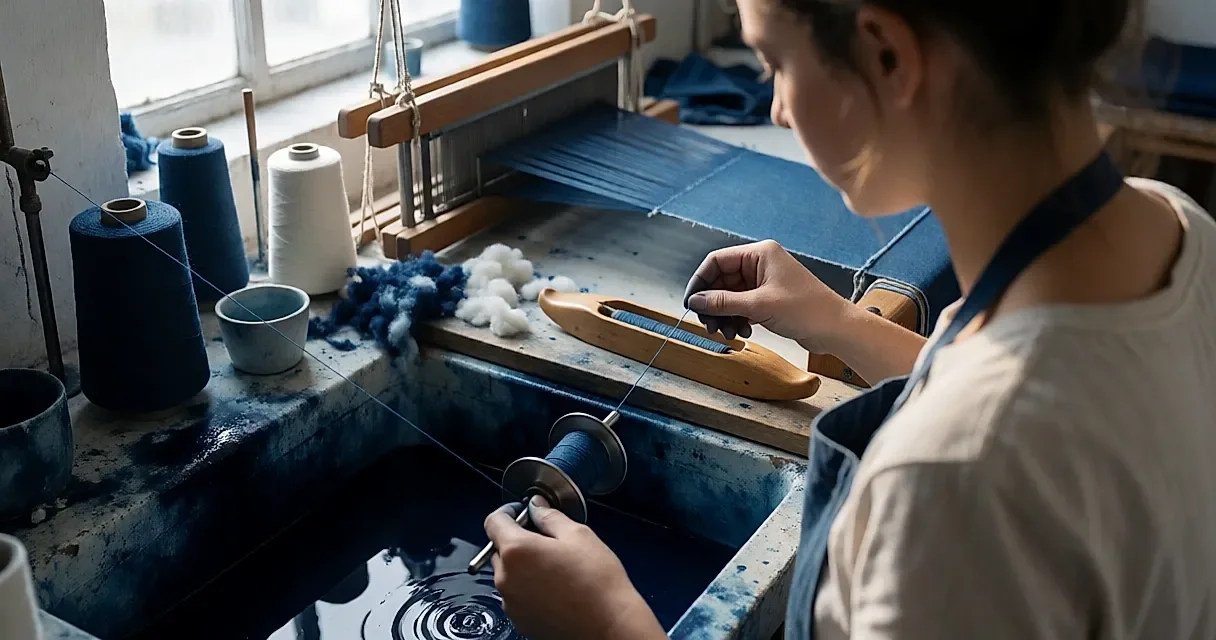
The small, scratchy label in the side seam—the one you unpick after three days—is becoming the most talkative part of a pair of jeans. It could already tell you the size and cotton percentage; now it is starting to say where the fibre came from and who spun it. Behind these extra details is a quiet industrial shift: spinning, weaving and finishing are moving closer together, sometimes under the same roof. Not out of nostalgia for the giant factory, but so brands can answer a very simple question when it is officially asked: where did this cotton come from?
Three trades that used to live apart
A pair of jeans is a chain of skills. Spinning turns fibre into yarn, weaving crosses that yarn to make cloth, and finishing—the industry term—takes care of dyeing, washing and treatments. Between each stage, the work often changes country, language and software: the cotton may be grown in Brazil, spun in Turkey, woven in Italy, dyed in Portugal and sewn in Bangladesh. Everyone does their job well, but everyone keeps their own paperwork.
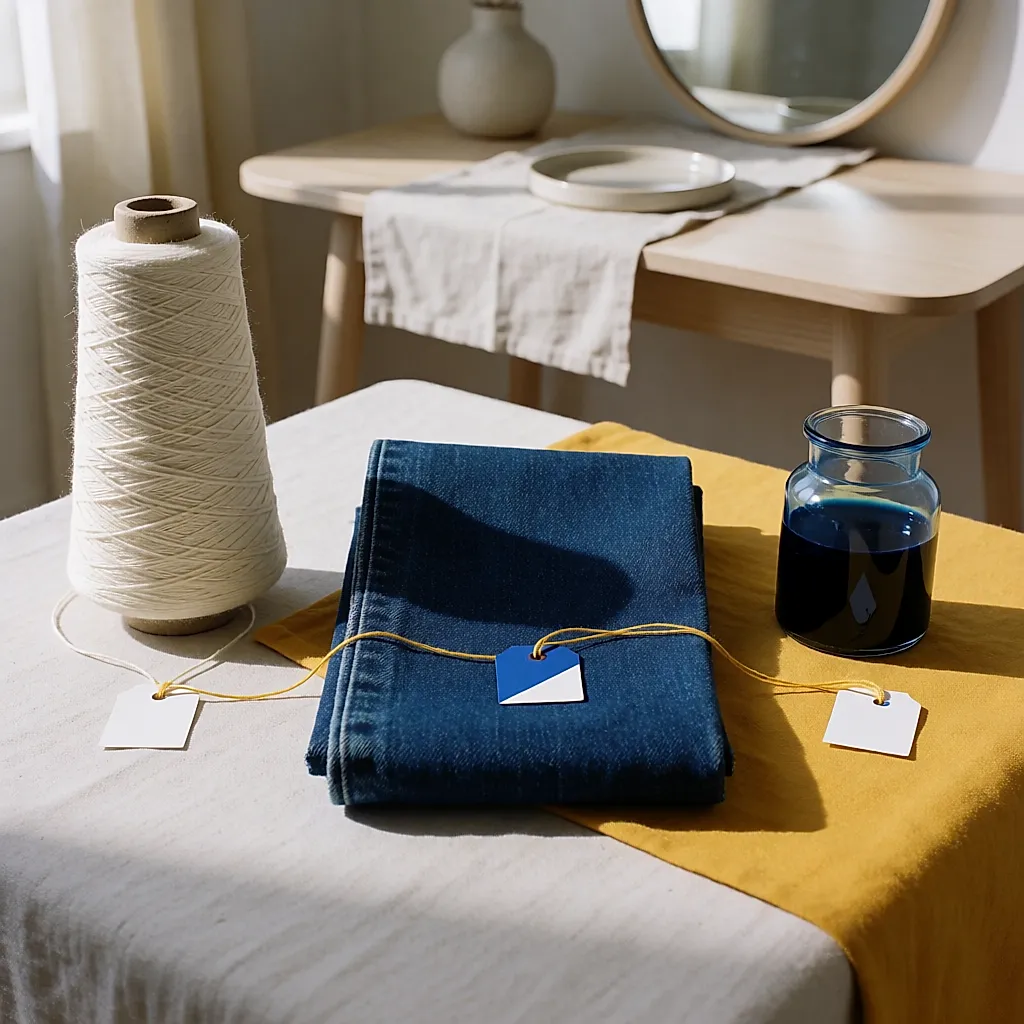
Denim adds its own complication: indigo dyes the warp threads before weaving. That is why jeans fade and whiten at the creases, and it is also why dyeing is not a stage that can be described casually. When spinning, weaving and dyeing sit under the same roof, the batch number follows the cotton bale from start to finish. One logbook, one chain of responsibility. Imagine the opposite: three companies, three systems, and information lost every time the work moves.
The passport on the horizon, and it isn't filled in at the end
Across the EU, a digital product passport is taking shape for textiles; the timetable for the rules is still to be confirmed. In other words, nothing is set in stone for your favourite jeans yet, but the direction is clear.
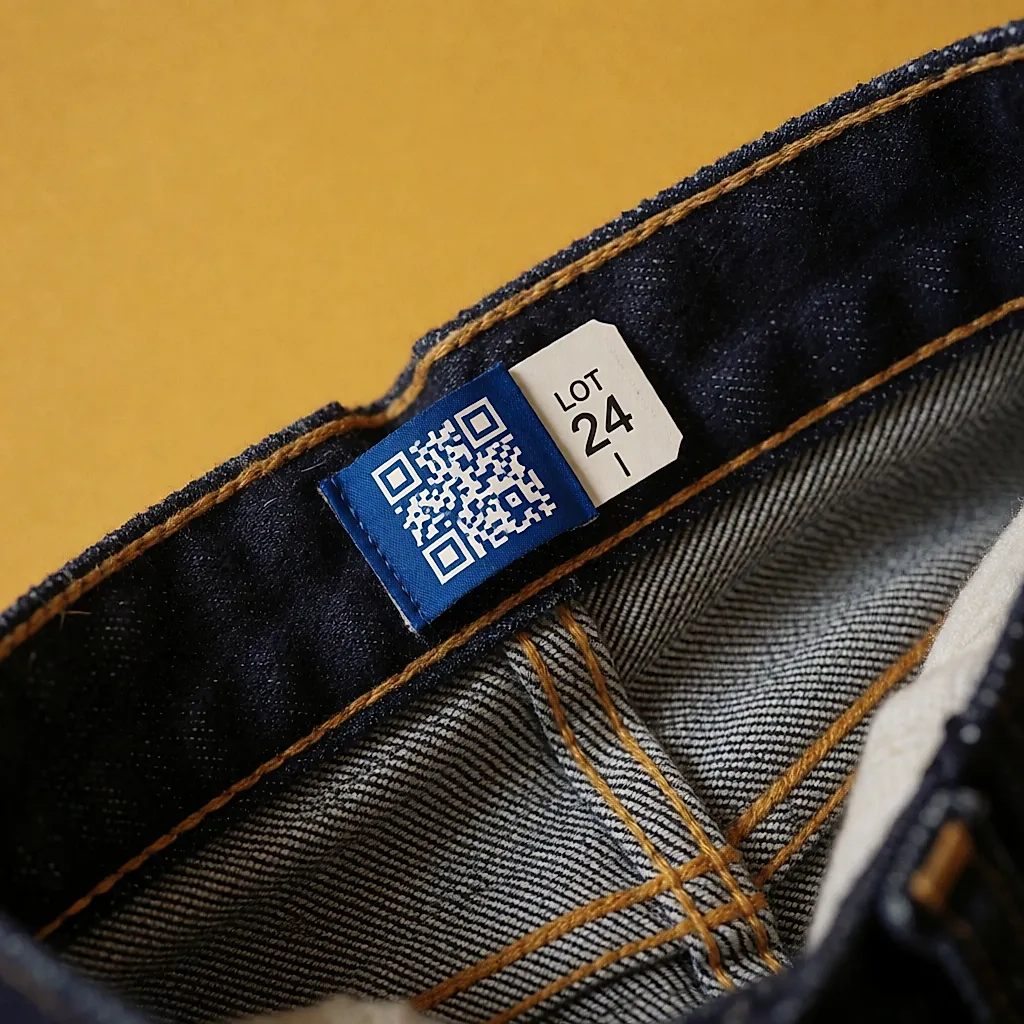
A passport cannot be filled in at the last minute. The data has to have been kept while it still existed: which farm, which batch, which spinning mill, which dye bath. The more intermediaries in the chain, the more places where the thread of information can break. This is where bringing the stages together makes sense: it is not about looking good on a 'commitments' page, but about having the right documents on the day you are asked for them.
What it changes in the fitting room, and what it doesn't
For you, the difference comes down to one line: a pair of jeans whose supply chain is documented can be checked. A QR code sewn into the waistband, a traceability page, a brand able to name its spinning mill—these small signs separate a complete set of records from a pretty phrase about 'responsible' cotton. They are also part of what pushes the price up: transparency costs time, audits and IT systems.
Be careful not to confuse traceability with virtue. An integrated factory can be very well equipped or very badly equipped; knowing where the fibre comes from says nothing, in itself, about the water and energy used. Bringing stages together can cut transport between them and reduce wasted material—a potential, not a guarantee. And that nuance is not a nervous tic of caution: cotton, yarn and cloth rarely leave the same building as the finished jeans. Garment-making often remains elsewhere. What is moving closer is the fabric, not yet always the trousers.
Budget
Expect to pay around £60–£110 for a mid-range pair of jeans whose traceability remains partial, often limited to the country where it was made. For denim whose spinning and weaving are identified, prices are more likely to be £130–£260 in specialist shops, concept stores or from brands that sell their spinning mill as much as their fit. Prices vary by city, range, type of denim and the level of detail in the records.
And if the budget won't stretch? Second-hand is still the smart buy: a pair that has already been worn has already been made, and some resale platforms list the brand and composition. Another free option is to keep what you already own for longer, wash it less often and inside out. It won't give you a QR code, but it will save you buying another pair.
The label check to do before the fitting room
- Look for the name of a spinning mill or a textile mill on the label or product page: it is a sign that a real set of records exists.
- A QR code that leads to a page titled 'Our approach' tells you nothing; a QR code that gives a batch, a country and a workshop does.
- Check the elastane content: elastane makes recycling blended fibres harder; traceability depends first on documentation of the supply chain.
Still, this heavily documented pair of jeans is not the most fun piece in the wardrobe, and that is perfectly fine. You don't need a QR code to love a piece of cloth, only to know what you are buying. The day the famous passport finally lands on labels, you will already know where to look—and the jeans you have worn for three years may at last have a story to tell.

Comments
Your opinion matters: rate the article, react and reply to comments.
Comments are moderated; AI-assisted comments are flagged. Text emoticons (8-), :-), <3…) are automatically shown as images.