

Two small magnetic pads, a click you barely hear, and the necklace is done up. No contortions, no broken nail, no solitary minute in front of the mirror trying to find the clasp behind your neck. That is exactly why a magnetic clasp is so appealing. It is also why it starts playing up as soon as the knitwear comes out.
The click that holds until wool gets involved
The idea is as simple as a magnet: two metal pads meet and the piece stays put. On a fine chain worn against bare skin in summer, it works very well. The trouble starts with layers.
A polo neck, a slightly scratchy scarf, a coat pulled on in one sweeping movement: with every bit of friction, the knit rubs against the clasp. A magnet has no notch or lock, nothing that truly catches. A sideways tug can be enough to make it slide, which is how a necklace ends up in a coat lining or on the pavement ten metres from where you lost it without feeling a thing.
Don't count on the magnet ageing gracefully either. A drop on a tiled floor or a knock against the edge of a table can weaken its hold. That is no reason to throw the piece away, but it is a reason to think twice before hanging a fairly heavy pendant from it.
Lobster clasps often hold better, but they leave their mark
The lobster clasp, the little lever clasp you pinch between two fingers, doesn't spring open the way a magnet can. That is its great strength, and probably why so many chains still use one. Its downside shows over time: the lever rubs against the ring every time you open it, the plating wears and the metal eventually becomes marked. On a very fine chain, this shows quickly.
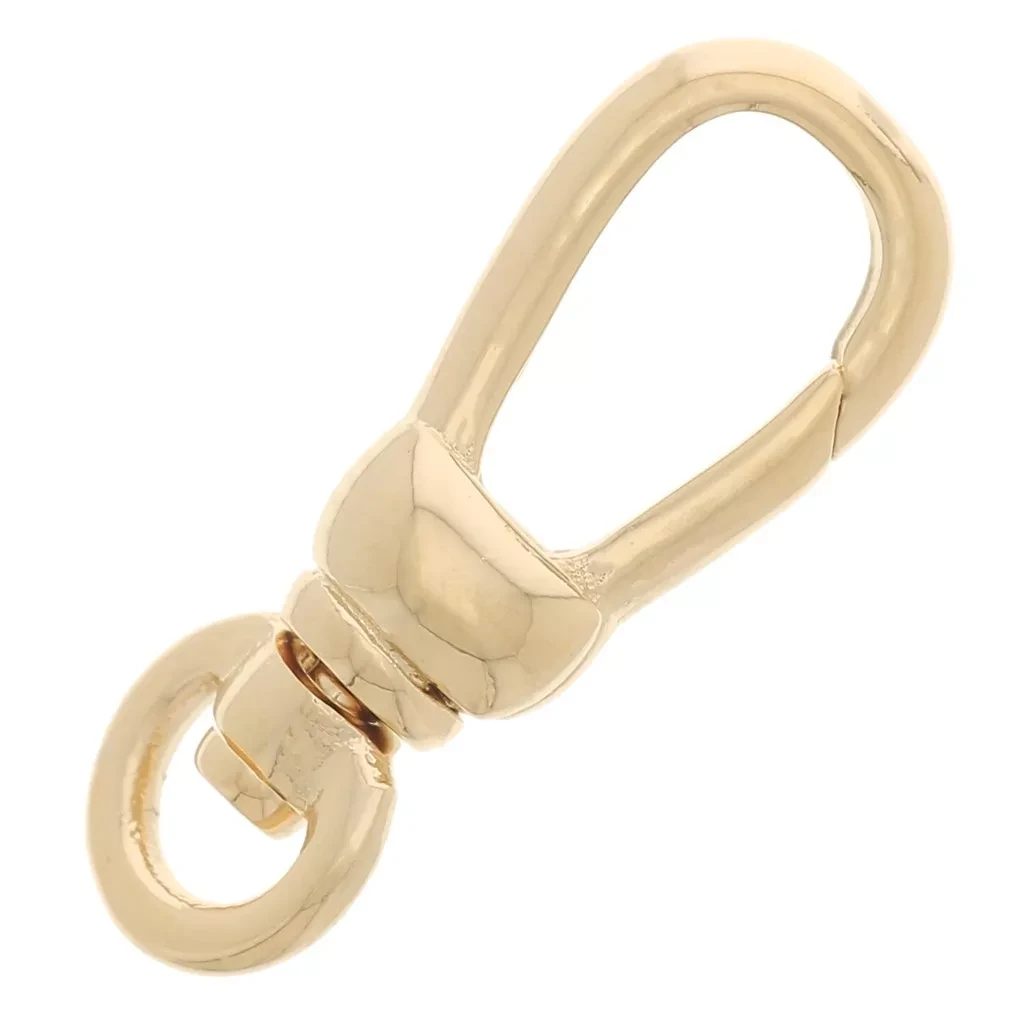
Weight matters too. On a stone pendant or a fairly substantial locket, a lobster clasp that is too small can pull on the chain and distort it. At the other end, some budget models can need so much pressure that opening them is uncomfortable. There is no perfect clasp, and it is worth being honest about that.
Even so, a lobster clasp is one of the reliable options, provided you check the ring from time to time. It is often the ring that opens first, after being pulled at to open the lever.
The safety chain is not just for show
That fine little chain attached to the clasp, with its mini lobster clasp, has a very specific job: to hold the piece if the main clasp gives way. A safety chain is not decorative, even if it looks good. Most of the time it is so short you barely see it, and that is deliberate.
The snag is that people often forget to clip it. Out of laziness, because it is tiny, or because they don't understand what it is for. Yet it is often what stops a necklace ending up under a Tube seat. So take two seconds, fasten it, and stop thinking about it.
What to check before you buy
Start with no equipment at all: close and open the clasp three times between thumb and forefinger to feel the resistance. If it opens with surprising ease, that tells you something. A clasp that needs a small, precise movement should hold better than one that simply snaps together.
Next, weight. The heavier the piece, the more the clasp needs to be mechanical. On a light piece, a well-positioned magnet may be enough; on a heavy pendant, choose a lobster clasp, a screw ring or a spring-ring clasp, which are generally safer.
The third check is the one people often forget: the safety chain. Ask whether it has one, whether it clips easily, and whether a jeweller can replace the main clasp. A replaceable clasp extends the life of a piece and can stop it being put aside after the first mishap.
What a replacement costs
Replacing a clasp usually costs less than replacing the piece. At a high-street jeweller, expect roughly £25–£50 for a costume or plated-metal clasp including fitting, and more like £45–£95 on a gold chain, depending on the model and the weight of the chain. Prices vary between cities and small boutiques.
If you are handy, a replacement magnetic clasp costs £5–£15 on its own from a haberdashery or online, but fitting it to fine jewellery takes patience. For costume pieces, ask the seller first whether replacement is covered under warranty or whether a spare clasp can be supplied.
The habit worth adopting: put your necklace on after your coat, never before, and take it off before pulling on a slightly scratchy wool scarf. Two seconds can save a necklace from ending up on the floor.
We often keep a necklace for the pendant we love, not for its clasp. That is entirely normal, and it is exactly why it is worth looking twice before buying. A clasp that holds and a safety chain you actually clip: the piece you wear every day doesn't need to be the most expensive one in the box.

Comments
Your opinion matters: rate the article, react and reply to comments.
Comments are moderated; AI-assisted comments are flagged. Text emoticons (8-), :-), <3…) are automatically shown as images.