

On the check coat in the window, the shoulder seam lands slap in the middle of a square. Nobody ever stops to look at that, and yet it says everything. That small alignment separates a coat that was engineered from one that was merely assembled.
Three places that speak louder than the label
Pattern matching is the way a motif carries on from one piece of fabric to the next. On a check, the chattiest spot is the armhole: the pattern on the body and the pattern on the sleeve have to follow each other, like two lengths of wallpaper joined up. Then comes the centre front, with the button placket and the darts, then the back. And finally the pockets: a flap that slices a check in half is visible from three metres away, even in the crush of a rush-hour Tube platform. You won't be able to unsee it now — sorry.
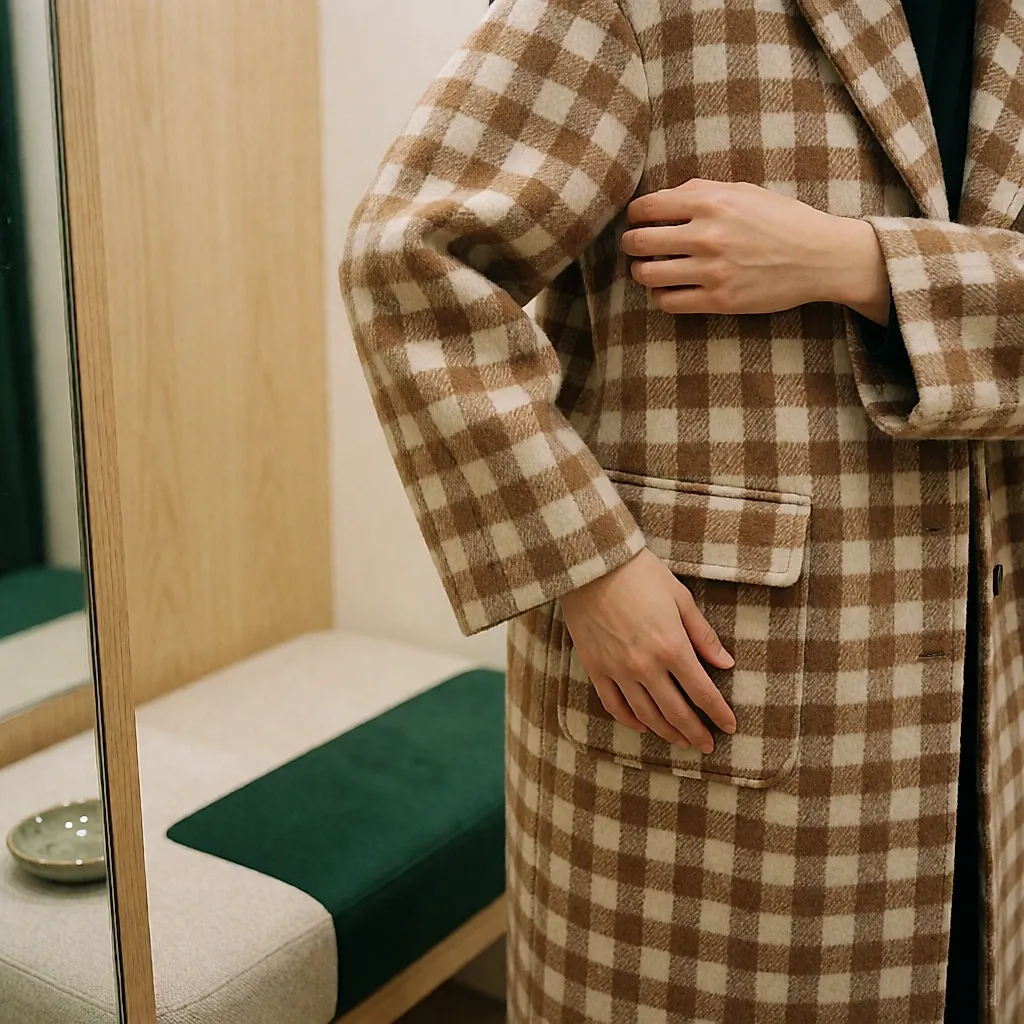
On a stripe the logic is the same, only crueller: a stripe shifted by 5mm creates a broken line down the whole height of the silhouette. On a houndstooth, you look for the match at the centre front, where the two fronts meet when the coat is buttoned. The eye isn't expert, it's just very good at spotting an anomaly — ask anyone standing in front of a crooked picture.
What it reveals about the cost of making it
A matched coat takes more fabric, and above all more time. In cutting, you can't slide the pattern pieces just anywhere across the roll: every piece is constrained by the motif and by the grain line. The result is greater cutting waste, a higher fabric requirement, and a stage where someone has to position, pin and check before the shears go in. All of that costs money, before you even get to the quality of the wool.
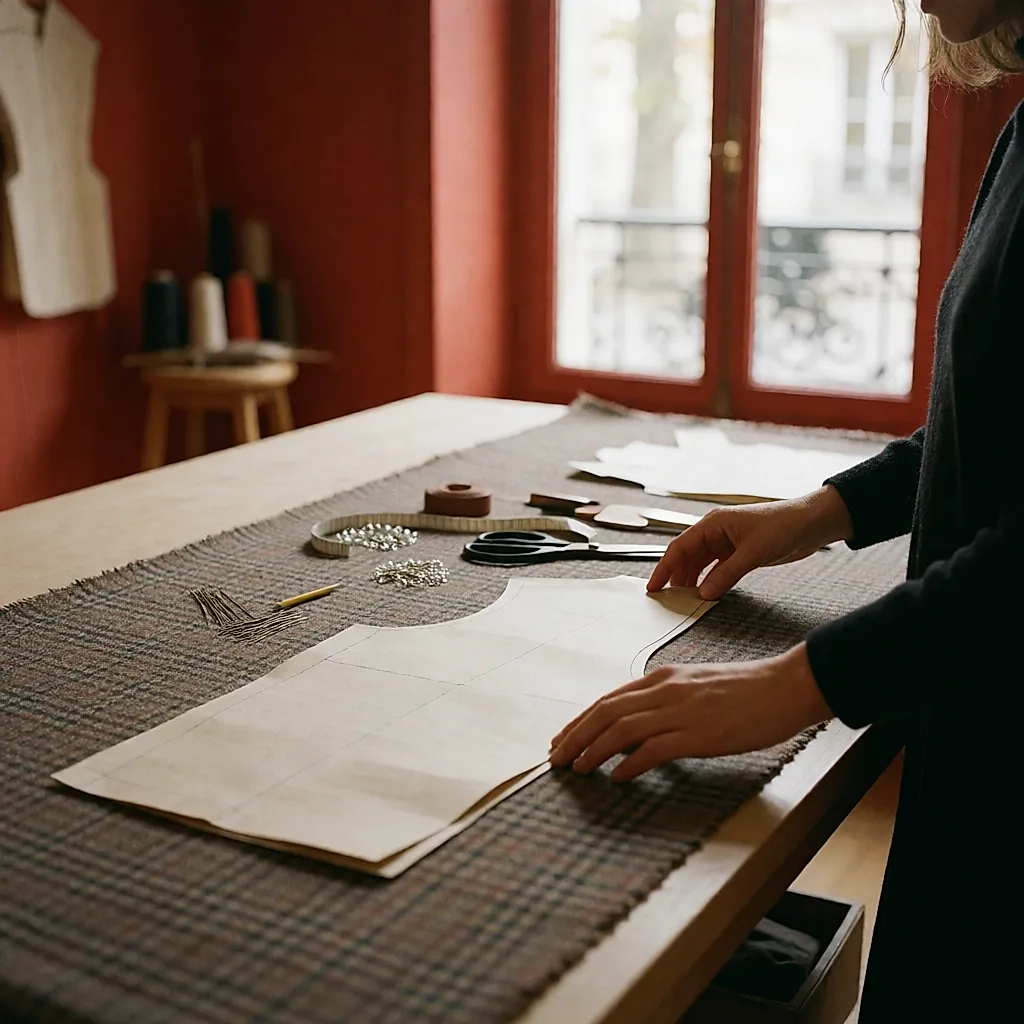
That's why pattern matching is a signal of care: a brand that accepts it on an 8cm check has accepted spending more on something plenty of customers will never notice. Do be careful, though, not to confuse the gesture with the material. A coat can be flawlessly matched in a wool that pills within weeks — check the composition and the share of synthetic fibres before you get carried away.
Small patterns forgive, large checks don't
It's all a question of scale. A houndstooth of a few millimetres, a microstripe, a very tight Prince of Wales check: the eye can't track a pattern that fine across the whole surface of a garment. A 1cm shift dissolves into the busyness of the motif. That is precisely what makes these versions so easy to wear, and so low-risk at a low price.

A large check forgives nothing. The bigger the square, the more the eye catches on the line that slips out. And contrary to what people assume, it isn't 'smarter': it's simply more demanding, harder to cut, harder to pair. If money is tight, the small pattern is where I'd send you without hesitation. An unmatched houndstooth is still a good buy; an unmatched large check is money spent on a flaw you'll see every morning.
And what about the drape?
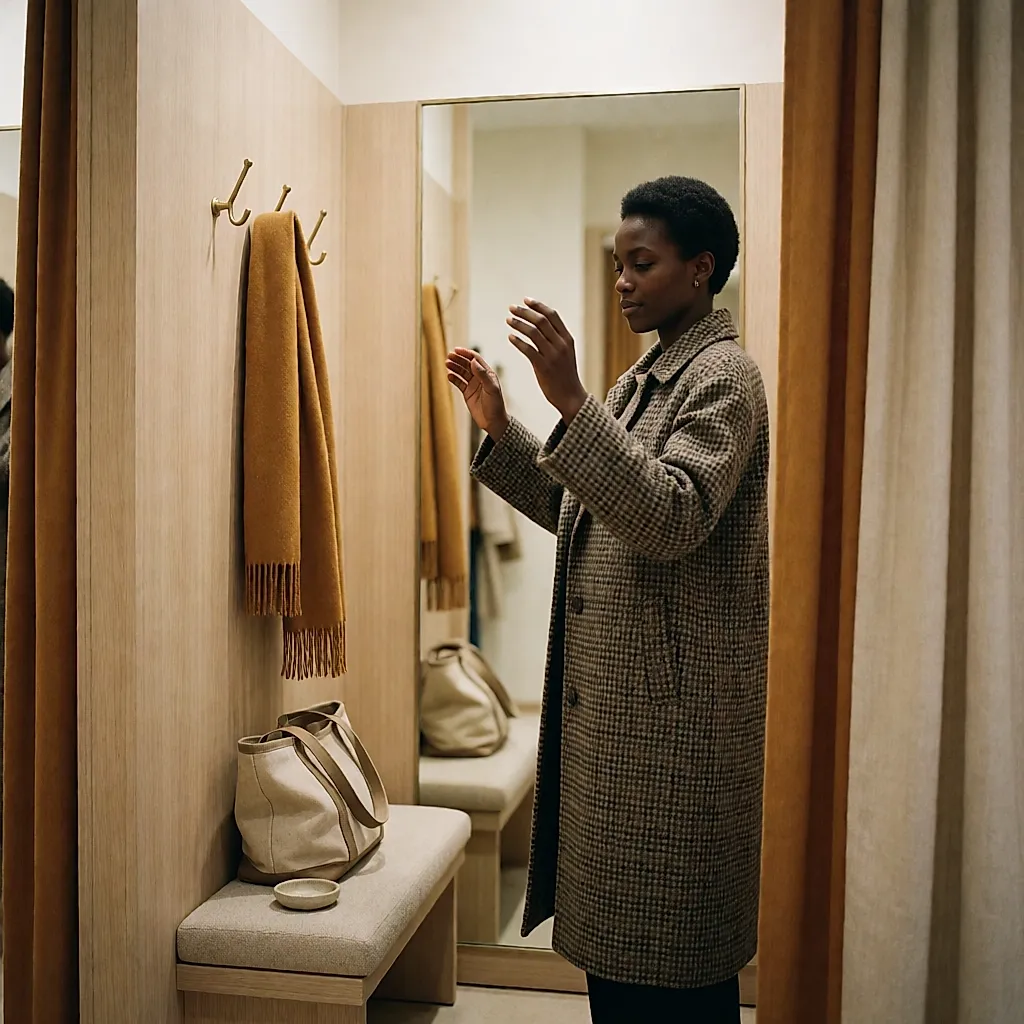
Matching is a giveaway about cut, not a guarantee. A coat can be impeccable at the seams and still fit you badly: shoulders too narrow, armholes that pull the moment you raise your arms to reach for your bag, a length that cuts your leg at the wrong point. The fitting room is the only judge — give it an extra thirty seconds, arms up, hands in pockets, and sit down if the coat has to survive car journeys.
And know who this piece doesn't suit: a large check on a petite frame can swallow the person, especially worn buttoned up. In that case, take the pattern as an accessory — scarf, shirt underneath, bag — and save the large check for a short piece, a jacket or blazer, where there's less surface to match.
What to budget
Prices range widely. Expect to pay roughly £50 to £100 for a checked coat from a high-street chain or a supermarket: at that level the matching often goes out of the window, and that's acceptable on a small pattern. From about £220 to £450, you start to find checks that are properly aligned and a wool that holds up: that's the most interesting zone. Above £600, you're paying for the material, the cut and the name — by then the matching should be a given.
The clever alternative: a plain wool coat, £90 to £180, and a checked scarf, £20 to £40. You get the effect, your budget breathes, and if you tire of the pattern you change the scarf instead of the coat. On the second-hand side, peer-to-peer resale sites are full of 1980s and 90s checked coats: look closely at the photos, shoulders and pockets, before you commit.
The three-second test, in the fitting room
- Shoulders: do the pattern on the body and the pattern on the sleeve follow each other?
- Centre front: buttoned up, do the two fronts form a continuous pattern?
- Pockets: does the flap pick up the coat's check, or does it float alongside it?
One simple truth remains: matching doesn't make a coat beautiful, it betrays the attention paid to making it. On a tight budget, put your money on a small pattern and a good drape; on a middling budget, insist on alignment at the shoulders and the front; on a comfortable one, stop compromising. And if you fall for an imperfect large check because it suits you down to the ground, keep it buttoned as little as possible — the smile will do the rest.
Comments
Your opinion matters: rate the article, react and reply to comments.
Comments are moderated; AI-assisted comments are flagged. Text emoticons (8-), :-), <3…) are automatically shown as images.