
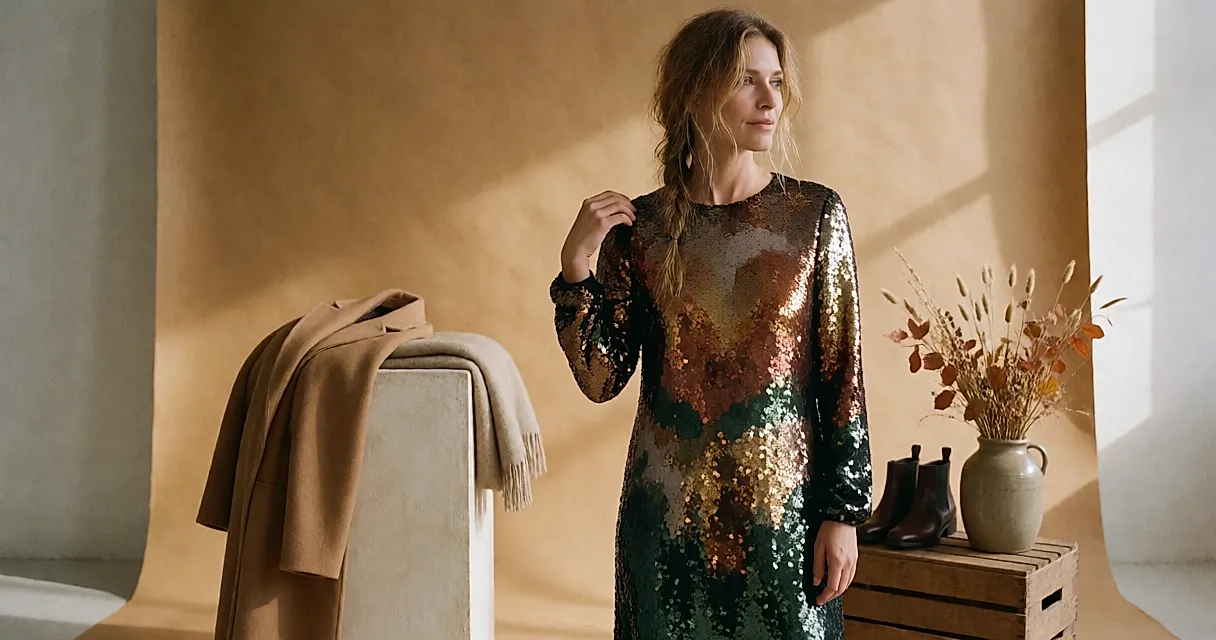
Eight o'clock, the light drops low over the tables, and the pattern on your dress has just changed its mood: a shaft of lamplight catches the shoulder, the flower lights up and goes out the moment you lean towards your glass. You put on a dress; you're almost wearing a picture. That's what has shifted this season: sequins no longer just sparkle, they draw. And that reshapes almost everything, from how the piece hangs to how you get it out of the wardrobe.
The mirror becomes a canvas
For years, sequins had one job: throwing light back at you. A fully sequinned dress was a solid block of glitter, readable from thirty metres, brilliant in a nightclub and much less so at a restaurant. What's appearing now is more patient: sequins in different sizes and shades, matte paillettes sitting next to mirror ones, areas deliberately left dim. The sequin has become a pixel: put together, it builds a gradient, a flower, a soft blurred landscape, a graphic line.
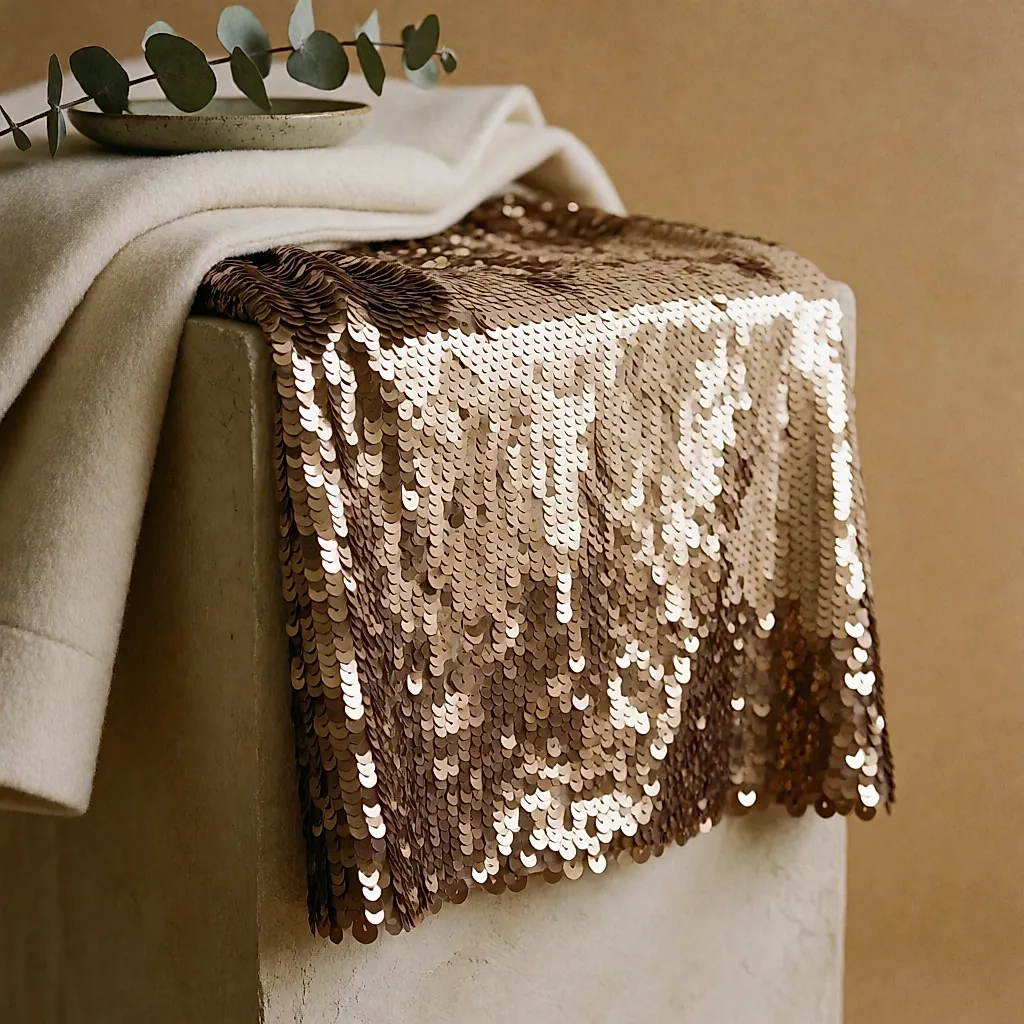
The consequence is immediate if you look closely. The pattern is no longer uniform across the garment: you notice densities, dips, crisp edges. On the hanger it can even look odd, almost blotchy. It's in movement, and from the right distance, that the image reassembles. In other words: never judge a sequin dress standing up in a fitting room, forty centimetres from the mirror. You could easily write off a good one.
The drape changes, and that's where it all happens
A densely embroidered panel has weight. Set on a fluid skirt, it pulls it down and gives it an almost architectural structure; scattered in light touches over chiffon or silk, it lets the piece move and the pattern sparkle on and off. Two dresses can show the same design and behave like two completely different garments. If the dress stands up on the hanger by itself, like a little soldier, you'll know what to expect once you're sitting at the table.
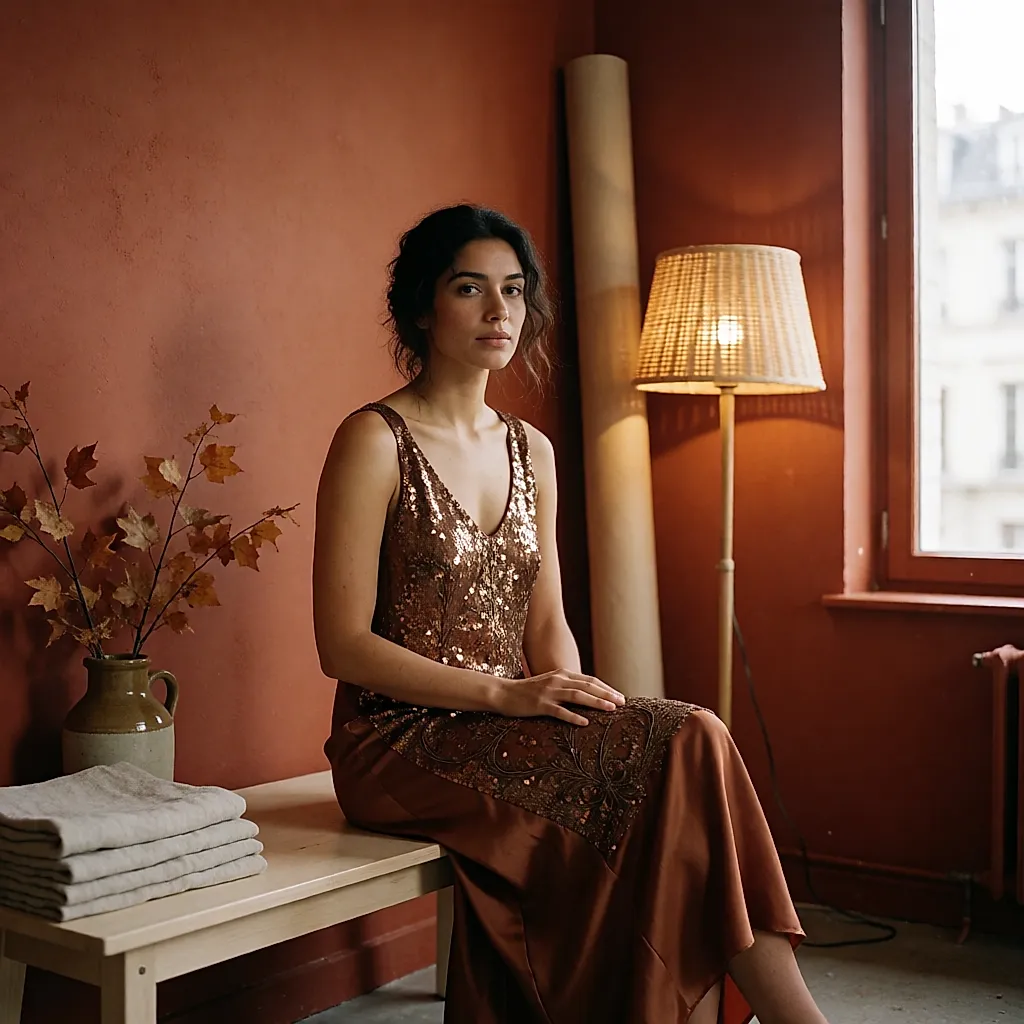
The second factor is light. Late on a grey, rainy November afternoon, a very shiny sequin goes flat and can look dull, almost cardboardy; a matte sequin keeps its colour and settles for a soft sheen. Hence a useful habit: try the dress in daylight before you commit to it for the evening. A style meant for a candlelit dinner isn't necessarily the one that will take you to a winter lunch.
One image at a time, or none at all
The rule comes down to one line: one luminous zone. With a patterned sequin dress, everything else steps back — opaque tights, plain boots or heels, a wool coat in a single colour, no jewellery trying to compete. The all-over sequin look exists and it works, but it asks for confidence and an occasion you can't cobble together on a Monday morning.
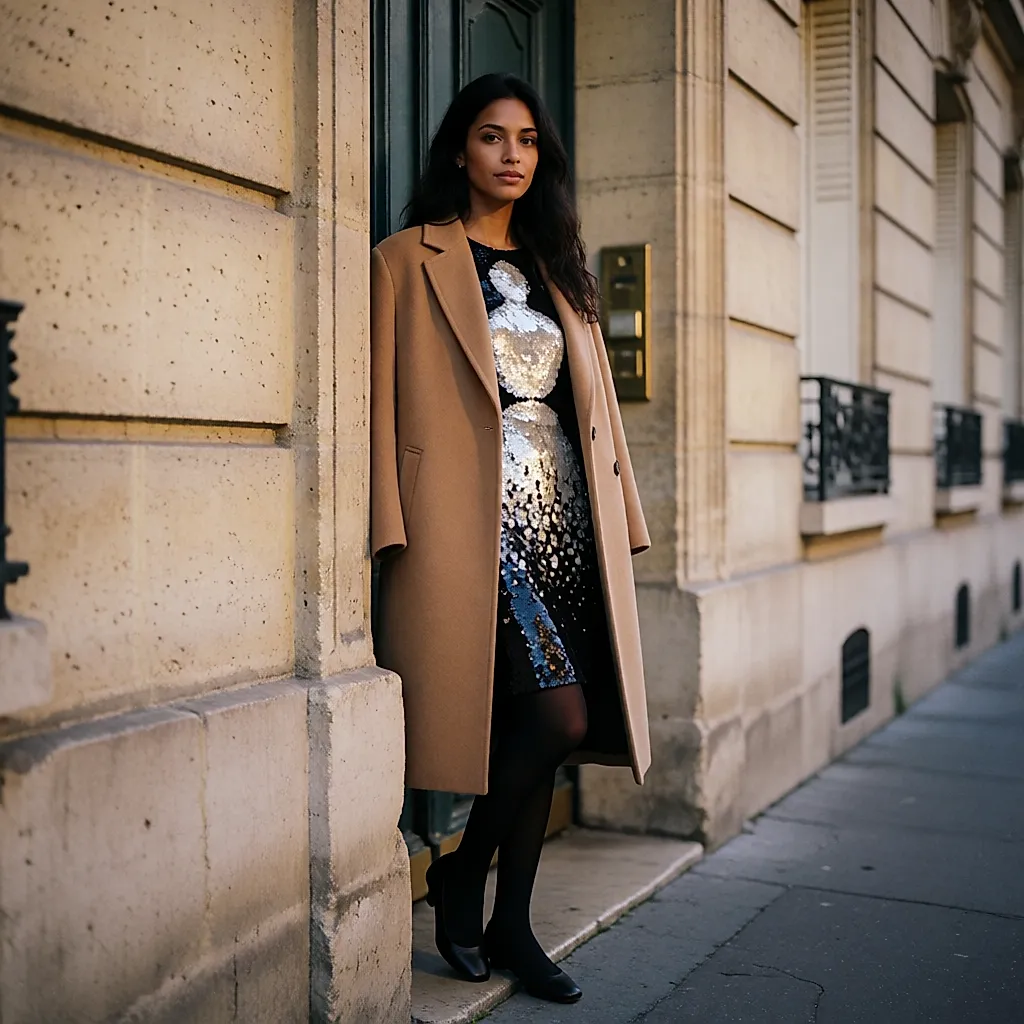
Second point, more strategic than it sounds: light areas pull the eye. A pattern concentrated on the bodice lifts the gaze upwards, a gradient fading down the legs lengthens the silhouette. If you don't like being looked at, go for tonal sequins, a trim, a sleeve, rather than a whole patterned dress: you keep the idea without the spotlight. And for a first purchase, a smaller surface costs less and gets worn far more often.
Care, and the awkward question
Let's talk about the fabric, because here it matters more than usual. Most sequins are made of plastic film, sewn or glued onto a base: the familiar advice to check the fibre content isn't a journalist's tic — it can make a difference to how long the dress lasts. A silk, wool or cotton base will often hold its shape better and breathe more easily; a glued construction can be more fragile when cleaned. Look at how the sequins are fixed, too: a thread running through each paillette can often be repaired, while a glued one may come away.
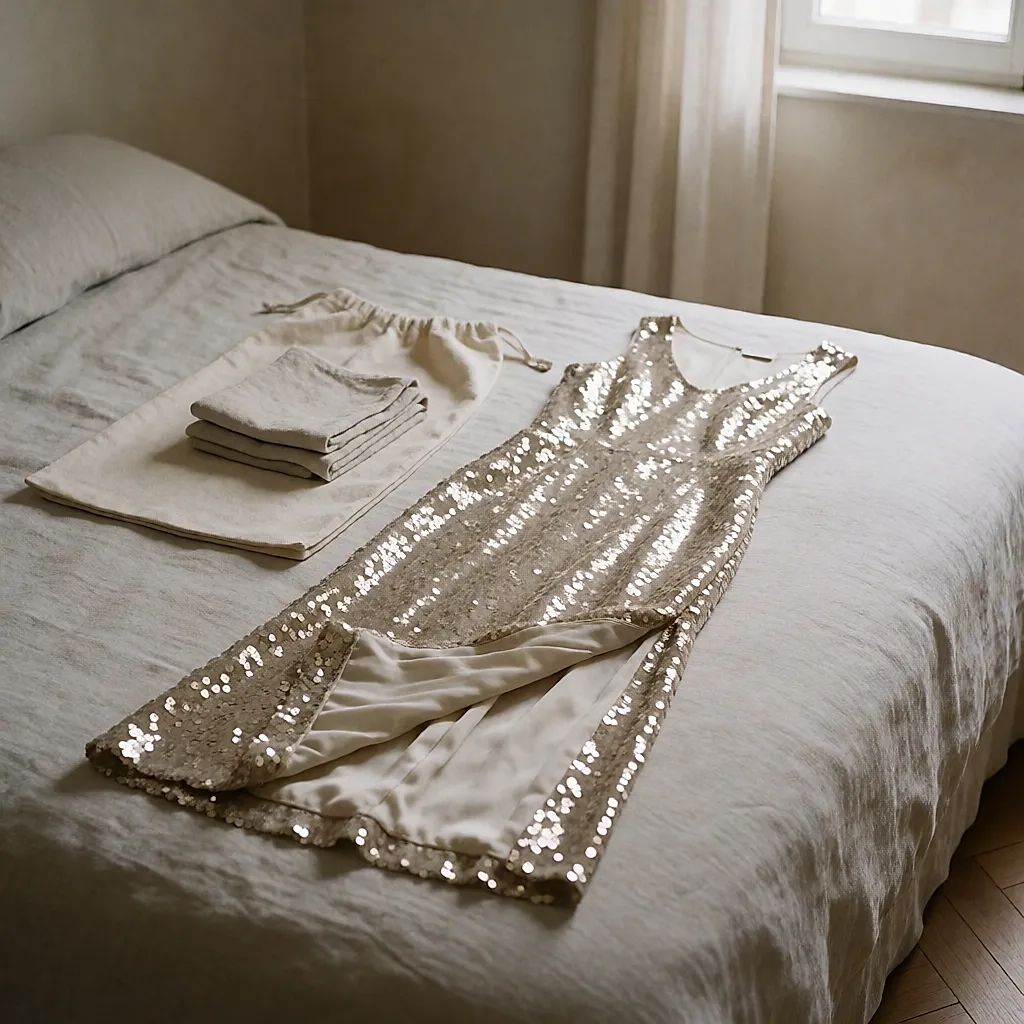
Care is no mystery: dry-clean the dense pieces, store them flat in a cotton bag rather than on a clip hanger that marks the shoulders. And the habit worth more than any purchase: get out the dress you already own, dust it off, wear it again. A good piece worn three times beats a mediocre one worn once.
Budget
As a rough guide, expect to pay somewhere between £50 and £120 for a sequin dress from a high-street chain or department store: in that bracket the quality of the construction varies a lot, which is why it's worth giving the seams a tug in store. For a partly embroidered, better-built piece you're looking more at £200 to £500, and well beyond that for hand embroidery. Price depends mostly on the density of the pattern, the base fabric and the construction — not on how many sequins there are.
If the budget won't stretch, there are two honest ways out: rental, often £40 to £90 for an evening, and second-hand, where you can find lovely pieces from past seasons provided you're willing to check the condition sequin by sequin. Add dry cleaning at £15 to £35 depending on where you live, and you have the real cost of a party dress.
Three questions before you head to the till: can you read the pattern from a metre away, or do you have to squint? Does the dress sit well when you're seated with your arms crossed? And does the sequin catch the fabric of your tights when you rub it with a finger? If two out of three leave you unsure, put the dress back.
What's left is the pleasure, which you can't put a number on. A sequin dress that carries a picture is a piece that keeps you occupied: you look at it, you move it, you choose it for the light of a particular room. Pick one that feels like you, both still and in motion — and let it shine without any help.
Got a sequin piece you no longer know what to do with? Bring it out and wear it over a fine knit and raw denim: that's often where it looks most right.
Comments
Your opinion matters: rate the article, react and reply to comments.
Comments are moderated; AI-assisted comments are flagged. Text emoticons (8-), :-), <3…) are automatically shown as images.