
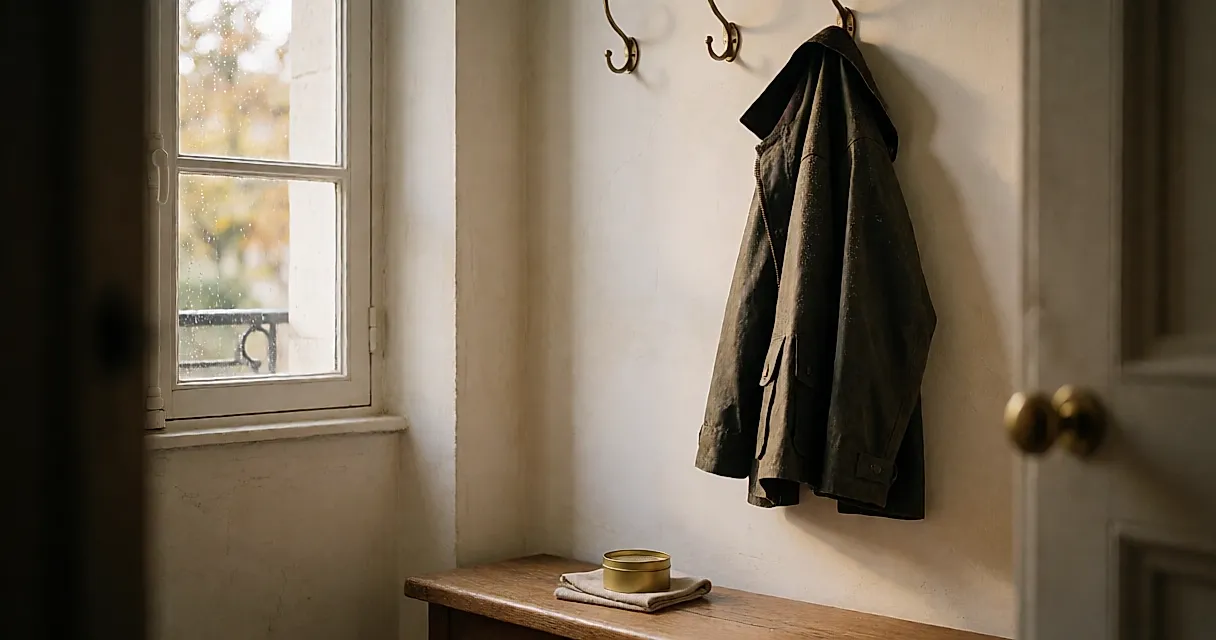
Sunday evening, fine November rain, and that waxed cotton jacket is starting to sulk. The drops no longer bead; they spread, darken the fabric and leave a coffee-coloured halo on your forearm. Had no one warned you that waxed cotton needs looking after, like a pair of leather boots you wouldn't leave to go grey two winters running?
When water leaves a mark instead of beading
A waxed cotton jacket in good nick has fabric that refuses water: drops roll off it, the surface stays matte and feels slightly slippery to the touch. As the wax wears, the behaviour changes, slowly and without warning. At the cuffs, the collar, and where a bag strap rubs the shoulder, the fabric starts to drink. It turns a darker shade, dries leaving a mark and stiffens slightly under the fingers.
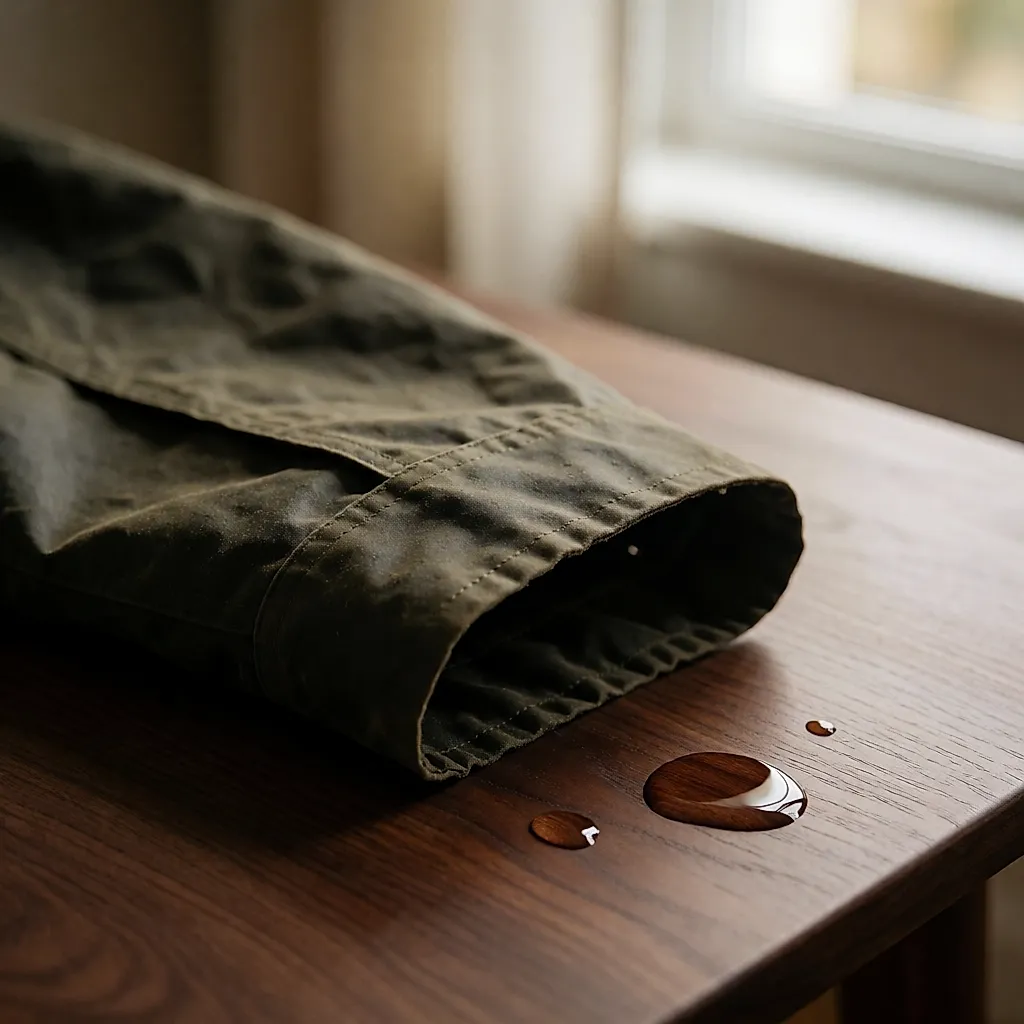
The simplest test is a single drop of water on a sleeve: if it beads and runs off, the jacket is still holding up; if it spreads and darkens the fabric within seconds, the wax is wearing away in patches and it's time to dig out the block. Nothing to panic about — thirsty waxed cotton isn't ruined, just halfway through its cycle.
Why you shouldn't re-wax the whole jacket
Re-waxing the entire surface every autumn is a generous gesture that turns against you: layers build up, the fabric becomes sticky, marks seats and cracks in the folds. Wear, though, is local — usually in the same places: collar, cuffs, shoulders, sleeve creases, hem. So why keep working at areas where the wax is still doing its job?
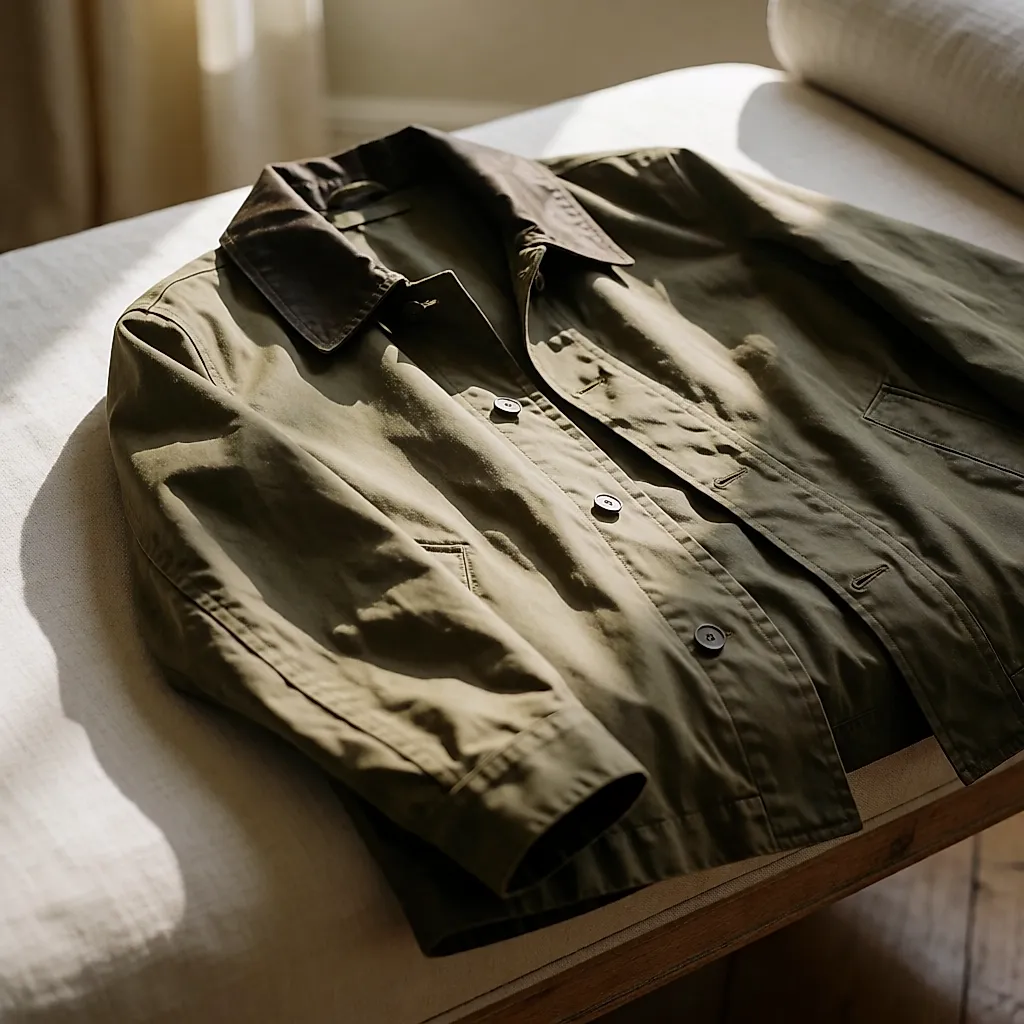
No need to book a full overhaul: touch up the tired areas once every autumn, and save the full re-wax for every two or three winters, when the piece has really lived. Adjust that rhythm to how you wear yours—a jacket worn every morning on the commute doesn't have the same life as one saved for three Sunday outings.
Choosing the right wax for the colour
This is where it can all go wrong. Dark wax on sand-coloured cotton can leave a brownish halo that is hard to remove. So look at the jacket before you look at the tin: with light cotton, ecru, beige or pale olive, you need a neutral or clear wax; on navy, black or bottle green, a dark wax works without drama and stays in keeping with the piece.
For products, Barbour Thornproof Dressing in dark brown suits dark fabrics; Fjällräven Greenland Wax block, which is clear, is kinder to pale cottons. If in doubt, test on a hidden area: inside a pocket flap, under the collar, on the hem. Two minutes of patience can save you an afternoon of regret.
How to do it without a hot iron
Start by dusting off: a soft brush or a damp sponge, warm water, then air-dry. Next, gentle heat — soften the block in a bowl set over hot water or with a hairdryer on a warm setting, and warm the fabric too so the wax sinks in rather than sitting on the surface. Apply in small dabs, in a thin layer, working it into the seams and dried-out areas, then wipe away any excess with a clean cloth. Hang it up and leave it overnight in a room at normal temperature: the wax carries on working by itself.
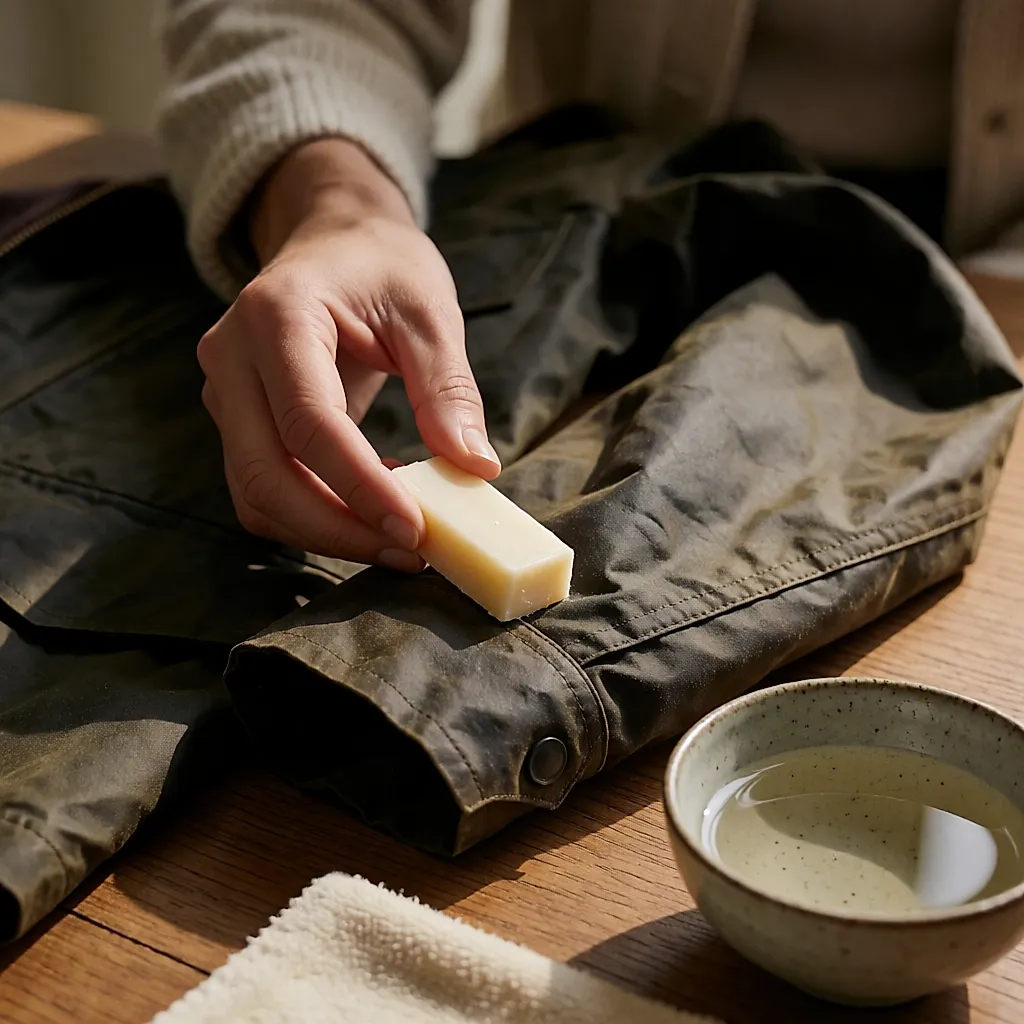
And that famous iron you see in tutorials? No hot iron, please: too hot and it burns the wax and marks the fabric — the kind of shortcut that costs you a jacket. Some blocks, including Fjällräven Greenland Wax, can be applied with a warm iron under baking paper, following the manufacturer's instructions; otherwise, the gentle heat of a bowl over hot water or a warm hairdryer remains the safest route.
Why it never goes in the machine
Washing and tumble-drying do exactly the opposite of the step above: they strip out the wax, soften the fabric and make it lose its shape. The jacket comes out limp, dull and no longer water-resistant. Dry cleaning is no better: its solvents remove the wax just as surely. So never machine-wash it: treat a mark locally with warm water and a brush, with a trace of mild soap rinsed straight away, then re-wax the area.
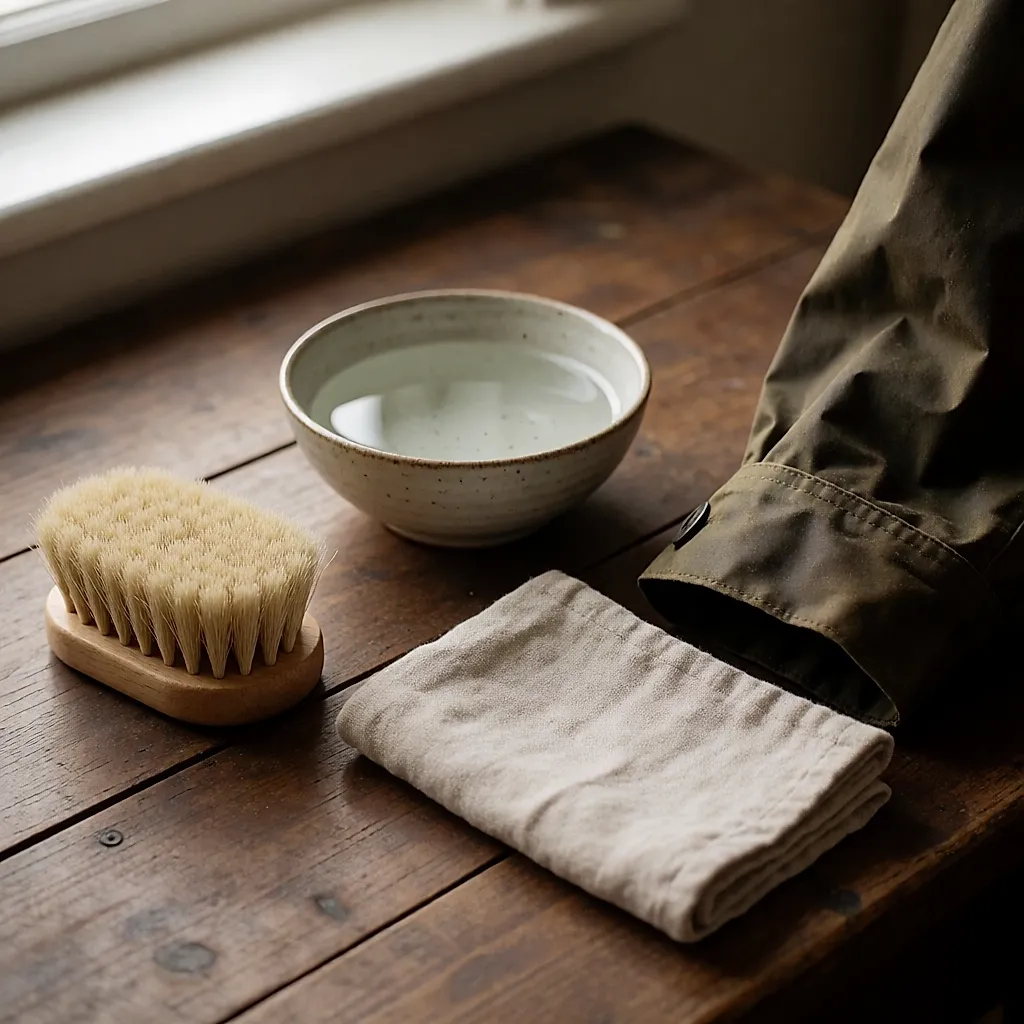
Before you reach for the block: test the wax colour on an inside flap; work with gentle heat, never a high setting; choose two thin coats over one thick one (any excess comes off on the cloth); leave to dry overnight, away from direct heat.
What a tin costs, and when to pay someone else
This is one of the cheapest wardrobe fixes going. A block or tin usually sits in the £10–£20 range, and one should last several seasons on a single jacket; the price moves with the size, the brand and whether you choose a block or a stick. You'll find them in outdoor shops, haberdashery departments or online.
Should you rush off to a workshop? Not necessarily. Some brands, plus a few cobblers or specialist alteration services, offer a full re-wax, more like £35–£80 depending on the piece and the provider—where such a service exists near you. At that price, it makes sense mainly for a jacket you love or a second-hand piece you want to rescue.
A well-maintained waxed cotton jacket gains character with age; marks at the cuffs tell a story, rain rings much less so. Ten minutes, a cloth and a block—far cheaper than replacing a jacket you still like.



Comments
Your opinion matters: rate the article, react and reply to comments.
Comments are moderated; AI-assisted comments are flagged. Text emoticons (8-), :-), <3…) are automatically shown as images.