
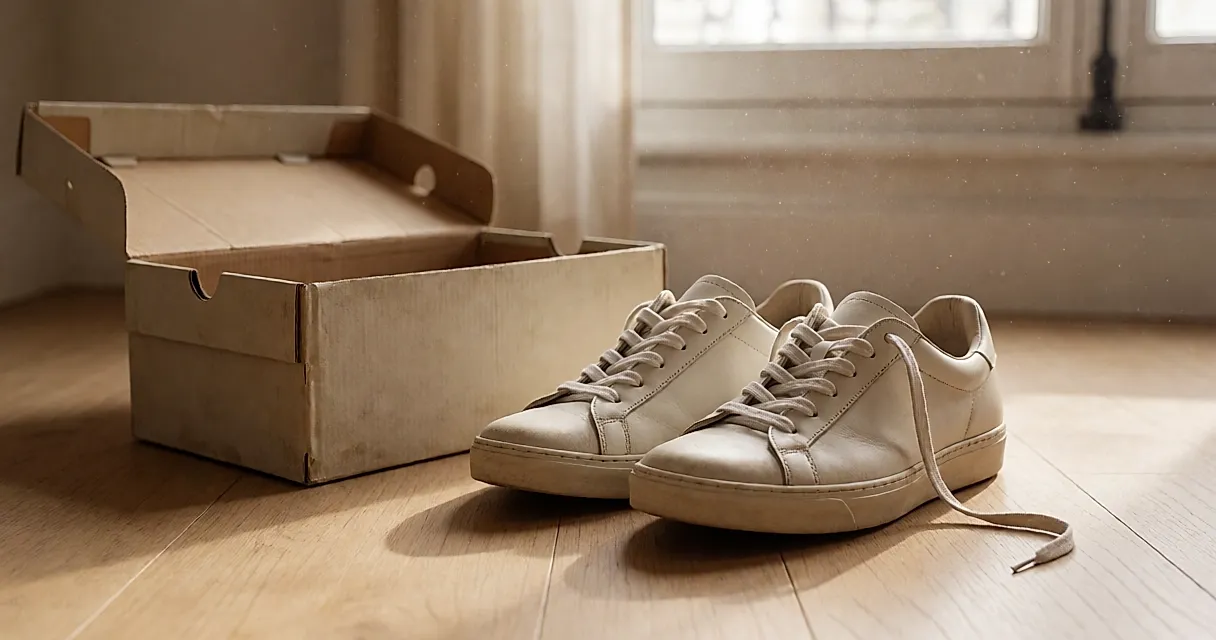
You bought them almost by accident, quite sure you'd be the only person wearing them. A few years on, there they are in the window a hundred metres from your flat, in three colourways, and the woman in the next flat along has an identical pair. Sell them, keep them, or shrug and wear them anyway?
What a reissue actually does to the original
The first reaction, when a pair you thought was rare reappears on the shelf, is to feel you've been had. In practice it's rarely that simple. A reissue doesn't replace the original: it puts it back into circulation, with its name, its codes, its history. Does it flatten the resale value of the old pair? Often not — the spotlight mostly reminds people the model existed first.
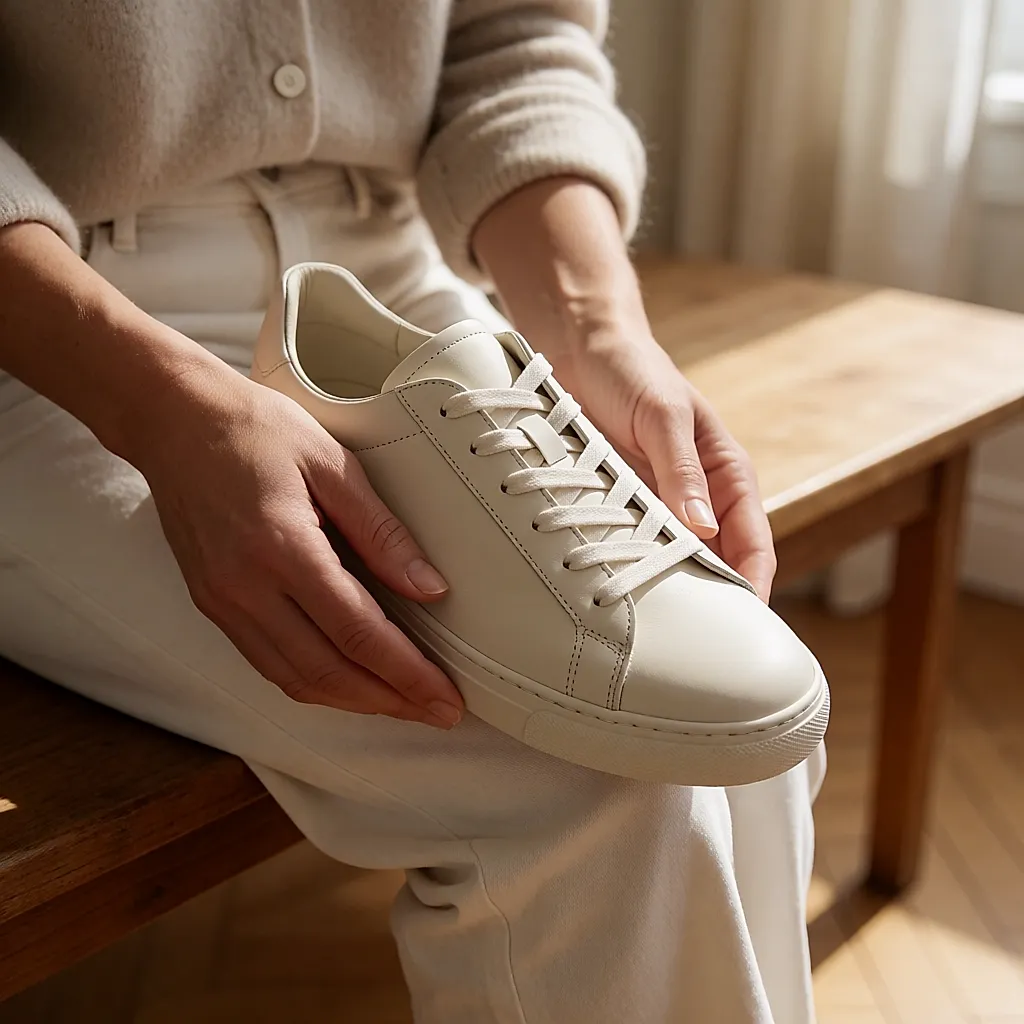
Except that "reissue" doesn't mean "exact copy". The shape can shift by a few millimetres, the leather can hang differently, the lining can be thinner, the sole softer. All of it invisible when you're walking, decisive when you collect. A reissue is an interpretation: it says what the brand wants to do today with a model from yesterday.
Hence the division of labour. The new reissue is the pair you wear, scuff, and take out in November rain without a second thought. The original is the one you look at, look after, keep in its box — sometimes never quite daring to put on.
The year now matters more than the model
The question is no longer "which pair?" but "which year?". Two pairs identical to the naked eye, ten years apart in production, don't fetch the same price: the release date has become the first criterion, ahead of colourway and ahead of size.
What gives it away? The article code on the inside label, the typography on the box, the proportion of the toe, the exact shade of the sole. And condition: a pair worn twice and a pair forgotten at the back of a wardrobe don't tell the same story, even at the same vintage.
Beware the pair that's "dead from being too new": some foams can degrade over time, even barely worn, depending on how they've been stored. Sole condition then counts for more than mileage.
And if your daily life means walking all day, a 1998 model with a tired sole isn't the fight you want. It's a collector's piece, not a Monday-morning shoe.
What to check before you get your card out
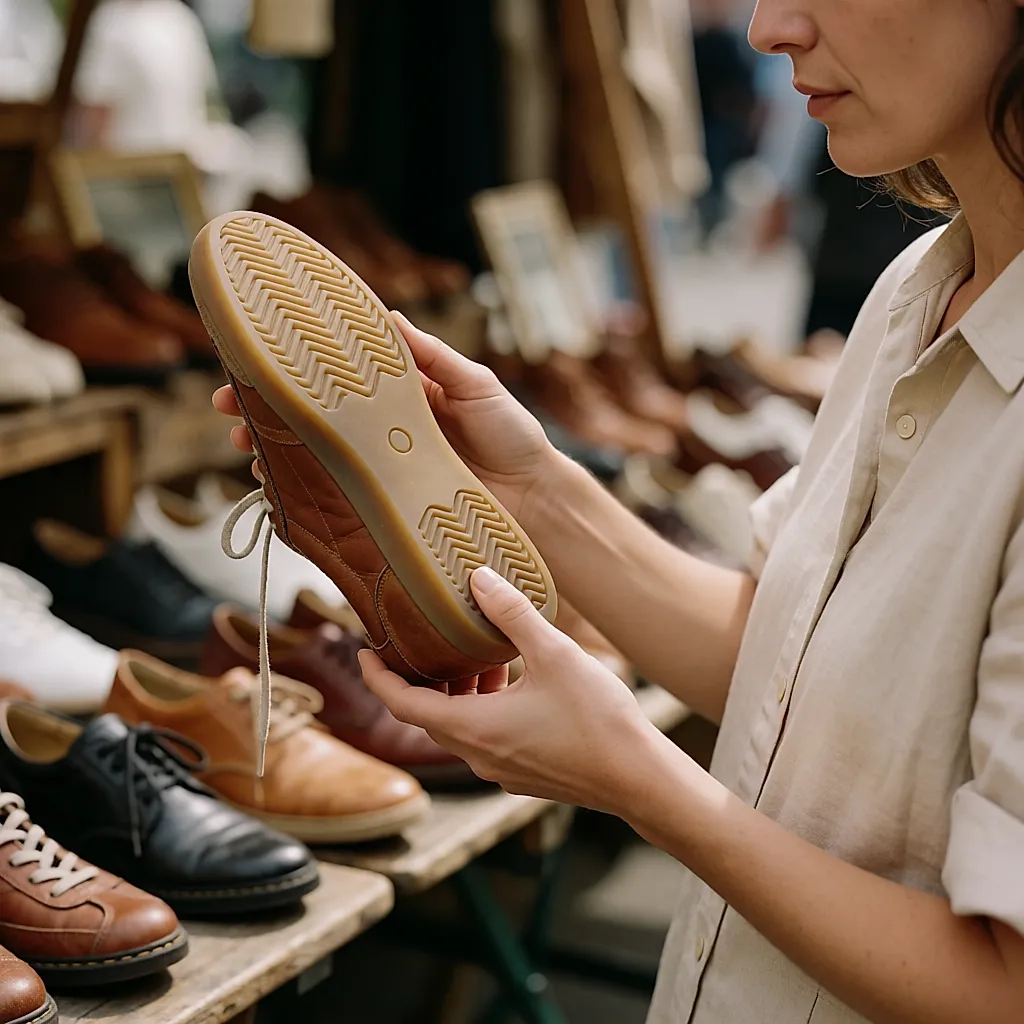
Three minutes in daylight. The sole first: yellowing can be cleaned, cracking can't be glued back. Then the leather: soft and matte is a good find; dry and shiny like plastic, be wary. Then the stitching, the inner heel, the wear under the foot. Listing photos always find the best light, never the most honest — ask for more.
Box, label, receipt: not out of archivist zeal, but because these can support the resale value, without guaranteeing a figure. A good pair without a box is still a good pair.
Three questions before you pay collector prices: am I actually going to wear them? Do I know the exact size, and that they fit true? And if I sell them in two years, to whom? If any answer wobbles, it's a good emotional buy, not a good buy.

Budget: what you pay for a reissue, what you pay for the original
Expect roughly £80 to £140 for a new reissue, in store or on the brand's own site, depending on the model and the material. An original in good condition, worn and lived-in, usually sits between £100 and £300 depending on vintage, size and how complete it is. Past £350 you're in a different category: original box, immaculate condition, rare colourway. These are rough bands, and they move with the city, the size and where you're buying.
Where to look, then? The brand's site and multi-brand retailers for new, with a guarantee and the option to return. Specialist vintage shops and second-hand fairs for the original, with the advantage of handling it before you pay. Peer-to-peer platforms, if you accept the postage costs and the wait for authentication. And the cobbler, that quiet hero: a resole often costs £50 to £100, sometimes less than a new pair.
So, reissue or original?
For wearing, it's settled: the reissue wins, with its new sole and its returns policy. For collecting, the date rules, and a complete original will stay ahead. In between there's the third way, the most sensible one — a reissue you wear, look after, keep for five or six years, and which may end up becoming your own vintage.
Because which pair actually gains value, in the end? The one that looks like you and sees you in real life: on a pavement, under a cloud, at a café table in October. The shop window already has the same pair. You'll have the scuffs.


Comments
Your opinion matters: rate the article, react and reply to comments.
Comments are moderated; AI-assisted comments are flagged. Text emoticons (8-), :-), <3…) are automatically shown as images.