
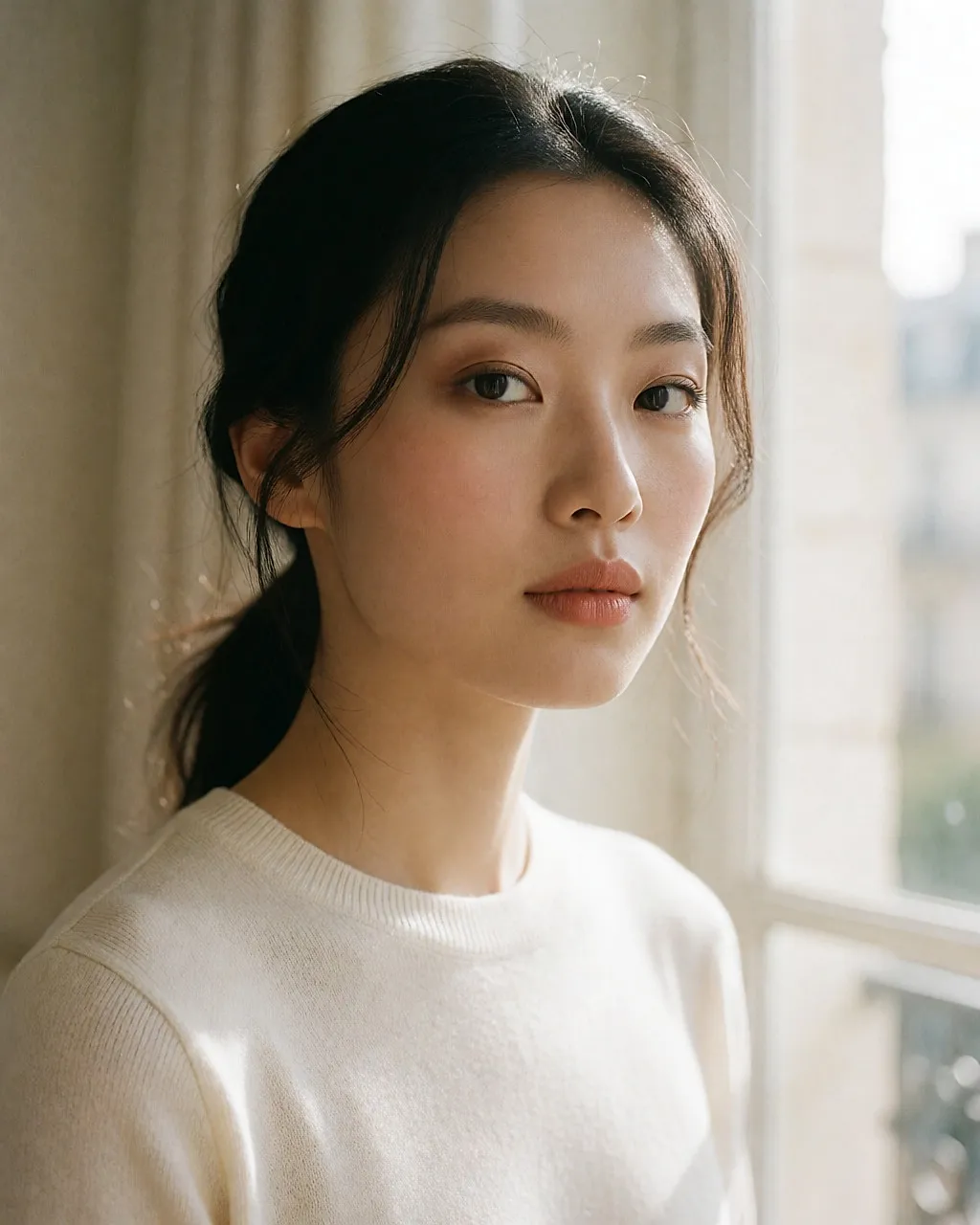
We all dream of nude makeup: fresh skin, bright eyes, that just-out-of-bed look... But it's not always easy to use only neutral tones, to strike the right balance between nude and completely bare, to know how to enhance your features, hide small imperfections while playing up your best points, all with natural colours that need to melt into the face as if they belonged there.
First, a quick point: if nude makeup relies on the tricky business of making it look as though you're not wearing makeup, that doesn't mean you use less makeup than for a classic look. The key lies in choosing the right shades and textures, and in the end, yes, you are properly made up — call it an optical illusion rather than a cheat; let's not split hairs...
The first big rule of successful nude makeup is flawless skin. After that, it's up to you whether you add an eyeshadow or a touch of gloss, but the skin itself must be flawless while still feeling lightweight.
No foundation that weighs the face down, no shade too dark and no cakey effect: choose a liquid foundation, ideally, that melts perfectly into the skin, then add a touch of barely tinted powder or, better still, translucent powder to set it.
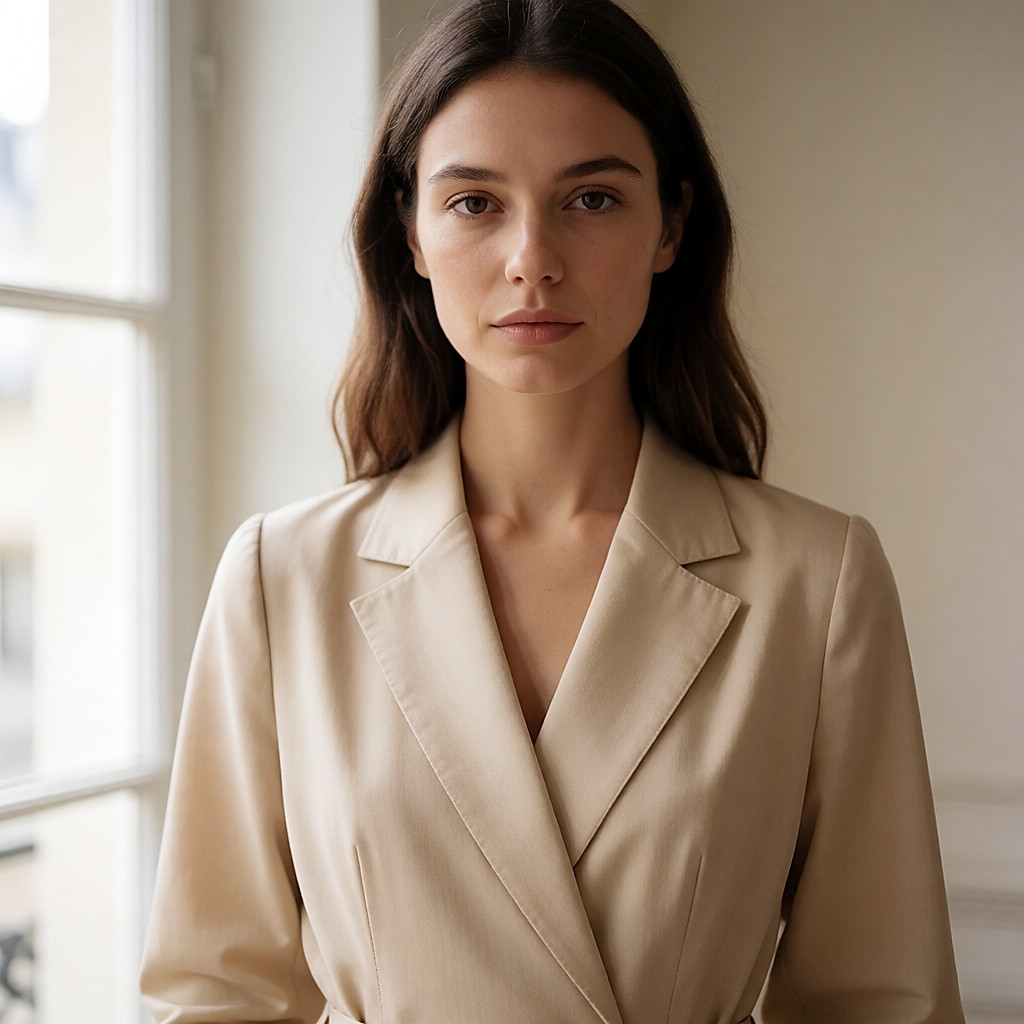
Your foundation colour should match your complexion perfectly: slightly rosy if your natural complexion leans pink, apricot if that suits you better — it's up to you, but choose carefully and never darker than your natural complexion: this is an essential step.
Apply foundation with your fingers, then gently press over the whole face with a makeup sponge to make sure no marks or unevenness betray your lovely, even skin.
Now is the time to conceal dark circles and any small imperfections.
Choose your concealer one shade lighter than your complexion, since it will brighten the shadowy areas such as the sides of the nose and under the eyes in particular.
Using a brush or your finger, apply the concealer and tap the area to blend the product into the skin. As for texture, it's up to you: cream or liquid, depending on your preference. For the best result, you can also lightly powder under the eyes where you applied concealer: the powder will set the concealer while making it invisible, provided, of course, that you choose a translucent one.
Another tip: when applying concealer, remember to blend it up onto the eyelid. You don't need to use loads, but it will help even out the eyelid, which can sometimes be marked by a few dark veins that dull the eye. This will brighten the eye while creating a good base for eyeshadow, if you want to apply some.
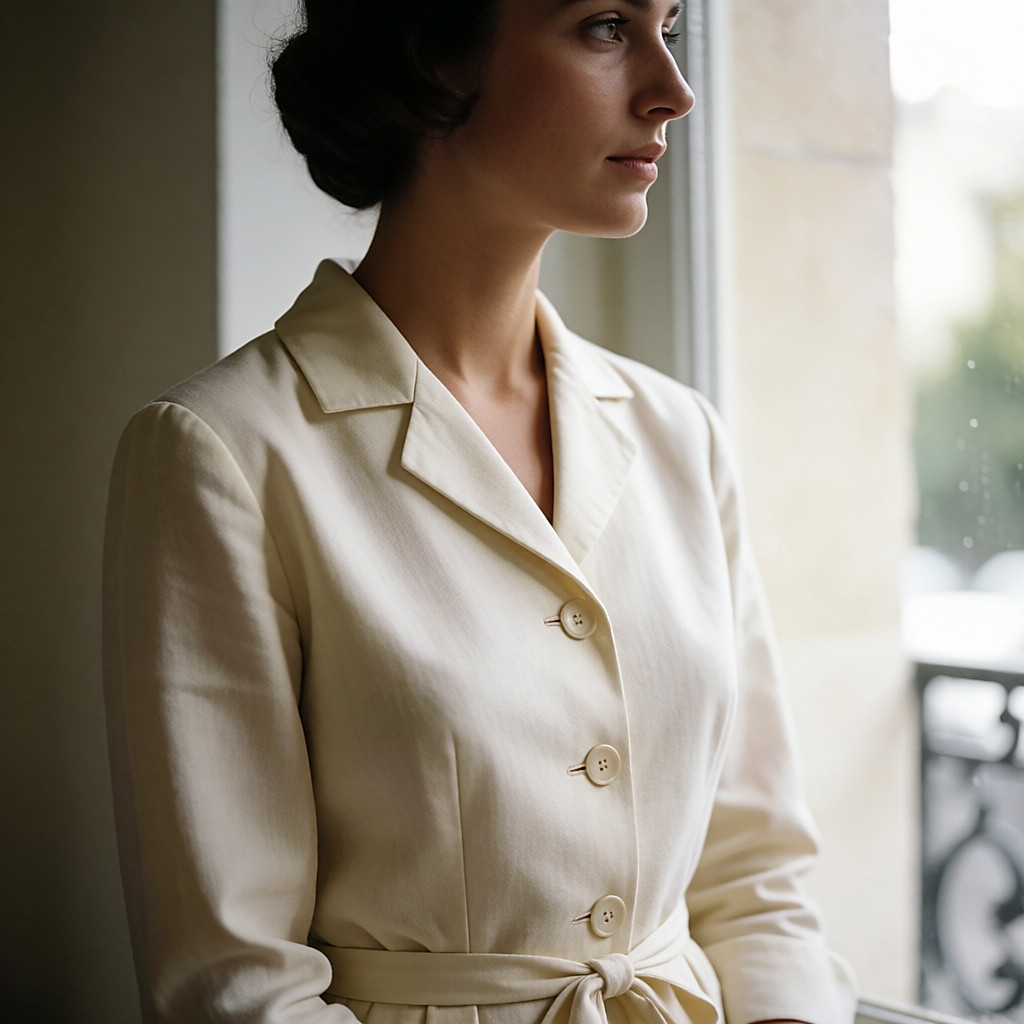
So now you have smoothed, even skin and a brightened eye area: you're on the right track.
Next comes powder. Even when you want a nude finish, it's important to apply a touch of powder over foundation to set it and improve its wear. It will also create the velvety effect of peach skin, always a plus. Choose the most natural possible, translucent — that's still the simplest — or, if you prefer tinted powder, make sure it doesn't darken your complexion, which must stay natural.
Apply it with a large powder brush, using it to remove excess and paying attention to hollow areas: sides of the nose, chin, to stop powder settling there.
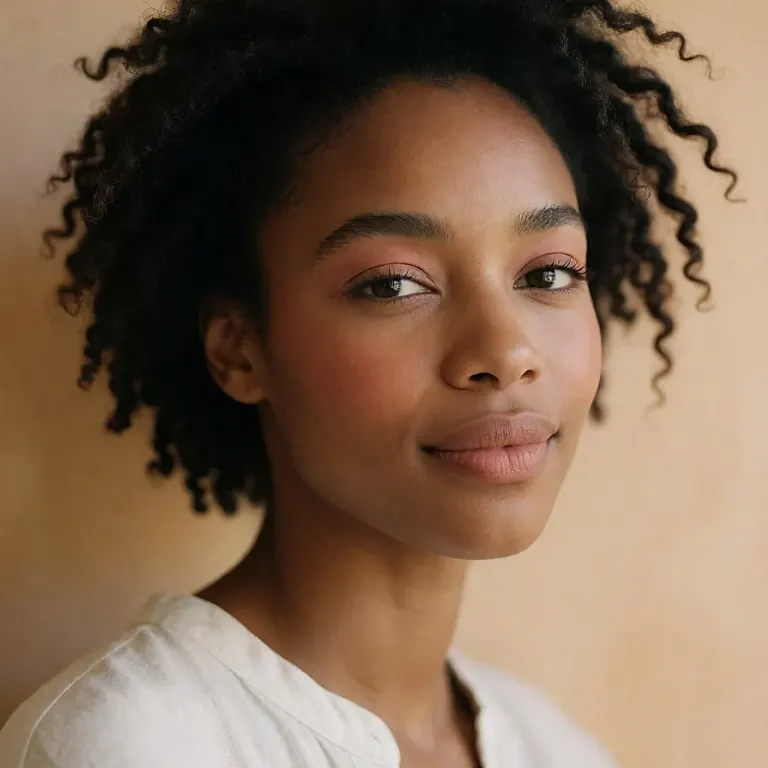
Now that your skin is flawless, add a tiny touch of blusher to your cheekbones. Choose rosy or apricot depending on your complexion, but very light, preferably not shimmery, and keep a light hand. The blusher should barely colour your cheekbones, for a healthy-looking glow, and give the face a little definition, but it should remain almost imperceptible.
For the eyes, remember to "comb" your eyebrows with a small brow brush, and fill any gaps with a pencil the same colour as your brows. They structure the eye area and, well cared for, give an impression of neatness and define it.
If you want to apply eyeshadow, go for neutral, light tones: apricot, pale pink, beige, taupe... Apply it mainly to the centre of the eyelid, a little as if you were creating a soft crescent. That way, the area near the brow stays neutral, but the eyelid picks up a little colour in the middle.
Add a touch of black, brown or clear mascara to open the eyes and enhance your lashes.
Finish with the lips, which you can quite happily leave bare. A hydrating lip balm can also do the job, or even a flesh-toned lipstick, a flesh-toned lip pencil, or a touch of barely pink gloss.
Nude is a major makeup trend, and one of those that never dates: brought up to date by fashion designers who "dressed" their models' faces in ultra-natural shades and translucent lips, the trend is also practised by ordinary consumers like us, with more or less skill. The principle is simple: yes, we wear makeup, but with the aim of brightening the face, heightening its natural beauty, accentuating the eyes, lips or cheekbones with neutral, soft tones, for a result that looks even truer than nature. That bare-skin effect, like "I've just got out of bed and I'm glowing", is what we're after.
The game-changing step: always test your foundation along the jawline, never on the back of your hand, and preferably in daylight. That's where you can see whether the shade blends with your neck — and whether it pulls too yellow or too pink, something the pale light of a bathroom never shows.
Budget
A full nude makeup look doesn't have to mean a celebrity-sized budget. Expect around £8 to £18 for a liquid foundation from a supermarket own-brand or pharmacy range, £7 to £15 for a liquid concealer, £9 to £22 for a translucent loose powder, £10 to £25 for a light, satin blusher, £7 to £18 for a neutral eyeshadow, £9 to £22 for a mascara, and £4 to £13 for a lip balm or barely pink gloss. High-end beauty counter brands can easily double those ranges, without the result always being twice as good: most often, it's the right shade and a texture suited to your skin that make the real difference. Look at travel sizes or sample tubes to try a shade without breaking the bank, and watch for sales on the products you already use.
Comments
Your opinion matters: rate the article, react and reply to comments.
Comments are moderated; AI-assisted comments are flagged. Text emoticons (8-), :-), <3…) are automatically shown as images.