

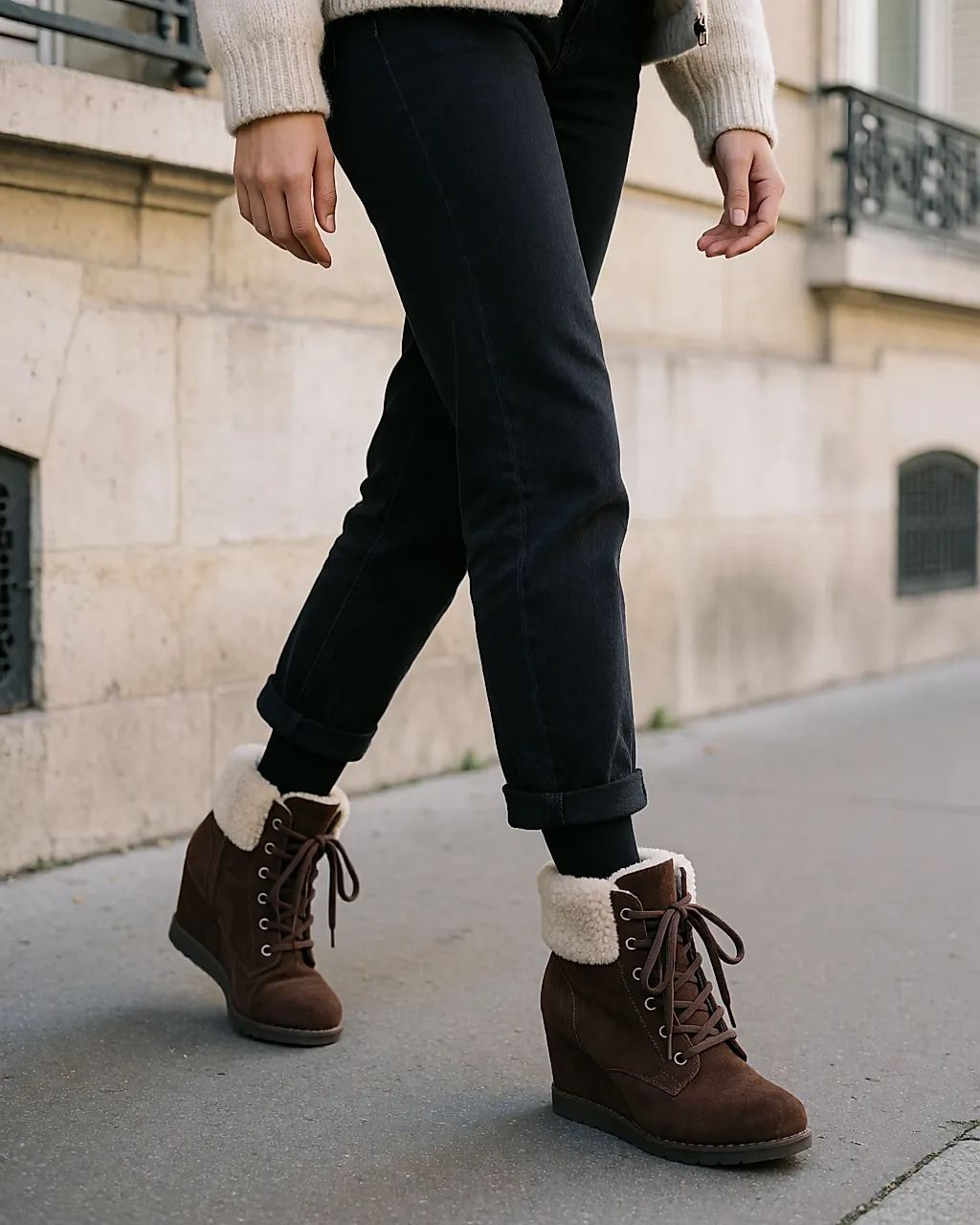
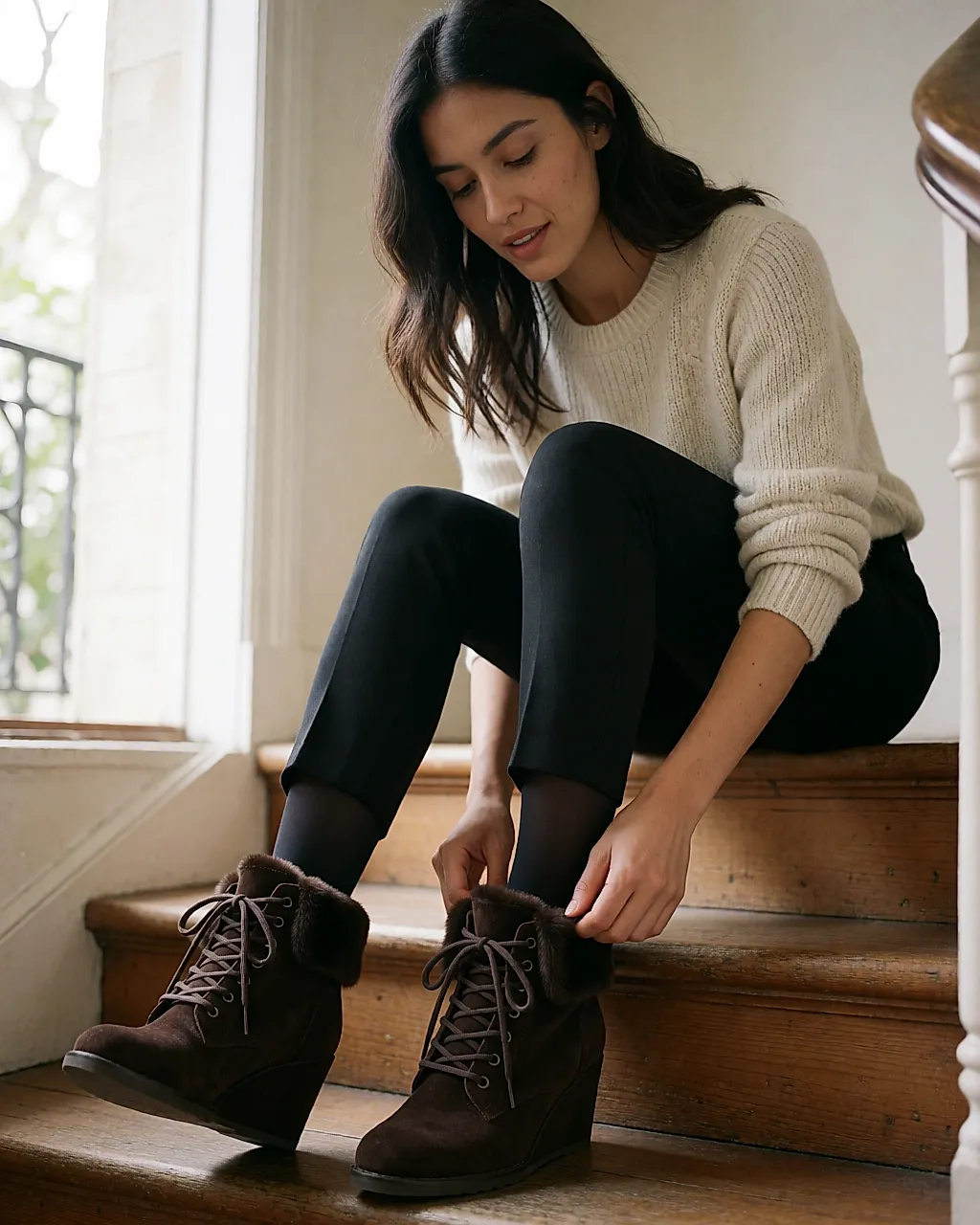
A friend messaged me last week: she'd spotted a pair of lace-up wedge boots but was worried she'd end up looking like an ice skater. Let's be honest, we've all wondered the same. In reality, it comes down to the style, the height and what you wear them with. Here's what to check before you get your card out.
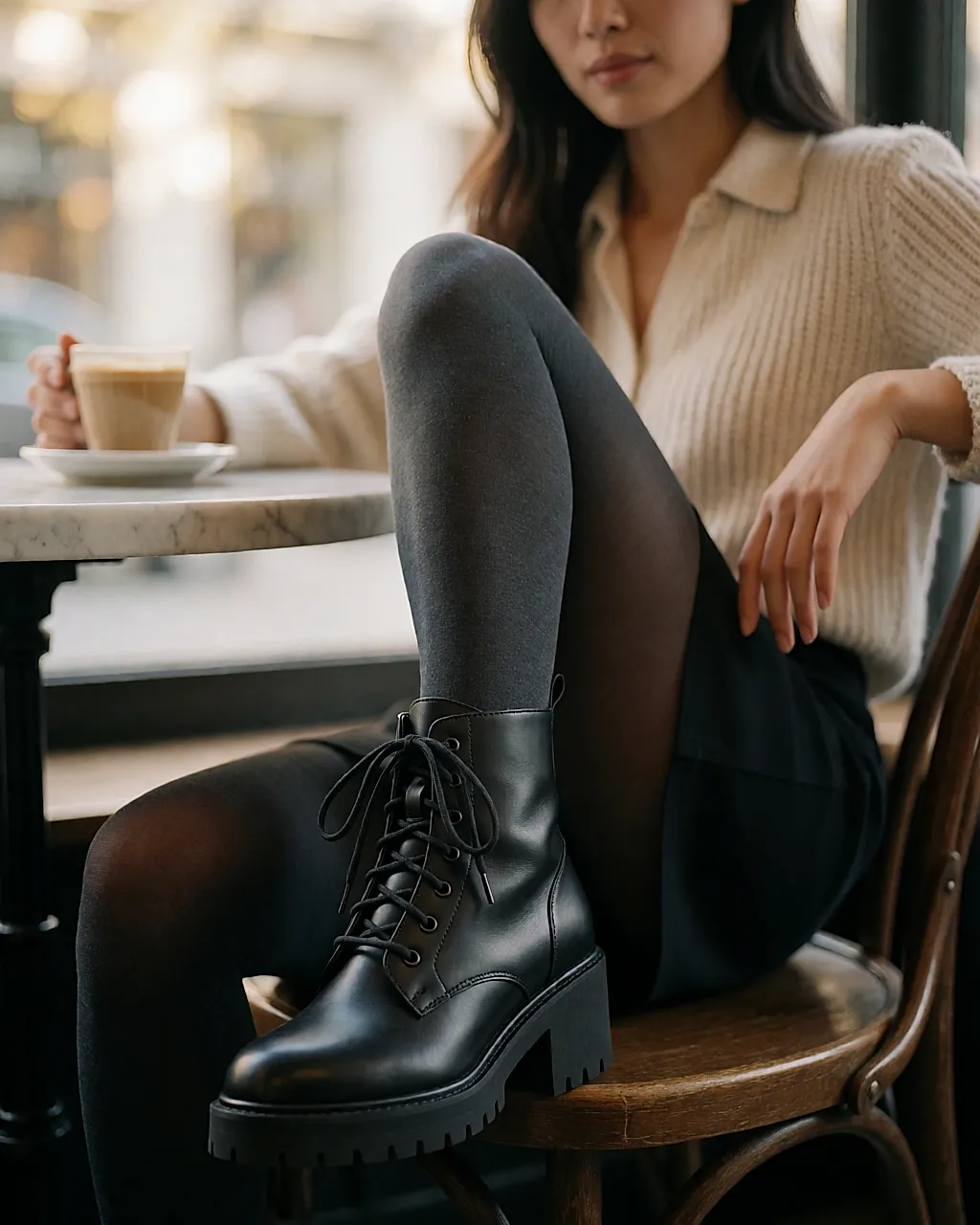
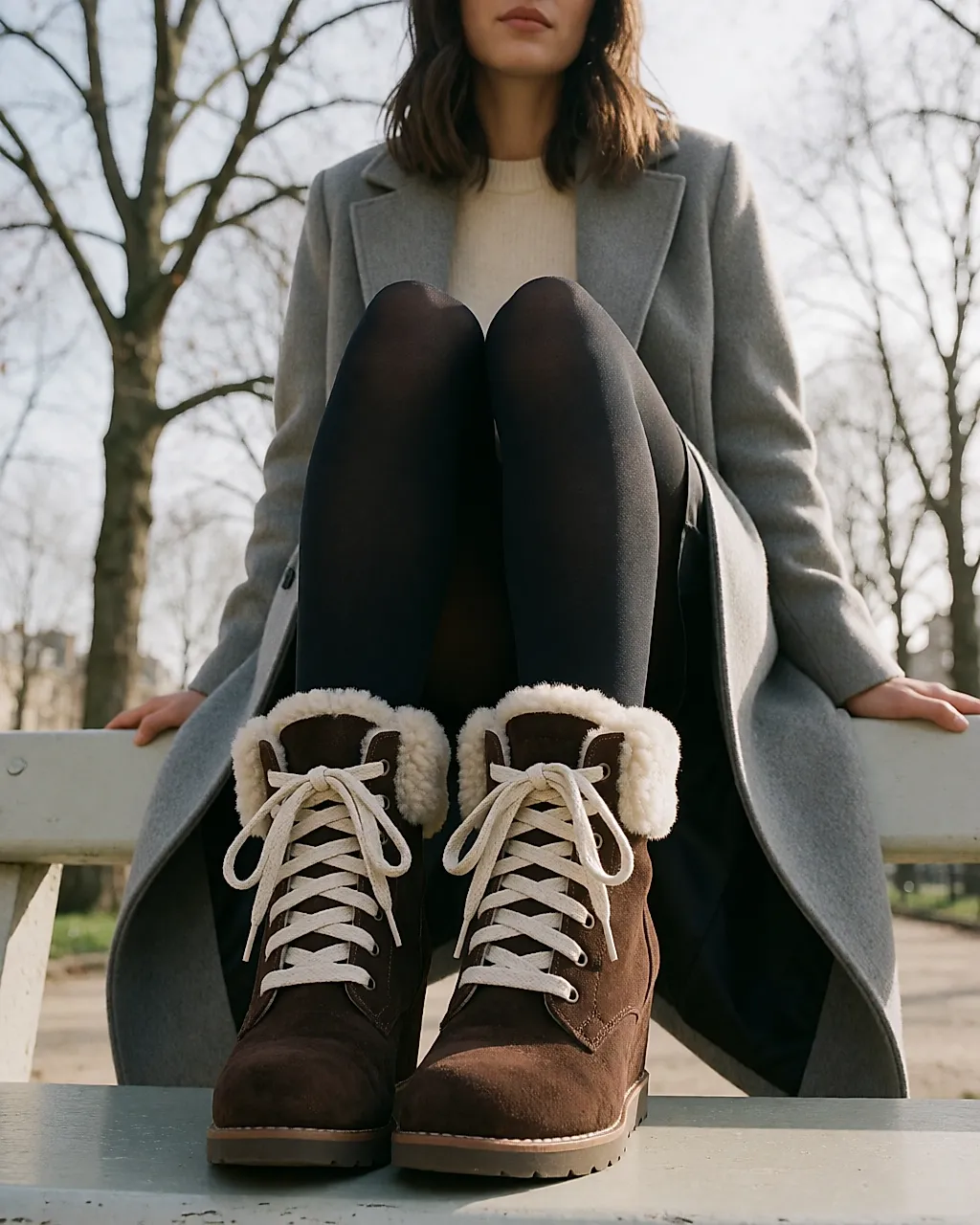
Why lace-up wedges come back every winter
The idea is simple: a wedge sole adds height without the instability of a stiletto, because your weight is spread across the whole surface of the foot. The lacing, meanwhile, lets you adjust the upper to your exact fit - handy if you have wide feet or a fuller calf. This combination has returned season after season for a few years now, in smooth leather, suede or nubuck, with chunky thick laces or fine lacing threaded under loops. A piece that plays on texture as much as on silhouette.
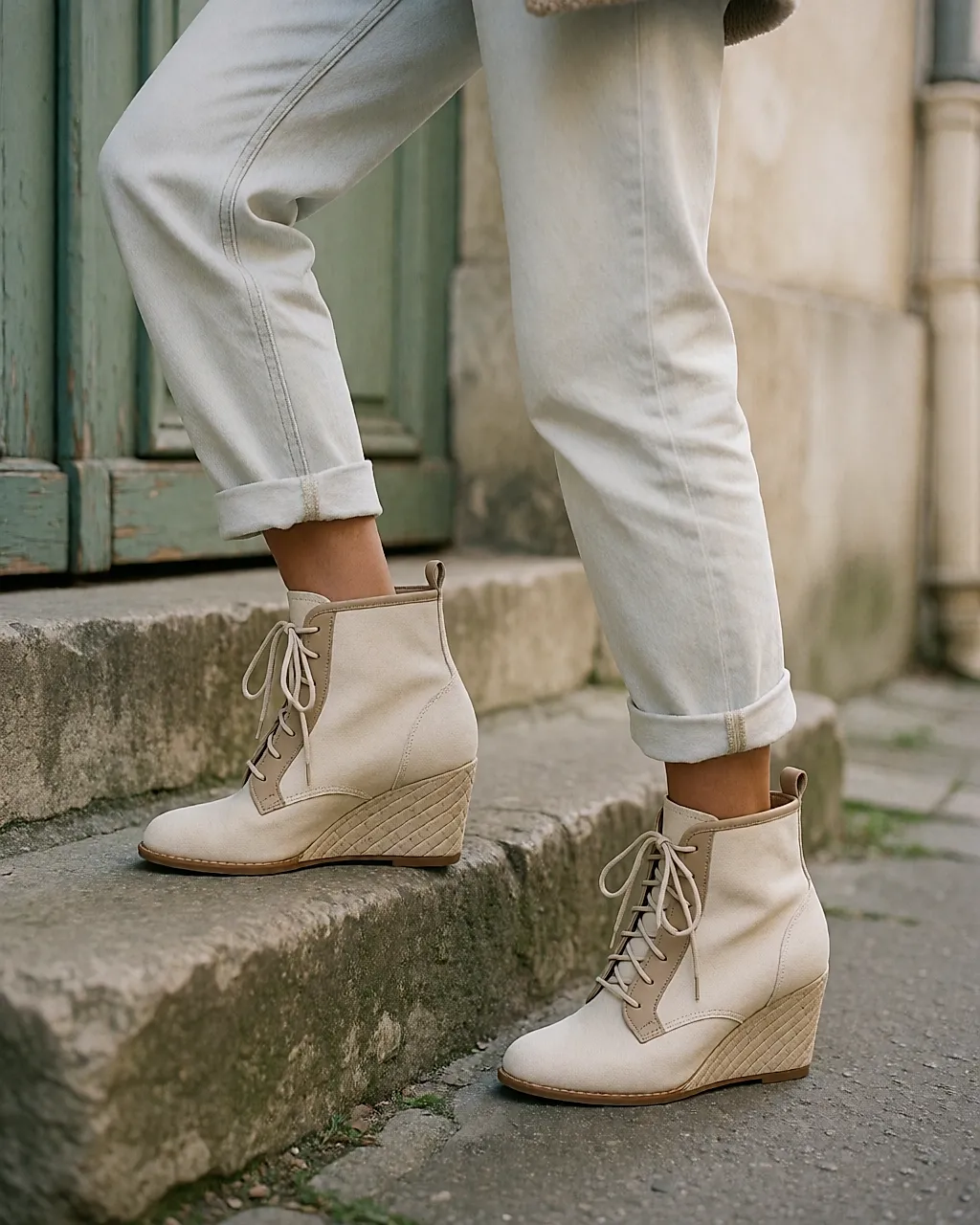
What to check in the fitting room
Three things, in this order.
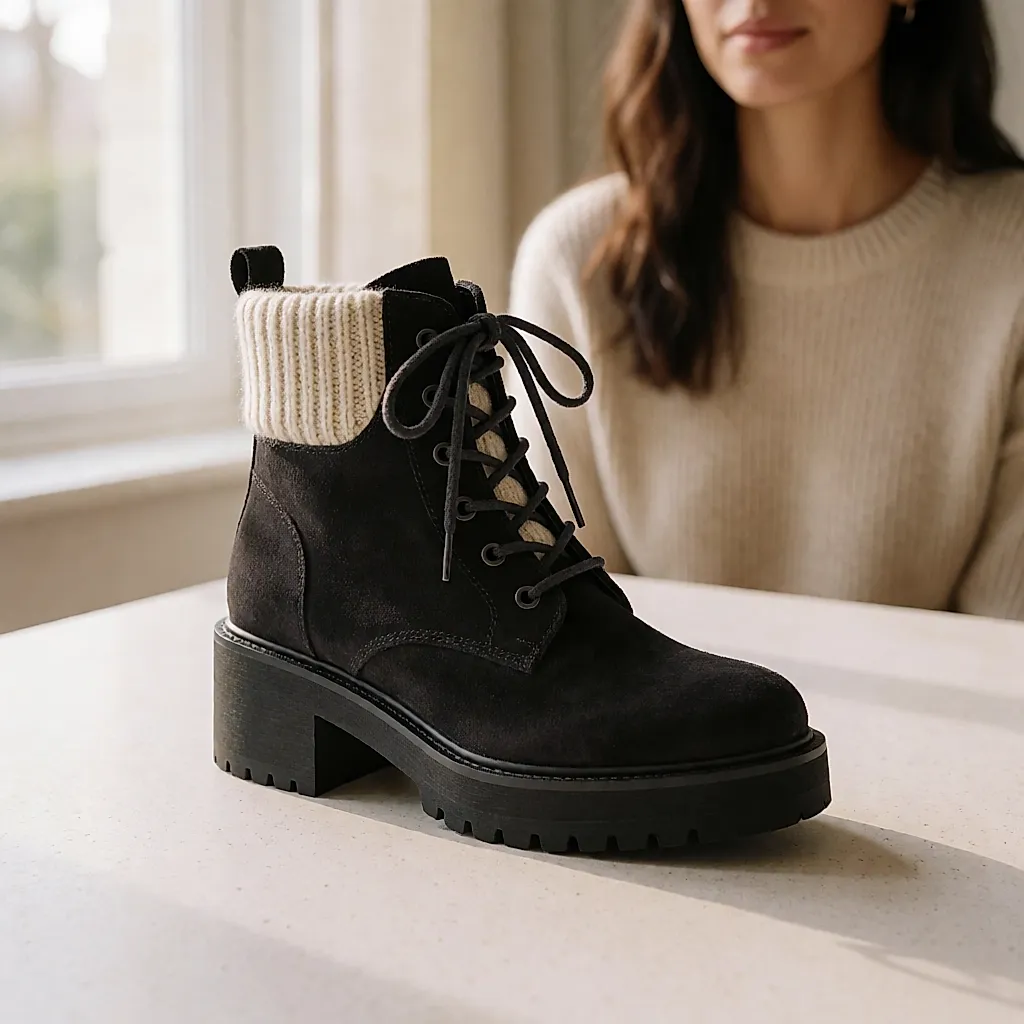
- The height. Between 5 and 8 cm, a wedge is comfortable all day. Beyond 9 cm, your ankle tires quickly if you walk a lot: better to save those pairs for short days.
- The lacing. Loops that are sewn on securely hold the tension. If the laces slip, it's often because they're too thin for the lining. Bend your foot: the collar shouldn't dig into your Achilles tendon.
- The material. Full-grain leather and nubuck breathe better, but need regular care. Synthetic costs less and stands up to rain better, except that it creases more where you walk.
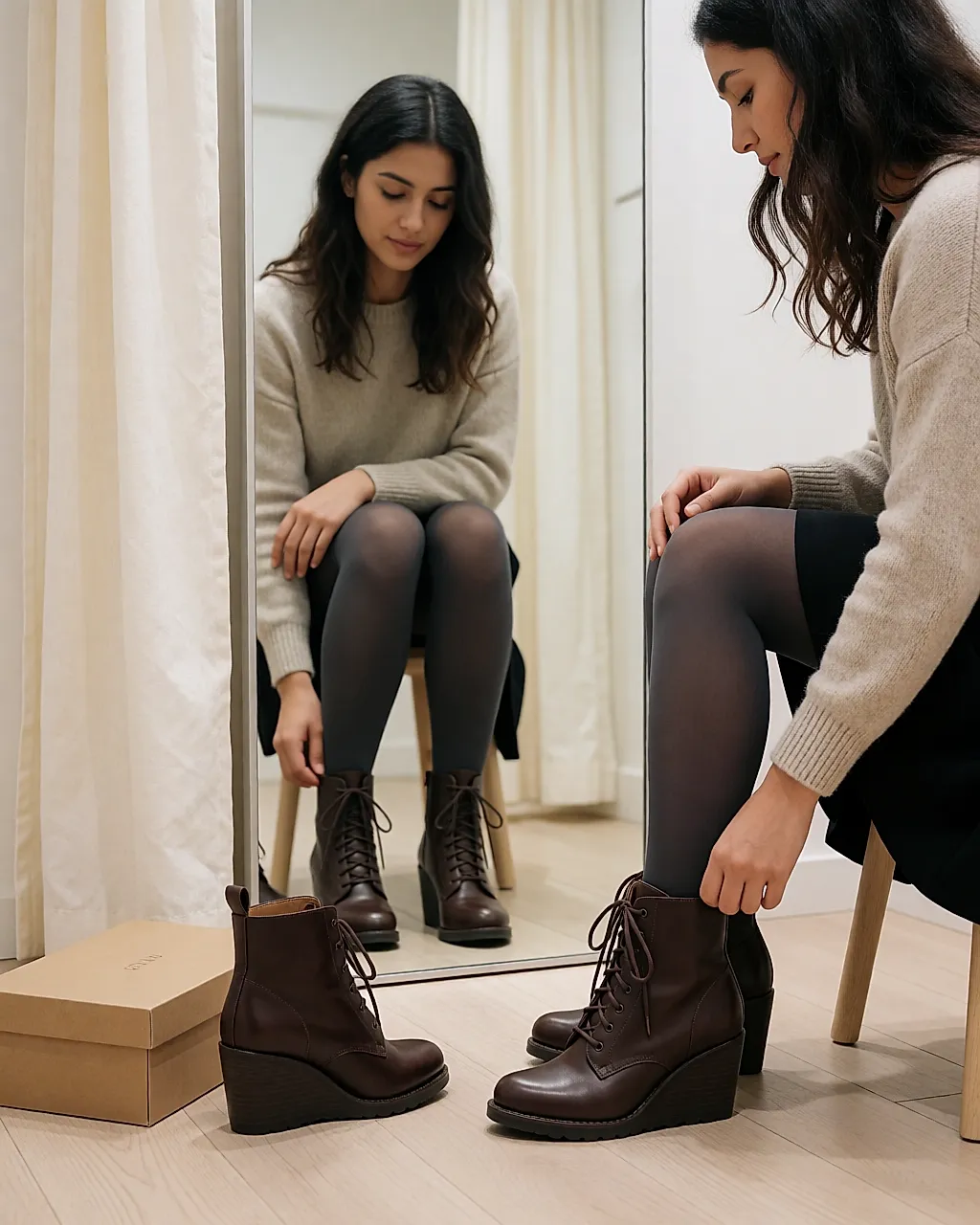
Try them on at the end of the day, with the socks or tights you plan to wear, and walk for ten minutes on a hard floor. It's the only way to know whether the sole moves with your foot or holds it back.

What to wear them with
Straight-leg jeans that stop at the top of the boot, a flowing midi dress, a short skirt with opaque tights: the three combinations that work best. The idea? Let the ankle breathe and avoid layering two strong volumes. A clean drape, a confident look, and you're done. You can accessorise with a statement belt or a textured leather bag, but avoid overly wide trousers, which break the line.
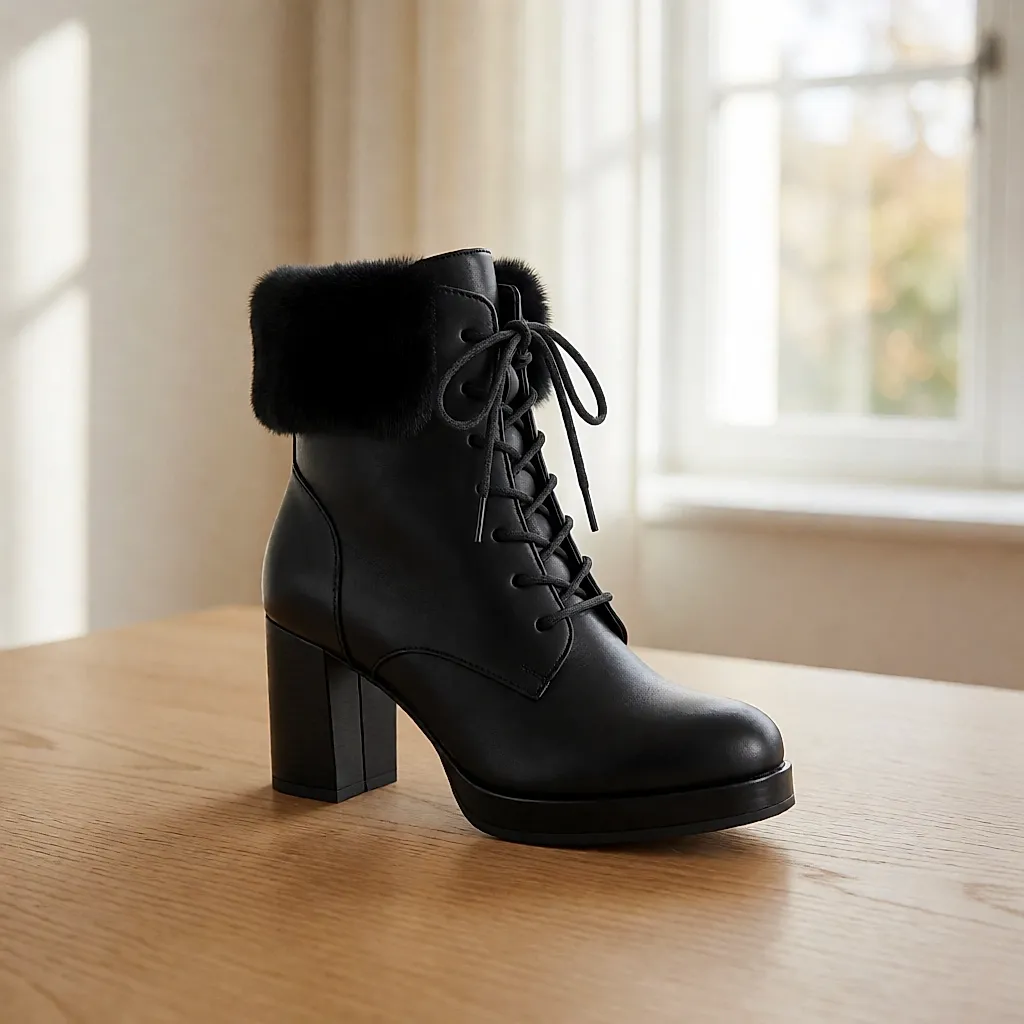
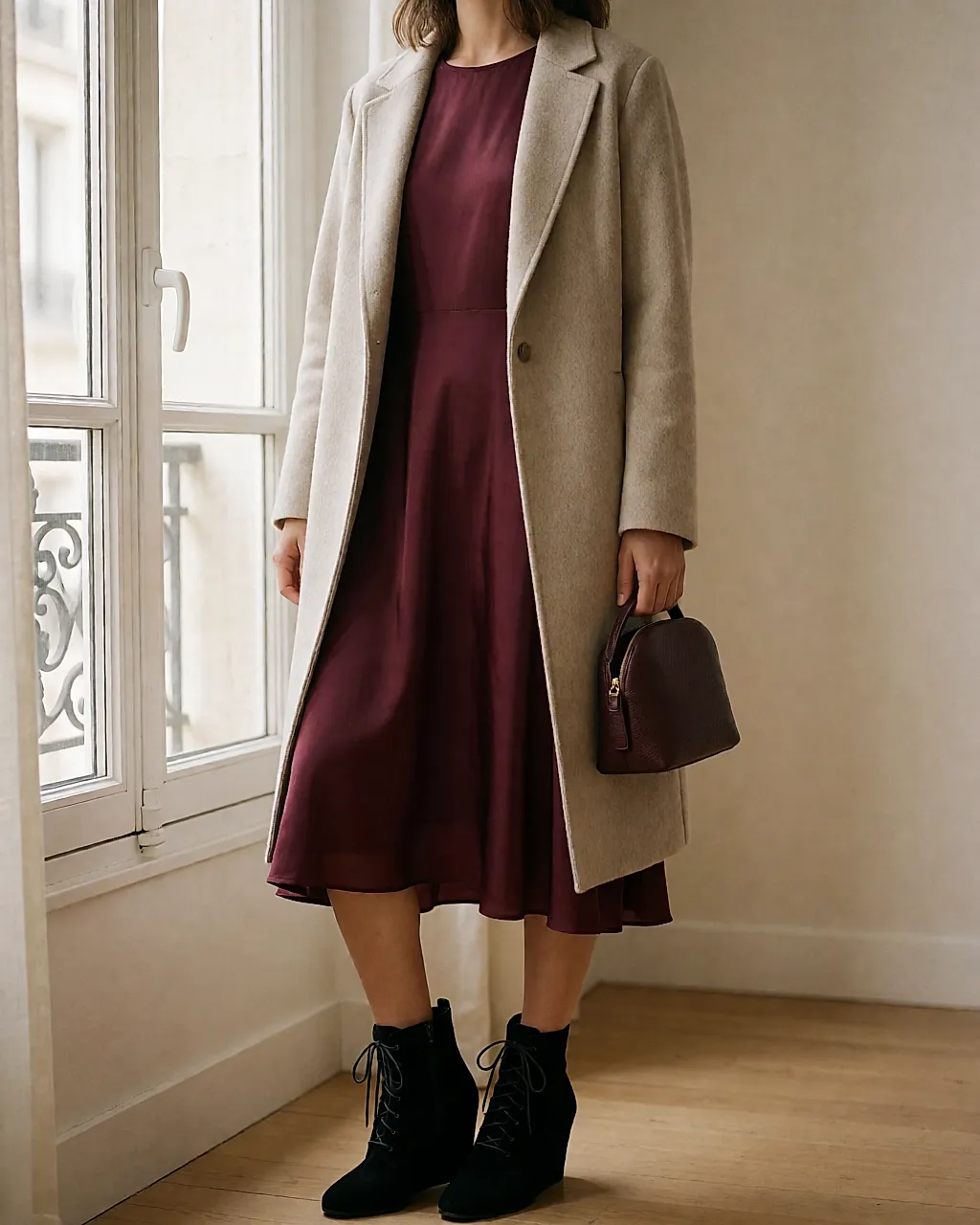
The trick that makes all the difference: on a new pair, have a cobbler fit a sole protector and a heel tap. Ask for the price: the tap protects the sole and the grip stops you slipping, especially on crepe soles.
Budget
Typical prices in the UK, excluding sales:
- £40 to £80: synthetic or reconstituted leather, fashion chains and department stores.
- £80 to £150: genuine leather, shoe brands, specialist online shops.
- £150 to £270 and up: European manufacturing, full-grain leather, replaceable soles.
- £15 to £70: second-hand, charity shops, resale platforms - a good option to try the style without spending much.
What changes the price: the upper material, where it's made, the type of heel (crepe, grippy rubber, wood-effect) and when you buy. Where to find them: in shops on the high street or in shopping centres, on brands' own websites, and from multi-brand retailers. For larger sizes, there's less choice in store: better to look online.
Sources
- French Law No. 2020-105 of 10 February 2020 on the fight against waste and the circular economy (AGEC law), which applies to the footwear sector.
- Regulation (EU) 2024/1781 establishing a framework for setting ecodesign requirements (EUR-Lex).
Comments
Your opinion matters: rate the article, react and reply to comments.
Comments are moderated; AI-assisted comments are flagged. Text emoticons (8-), :-), <3…) are automatically shown as images.