

You open your wardrobe on a September morning and nothing appeals. The jeans that fit too closely look dull, the pleated skirt looks too sensible, and the blouse you usually love has no one to play with. That is exactly when a boho wardrobe starts to look tempting—provided you avoid the camping-festival version, the one that smells of feather hair clips and fancy dress. The good news is that boho has changed, and it is far easier to wear. On the celebrity front, the outfits worn by Sienna Miller, Kate Moss and Vanessa Paradis show that a bohemian mood can still look elegant. There is one condition: do not pile everything on at once.
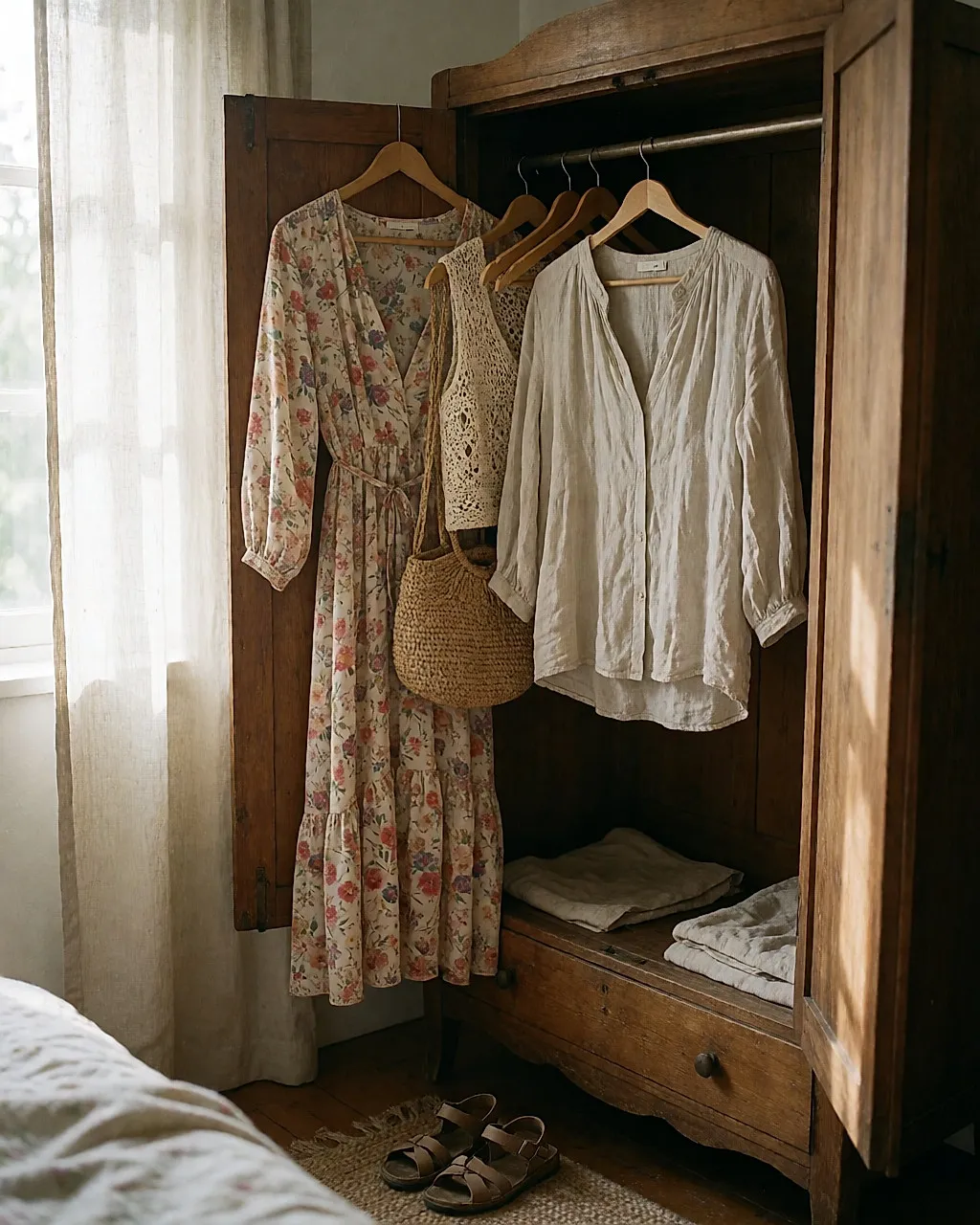
Why boho is back on the celebrity circuit
Boho's return to the catwalk owes a lot to the houses that have put fluid dresses, lace and layering back in the spotlight, with entire collections built on light fabrics and floating cuts. The trend then moved from the runway to the street, and from there to celebrity outfits: the fluid dress, the crochet cardigan and the scarf in the hair have all reappeared, without tipping into costume. Look at Lou Doillon or Sienna Miller and the mechanism is often the same: one very elaborate piece, and everything else in retreat. The principle is the one we had 20 years ago—a free, feminine mood that never feels stiff. What has changed? The dose.
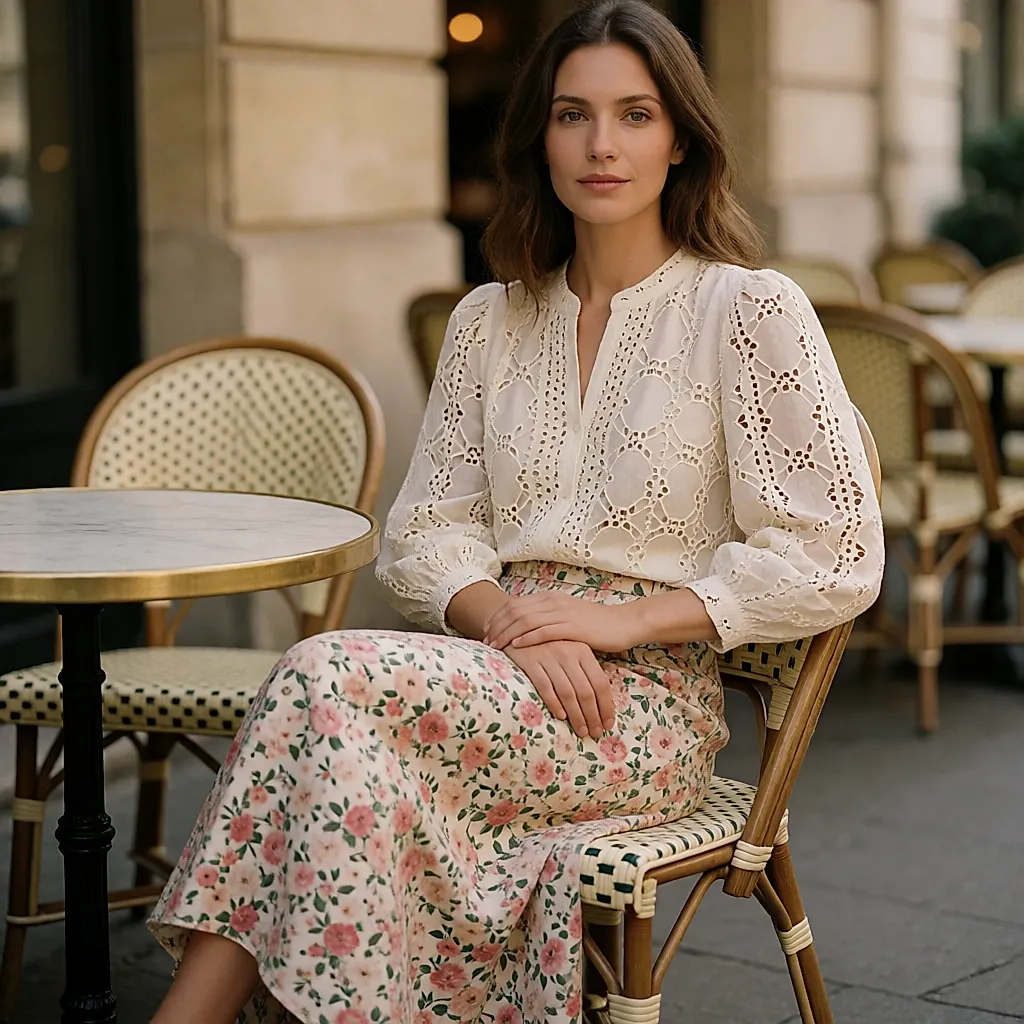
The star rule is one piece, not ten
Boho's trap is accumulation. One statement piece is plenty: a long floral-print dress, a balloon-sleeve blouse, a crochet cardigan. That is the lesson from Kate Moss and Vanessa Paradis. On them, boho works because there is always one strong element, never ten. The rest of the outfit stays sober, understated, almost basic.
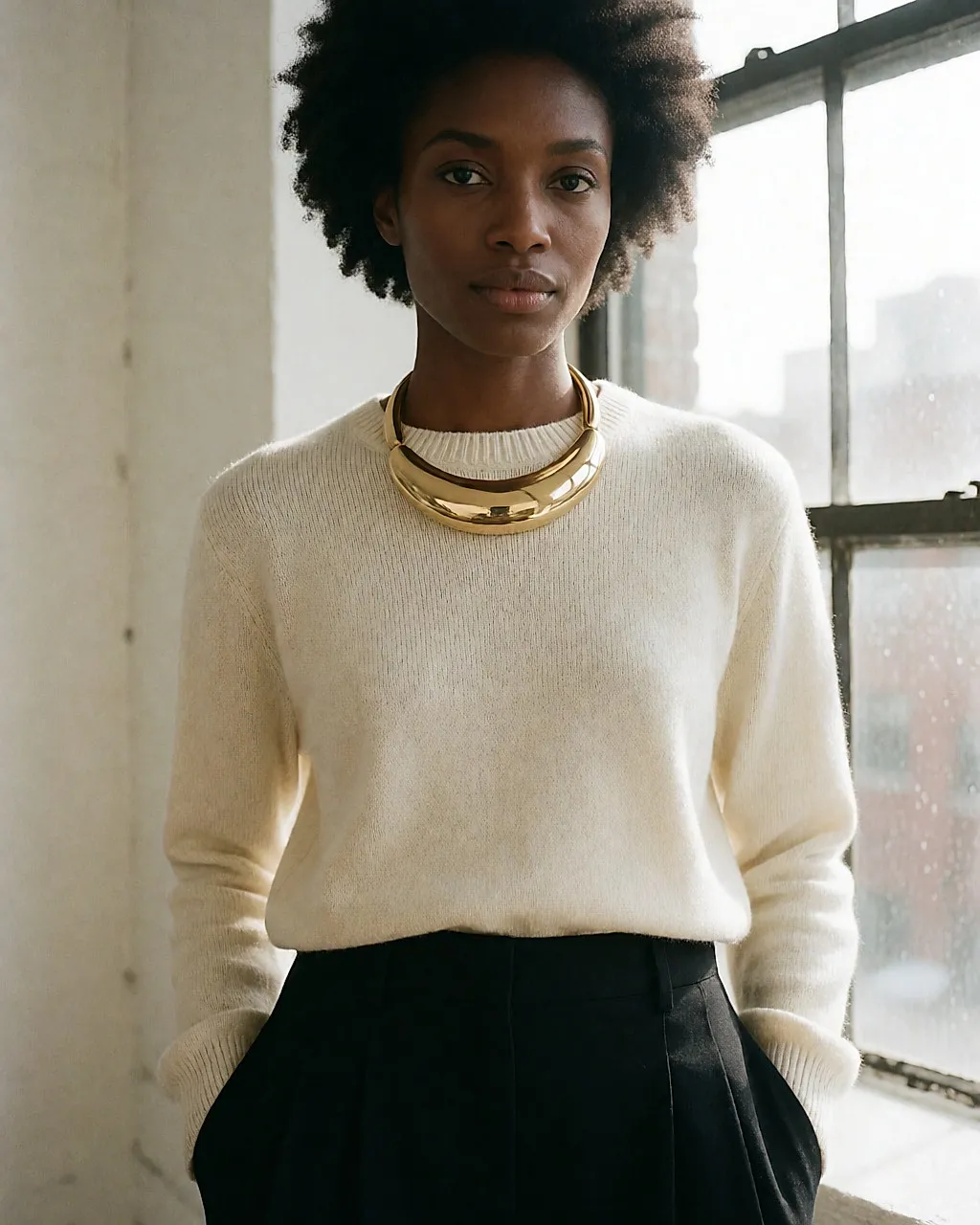
Fabric is all about the drape. Cotton, linen or fluid viscose move with you; shiny polyester breaks the effect and freezes the silhouette. As for cut, aim for controlled looseness: a loose top with a cleaner bottom, or the other way round. That contrast prevents the sack effect, which is always a risk when you put two generous volumes together.
With layering, a belt is your best ally over a maxi dress, and a fine cardigan over a summer dress does the job without weighing you down. For accessories, a scarf tied in the hair, flat fringed sandals or a raffia bag are enough to set the tone. It is Sienna Miller's approach: one accessory does the talking, and everything else listens.
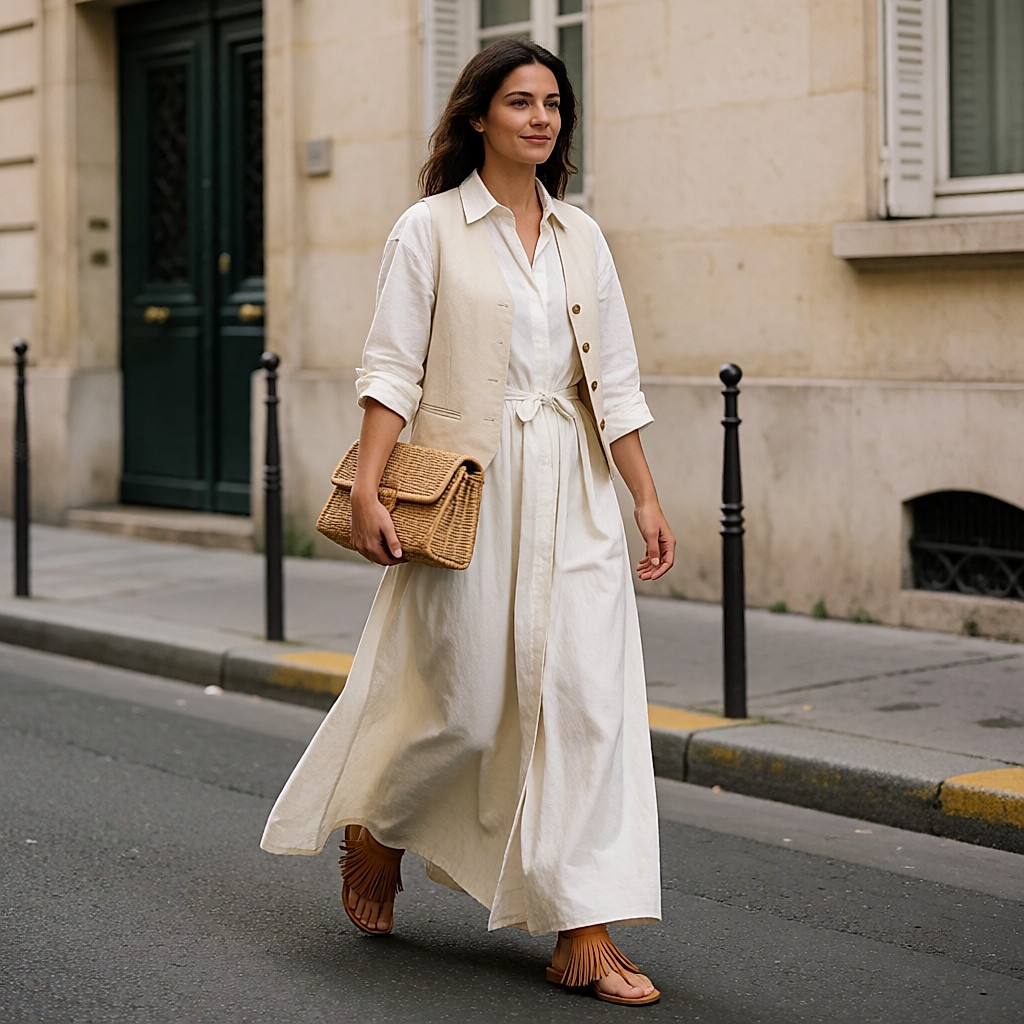
Three ways to get the balance right, as seen on the stars
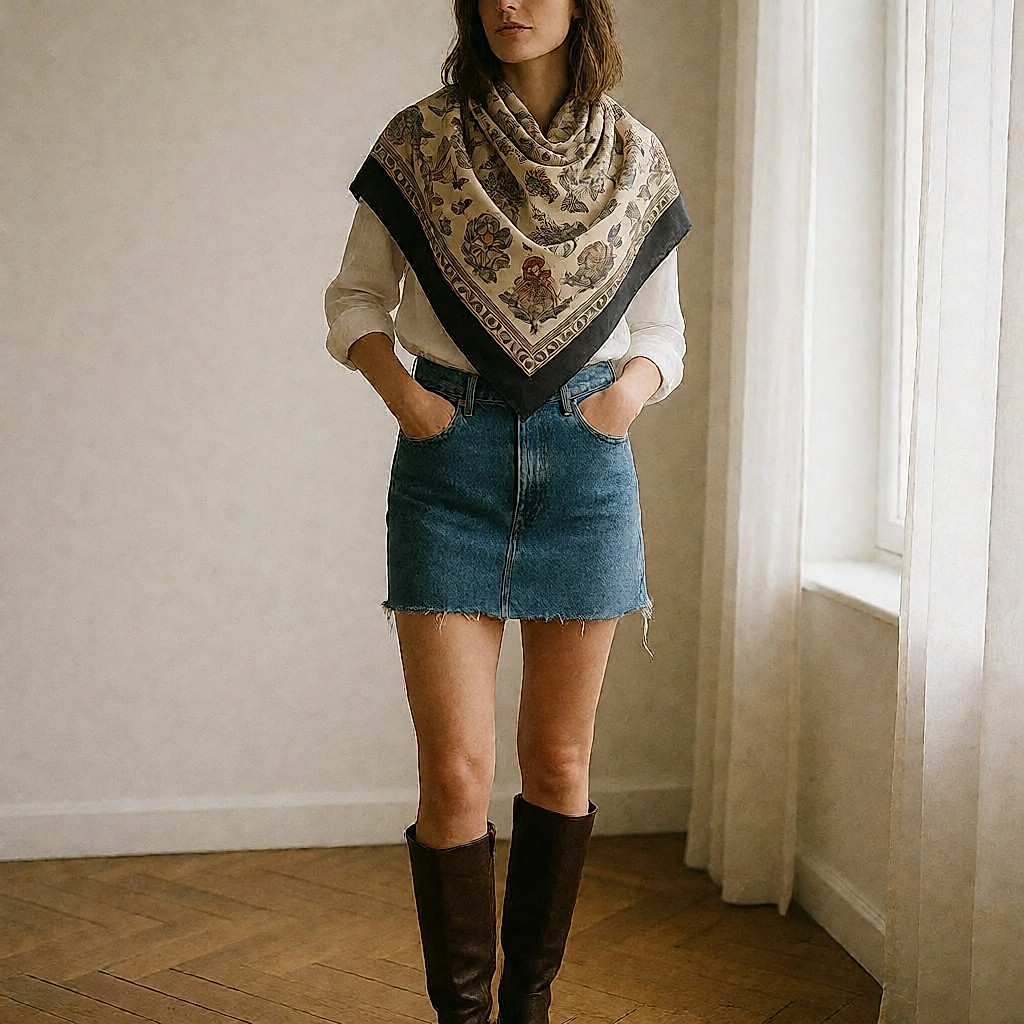
First option: minimal boho. A floral blouse with raw denim, or a floral dress with ankle boots. One boho piece at a time; the rest of the wardrobe stays basic. It is the easiest version to wear every day, and the one that forgives the most mistakes. Vanessa Paradis offers a good example with her floral blouses and no-fuss jeans.
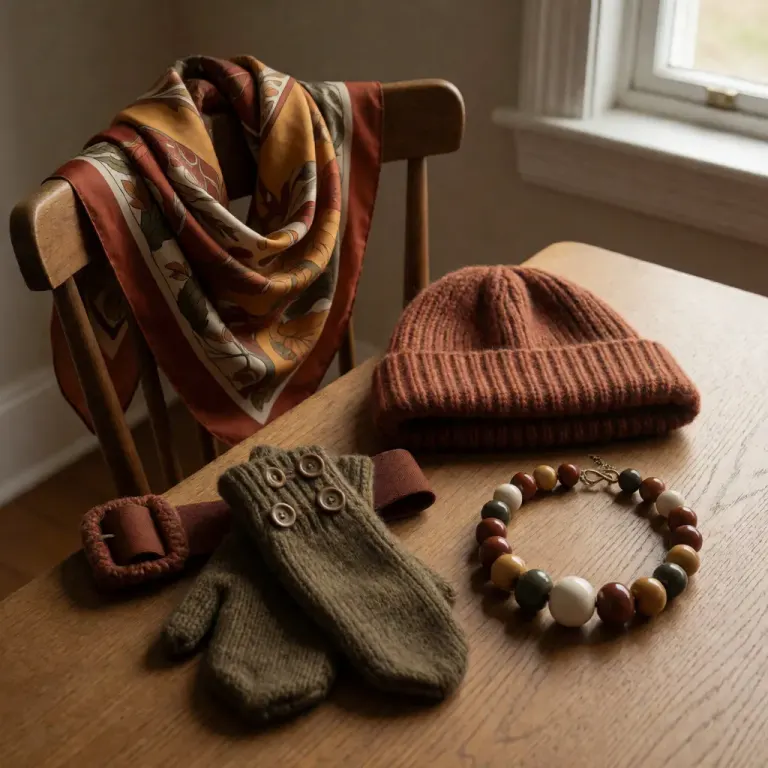
Second option: one strong accessory. Large hoop earrings, medallions or retro prints are enough to accessorise a plain outfit without overloading it. Again, one standout element, not three. The jewellery does the work, and the outfit simply follows.
Third option: the festival formula. Distressed shorts, a cropped top, rugged boots and a colourful scarf. Simple, comfortable and effective—but also the most rule-bound, so it is best kept for days when you are happy to lean into the cliché. Kate Moss remains one of the most cited figures for this look, which is probably why it is so hard to copy without ending up in costume.
The mirror test. Before you go out, take off one accessory. If your look still stands without it, you have got it right. Boho rarely forgives accumulation.
How to wear it day to day
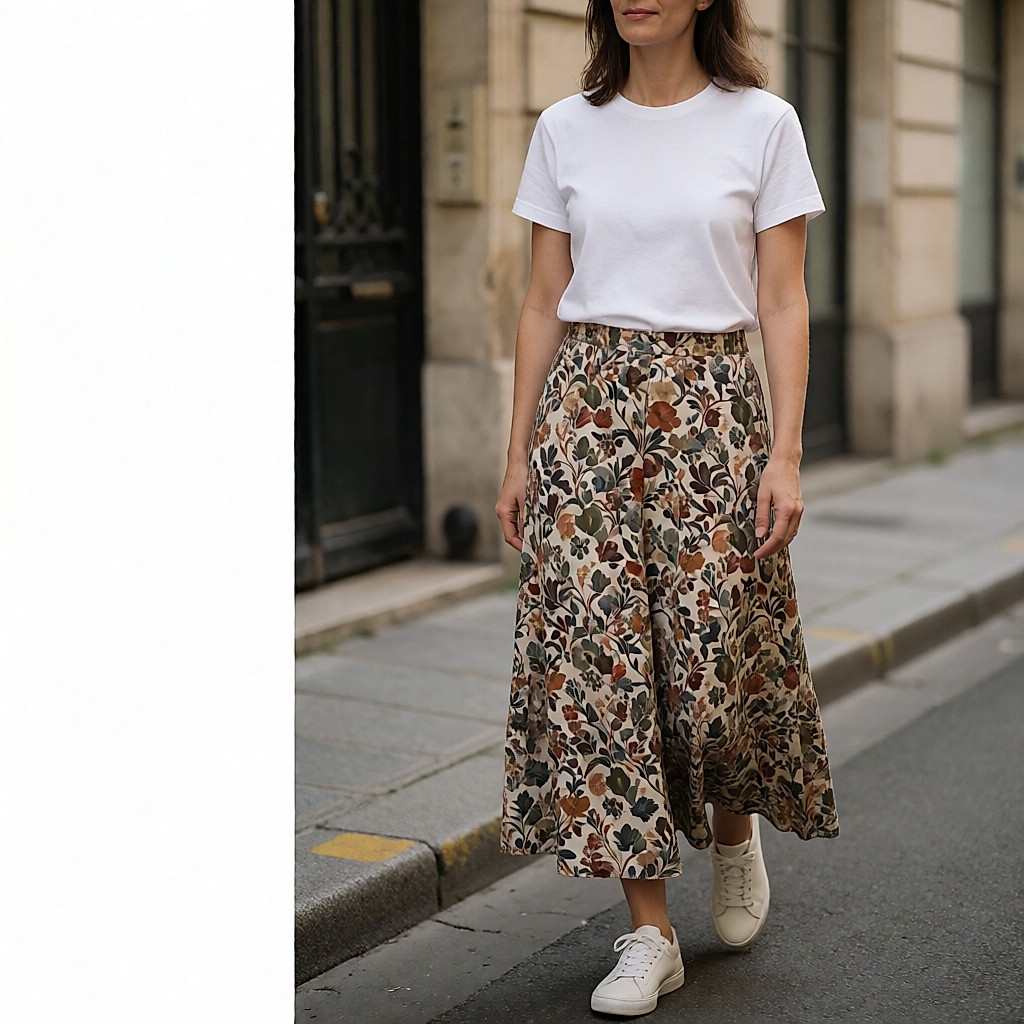
There is no need to wait for a festival, or to have a star's wardrobe. A long skirt worn with a white T-shirt and trainers works midweek, in the office and on Saturday. An embroidered blouse with straight-leg jeans goes almost anywhere. The key is to add boho in touches—a print, a texture, a piece of jewellery—but not all three at once.
The most useful approach is to build your outfit around one strong texture and keep everything else plain. A capsule wardrobe works well with two or three well-chosen boho pieces, rotated with your basics. You are not trying to look like a star; you are looking for the piece that makes you want to go out.
Budget
I have not tested these pieces one by one: the ranges below are broad indicative UK prices, not product-page quotes. They vary according to fabric, location and where you shop on the price scale.
- Cotton or linen blouse: around £20 to £50 on the high street, £70 to £180 from a brand.
- Long printed dress: £25 to £75 in accessible ready-to-wear, £8 to £35 second-hand.
- Ankle boots or boots: £50 to £150, depending on the leather.
- Flat sandals: £15 to £60.
- Costume jewellery: £8 to £35.
Second-hand—charity shops, resale platforms and clothes swaps—remains the best hunting ground for boho: pieces tend to be more detailed for less money, and it is also the lower-impact route. If you buy new, choose organic cotton certified to GOTS: the label guarantees a proportion of organic fibres and regulates chemicals throughout the production chain. Linen is another strong option, and in terms of how it feels, little beats it.
The compromise? These fabrics cost more and crease more—unironed linen is obvious. And linen grown far from Europe carries a transport footprint that counts. European manufacturing or a traceable material remain more reliable markers than a 'natural' slogan printed on the label.
Sources
- Global Organic Textile Standard (GOTS), public reference for the label.
Comments
Your opinion matters: rate the article, react and reply to comments.
Comments are moderated; AI-assisted comments are flagged. Text emoticons (8-), :-), <3…) are automatically shown as images.