
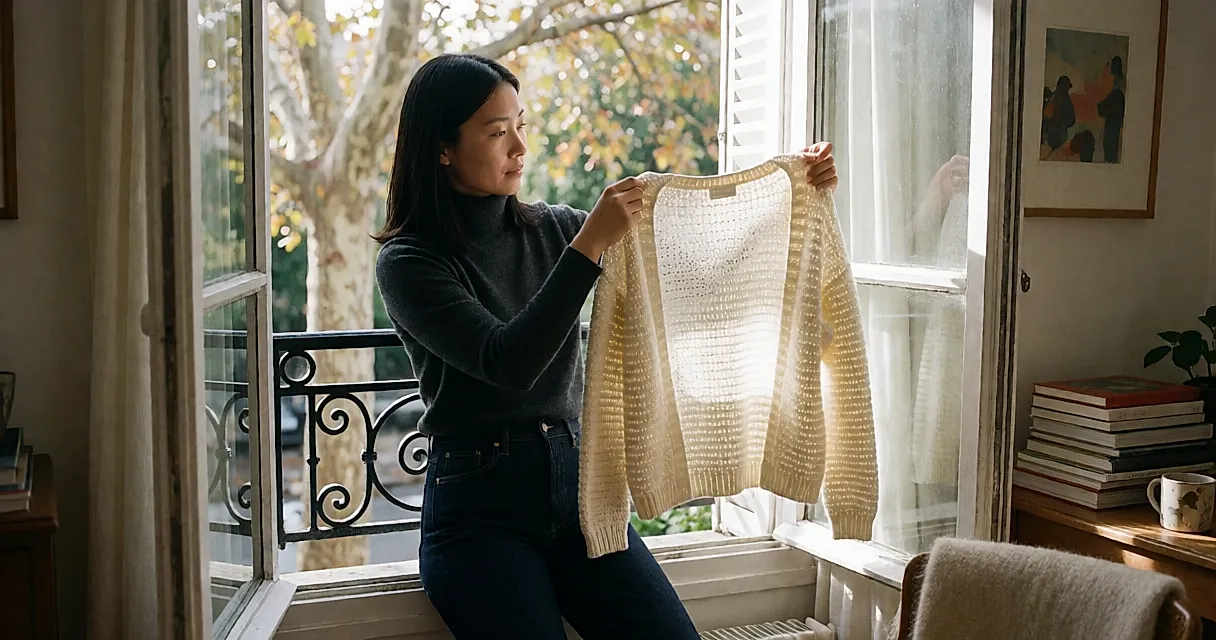
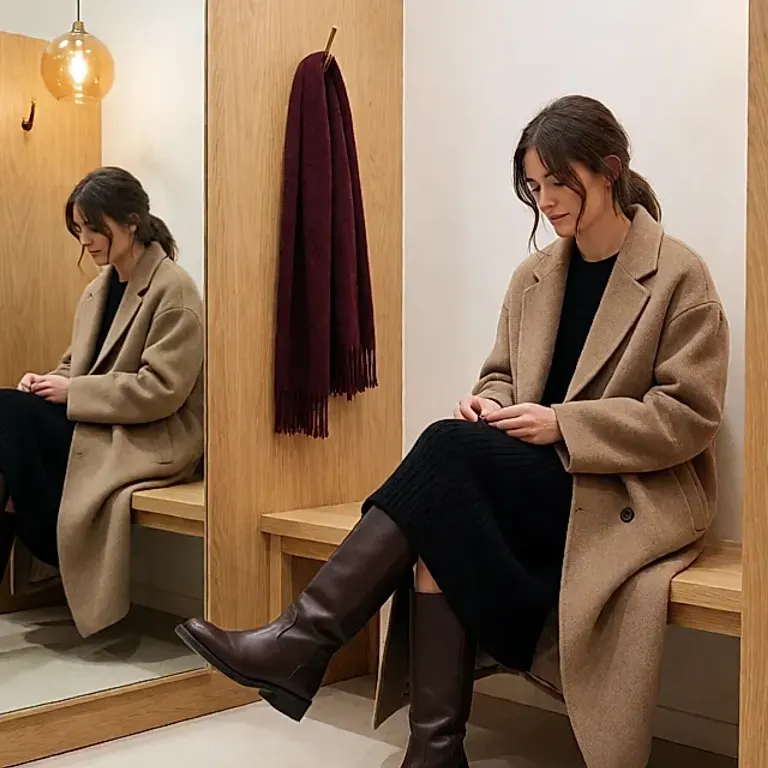
Changing room, white neon, full-length mirror. The piece has been on your shoulders for a minute and your hands move before you’ve decided: you turn it inside out. Not because you sew, but because from the front this crochet cardigan looked a bit too well-behaved. A bit too smooth. A bit too keen to be pretty.
That is where the real question lies, though — in the thickness of the yarn. The right side of a crochet piece is the shop window: a repeating motif, a colour that pops against raw denim, an open stitch that lets the November air through. The wrong side is the office. It is where you see how the work was done, and whether you want it on your shoulders for three winters.
The inside cannot lie
Turn a crochet piece inside out and you see its architecture: rows stacked like folded sheets, little horizontal bars, a fabric that suddenly loses its geometry. On a well-made piece, those rows run straight, without bulging or suspicious gaps. On a rushed one, the alignment ripples, and daylight comes through where the tension has slipped.
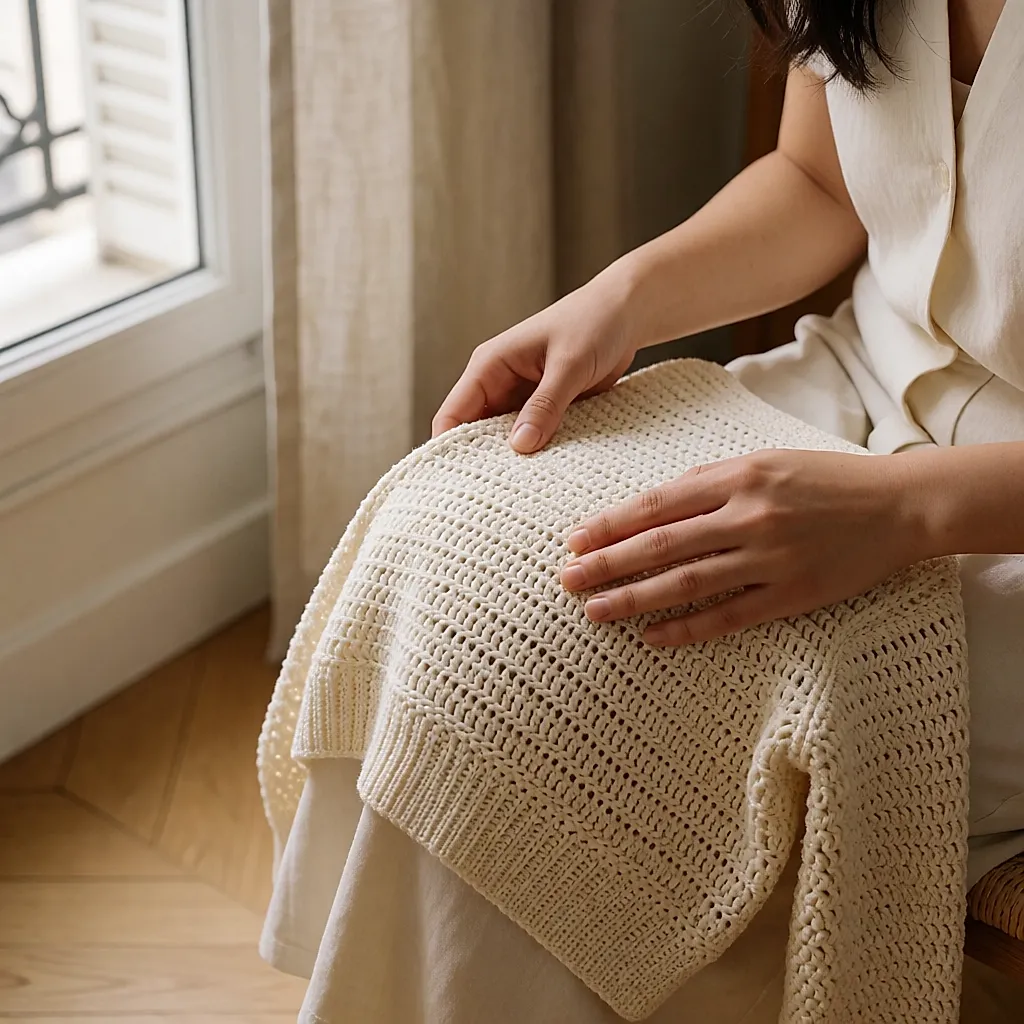
Touch finishes the diagnosis in two seconds. A well-made wrong side is almost flat under the fingers, supple, without roughness — you could wear the piece inside out without it scratching. A sloppy wrong side catches: loose ends stick out and can work loose at the first wash, knots wander around the middle of a sleeve, the shoulder seam pulls the stitch out of line. These are not perfectionist quirks: they can decide whether your cardigan makes it through February.
Where the rows meet is the maker's signature
There is one place where you can recognise a hand at work: the point where the rows join. Worked in rows, a piece keeps a slight step at the sides, a stitch that rises one notch at the start of each row — the little crochet step that gives away the person behind the yarn. Worked in the round, it shows a fine diagonal at the join, or a one-stitch offset if the piece has been worked in a spiral.
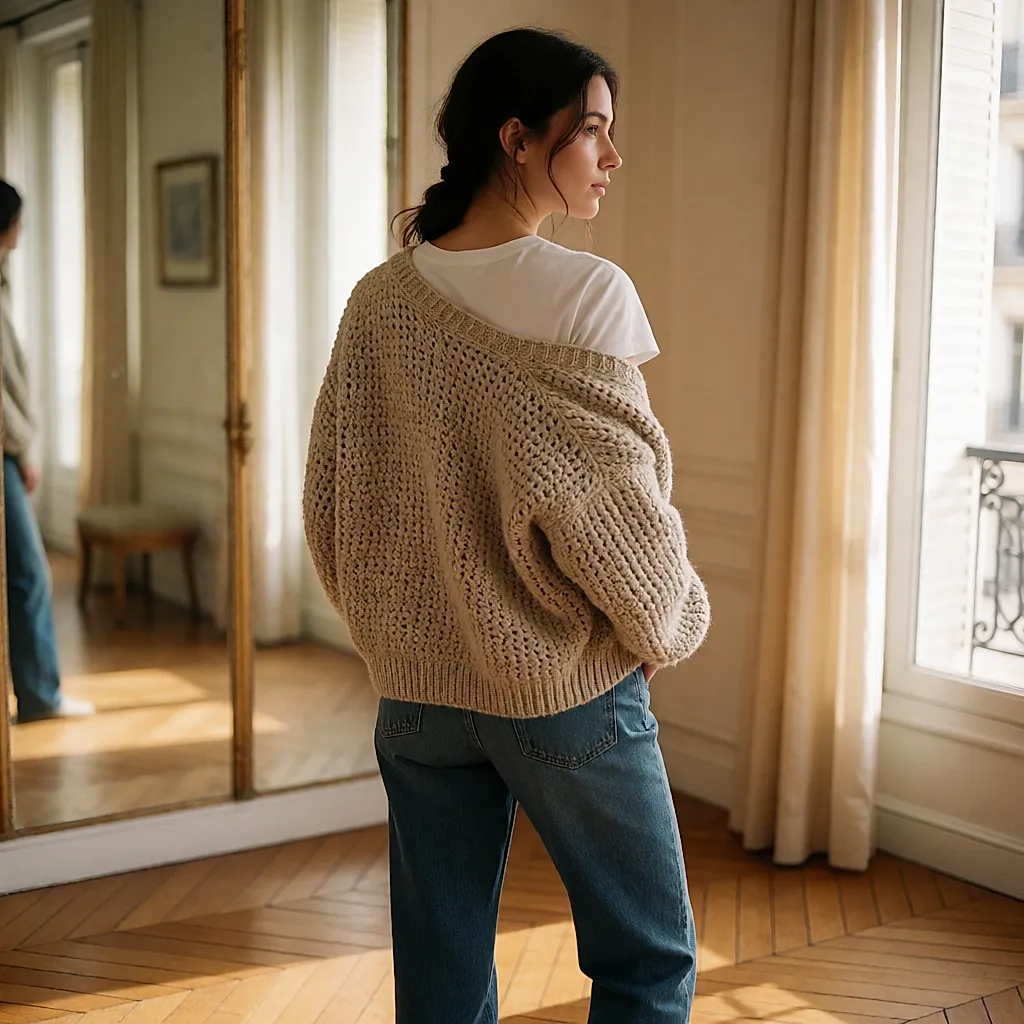
None of this is a defect. Quite the opposite: a piece that is perfectly smooth on the inside, with no readable join and not the slightest irregularity, rarely comes off a crochet hook. It more often comes from a machine imitating crochet — a faithful motif, a stiffer drape, and a regularity that can make it look more like decoration than clothing. A slight offset from one row to the next? That is a signature.
Why crochet resists the machine
Crochet is hard to mechanise, and not by chance. The stitch is formed loop by loop, with a hook holding one loop while another is pulled through: a slow, sequential movement that is difficult to hand over to a bank of needles. Knitting machines line up hundreds of needles at once — hence their efficiency, and their stiffness.
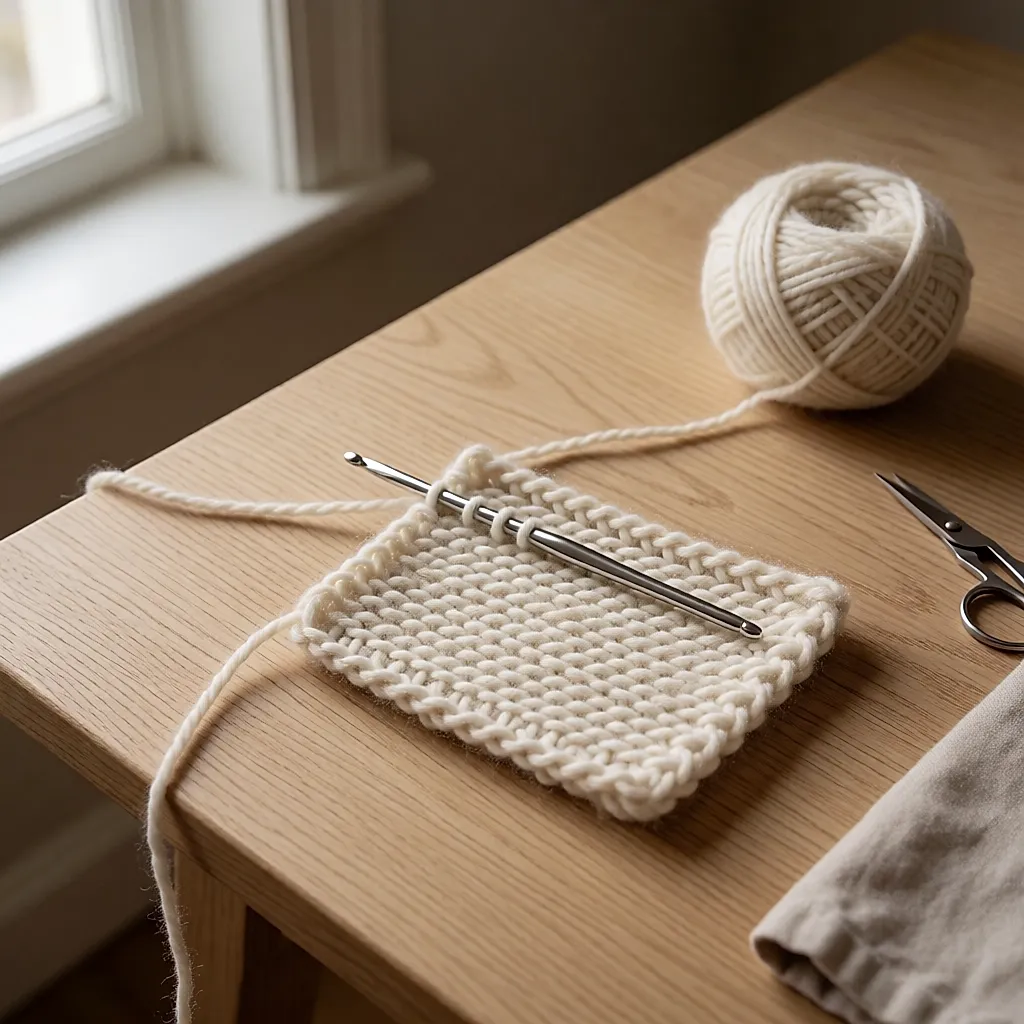
The consequence: a piece sold as crochet may be hand-crocheted, or it may be machine-made to imitate the stitch. The label gives the fibre composition and sometimes the country of manufacture, but not the number of hours or the number of hands behind it. That is exactly why the wrong side is worth more than a sales pitch: it promises nothing, it shows.
Three seconds on the wrong side, before the till
- Turn the piece inside out and follow the rows with your eyes: straight, even, with no gap that lets light through.
- Look for the woven-in ends: if they hang or stick out, the piece may not last the winter.
- Pinch a shoulder and tug gently: the seam should hold without distorting the stitch.
An uneven wrong side is not a fault. A wrong side that is coming undone is.
What it costs
Price is where the gap becomes dizzying, and it tells you exactly what the inside is showing. In charity shops and on resale platforms in the UK, expect roughly £15–£45 for a vintage crochet cardigan or top, sometimes with a stretched stitch and plenty of charm. At a high-street chain, a crochet-look piece often sits between £25 and £60: at that price, check how much of it is synthetic before you fall in love.
For real workshop work, the figures shift: from around £90 to £200 for a top or cropped cardigan from a maker, at a makers' market or specialist shop, and more like £180–£400 for a long piece in wool or organic cotton, depending on the time spent, the fineness of the yarn and the city. And if you find a merino wool or linen piece at a vintage fair or car boot sale, consider it a find. These fibres tend to age better than acrylic and relax less at the joins. It is coat money, not T-shirt money — but it is also a piece you can keep for years when the inside is good.
One last thing before you leave the changing room: keep the piece turned inside out for another thirty seconds. By then you will know whether you are buying a pattern, or the work itself.

Comments
Your opinion matters: rate the article, react and reply to comments.
Comments are moderated; AI-assisted comments are flagged. Text emoticons (8-), :-), <3…) are automatically shown as images.