

November doesn't kill boots from the top down. It goes for them from the ground up. You come back from the market with a spotless upper, a couple of splashes and the feeling you've bagged a bargain. Three weeks later the heel has started to lean, and a white tidemark has settled into the leather out of nowhere. So when a pair starts to flag, do you head to the cobbler or back to the shop?
Turn the boot over before you try it on
It happens in the fitting room: you pull the boot on, take three steps, check the hem of your jeans. The part that matters is still in your hand. Before you ask yourself whether it goes with the midi skirt, turn it over and look at the underside, where the upper meets the sole: that's where the life of the pair is decided.
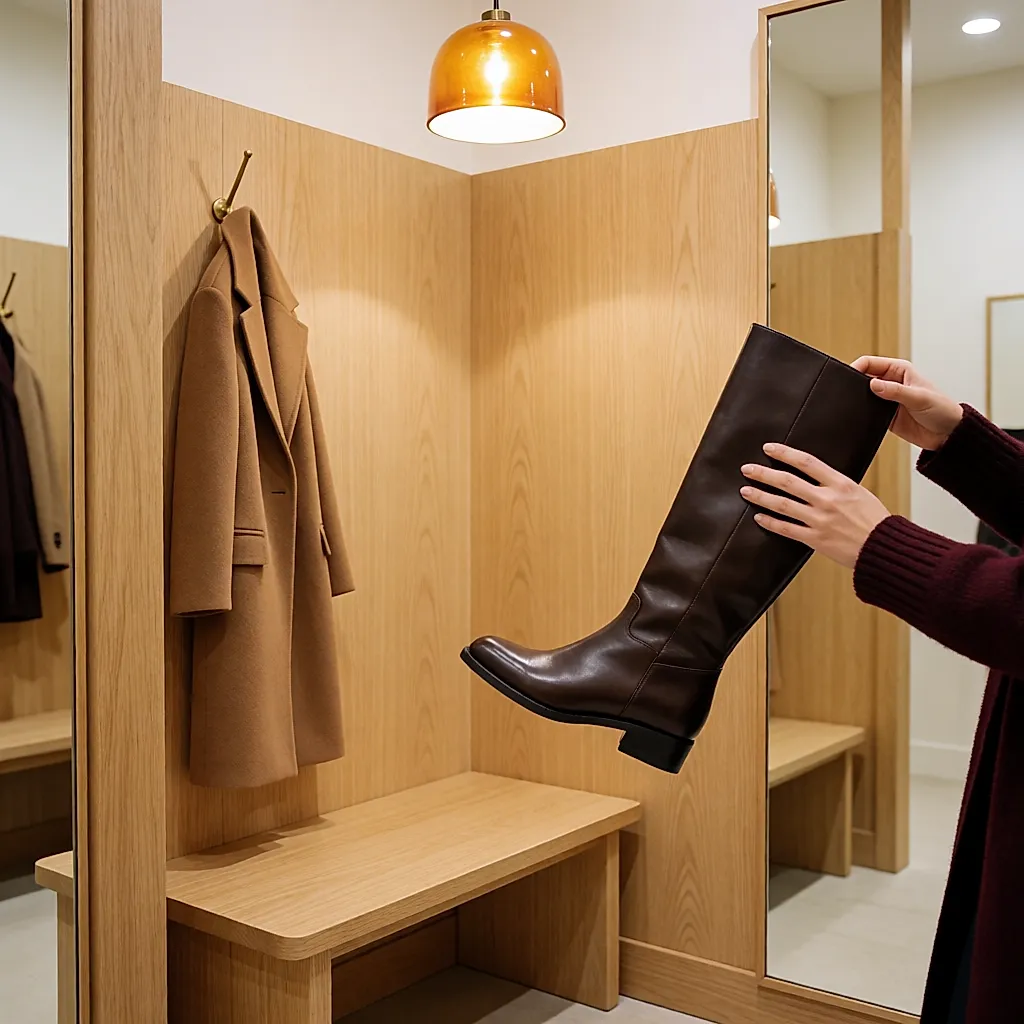
What you're looking for is a band of leather running right around the foot and stitched through its full thickness, not just at the surface. When that seam genuinely joins upper, welt and sole, it's a stitched welt: the shoe can be taken apart, rebuilt and resoled several times. On a glued sole, everything is held together by strong adhesive. A good cobbler can often fit a half-sole over the wear or replace the lot, but the boot doesn't come apart cleanly — and on plenty of cheaper styles the sole is moulded in one piece with the upper, which makes a repair cost more than the pair did.
One detail to watch: sometimes the stitching is purely decorative, a neat line running along the edge that holds nothing together. If the seam doesn't bite into a real thickness of leather, be wary.
The rubber-versus-leather trade-off
On a wet November pavement, a lugged rubber sole changes the day: Tube gratings, slippery paving, station steps — it grips. The flip side is that deep tread picks up grit and salt, and rubber wears first exactly where you never look, on the outer corner of the heel. A pair that leans to one side after a winter is rarely a manufacturing fault: it's a walking habit.
Leather, on the other hand, is unbeatable for line: a thin sole sharpens the silhouette and keeps the boot straight under a wide trouser. But it hates salty water, slips on smooth floors and marks easily. The sensible compromise? Have a cobbler fit a thin rubber half-sole over a good leather sole: the line stays, the grip arrives.
Let's be honest: a fine leather-soled boot takes you perfectly well from the office to the car. It won't take a whole day walking in the rain.
The fifteen minutes that save the pair
The habit that counts is the one you form when you get home, not in spring. A damp cloth to lift the salt before it dries, then air-drying away from any heat source — never on the radiator, because heat stiffens leather and stresses the adhesives. Then, once the boot is dry, a pea-sized amount of wax polish or beeswax-based grease, massaged into the seams: the leather stays supple and water runs off.

And keep an eye on the heel tips, those small blocks under the heel that wear through well before anything else. Replacing them for a few pounds, as soon as they start eating into the heel block, is the cheapest repair in the wardrobe — and the one people forget most often.
The thirty-second turned-boot test. Boot in hand, press your thumb into the middle of the sole: if it feels hard as a board, the cushioning is thin and you'll pay for it later in the day. Then look at the edge: a seam that crosses the full thickness, tight thread, a clean welt — that pair can live through several winters. A smooth, perfectly uniform edge with no visible stitching means glued, and it will need looking after differently.
What repairs and boots actually cost
On repairs, expect to pay somewhere in the region of £25 to £50 for a half-sole at a local cobbler, and a few pounds for a new heel tip. A full resole tends to climb to £60 to £130 depending on the material, the city and the workshop; on a stitched welt you should usually budget £90 to £160 and accept that the boot will be away for a few days, since not every cobbler takes on welted work.
On the buying side, a mass-market glued-sole boot sits between £90 and £180; a stitched-welt pair rarely starts under £220 and quickly climbs to £350 or £400. Secondhand upends the maths: welted boots worn for a couple of winters sometimes turn up for the price of a cheap new pair.
So which way? On a tight budget, and for a pair you'll wear two or three seasons, a glued sole does the job — provided you have a half-sole fitted early, before the heel hollows out. For everyday wear and the wish to keep the same pair for years, aim for the stitched welt: dearer up front, but an occasional resole brings it back to new. And between the two, secondhand remains the good November find: someone else paid full price, you get the sole.


Comments
Your opinion matters: rate the article, react and reply to comments.
Comments are moderated; AI-assisted comments are flagged. Text emoticons (8-), :-), <3…) are automatically shown as images.