

The parcel was too big, the tissue paper too loud, and the rust-coloured jumper was exactly what we'd been after to see us through to March. Then we turned over the label: 70% wool, 30% polyamide, plus a small sewn-in card announcing, in fine print, a fibre commitment for 2035. A lovely intention, genuinely. But the jumper is here, now — so what is it actually telling us?
What the label says, what the website says
Two documents, two timeframes. On one side, the composition printed inside the garment: it describes what you're holding, to the exact percentage, and the order of the fibres is not decorative — as a rule, the first one listed is the one there's most of. On the other, the retailer's sustainability page, which sets out where it would like to get to. Confusing the two is a bit like reading a candidate's manifesto and thinking you've read their CV.
What the label leaves out is just as telling: the weight of the knit, the gauge, where the fibre came from. To fill those gaps you have to dig through the product page, look for a certification — GOTS, RWS or Oeko-Tex, for instance — and, above all, look closely at the garment itself. Seams that pull, elbows that have already pilled on the rail, a limp drape: three clues that say more than any slogan. And that catch-all "other fibres"? That's the line worth asking questions about.
A date is a direction, not a rubber stamp
So what does a 2035 pledge actually say? It says a brand has agreed to set itself a public course, which counts for something in a sector that has long been talkative about collections and silent about spinning mills. You just have to read the rest: does the commitment cover all the fibres or only a fraction? Does it come with interim targets, an annual report, a supplier list? A date with no milestones is the New Year's resolution you've forgotten by February.
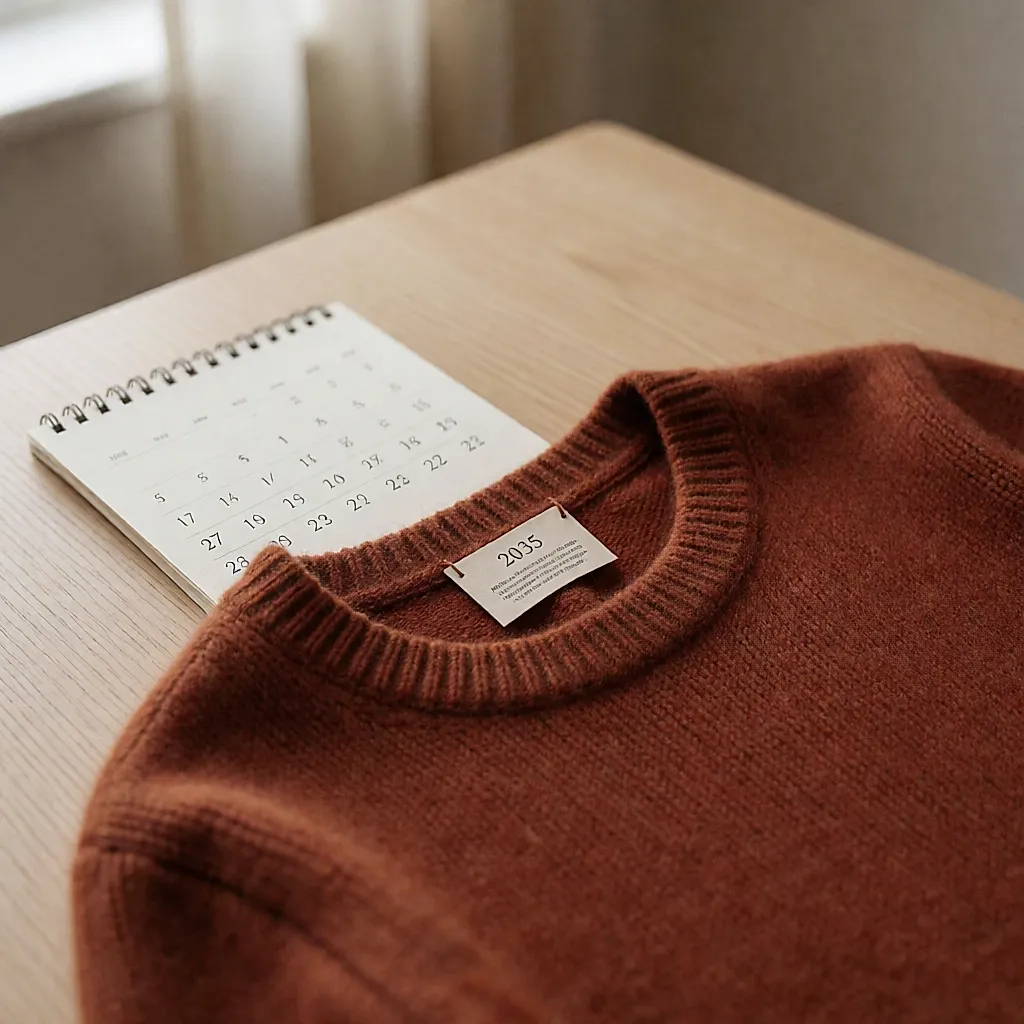
Then there's the logical gap: the piece in your hands was knitted months ago, sometimes more, under today's sourcing arrangements. A promise with a deadline doesn't make it better or worse. It signals a trajectory — valuable if you're weighing up two retailers for a future purchase, useless for judging the knit sitting on your knees. You might find that frustrating. It's also exactly what makes the label so valuable.
What happens after the till
Let's talk about after the purchase, because that's where everything is decided. A wool jumper aired between wears, washed cold, dried flat and brushed now and then will see out winters while a more expensive one succumbs to a spell on the radiator. The effort is modest, the effect stubborn. How many knits have you given up on over a snag that ten minutes of darning would have fixed?
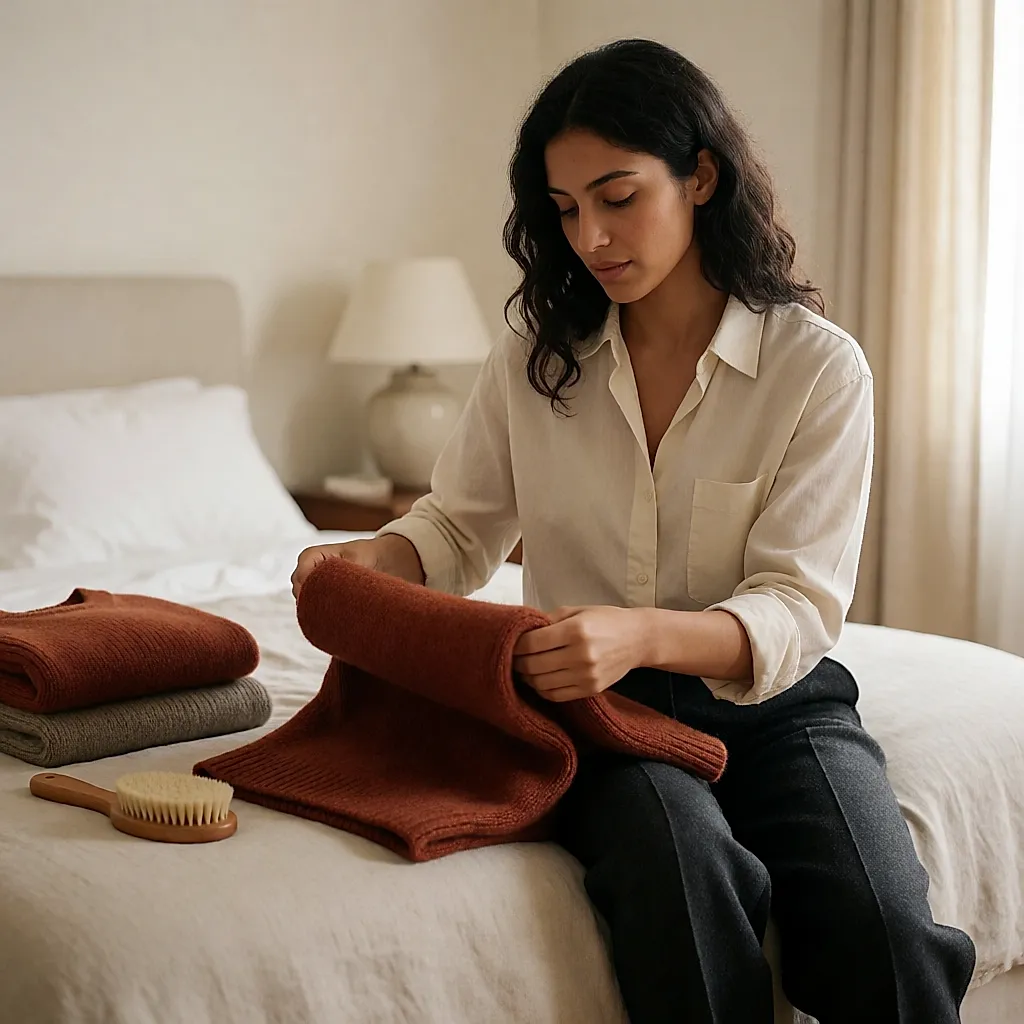
Wool has a memory, and it hates being hurried: you push a loose thread back through, redo a seam and, in practice, can leave it to rest for a few hours before wearing it again. This isn't salon environmentalism, it's wardrobe common sense. And the only document that really speaks to your jumper's future is the care label — which never mentions 2035.
Three things to check before you get to the till: the composition in percentages and the order of the fibres; the exact name of the material (wool, virgin wool, merino, recycled cashmere — these are not the same animals); and the care instructions, which will tell you straight away whether the piece fits your life. A quick look at the share of synthetic fibres is worth folding into the check too.
What you'll pay
On price, natural knitwear builds in steps. Expect roughly £40 to £90 for a cotton or basic wool jumper with a bit of body to it, from an accessible label or a high-street shop, £80 to £180 for merino, and £150 to £400 for cashmere, depending on gauge and provenance. Second-hand, good wool turns up at £20 to £60 — as long as you check the seams and the sleeves. Then add upkeep: darning or alterations usually come in at £15 to £40, and a specialist wool detergent costs £5 to £12 from a supermarket or chemist.
What moves the price? The city, the fineness of the knit, where the fibre comes from and where it was knitted — though none of those on its own guarantees a better piece.
A well-composed, well-cared-for knit will stay with you longer than three vague pieces bought to tide you over until the next collection. So the next time a box opens on a parcel that's too big, turn the label over before you fall for the colour. Less romantic. Far smarter.

Comments
Your opinion matters: rate the article, react and reply to comments.
Comments are moderated; AI-assisted comments are flagged. Text emoticons (8-), :-), <3…) are automatically shown as images.