
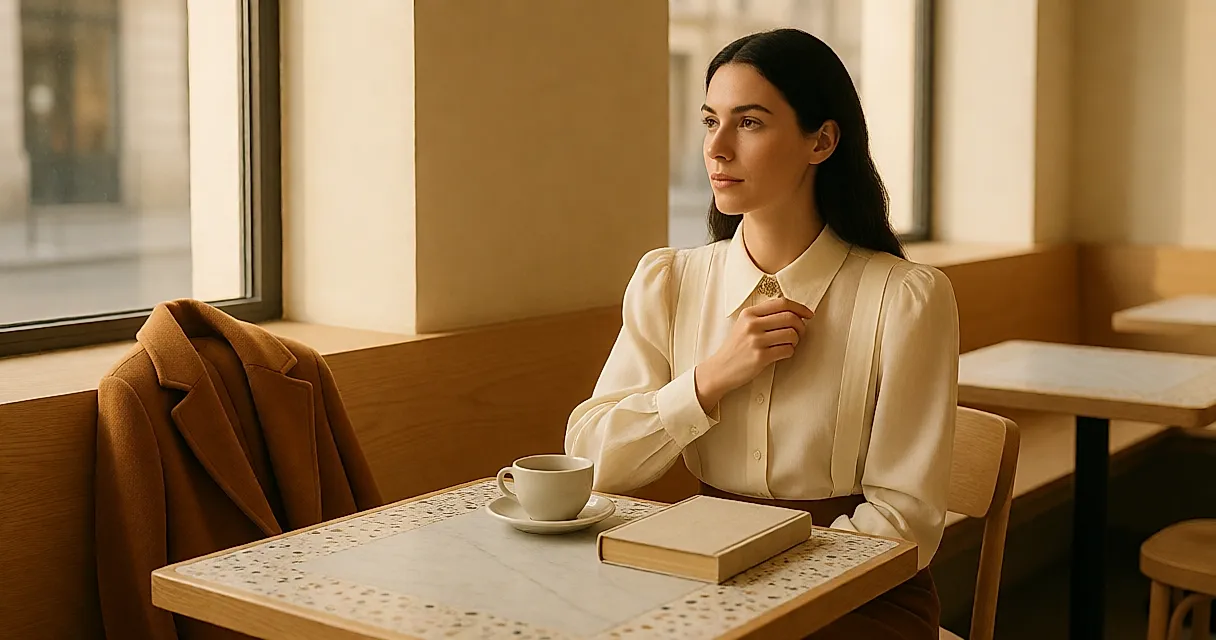
A necklace worn for the evening will always, eventually, carve a groove in the back of your neck. The answer is not to carry it better — it is to do away with it altogether. On a certain kind of blouse the jewellery is already there, stitched, embroidered or set into the neckline, and it is the cut, not the clasp, doing the work.
The jewel has left the chain
The idea is simple: instead of hanging pearls, medals or an antique brooch from a clasp, you fix them straight onto the cloth. The technique is nothing new — embroidery studios have been mounting pearls and rhinestones onto evening dresses for decades. The difference is that here the jewel stops being an accessory: it becomes part of the garment, like a button or a pleat.

The result: no chain twisting round, no clasp gaping open, no necklace sliding under the collar. The jewel does not dangle any more, it settles in. And oddly enough, that changes the whole thing: the blouse looks finished, whereas a necklace dropped onto a plain collar often reads as an afterthought.
The cut has to carry it
One detail people forget: jewellery is heavy. A strand of fine pearls is manageable; a pile of antique medals, brooches and rhinestones across a bare back is another matter entirely. The weight no longer lands on the nape of the neck but on the shoulders and the seams. Which is why you need proper structure: a lining, straps wide enough to take it, a reinforced yoke inside.
This is where the jewelled blouse starts making demands. If the neckline is too wide, the jewellery drags the fabric downwards; if the back is completely bare, you need support that does not show. And the necklace, in all this? It becomes pointless, even superfluous. You save time in the evening and lose a little room for manoeuvre in the morning.
Where to find it in the UK
The easiest route? Start with your own wardrobe: a blouse with a plain collar that you already wear will do the job nicely. If not, hunt down a second-hand piece and have the jewellery mounted onto it. Independent embroidery studios will often take on this kind of piecework, provided the fabric can take a needle. Expect to pay somewhere between £70 and £220, depending on how dense the design is and how many hours it takes — a single row of pearls costs less than rebuilding a whole brooch.
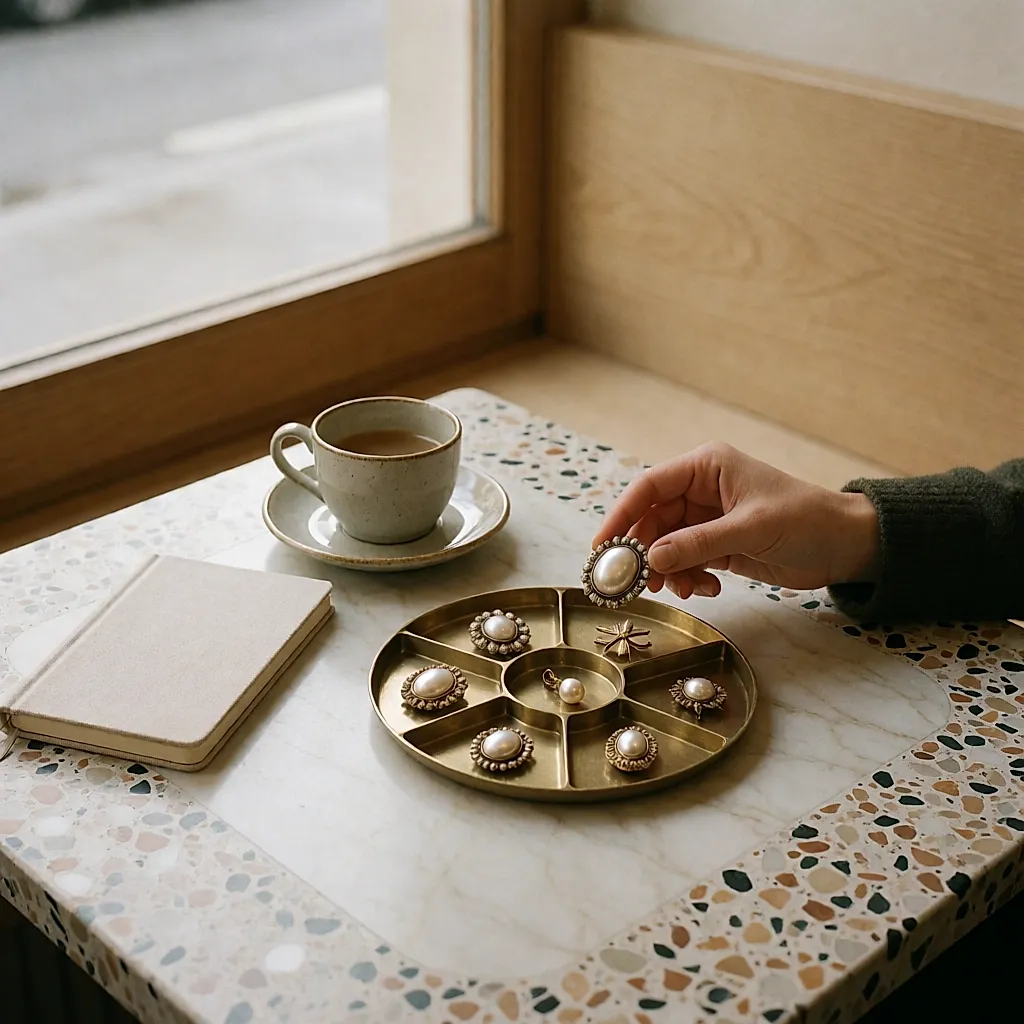
Where your money goes furthest: mismatched antique jewellery. An inherited brooch whose clasp has broken, an earring with no partner, a long chain whose links have given up. You find them at flea markets, antiques fairs or from a jeweller who does repairs. A piece of antique jewellery to be mounted usually costs £18 to £70, sometimes less if the design is simple.
One last option: a seamstress or a local alterations shop can take on a second-hand piece and stitch an existing jewel onto it, for £25 to £80 of workmanship. That is the most flexible route if you want to test the idea without committing to a studio piece straight away.
What it costs
So is it worth the money? A vintage or second-hand blouse in cotton or silk: £15 to £55 from a charity shop, more at a specialist boutique if the piece is signed. The antique jewel: £10 to £70 depending on material and condition. Studio mounting: £70 to £220 for jewellery embroidery, £25 to £80 for a simple alteration with a seamstress. The total can still come in under the price of a new evening blouse, provided you are happy mixing eras.
And if you go for a piece that is already jewelled, prices climb quickly: £130 to £350 in a boutique for a hand-embroidered blouse, sometimes more if it is a one-off. That is statement-piece money, and it is meant to be kept for years.
The trade-offs
Who is this not for? It is not a blouse for every kind of life. First limit: stitched-in jewellery does not take kindly to machine washing — you will usually need dry cleaning or a very gentle hand wash, and you should check that the pearls are not working loose.
Second limit: the weight. If your shoulders are fragile or you wear a bra with fine straps, a jewelled bare back can quickly become uncomfortable.
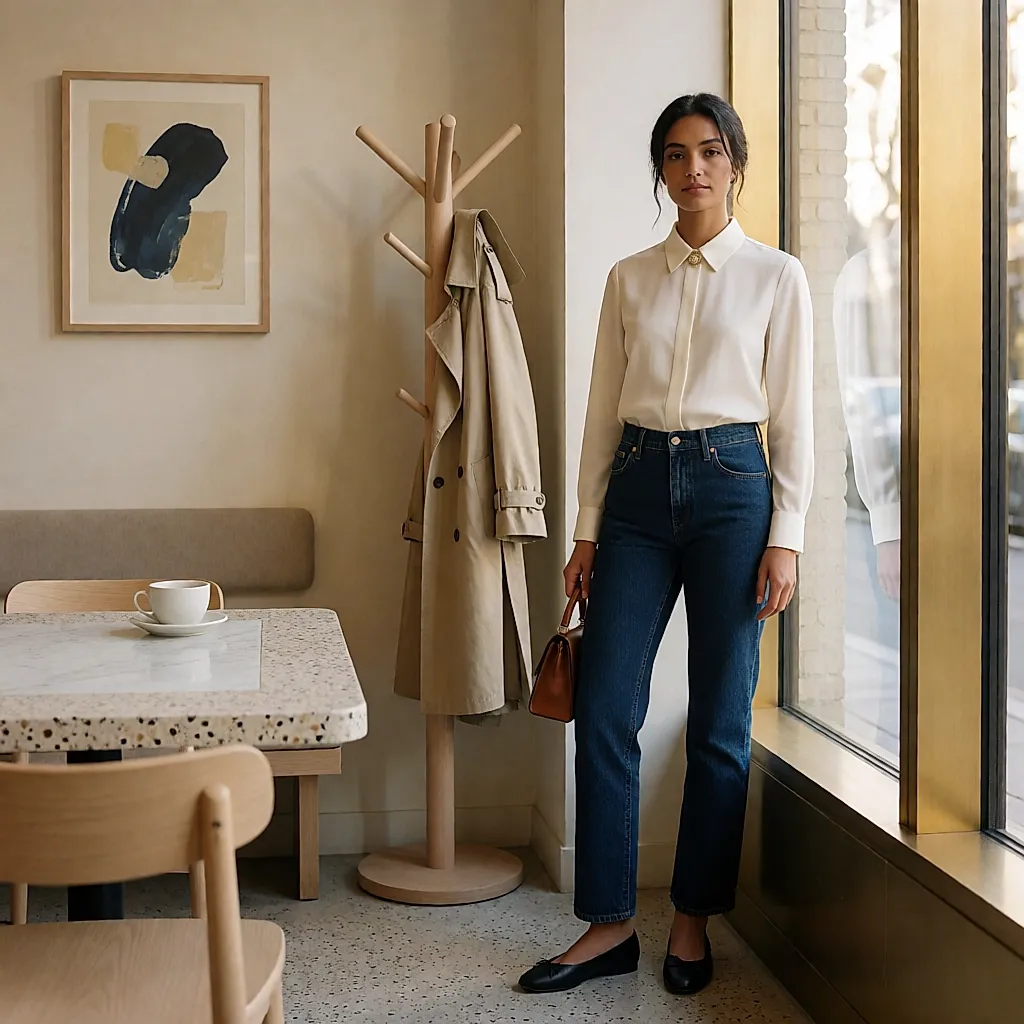
And finally, on the style front, the piece does not forgive guesswork. With raw denim and ballet flats it works; with too much of a total look it tips into costume. Better to wear it as a single statement piece and let the rest of your wardrobe breathe.
The weight test: before you sew anything, pin the jewel to the garment and wear it for five minutes. If the neckline pulls or the back gapes, the cut is not ready. Use a strong thread and add a fabric reinforcement inside to spread the load.
In the end, the antique-jewellery blouse is not one more piece in the wardrobe: it is a way of moving jewellery from your neck onto your clothes, and buying yourself a bit of freedom in the evening. For a first try, a £20 second-hand blouse and a £25 antique brooch are enough; for a studio piece, budget nearer £180 to £350. Either way, the necklace can stay in its box.
Comments
Your opinion matters: rate the article, react and reply to comments.
Comments are moderated; AI-assisted comments are flagged. Text emoticons (8-), :-), <3…) are automatically shown as images.