

Sunday night, 10.40pm. The suitcase is open on the bed and the wool jacket — the one that goes with almost everything — will not close. The pull tab comes away between your fingers, the slider dangling like a charm. You travel with the black coat instead, you stew on it, and the jacket goes to the back of the wardrobe with a promise to deal with it later. Before you write it off, there is a properly wardrobe-shaped decision to make: repair it, or let it go.
Three ways a zip fails, three verdicts
A zip is three main parts: the tape (the soft strip that carries the teeth), the slider (the piece that meshes them) and the pull tab you actually grab — plus the teeth and the stops at either end. Money-wise, the most dramatic failure is usually the least serious. A torn-off pull tab costs next to nothing to replace; a tired slider — the one that lets the zip fall open down your back, mid-meeting — can be swapped too, without touching the tape.
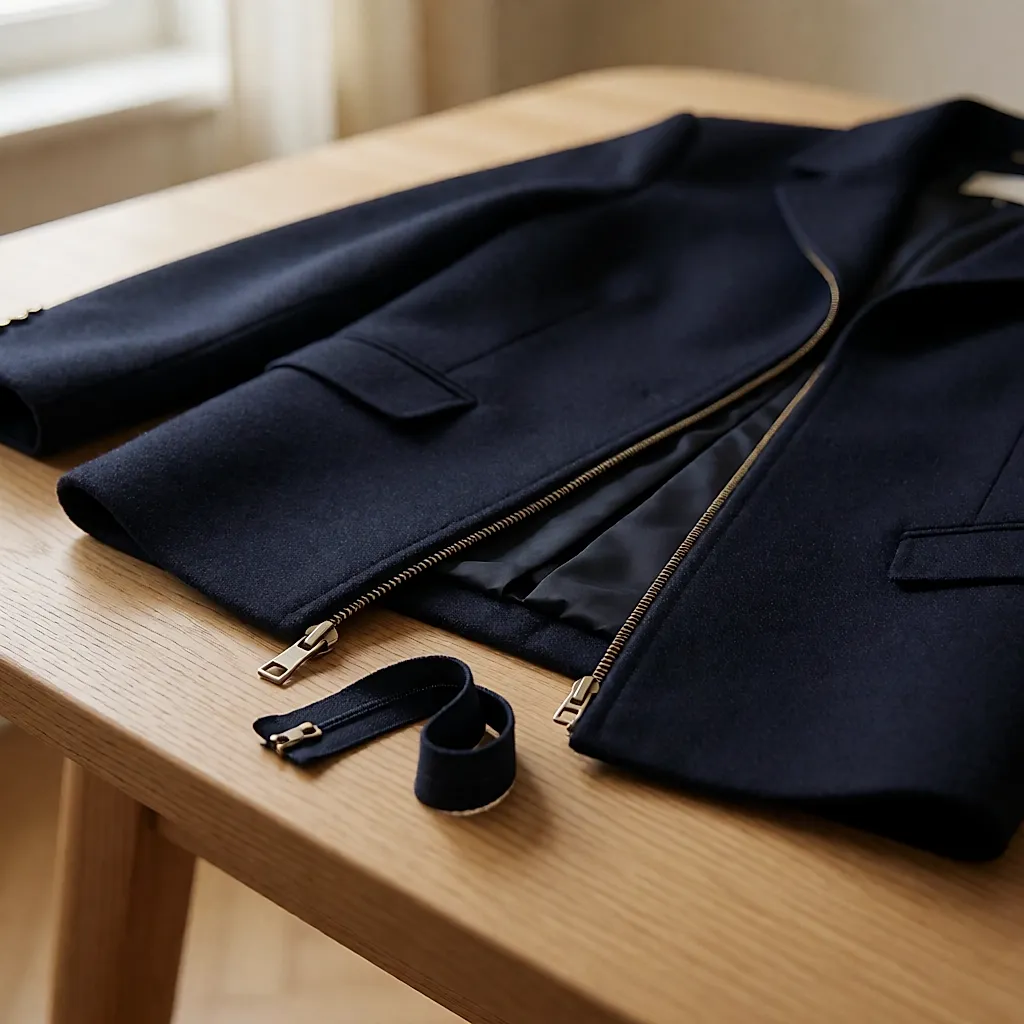
Everything else needs a proper look. A missing tooth, a tape that has started to gape or that has rippled from too hot a wash, and the whole zip has to be replaced. On a jacket, a separable zip (the kind that opens into two halves) costs more than a pocket zip: there are two sides to set in and a lining to work around. On leather or suede, plenty of alterations tailors would rather not take it on and will send you to a cobbler or leather specialist — that isn't a refusal, it's advice.
What to take in, and what to ask
Rule one: take the garment, not a photo. An alterations tailor judges with the tape in their hand, not down the phone. They will look at the length, the colour, how fine the teeth are, how thick the lining is — and they will ask how long the jacket has been with you. Answer honestly; it's part of the diagnosis.

Then comes the question nobody likes asking: is it worth it? An honest professional will tell you before they get the machine out. If the lining is in shreds, if the fabric has gone at the elbows, a new zip will hold for three weeks on a garment that's on its way out. At that point the quote does you a favour by saving you a pointless repair.
Three things to do before you leave your jacket at the counter: ask for a written quote, check that the colour they're suggesting sits close to the original (a black zip on a navy jacket shows), and work the zip yourself in front of them before you walk out. One avoided round trip is a Tuesday evening back.
A judgement call, not a write-off
This is where it all hangs. A £40 jacket bought six years ago and worn two hundred times doesn't weigh the same as a wool jacket bought last month. We start to hesitate when the repair approaches a third of the original price — that's our rule of thumb, not a law of physics. Below it, repair without a second thought; above it, compare.
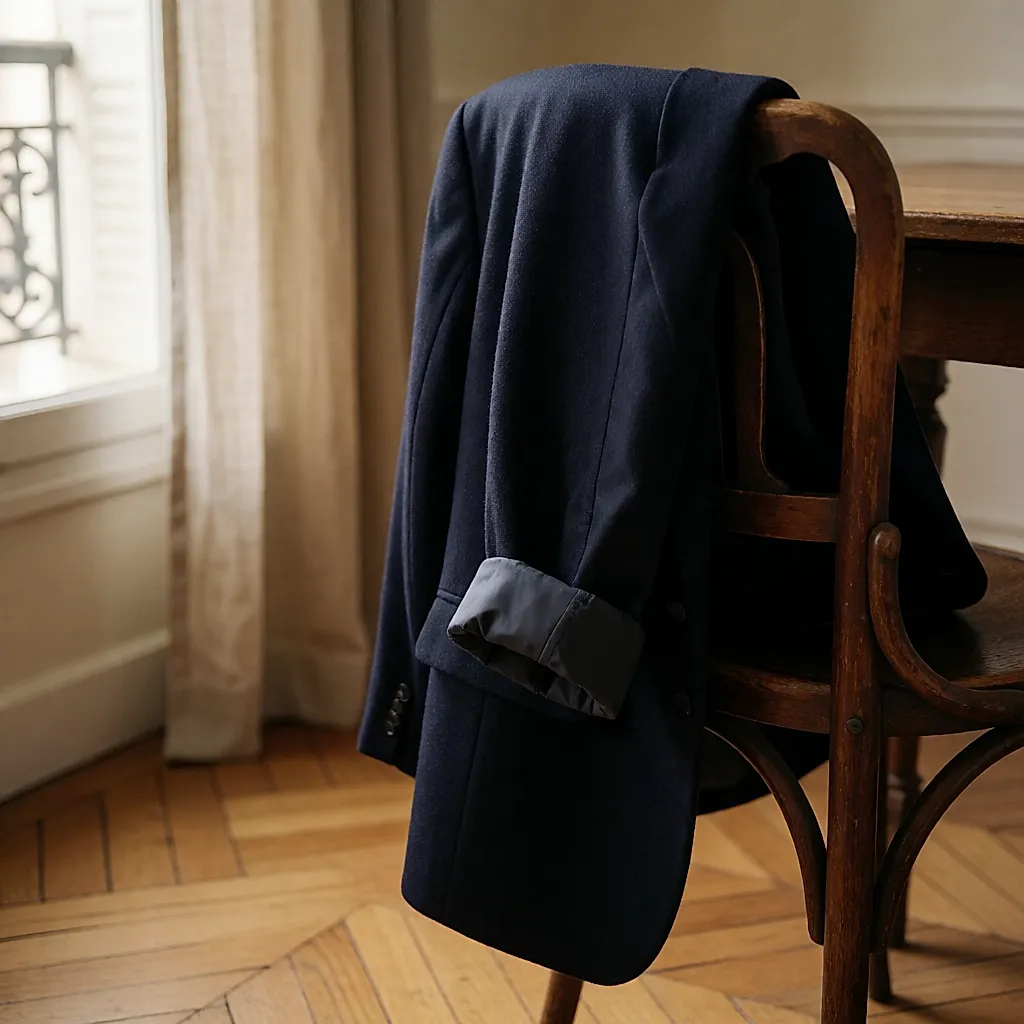
Compare with what? The brand's after-sales service, first: some houses will deal with zips on their own pieces, sometimes free in the first year. Look at the construction, too: a zip set into a lined jacket means opening up the lining, which means labour. And remember that keeping a piece you love is the most low-impact move available in any wardrobe — no need to make a speech about it, just don't bin a jacket over a slider that has run out of puff.
What it costs
In real life, budget roughly £8–15 for a pull tab replaced at a local haberdashery or alterations shop, £15–30 for a new slider fitted, and £30–70 for a complete zip on a standard jacket. The range climbs with length, lining, whether the zip is separable and, of course, the city. Leather adds a premium: a leather specialist is working the material, not just the zip, and the quote can double.
For a diagnosis, head to your local alterations tailor; for tanned leathers, a cobbler or leather specialist; for the parts alone, a haberdashery or an online supplier if you sew yourself. A rush job usually costs a few pounds more: if the jacket is booked for a trip, plan ahead rather than gambling on the night before.
The habit that prevents a repeat
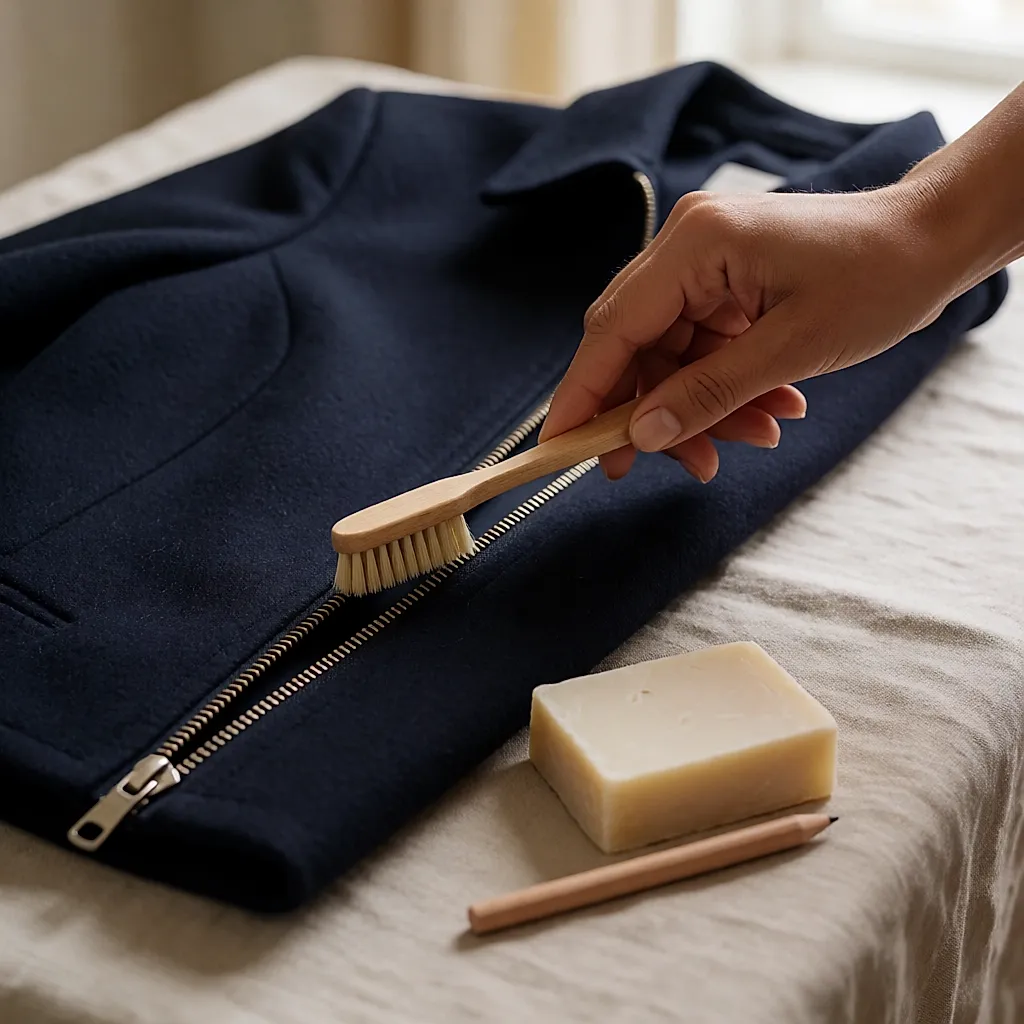
Zips clog: dust, fluff and detergent residue build up between the teeth and force the slider. An old dry toothbrush works wonders along the tape, and a light rub of wax pencil or dry soap helps the slider glide — that's the simplest habit to keep. Close the zip before washing and before hanging: teeth lined up hold better than teeth left open.
And use the change of season, when the coats come out, to run through every zip in the house. Three seconds per jacket: run the slider up and down empty, give the pull a firm tug. It's the ideal moment to spot a failure before it picks your Sunday night.
In the end the choice is simple: £8–15 if it's the pull, £15–30 if it's the slider, £30–70 if it's the tape. In the first case, go ahead without a second thought; in the other two, get a quote and look honestly at what the jacket represents in your wardrobe — and in your actual budget.
Comments
Your opinion matters: rate the article, react and reply to comments.
Comments are moderated; AI-assisted comments are flagged. Text emoticons (8-), :-), <3…) are automatically shown as images.