
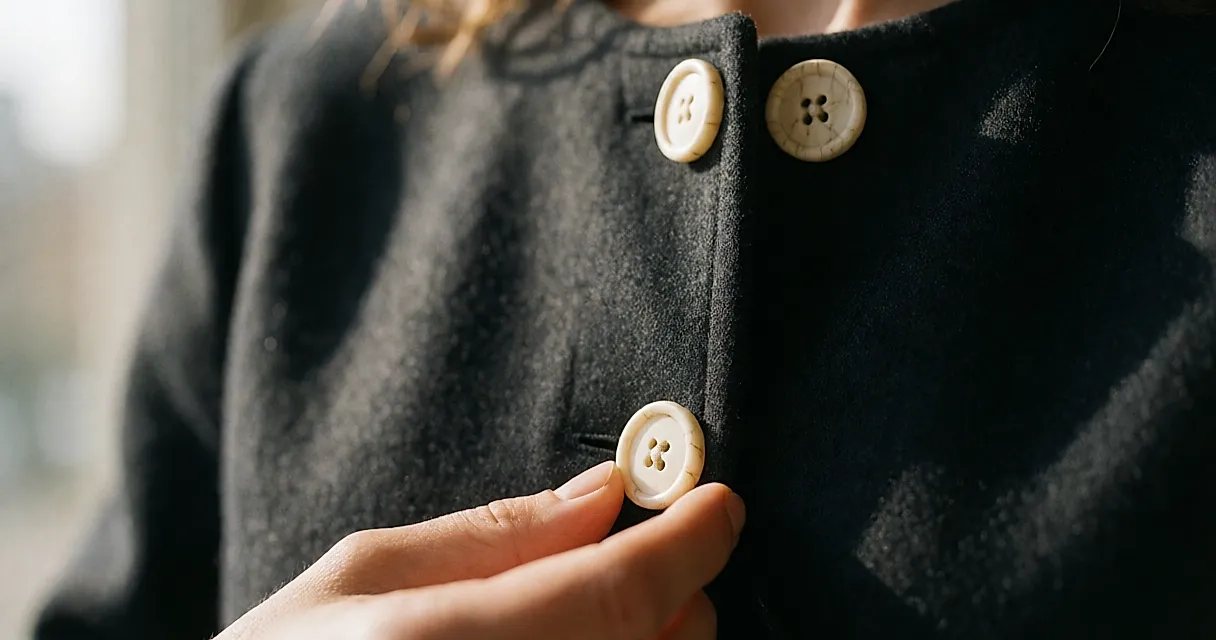
The jacket falls just right. The shoulders sit where they should, the sleeves end at the right point, and the wool has that dry handle that already has you reaching for your card. Then your thumb meets a warm, lightweight button with a faint mould line along the edge. You put the hanger back. Good instinct.
The detail nobody reads
On a jacket, everyone inspects the shoulders, the lining, the label. The buttons? Never. Yet they are one of the pieces you touch most often in a day, the thing that decides whether a garment looks considered or as if it came out of a box in a hurry.
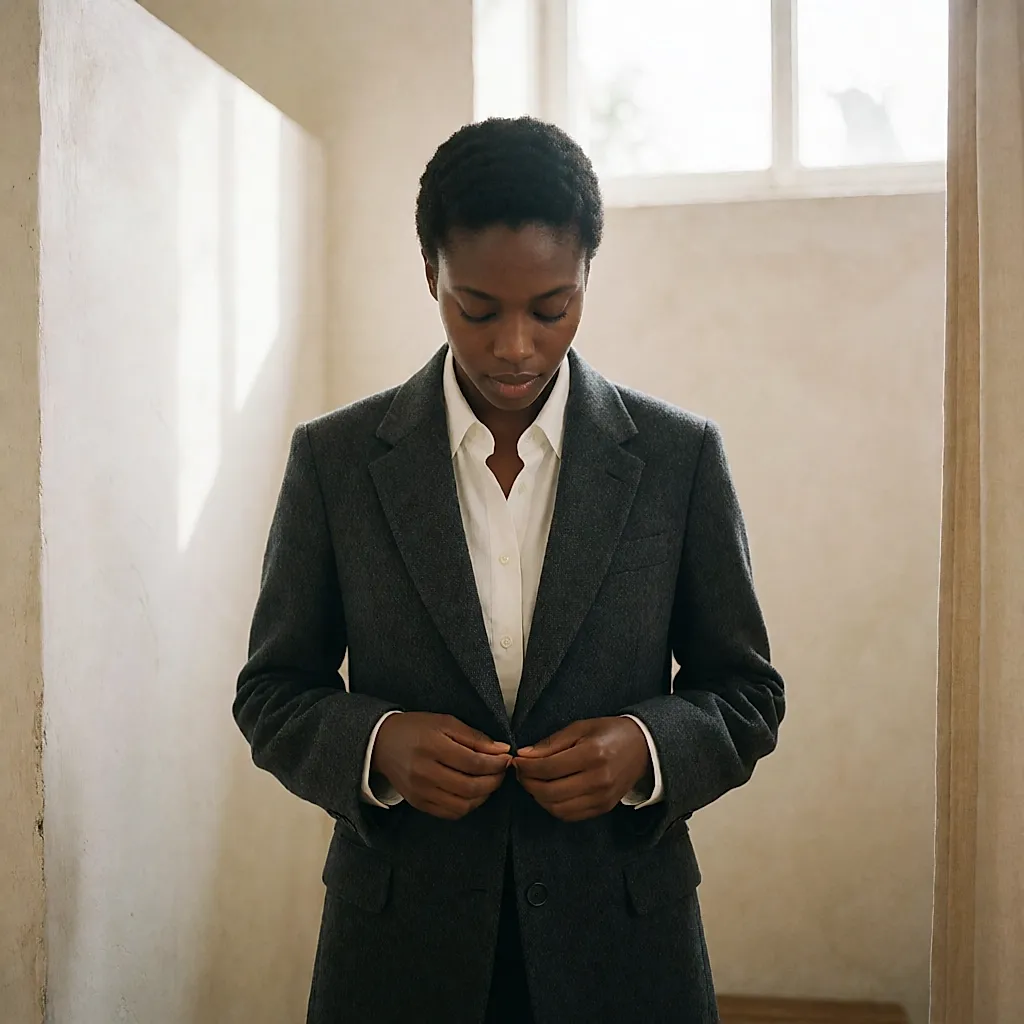
A beautiful button won't save a bad cut — nothing saves a bad cut. But a mediocre button can sink a lovely piece, and it happens more often than you'd think: discreet finishes are often the first place costs are cut, because in an e-commerce photo eight dark discs all look alike. In the hand, they tell a different story. A button is one of the few parts of a jacket you actually touch: you may as well know what it is telling you.
What corozo, mother-of-pearl and plastic feel like
Corozo first, since it is the word that keeps coming up among conscientious brands. It is a seed, the nut of the tagua palm, nicknamed vegetable ivory, dyed and then polished. Dense, slightly warm to the touch, with fine veining and irregular shading. Look at the full set side by side: if they are strictly identical, they are not seeds.
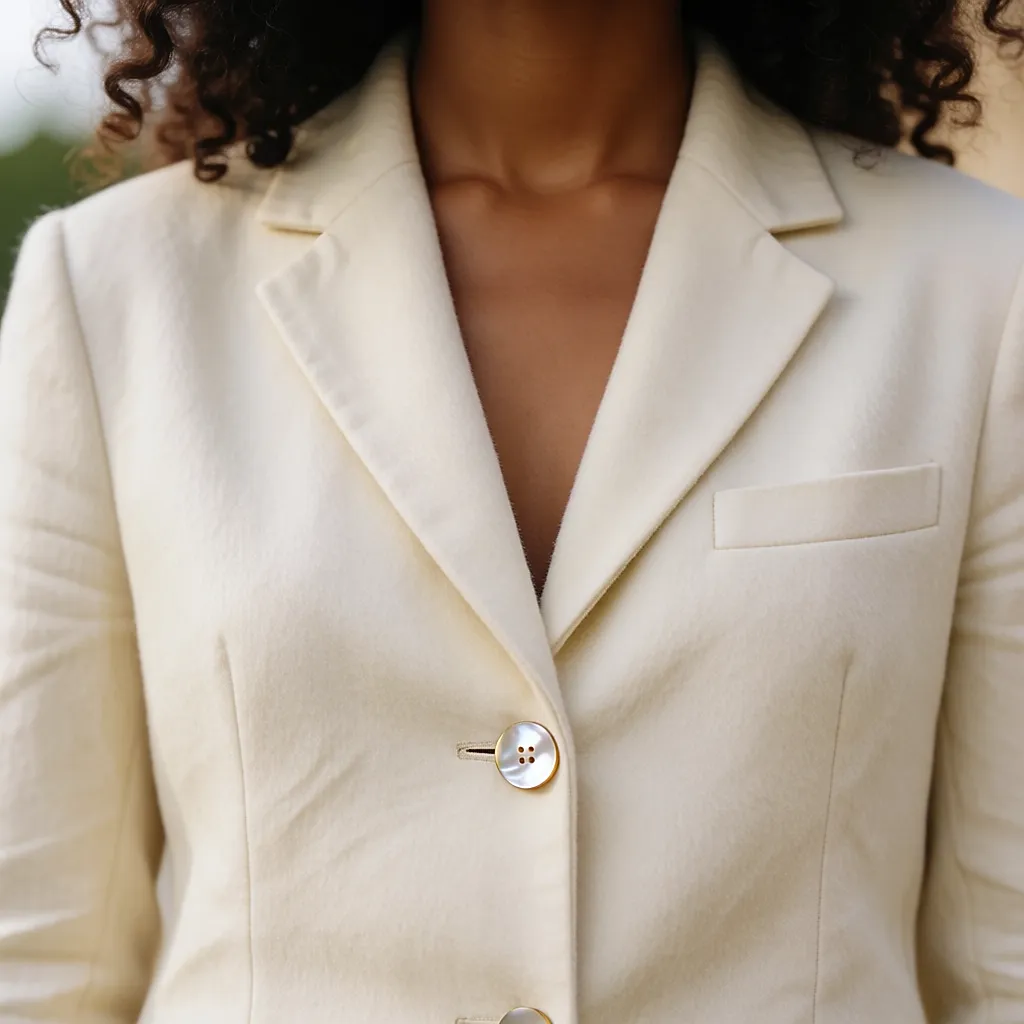
Mother-of-pearl is cold at first touch, a little heavier, and plays with the light — a milky gleam that shifts when you tilt the button. On a pale blazer it looks superb; it is also more fragile, vulnerable to knocks and not too fond of the washing machine. If you see it on an everyday jacket, check that a spare button is sewn into the lining.
Moulded plastic, finally, can be spotted by three signs: a uniform colour with no depth, exactly the same grain on every button, and a fine mould line along the edge, the trace of the mould. Tap it with your fingernail: the sound is drier. It is not a disaster — a decent plastic button can last for years — but it does not deserve to be priced like corozo.
The alignment test that shows no mercy
Before the material, there is the gesture. Button the jacket and look at the line: the buttons should sit exactly opposite the buttonholes, without pulling the fabric or creating a wave. A badly placed button shows immediately, and it is often the sign of a piece put together in a hurry.
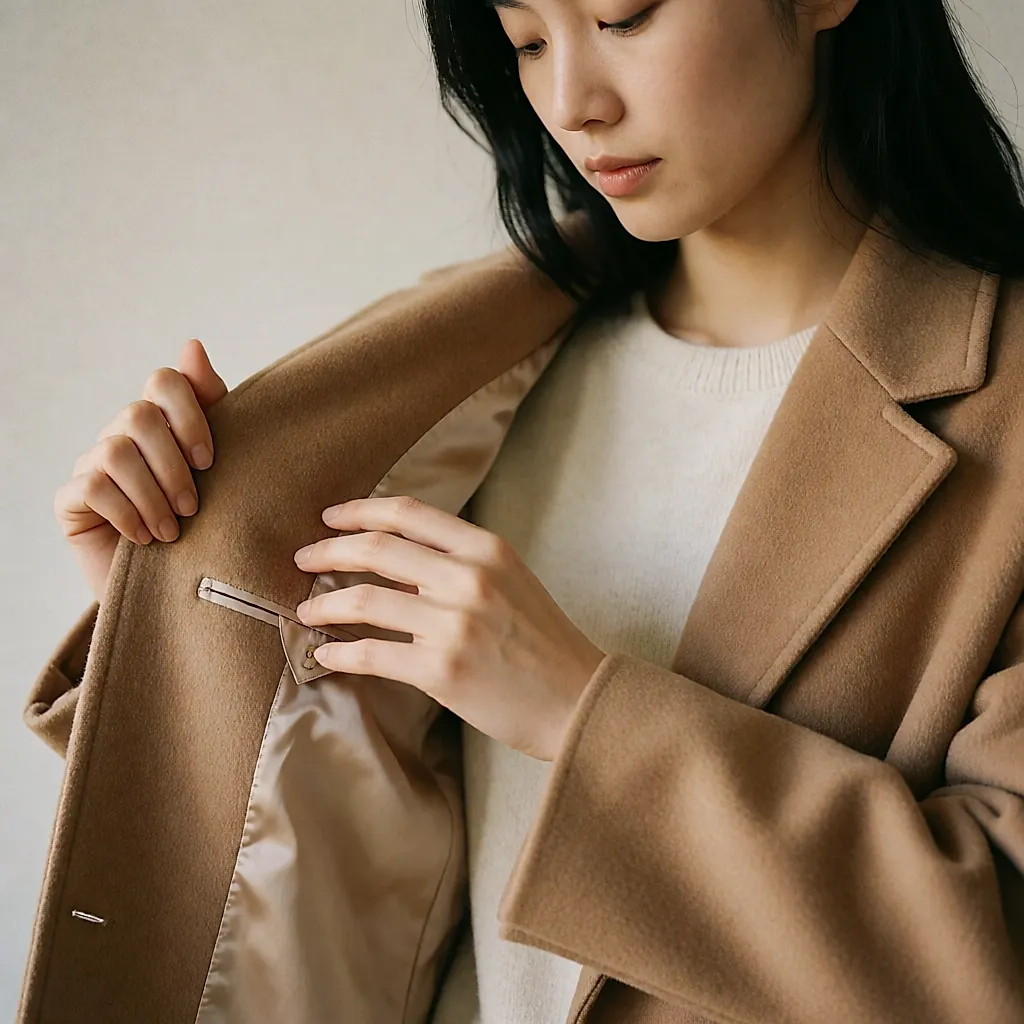
Count the stitches holding them on, too. Four holes, two neat parallel bars, thread that doesn't run off at an angle: that is clean work. A button that floats a millimetre above the fabric, and you are landed with a Sunday-night sewing job.
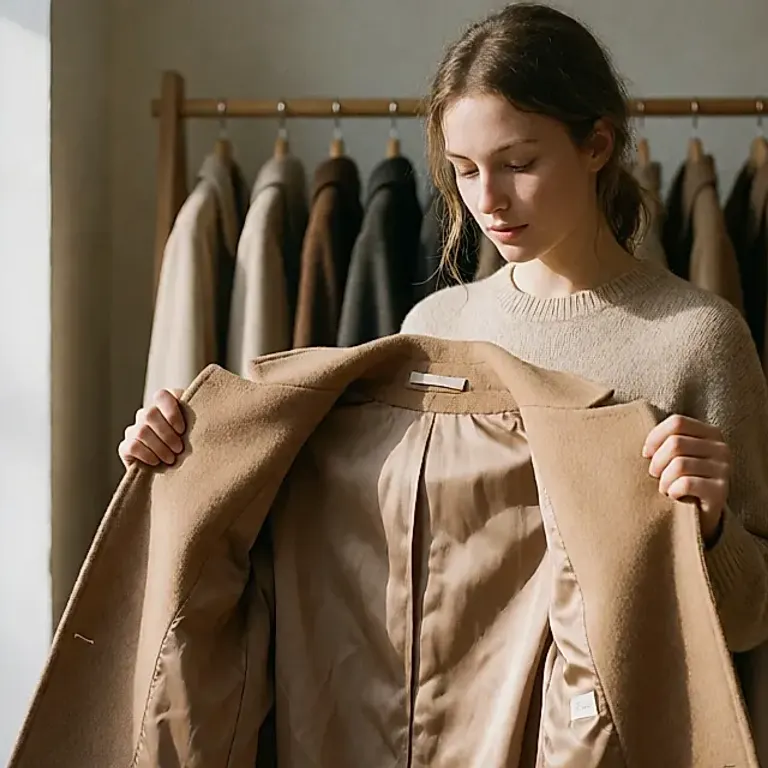
Three checks in the changing room. Give the jacket a gentle shake: no button should wobble. Look at the full set at a glance — the irregularities of corozo or mother-of-pearl are a good sign. And look for the spare button sewn into the lining: it is the small detail of pieces made to last.
What it costs
A full set of buttons generally sits somewhere between £4 and £25 at a haberdashery, depending on the material; having a seamstress attach them is an additional modest cost, which varies according to city and garment. But the real reflex, before you pay, is to check the material under your finger, the alignment and the spare button sewn into the lining.
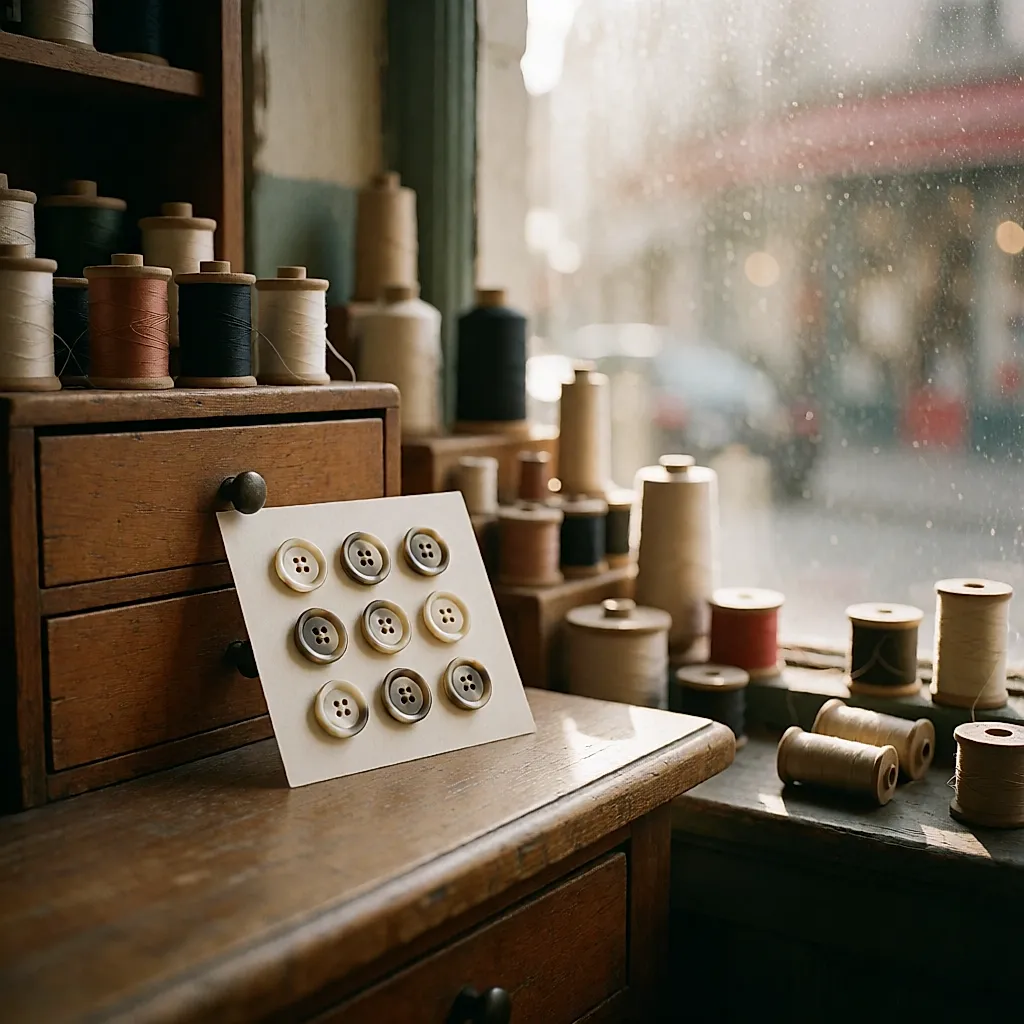
One caveat, all the same: on a piece with buttons engraved with an emblem, removing the originals takes away part of its history. There, it is better to repair than replace.
So, will you check the button next time? In the changing room, give it ten seconds: the material under your thumb, the alignment, the spare button sewn into the lining. Ten seconds that may save you an unnecessary alteration — or make you want to treat a jacket that deserves it to a proper corozo set.

Comments
Your opinion matters: rate the article, react and reply to comments.
Comments are moderated; AI-assisted comments are flagged. Text emoticons (8-), :-), <3…) are automatically shown as images.