

You know that moment in the fitting room, caught between the comfort of a legging and the look of a pair of jeans? A friend handed me a pair of black trousers the other day, offhandedly: "they're jeans, but you can cycle in them." They were jeggings, and you have to admit, on that one she'd called it exactly right.

A jean, a legging, or both?
The word doesn't hide anything: it's a contraction of jeans and legging. But on the rails you'll quickly find two families with very little in common, and that's where the choice gets tricky. On one side, the stretch-knit trouser printed to look like denim: fluid drape, elasticated waistband, often fake pockets. Comfort is maximal, the second-skin effect too, and that is really the point. On the other, the skinny jean in highly stretchy denim, with a bit of elastane in the weave — it keeps the structure, the seams and the topstitching of a real jean, but it hugs the leg. So the two look nothing alike.
The quickest test in the fitting room? Pinch the fabric and stretch it firmly. If it springs back quickly and the inside of the waistband is lined like a jean's, you're onto denim. If it stays marked and the back is plain jersey, you're holding a disguised legging. That's not a fault in itself — it's simply another piece, with another job. Up to you what you're after that day: a structured look that holds the silhouette, or a soft bottom half that disappears under a tunic.
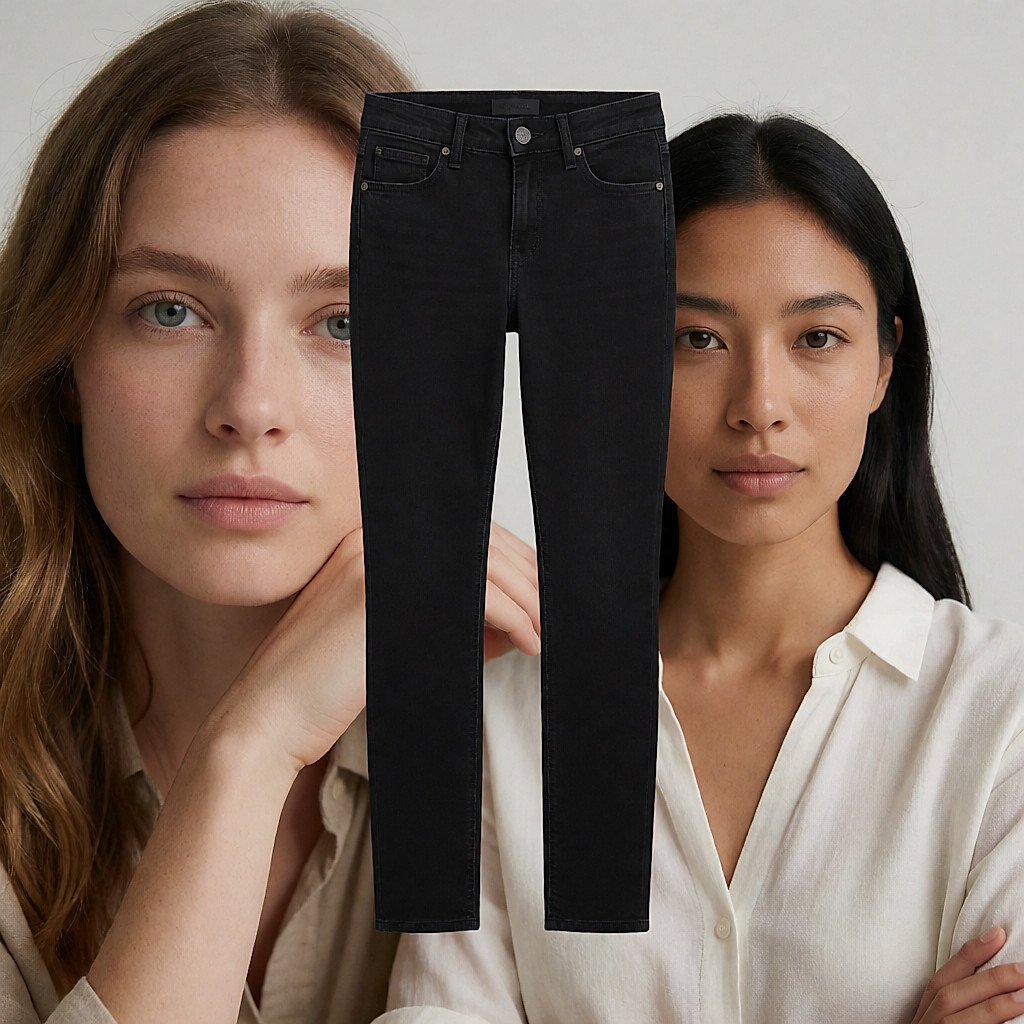
The silhouette has done a round trip. After years of loose cuts, the body-hugging style is back, and it's worn in contrast: tight bottom, voluminous top. The jegging then becomes a layering piece, almost a thick pair of tights slipped under a dress or a long tunic. It's actually at its most convincing then: discreet, it lets the volume on top do the work.
Getting the choice right
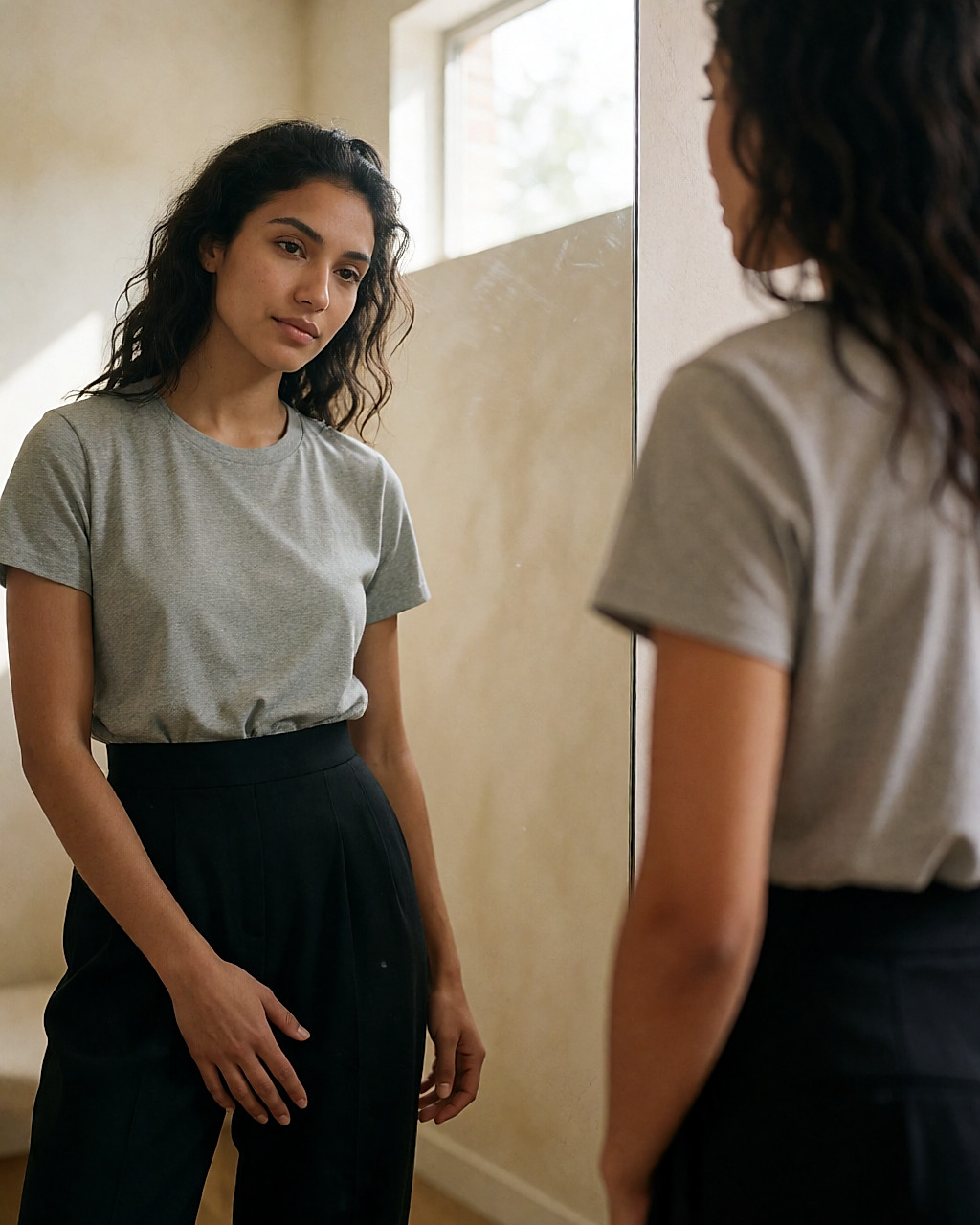
Three criteria matter more than the price tag, and they'll save you plenty of disappointment. First, the fabric weight: too thin and it shows every lump, goes white at the knees and lets light through — not exactly the effect you're after. The move that changes everything in the fitting room: stand with your back to a window and check the opacity. Second, the elastane content. Too high and the trousers take on a life of their own, sagging at the knee before the day's out. Third, the waistband: a high rise and a wide band hold everything in place without cutting into your stomach, which is already a lot.
On sizing, go with yours. Not one down, on the grounds that it'll stretch — we all know the theory, and we all know the result. Jeggings that dig into your hips won't soften, they'll distort badly.
Three quick checks in the fitting room: crouch down — if the waistband drops, it sits too low. Look at the crotch against the light — any transparency, back on the rail. Walk ten steps — fabric that rides up your calf will bother you all day.
What to wear it with
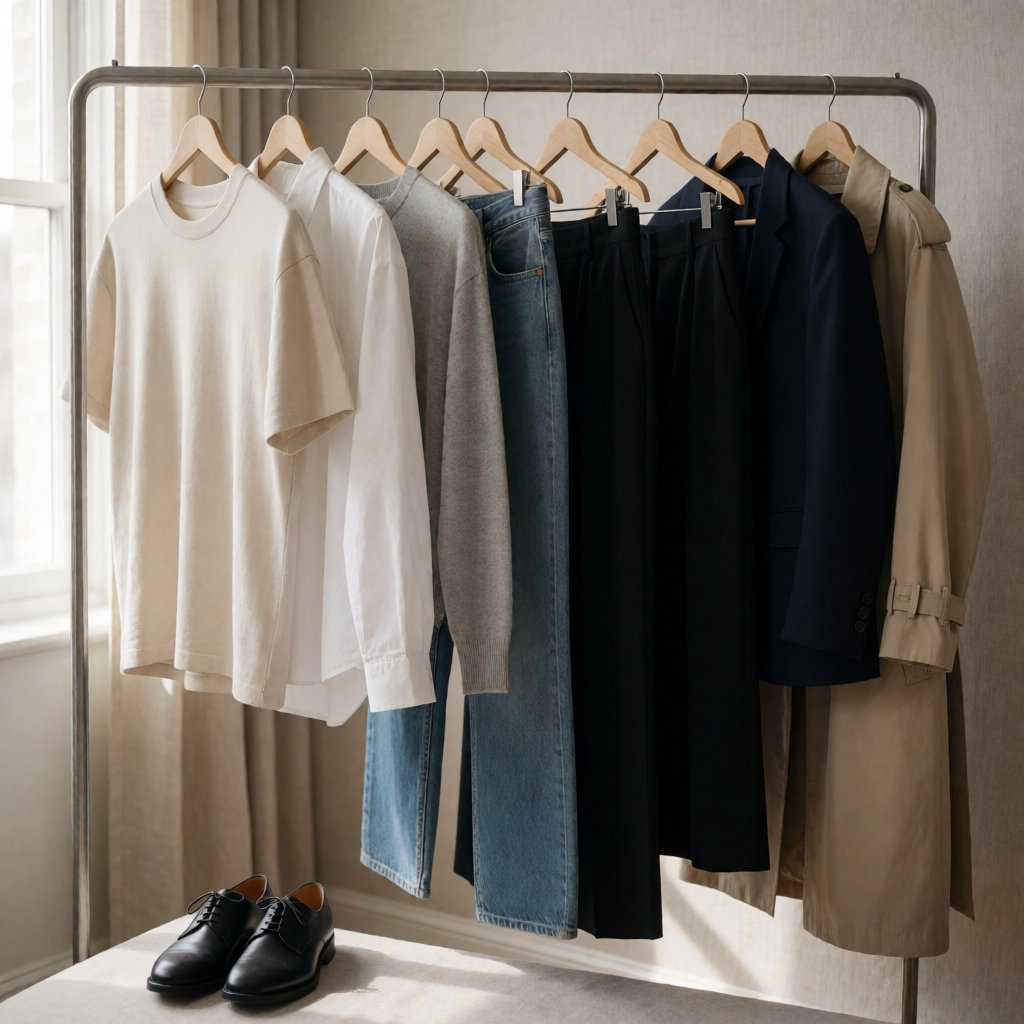
The rule fits in one line: tight on the bottom, loose on top. An oversized shirt, a straight blazer, a chunky jumper layered over a long t-shirt — it's the contrasts in thickness that give the silhouette its rhythm. There's nothing sadder than a fitted top over a body-hugging bottom: the eye no longer knows where to rest.

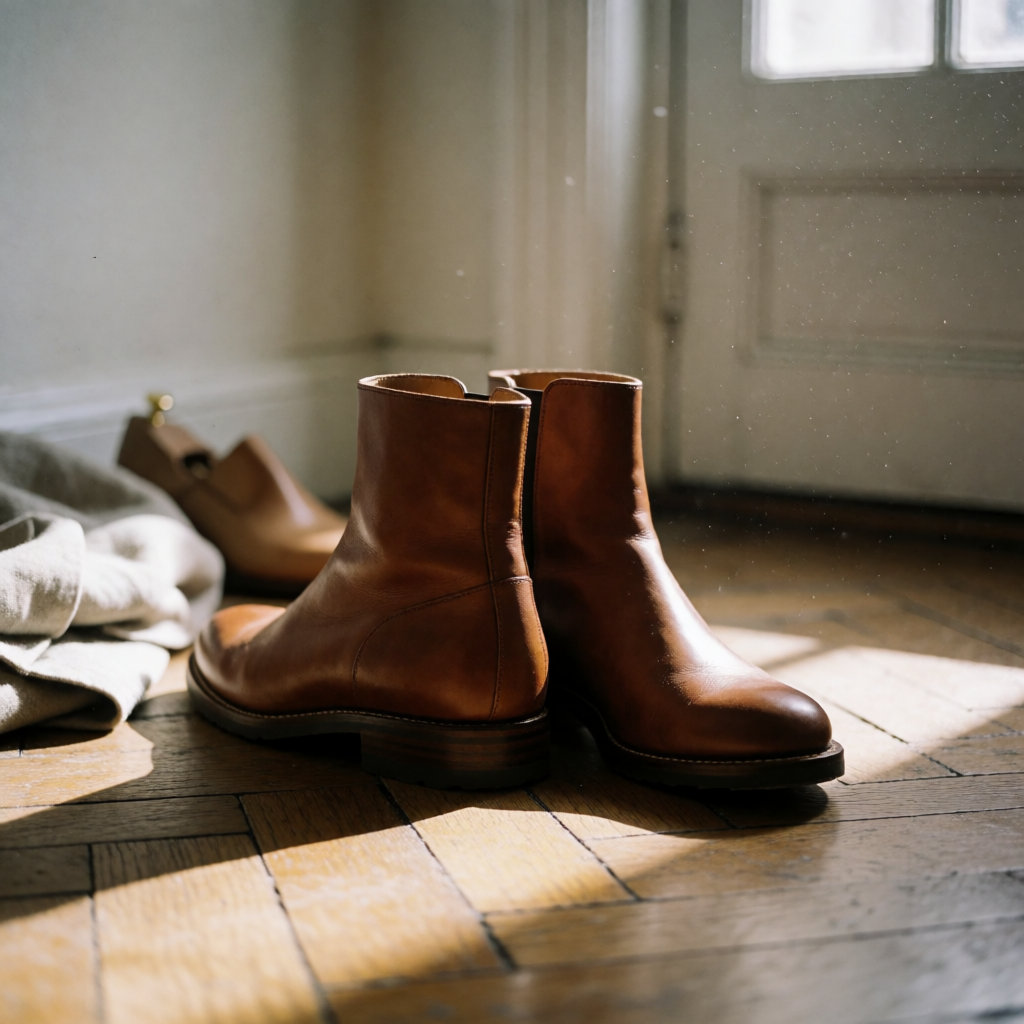
On your feet, it all depends on the drape. Tall boots or cowboy boots for a slightly rock total look, flat trainers for everyday, loafers if you want to lift things up. Black jeggings work as a capsule wardrobe basic; leopard print or very pale wash, on the other hand, quickly becomes a statement piece that dictates the rest of the outfit — best saved for days when you want the focus lower than the waist. And if your shape leans towards an A or a V, bear in mind that body-hugging styles forgive less than a straight cut: not a reason to go without, just a piece to choose with a little more care.
On materials, favour GOTS-certified organic cotton — the label covers the supply chain and the chemicals permitted — blends with European linen, or denim carrying the Oeko-Tex Standard 100 label, tested for harmful substances but silent on the garment's end of life. And keep in mind that a pair of jeans worn for five years beats three jeggings worn out in a season.
Budget
In the UK, expect to pay around £8 to £20 in supermarkets and fast fashion chains, £30 to £70 in denim chains and knitwear brands, £80 to £150 for thick denim made in Europe. The price mainly tracks the fabric weight, the elastane content, where it was made and the label — not necessarily how long it lasts, either!
Where to look: fashion aisles in supermarkets, high-street retailers, denim brands online — and above all second-hand: charity shops, Vinted, eBay, Depop, where stretch denim turns up at gentle prices. A hem at the tailor usually comes to £8-15, and taking in a waistband nearer £15-25: often cheaper than buying new.
Sources
- ADEME — Fashion and textiles: impacts and levers
- Refashion — French textile repair and recycling sector
- GOTS — Global Organic Textile Standard
- Oeko-Tex — Standard 100
- INSEE — clothing price index


Comments
Your opinion matters: rate the article, react and reply to comments.
Comments are moderated; AI-assisted comments are flagged. Text emoticons (8-), :-), <3…) are automatically shown as images.