
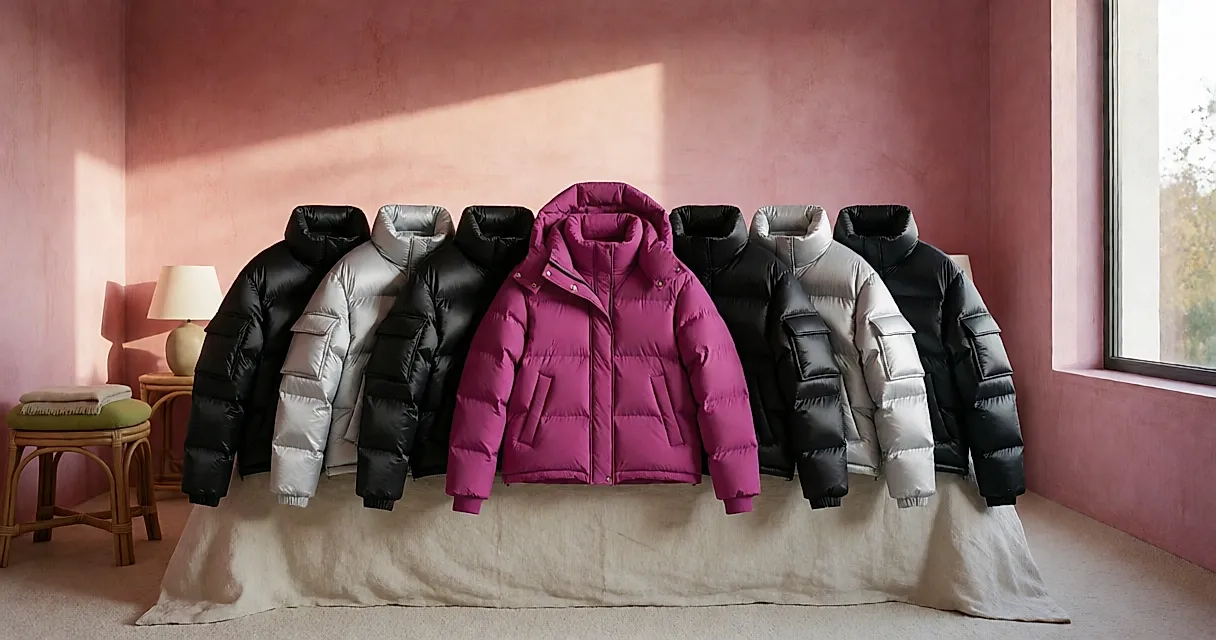
You can spot a sports puffer being worn in town in three seconds flat, and it is almost never the down fill that gives it away. It is the details: a fluorescent zip pull, a Velcro-fastened flap, stitching as wide as bed slats. Since fashion houses turned the puffer into a proper wardrobe piece, the line between the two families has come down to exactly that: what you do not notice at first glance. These details are easy enough to read in the fitting room, and they come at a price.
Length decides what the jacket is for
A hip-length puffer acts as a jacket: it stops abruptly, lets the knit underneath show, and works as well with jeans as with a well-cut trouser. A thigh-length style does the job of a coat and becomes the piece you throw over a blazer without looking as if you are off skiing. It is the most forgiving length in town: it covers the hips, keeps your legs warm when you sit outside, and works open over an all-black outfit with no effort.
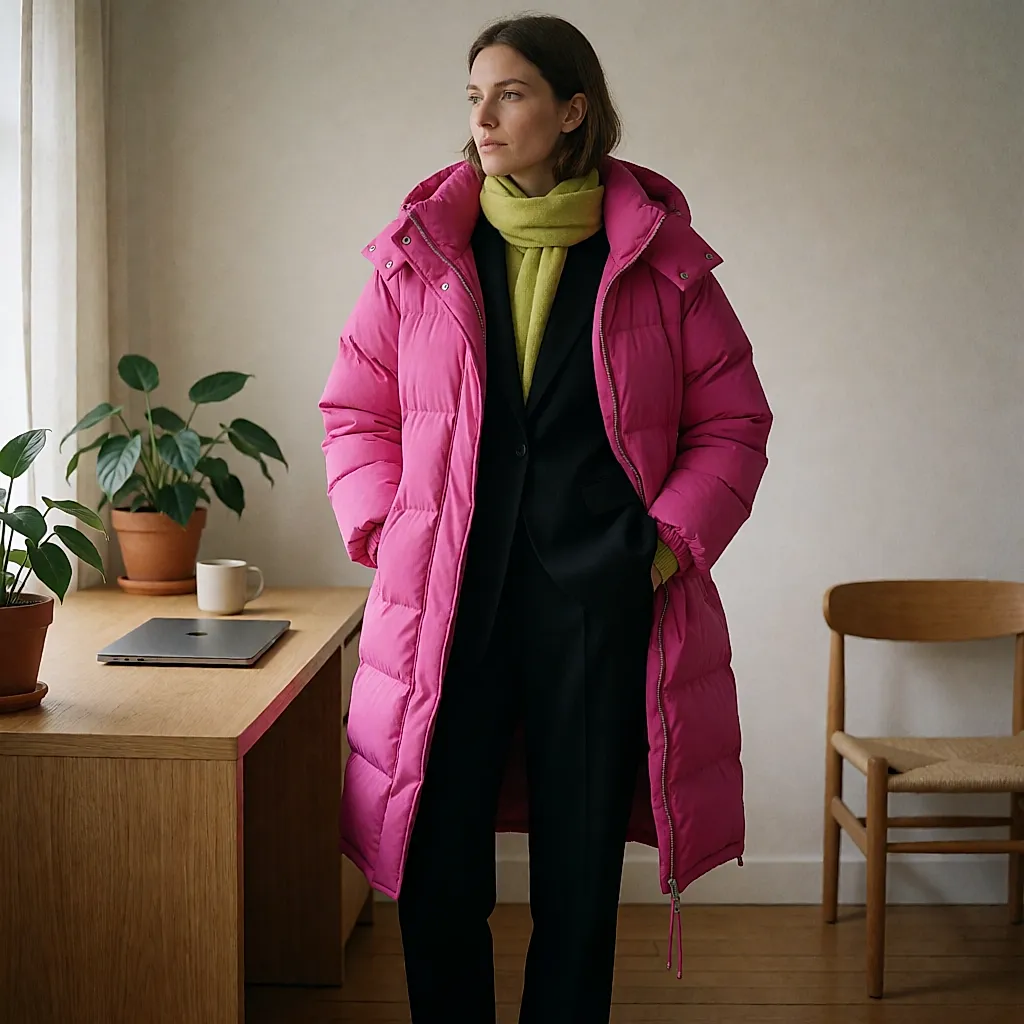
The classic mistake? A puffer that is too short and too puffy, stopping right at the high waist and cutting the silhouette in two. And one that falls below the knee, which is fine in the mountains but genuinely cumbersome on a crowded train. As for the belted version, it does create a waist — provided the elastic does not compress the down too much; otherwise it migrates and the line ripples.
On price, expect to pay around £80 to £130 for a decent mid-market short puffer, and £130 to £220 for a well-filled long one. Below that, if the length exists, it is often at the cost of a thinner fill.
Under £130, you will mostly find lightweight, packable styles, very good for transitional weather — Uniqlo's Ultra Light Down range is a well-known example — with sewn-through stitching, respectable warmth but dependent on how many layers you wear, and rarely a generous length. Between £220 and £430, the fill is better traced, the wind flaps lined and the cuts hang straight; beyond that, the difference is no longer warmth but finishing — baffles, lining, hidden buttons, metal zips, and sometimes a repair service offered by the house. On fill, the label is revealing: down and feathers are natural and easier to trace than synthetic wadding, a point worth keeping in mind for a piece you hope to keep for ten years.
The stitching tells you how it is made
A sewn-through construction — where the two layers are stitched together — leaves a line with no down: a thermal bridge, through which cold passes easily. The most technical pieces place the down in internal baffles, which removes those cold spots at the cost of a little more bulk. On a city puffer, the workmanship is judged by the fineness of the pattern: regular, closely spaced lines that stop short of the zip and pockets instead of running straight through everything.
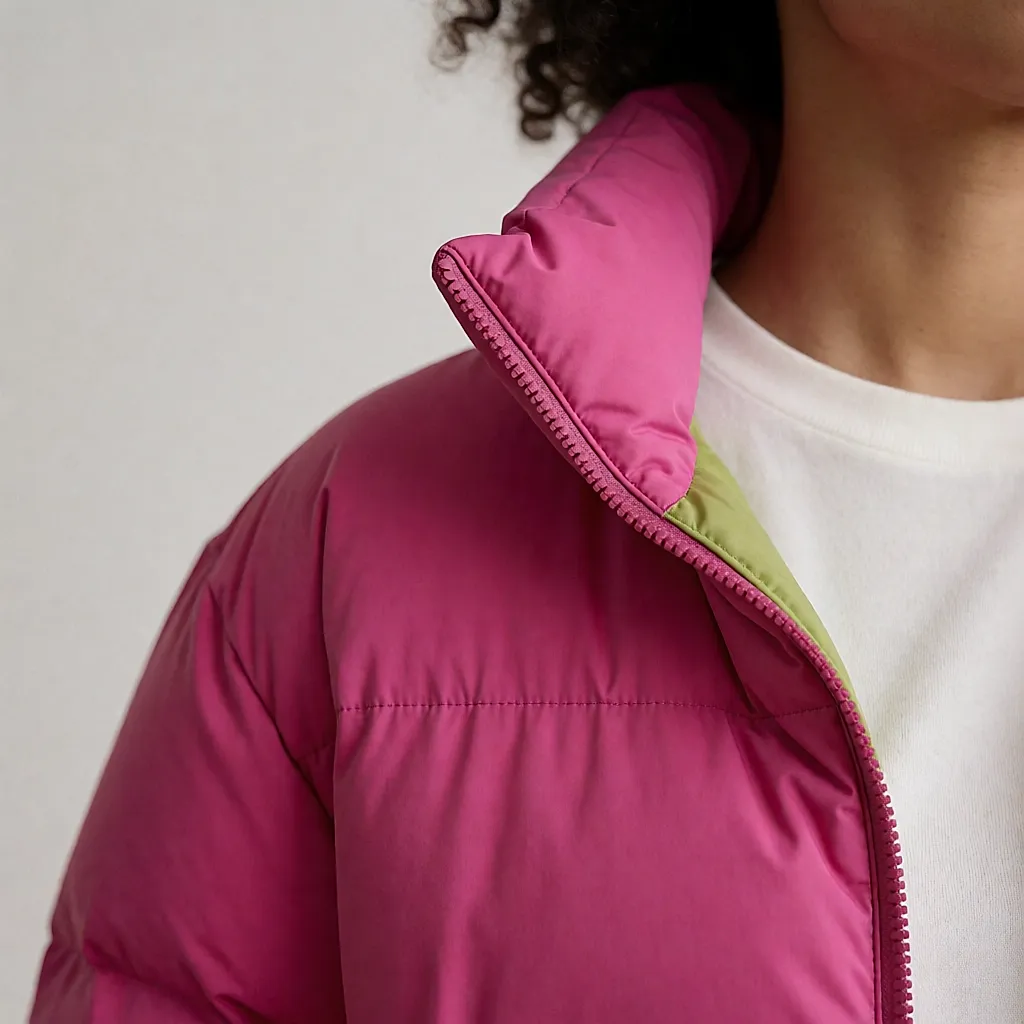
Then look at the shoulders. An armhole that sits exactly on the shoulder bone gives a clean, almost tailored line. A wide, dropped shoulder, very common on outdoor styles, rounds the back and makes the silhouette look older. In practice, it is often around £260 to £350 that you start to see baffles, neat stitching and a properly finished lining inside — the kind of detail you do not see, but which changes the drape.
The fastening is where the wind gets in
A zip on its own, however chunky, does little to stop the wind. What makes the difference is the storm flap: the strip of fabric behind (or in front of) the zip that stops air coming up underneath. On city styles it is often lined and fastened with a few discreet press studs; on sports styles it is held by Velcro, which has one major drawback — it catches wool and fine knits.
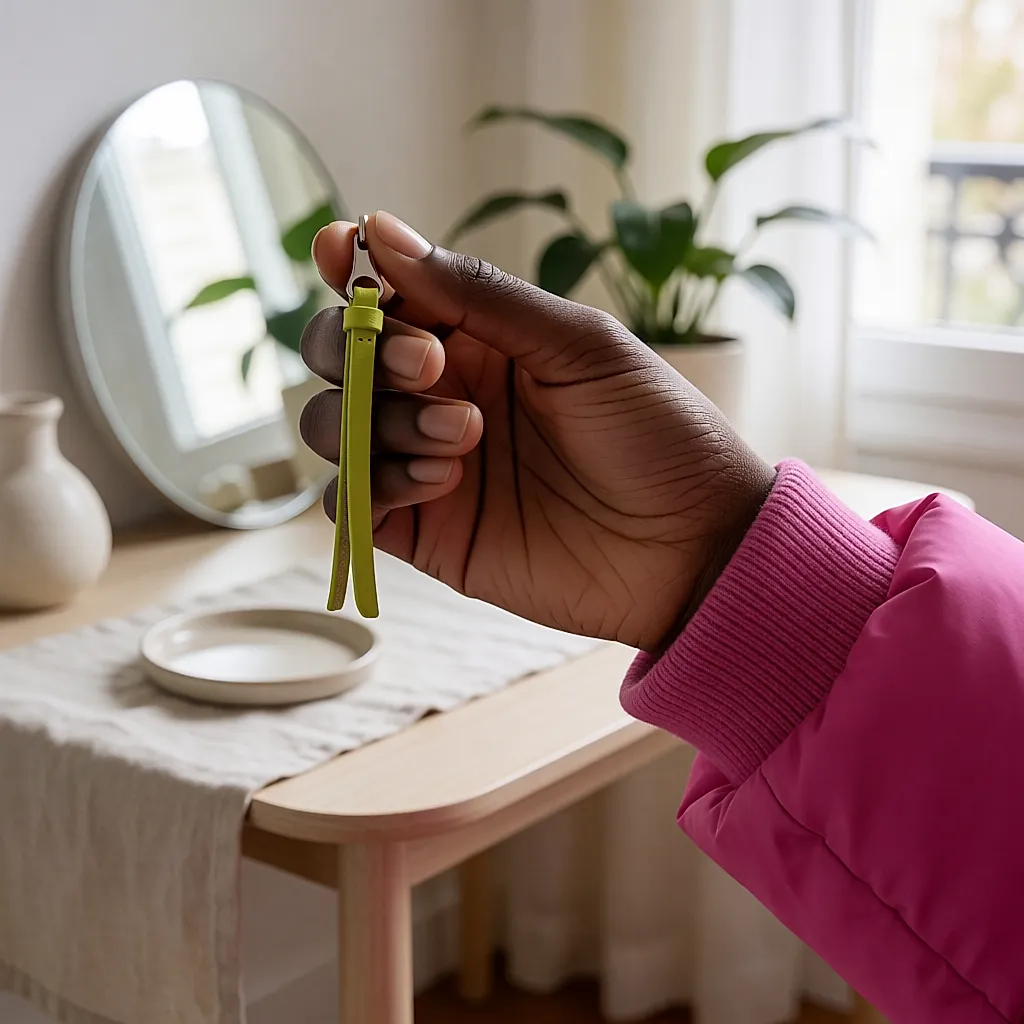
The rest is a matter of small details. A two-way zip lets you open the puffer from the bottom when you sit down, without undoing it completely. A stand collar with a chin guard keeps the cold zip away from your skin. Ribbed cuffs or a hidden elastic stop air better than a loose sleeve. And a drawcord hem is better than a straight hem, which lets draughts in from below.
What gives a sports puffer away
A contrasting logo on the chest, coloured zip pulls, reflective strips, a satin fabric that rustles as you walk, high cargo pockets: a sports puffer does not hide where it comes from, and that is exactly as it should be when you are walking in the woods. The problem is not the jacket but the accidental mix — a technical puffer with tailored trousers and leather boots, where the two worlds cancel each other out.
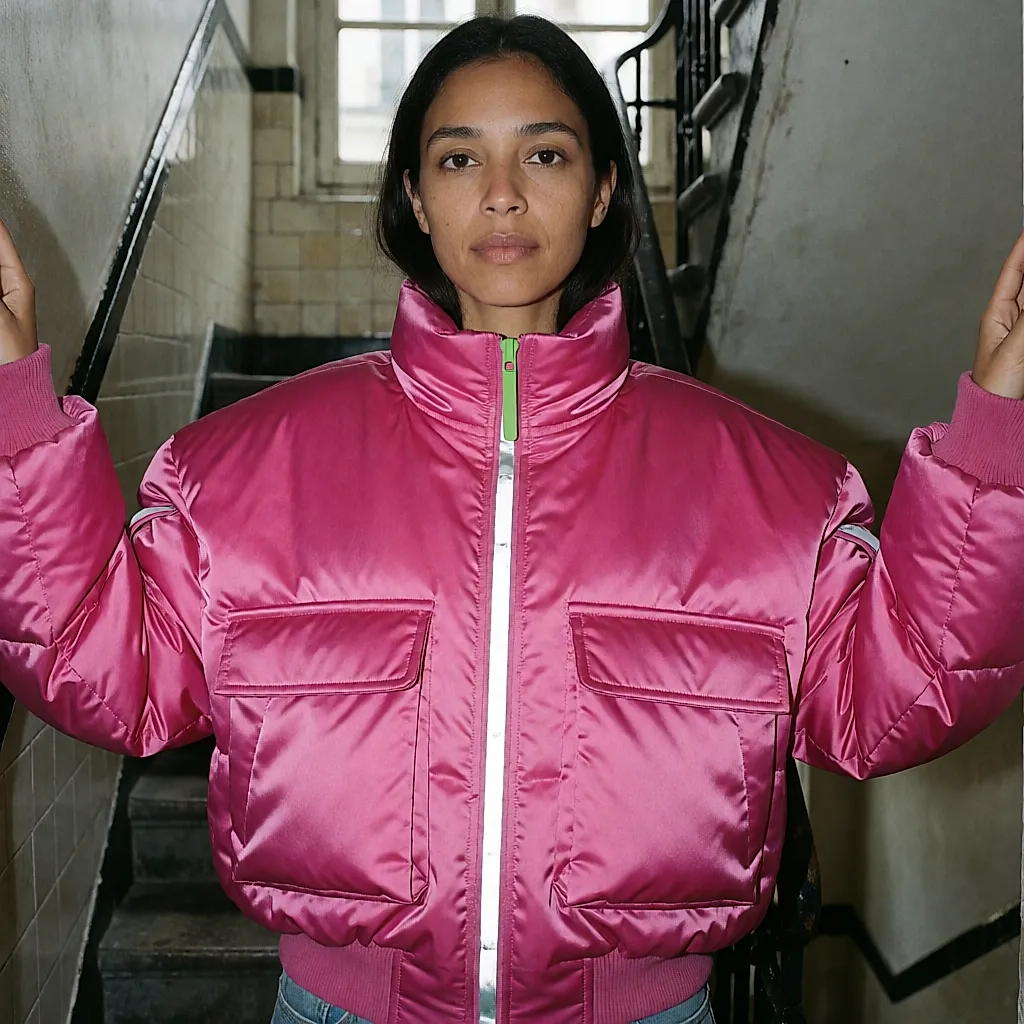
So there are two options. Either you commit to the outdoor look from head to toe, and the whole outfit becomes a deliberate choice. Or you look for a city piece: a matte surface, a discreet zip, a clean fit, flat pockets and a soft outer fabric that does not rustle. One detail also gives a ski jacket away: sleeves cut wide to layer over a fleece, which flap around once worn over a simple shirt.
Three checks in the fitting room. Run your hand behind the zip: can you feel fabric, or just the zip teeth? Raise your arms: does the puffer ride up to your ears? Give it one shake: down that escapes through the stitching is down that will keep escaping all season.
Then there is care, often the real weak point. Wash it rarely — twice a season is usually enough in practice — on a cold cycle, and plump the down in the tumble dryer with two clean tennis balls; that is what restores its loft. A tear can be repaired: a £350 piece that lasts eight years still makes more sense than a £100 piece bought three times over.
And the best judge, ultimately, is the fitting: put the puffer on over the knitwear you will actually wear, raise your arms, sit down, do the zip up again. That little fitting-room routine will tell you more than any label — and it is what will decide whether the piece stays in the wardrobe or becomes the one you reach for without thinking.


Comments
Your opinion matters: rate the article, react and reply to comments.
Comments are moderated; AI-assisted comments are flagged. Text emoticons (8-), :-), <3…) are automatically shown as images.