

On the label of your favourite shirt, there is plenty: fibre composition, country of manufacture, the little washing symbols that remind you an iron is not a decorative accessory. One line is missing. The name of the person who sewed the collar, and the conditions in which they did it.
This is not a poet's daydream. Supplier traceability, long confined to the 'our commitments' paragraph at the bottom of a brand's website, is changing status: it is becoming a legal obligation, which means a document you can request, read and challenge. For your wardrobe, that shifts quite a lot.
Forced labour remains a reality around the world, and clothing — long chains, plenty of subcontracting — is among the most scrutinised sectors. That is the backdrop. Now for what it changes in the wardrobe.
The blind spot in a multi-tier supply chain
A brand sews almost nothing itself. It places an order with a workshop, which sometimes subcontracts part of the volume to another workshop, which hires through an intermediary. Each tier adds another layer and removes visibility from the one above. This is where cases of forced labour sit: not in a horror-film factory, more often in link number three, the one nobody ever mentions in the catalogue.
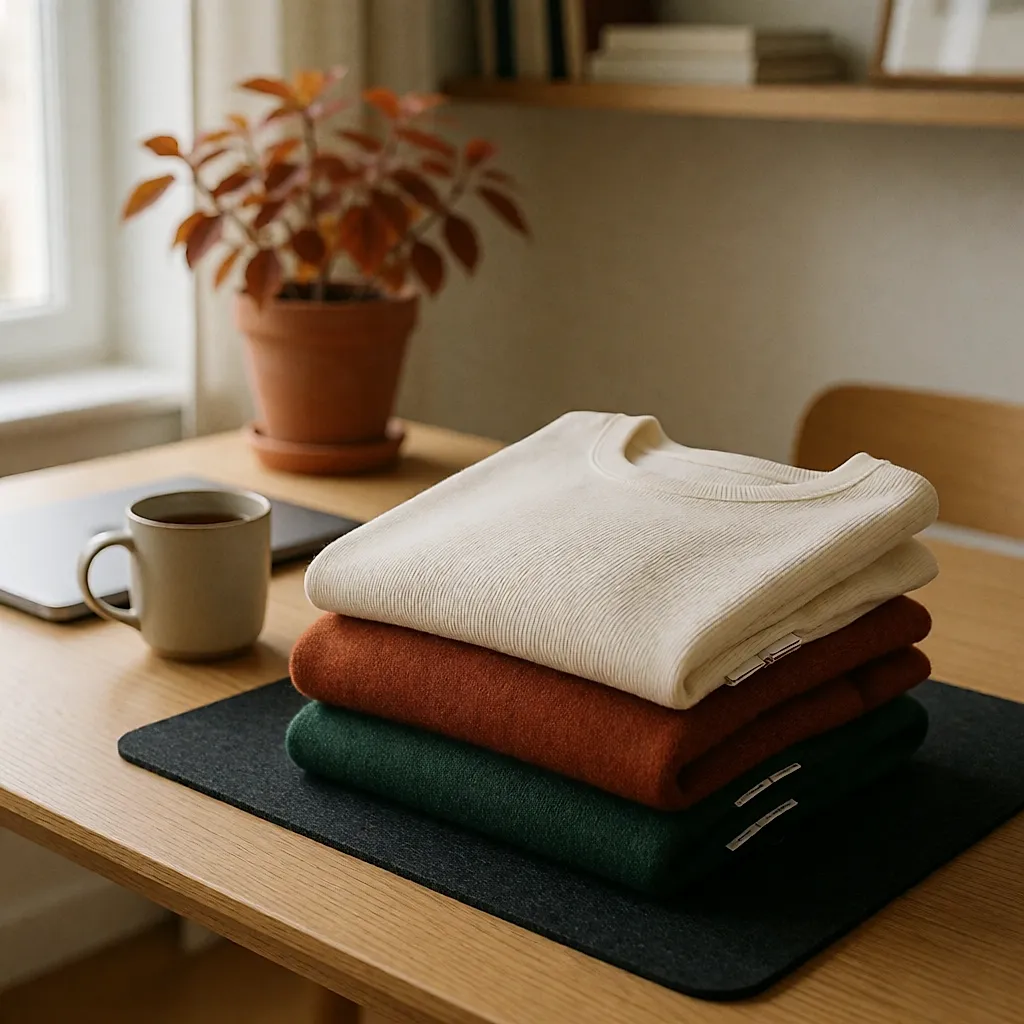
That is why a 'Made in' label has so long told you where a piece was assembled, never by whom or for what wage. A T-shirt can change hands three times before it reaches your wardrobe, and a well-meaning brand can have no idea what is happening at the end of its own chain. This is exactly the blind spot that cascade subcontracting makes legally awkward.
What the law puts on the table
In the UK, the Modern Slavery Act 2015 requires large businesses to publish an annual slavery and human trafficking statement. It does not map every supplier, but it does put forced labour on the public record. In France, the 2017 duty of vigilance law requires large companies to publish a vigilance plan: risk mapping — human rights, health, environment — across their subsidiaries and suppliers, plus the measures planned to prevent those risks. Forced labour sits at the top of the list, among serious human rights harms. This is not a nice sentence for a report: it is a public document.

At European level, the framework is widening. A due diligence directive adopted in 2024 is due to be transposed by member states, with a timetable that is still debated; a regulation also plans to keep products made with forced labour out of the European market. In fashion terms: the supply chain becomes an object of law, rather than a feel-good appendix to the annual report.
And here is the good news: the pen is not in your hand. Nobody is asking you to audit a spinning mill on a Tuesday afternoon. But you have the right to look at what is published — and to choose on that basis.
Three questions that tell you a lot
The vigilance plans of the brands concerned are online, often as PDFs, sometimes buried under 'commitments'. You are not being asked to read eighty pages. Three questions are enough to get a sense: does the brand name its tier 2 and tier 3 suppliers, or only countries? Is there a worker grievance channel that workers can actually access, or just an annual audit? And above all, what happens when a problem is reported?
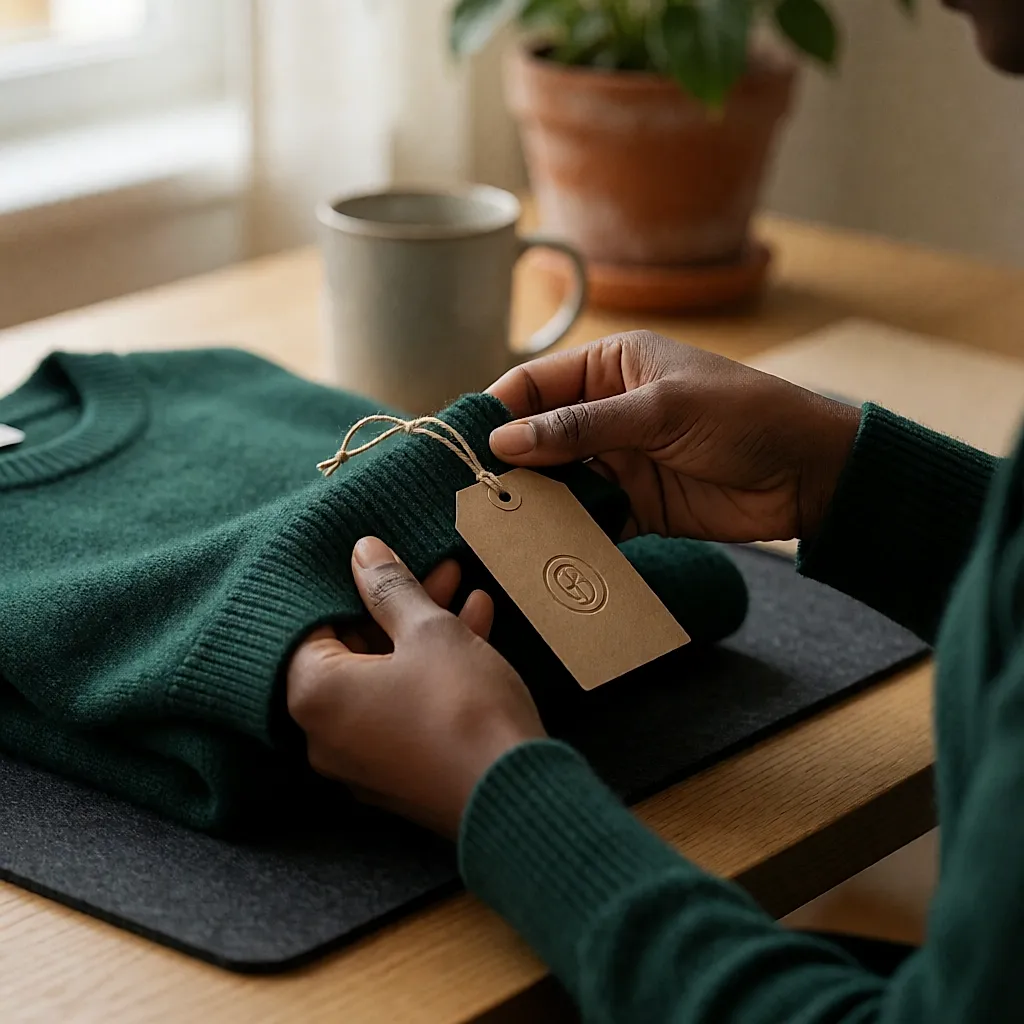
A brand that answers, even imperfectly, says more than ten green labels. Beware the rest: a label certifying the material — organic cotton, recycled wool — does not certify working conditions. These are two separate chains, easily confused because the same word 'responsible' is printed on both.
Before you check out, search the brand's site for 'modern slavery statement' (or 'duty of vigilance' if you are looking at a French or EU brand) and see what comes up. Named workshops? Dates? If nothing appears, write to customer service: the reply — or the silence — is information in itself.
What it costs
A better-traced piece rarely costs the same as an opaque one. As a rough guide, expect around £25–£45 for a cotton T-shirt from a brand that documents its workshop, £80–£180 for a sweatshirt or knit, and £150–£350 for a trench or coat. These gaps come from the fabric, where it was made and the volumes produced: transparency explains only part of the bill, and a piece that sees you through five winters often costs less than an impulse buy that bobbles after the second wash.
If the budget is tight, second-hand remains the smartest shortcut: expect roughly £15–£60 for a knit from a charity shop or resale platform, original label included — composition, country of manufacture, sometimes the workshop. You find pieces that have already earned their keep, ready to wear, care for and keep. It is also the most low-key version of traceability: no need to know who knitted a jumper that already exists.
Forced labour will not disappear because a form is online. But the balance of power is shifting: what was a communications argument is becoming a verifiable document, and a customer who asks costs less than a customer who walks away. So the next time you turn a seam inside out, look at the label. If it is chatty about the material and silent about the hands that made it, you know what to ask next.


Comments
Your opinion matters: rate the article, react and reply to comments.
Comments are moderated; AI-assisted comments are flagged. Text emoticons (8-), :-), <3…) are automatically shown as images.