
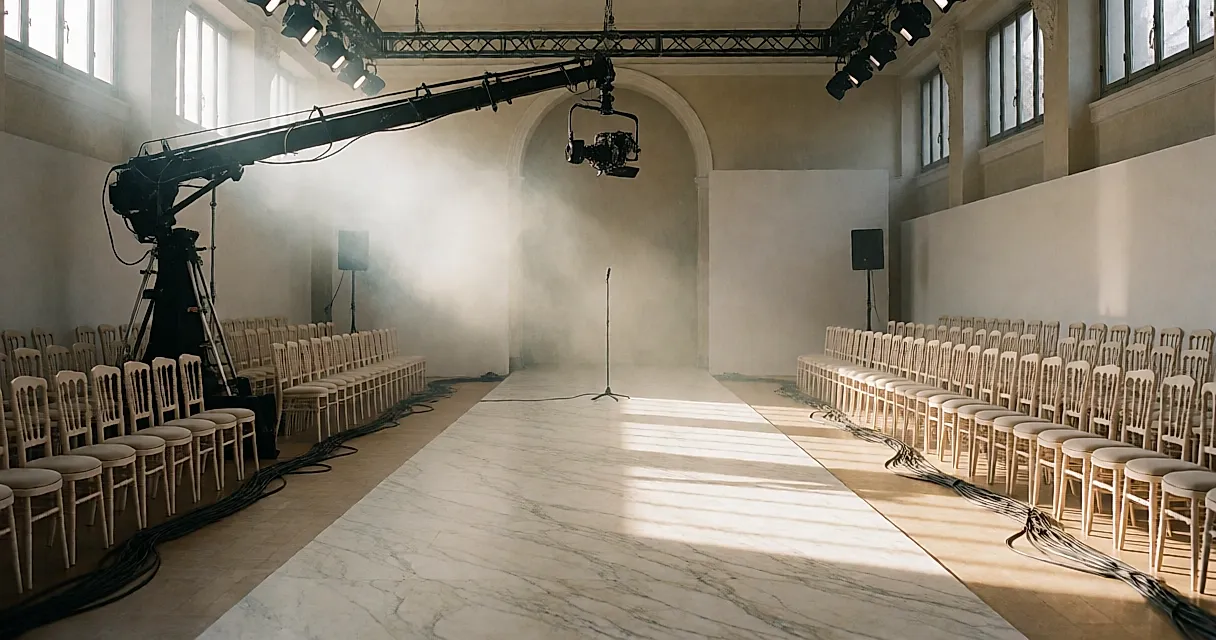
Sunday night, 10.47pm. You're on the sofa with a blanket over your knees, and an eleven-second video is showing you heels clipping across a marble floor. The show happened eight days ago. Yet here it is again, between two pasta recipes. At what point exactly did the fashion show stop being an appointment and become a programme?
The dress never arrives on its own
On the invitation there's a house name. Behind it, another company: the one that found the venue, negotiated the electricity, cast the models, set the lighting and sorted the reception, the security and the livestream. That company doesn't work for a single client, and that's the whole point: it sells a method, an address book and a house style of staging to several labels, sometimes across several seasons in a row. A show is no longer a one-off; it's a line in a catalogue.
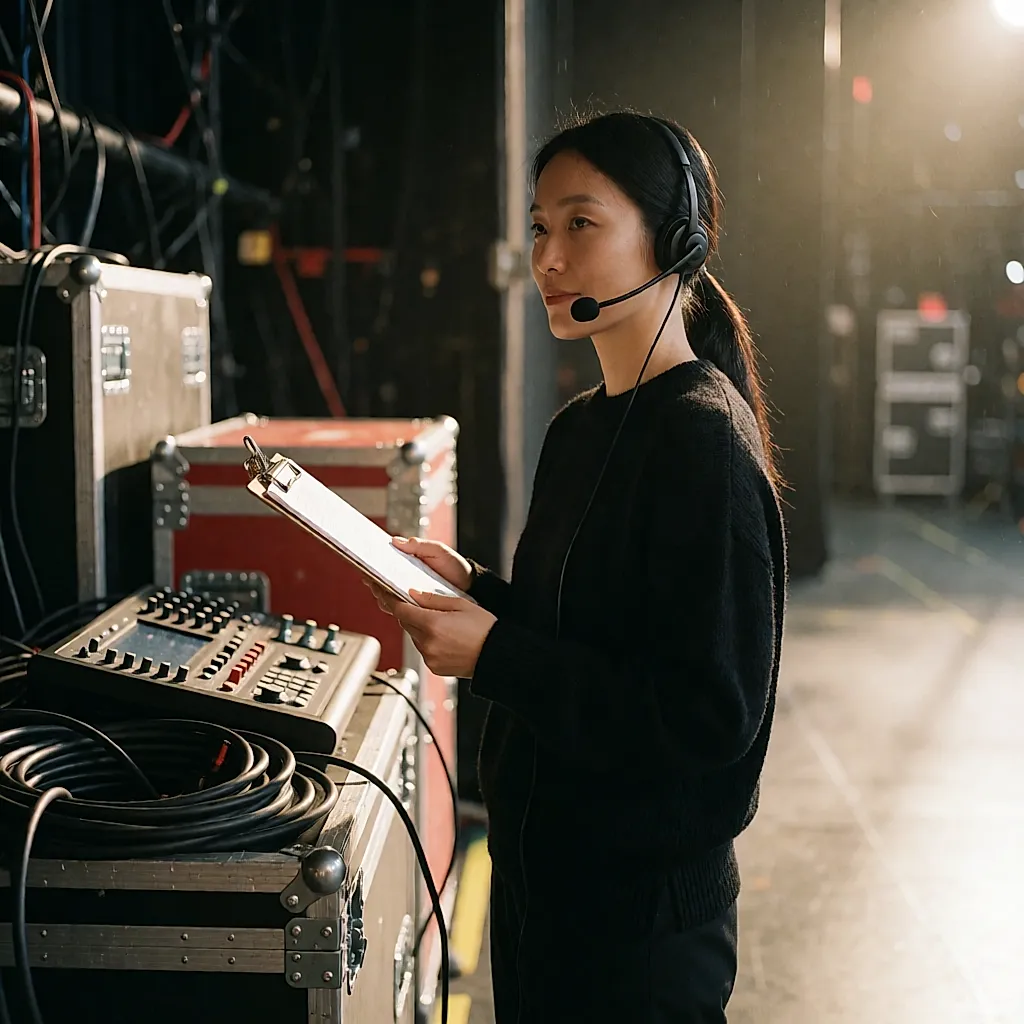
Add the money that comes with it. Production agencies are growing, bringing in investors and buying up expertise — lighting, sound, casting — so they don't depend on anyone on the day itself. And because a picture is worth more than a speech, they sell the story too: the set that will make the photo, the front row that will make the front page, the moment that will survive on loop. In this arrangement, a collection becomes one raw material among others.
The show is filmed before it's seen
The direct consequence: clothes are no longer designed only for the room. A silhouette has to read in three seconds on a six-inch screen, a drape has to hold up in vertical video, a full look has to produce an image before the front row has even had time to get its phone out. You've noticed how the set eats up half the frame? That's deliberate: these are formats.
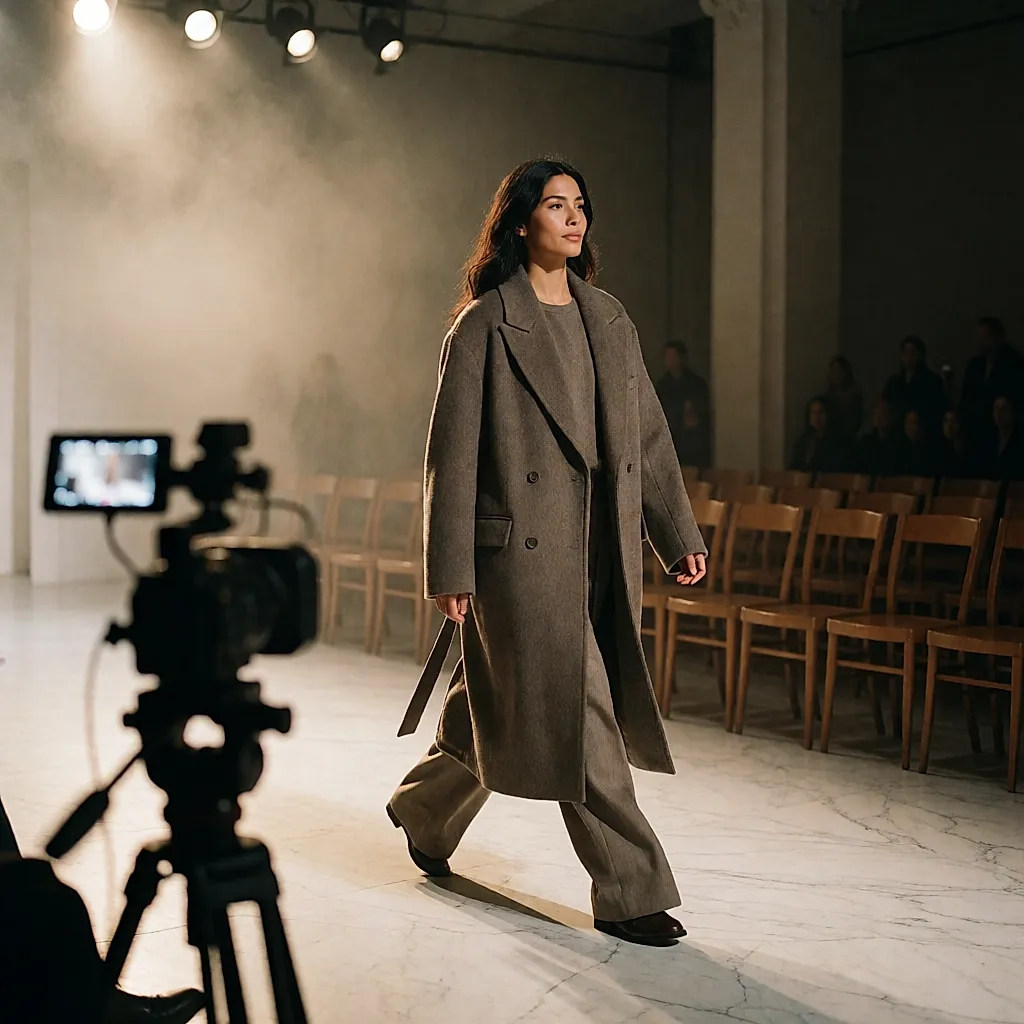
Is that necessarily bad news? No — you see the clothes better than you did fifteen years ago, from the front, from the back, in movement, without waiting until the following month. But there's a vertigo to it: between the piece designed for the wide shot and the one you'll pull on at 8.12am on a rainy Tuesday, the gap has never been so visible, and nobody films that.
What this means for your wardrobe
The good news is that you don't need to follow the machine to buy well. The show is a trailer; the shop is the final cut. What reaches the rails has already been filtered by buyers, often reduced to the most wearable pieces — and that's all to the good.
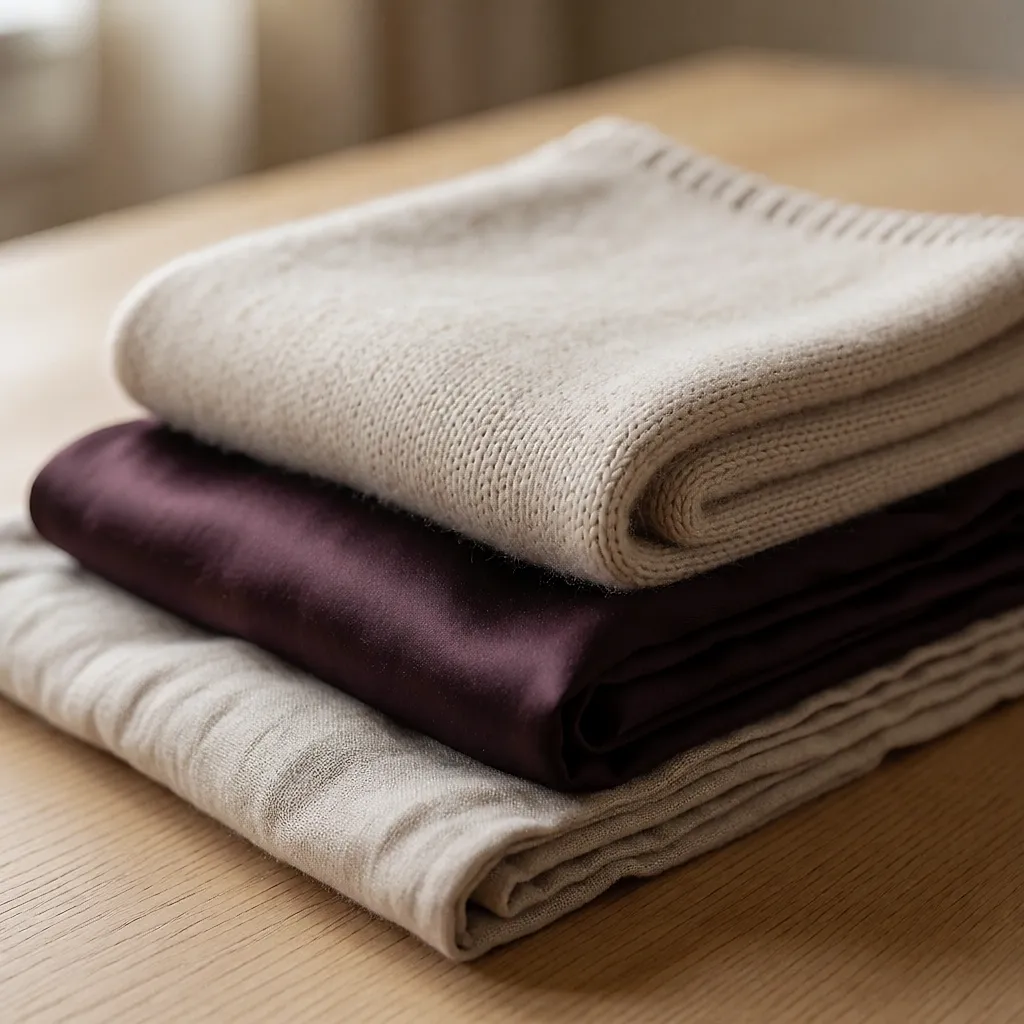
Which leaves not buying the set. Look at the composition (wool, linen, organic cotton, silk) rather than the name of the collection, imagine the piece without the music or the marble, and ask yourself whether it will hold up on a Monday morning. A well-cut trench, a jumper that falls just right, a skirt whose fabric moves: that's what survives a show. A piece that exists only in an eleven-second video, far less so — we all know the parcel opened at 11pm and the return label printed at 7am.
Budget
On the production side, the figures are nowhere to be seen: no public price list, just quotes passed from hand to hand. The rough figures that circulate in the industry start at tens of thousands of pounds for a show in a hired venue with stage management, casting, hair and make-up and security, and climb steeply as soon as you mention set design, a livestream and several hundred guests.
For your wallet, the bill is quieter. The merch that comes with a collection — T-shirt, cap, tote bag — often sits between £30 and £80, while a piece in wool or vegetable-tanned leather goes well beyond that. Hence the appeal of the second wave: second-hand, end of line, pieces you keep for ten years rather than ten weeks.
The habit that costs nothing: before you hit buy, look for a photo of the piece on its own, laid flat, on a white background. If you still like it without the set, the music and the model, you've found a keeper. If it only works in motion, you've just saved yourself a return.
The show has become an industry, and nobody is going to turn the clock back. That's no reason to watch it like an advert: you still have the last word, the one that comes with the card and the rail. The spectacle is free; the wardrobe gets decided cold, on a Monday morning, with the returns label turned between your fingers. And no production company can film that for you.


Comments
Your opinion matters: rate the article, react and reply to comments.
Comments are moderated; AI-assisted comments are flagged. Text emoticons (8-), :-), <3…) are automatically shown as images.