
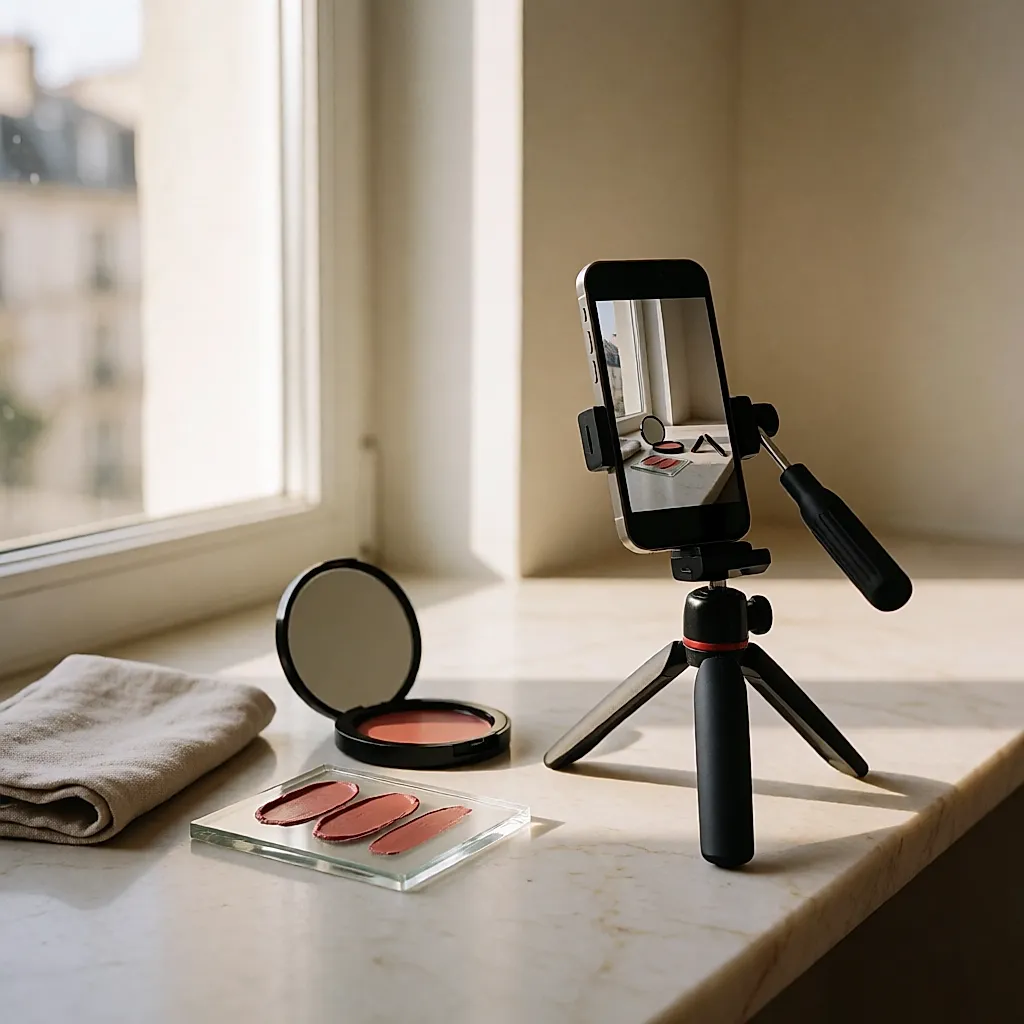
You're looking for the autumn lipstick. Not the one from the billboard campaign — the one circulating in Stories, note apps and tabs left open at midnight. Honestly, that one didn't wait for a marketing green light: it has a first name, an account, a community. And it was adopted before anyone thought to put it in a pot.
Trends start in the comments, not the labs
In China, the mechanics have quietly flipped. Where we still imagine a beauty house dictating the season's colour from a glass tower, it's often creators who start the movement. A shade of eyeshadow, an icy texture, a slightly wet finish: it all starts with a video, a tutorial filmed by the window, a comment asking for the recipe — often on Xiaohongshu or Douyin, two platforms where Chinese beauty routines circulate. Co-creation seems to be becoming standard practice.
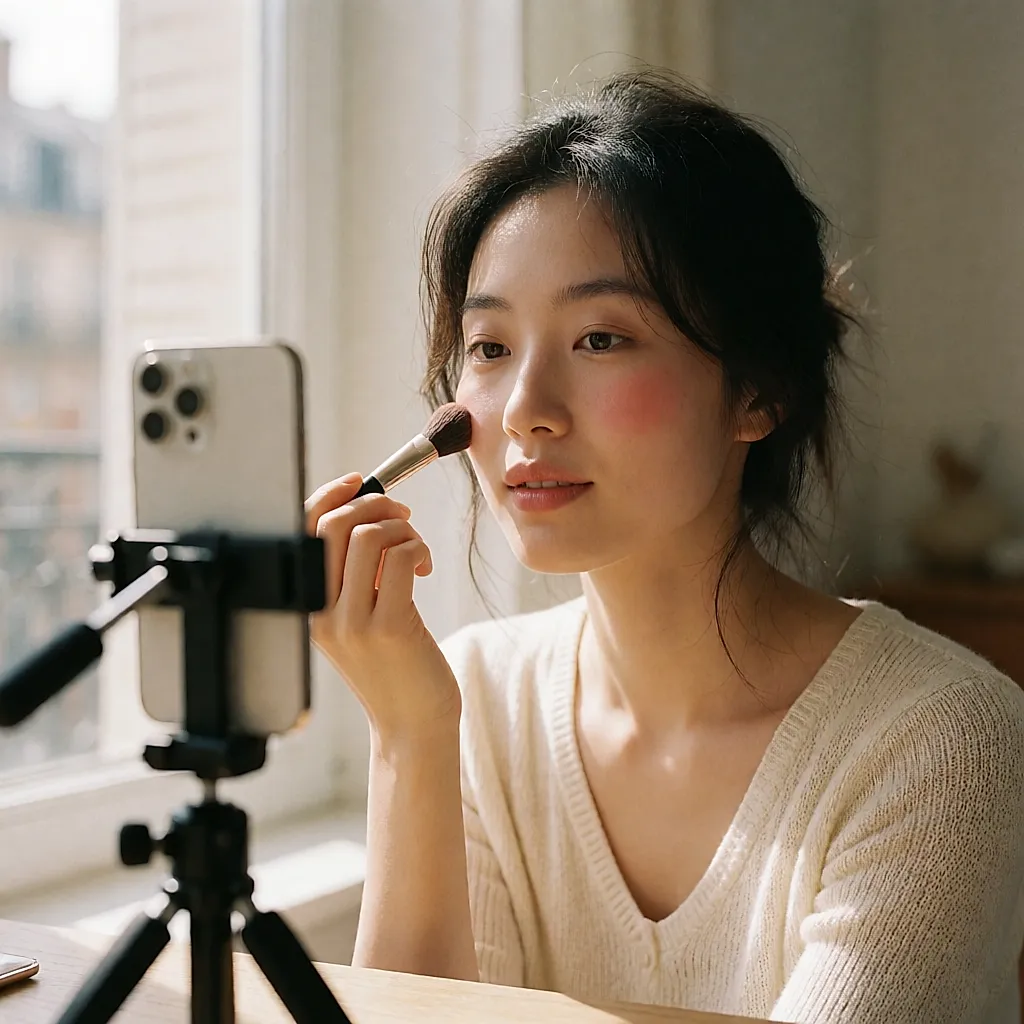
And it's not a niche micro-trend. Beauty creativity seems to renew itself mainly through cross-pollination and young creators. Make-up crossing over with fashion, vintage, photography, craft. The result: ideas move faster than briefs, and a 22-year-old can launch a lip colour before a big beauty group has convened its first committee meeting.
Trends are decided upstream
This is where the language gets fun. Platforms no longer just host creators: they co-build coherent sets of shades, textures and techniques that will define the season. We're no longer talking about a collection handed down from on high, but something assembled by many hands. Creators bring the use and the technique, the platform brings the spotlight, and the product arrives at the end of the chain.
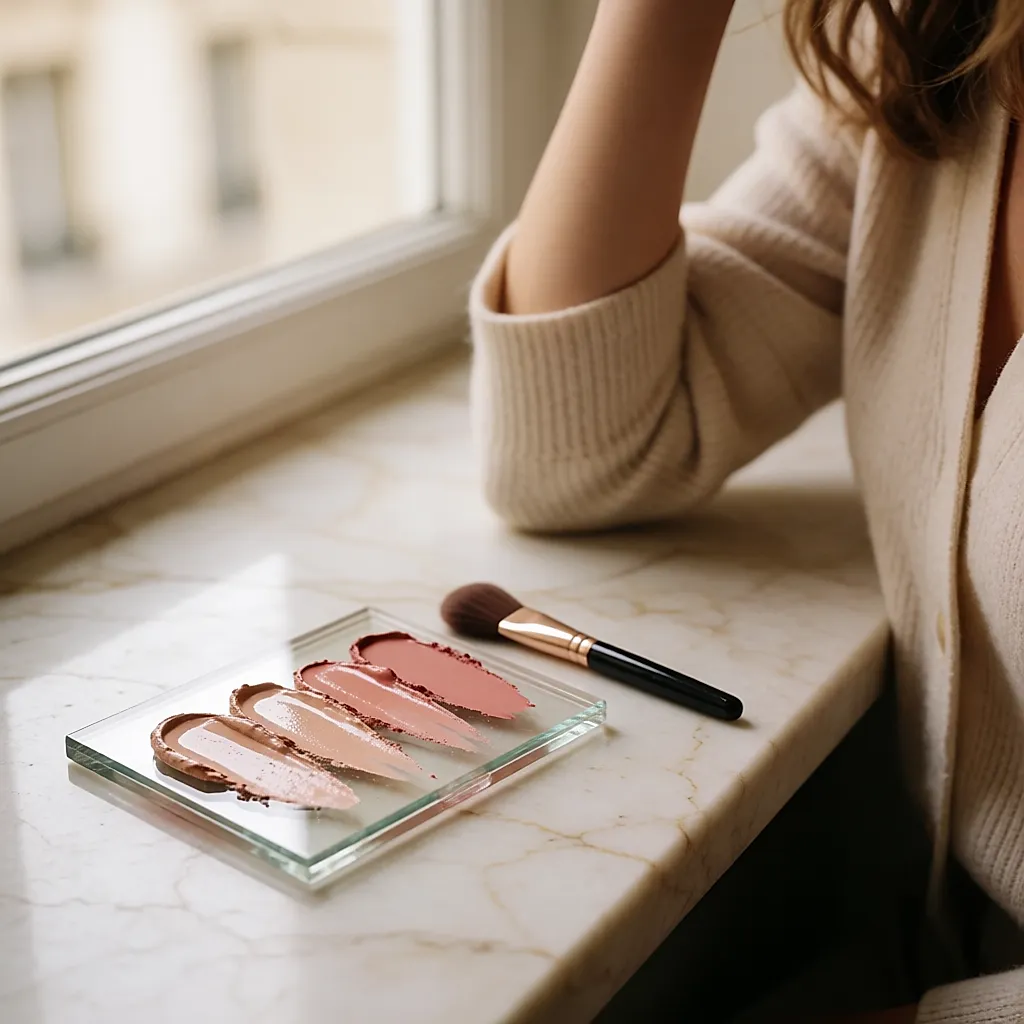
In practice, this shifts the moment when a trend exists. It lives online first — tutorials, trials, shade pairings, remixes — before it becomes something you buy. The how matters as much as the what: how you tap on eyeshadow, soften a blusher that's too bright, layer two textures. These are details the community films, tests and corrects long before any packaging is designed. The trend is made upstream, on the platform; the product arrives downstream, almost like a report on what has already happened.
What this changes closer to home
You might be wondering what all this has to do with your bathroom. Quite a lot, actually — and in a rather cheering way. First, because these trends travel fast: a texture, a finish, a way of layering reach us through creators, not shop windows. And because it shifts how we look: instead of waiting for a brand to tell us what to wear, we can follow the people inventing it directly, with their mess-ups and trial and error.
One caveat, though. What holds up in a video won't necessarily hold up for eight hours on a tired face on a Monday morning. How long make-up lasts depends on your skin, the heat, the kind of day you've had — and no community can test it for you. So keep your curiosity and your mirror: they're the ones that decide, not the view count.
Spotting a trend that comes from creators, not brands — no set rules, just a few signs you start to recognise: it appears in tutorials and trials long before campaigns; several accounts pick it up and twist it, rather than simply reposting it; people describe it by a texture or a technique, rarely by the name of a bottle. And if you see it everywhere before a single pot has hit the shelves, that's a good sign.
The most delicious part, really, is the reversal. For a long time, we thought beauty flowed down from the brand to us, via the glossy page of a magazine. Now it often flows up from creators to the platform, then on to the shelf. So next time a colour stops you mid-scroll, open the account behind it rather than the product page: that's where you'll see the technique, the edit, sometimes the mess-up. The rest is packaging.
Comments
Your opinion matters: rate the article, react and reply to comments.
Comments are moderated; AI-assisted comments are flagged. Text emoticons (8-), :-), <3…) are automatically shown as images.