

Whitening your teeth: yes to bicarbonate of soda, but not every day
You have probably already got a tub of bicarbonate of soda in the kitchen, hiding behind the bags of flour. Sprinkled onto a wet toothbrush, it can work as a gentle abrasive to help lift the surface stains left by coffee, tea or tobacco. But let us say this straight away: occasional use, spaced well apart, and never instead of a fluoride toothpaste — and it is worth asking your dentist before it becomes a habit.
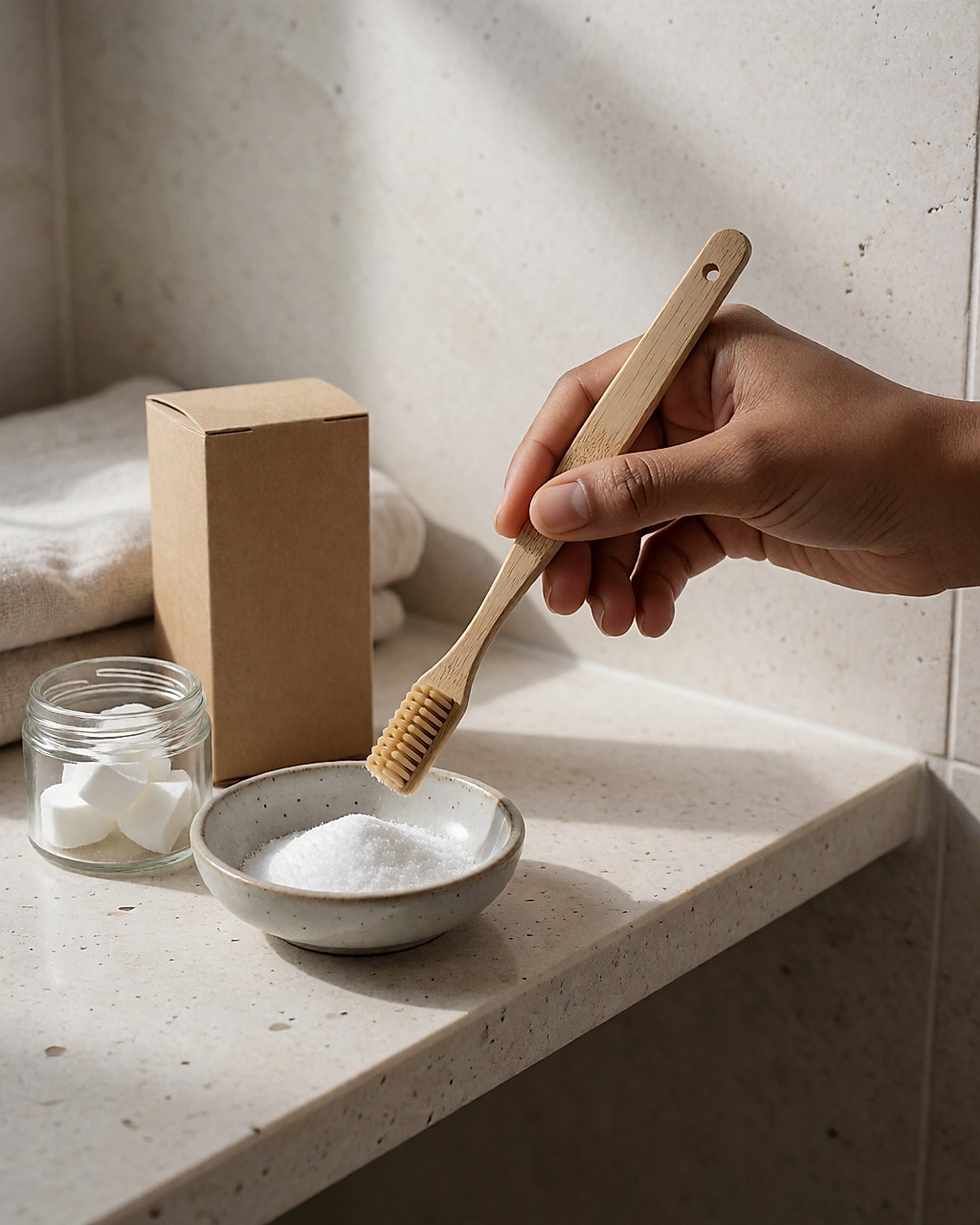
The trap is regularity. A daily abrasive can eventually wear away enamel — and enamel does not grow back. Another myth worth binning: no, bicarbonate of soda does not remove tartar. Tartar, that hardened mineralised layer clinging to the base of the teeth, is removed at the dental surgery. Your check-up still matters most, and it is part of ongoing dental care — in the UK, NHS dental charges are banded, so it is worth checking what your appointment will cost before you book.
On the format front, solid toothpastes and chewable tablets now exist, sometimes sold in a cardboard box or a glass jar: no plastic tube, and the formula holds up rather well. One tip though: read the full ingredient list rather than the word 'natural' printed in large letters on the label. It tells you far more, and saves a fair few disappointments.
Setting your make-up: what a facial mist really does
Sprayed as a very fine veil over make-up that is already on, a facial mist refreshes, revives radiance and softens powdery textures. No need to drench your face — if it is dripping, you have overdone it.
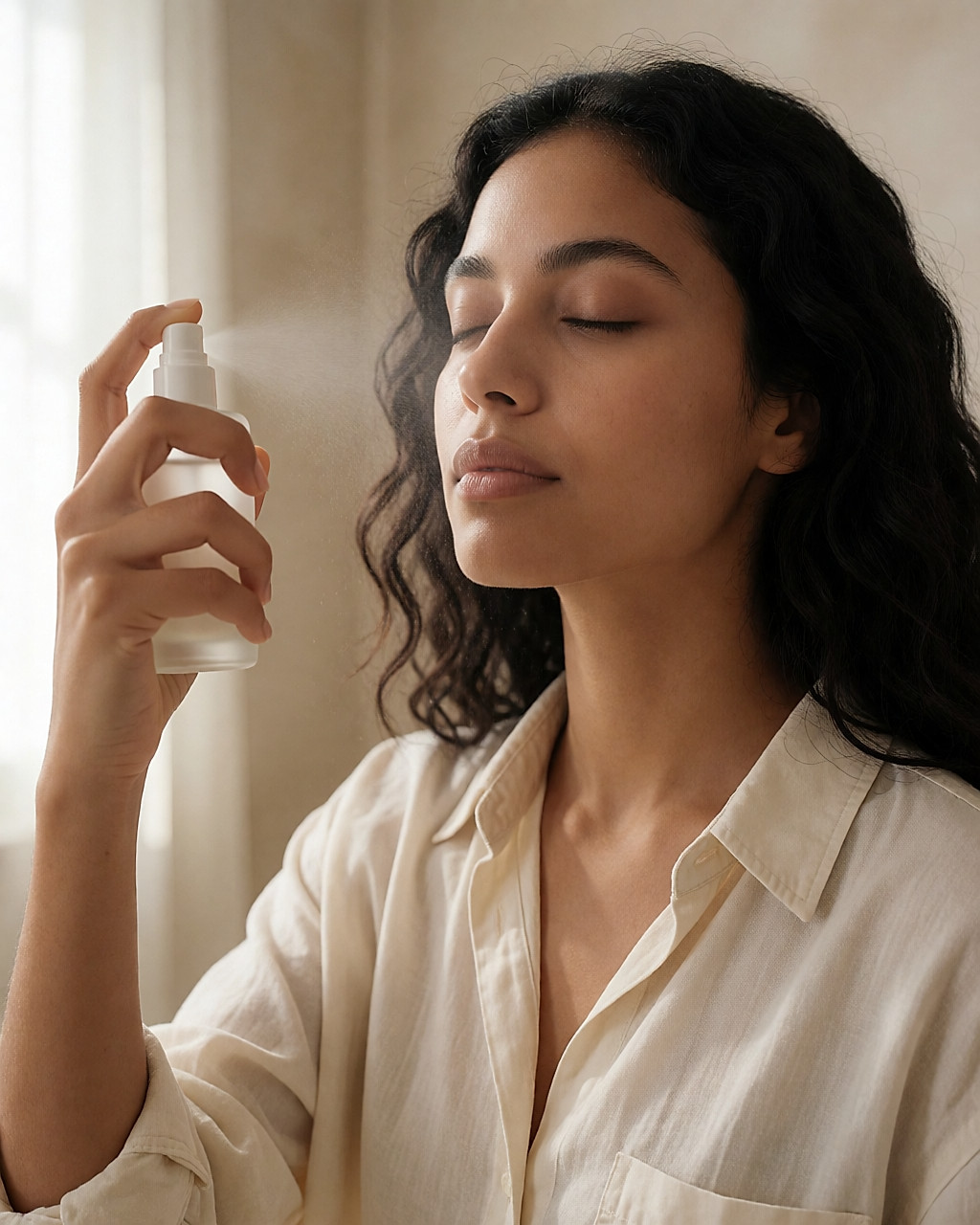
What it does not do, though, is set make-up for long. A setting spray contains film-forming polymers that leave a veil on the skin and hold make-up in place; a facial mist does not. Dry skin and a short day? It is more than enough. A long day and combination skin? Keep a setting spray, but choose a mini or refillable format: fewer single-use bottles, and your bag will thank you.
Nails and the eye area: the recipes worth tweaking
A warm lemon water soak is often presented as a way to whiten nails. Except that citric acid can dry out the cuticle as soon as you repeat it. The step that changes everything is a plant oil — jojoba, castor, sweet almond — massaged into the base of the nail in the evening, with two drops of lemon essential oil now and then. Never before sun exposure: it is photosensitising.

For tired eyes, cold is unbeatable. An ice cube wrapped in a clean cloth, a few moments on the eye area, then a cotton pad soaked in cornflower floral water. Buy it in a glass bottle: kept away from light, it keeps far better. And if you want a benchmark for what is in the bottle, a label such as COSMOS Organic, or a certifier such as Ecocert, sets out the share of organic ingredients and the formulation charter — more solid ground than a 'natural' scribbled on the jar.
Two habits that save both time and money: buy floral waters and plant oils from a pharmacy or a health food shop rather than in a 'beauty ritual' gift set — the contents are often identical, with an extra bottle thrown in. And read the ingredients before the packaging. A 200 ml bottle of floral water easily lasts you six months.
Circulation: the cold blast, with precautions
Finishing your shower with cold water, working up from the ankles towards the waist, wakes up the skin and gives you a boost. It does not last, but that feeling of lighter legs is definitely there.
And peppermint essential oil? It is sometimes used in massage, diluted in a carrier oil, for its cooling sensation. Two precautions: never on the face, and never for children or for pregnant or breastfeeding women. Essential oils are concentrated active ingredients, not perfumes.
Hair: a vinegar rinse and a little heat
A final rinse with vinegar water — one tablespoon of cider vinegar to a litre of water — is said to acidify the hair and smooth the fibre. For a result that is often shinier, with less frizz. Space it out if your hair is dry or coloured, or you risk drying it out further.
For a hair mask, wrap your coated lengths in a towel soaked in very hot water and wrung out. The warmth can help the treatment spread evenly and give a softer feel. A mask or a plant oil in a glass jar will do the job beautifully — no need for a fancy branded pot.
Style counts too: accessorising without breaking the bank
A beauty routine is not everything. It is the overall look that reads first: a sharp cut, fabric that falls well over the body, well-judged layering. Good news — it often comes down to one detail. A statement piece — a printed scarf, a second-hand leather bag — is enough to transform a basic head-to-toe outfit, and that is exactly how a wardrobe gets built: in touches.
Dig through charity shops and resale platforms. You will often find wool, silk or linen for next to nothing, and you extend a garment's life instead of buying new.
Budget
Typical UK prices, to give you a rough idea:
- Bicarbonate of soda, 500 g: £1 to £3, in supermarkets or refill shops.
- Solid toothpaste or tablets: £4 to £10, from a pharmacy, health food shop or online.
- Cornflower floral water, 200 ml: £5 to £12, from a pharmacy or an organic beauty retailer.
- Plant oil, 50 to 100 ml: £6 to £15, depending on the species and the certification.
- Peppermint essential oil, 5 to 10 ml: £7 to £15, from a pharmacy.
- Thermal water facial mist, 150 to 300 ml: £5 to £12, from a pharmacy or supermarket.
- Make-up setting spray: £10 to £25, from a beauty hall; often less online.
- Cider vinegar, 500 ml: £2 to £5, in the food aisle.
The differences come down to format, certification and where you buy. A glass or refillable container costs a little more up front, but you use it again and again.
Sources
- ANSES — Precautions for using essential oils, consulted in 2026.
- ADEME — Guide to environmental labels and packaging recycling instructions, consulted in 2026.
- COSMOS / Ecocert — COSMOS Organic label standards (share of organic ingredients, formulation charter), consulted in 2026.




Comments
Your opinion matters: rate the article, react and reply to comments.
Comments are moderated; AI-assisted comments are flagged. Text emoticons (8-), :-), <3…) are automatically shown as images.