
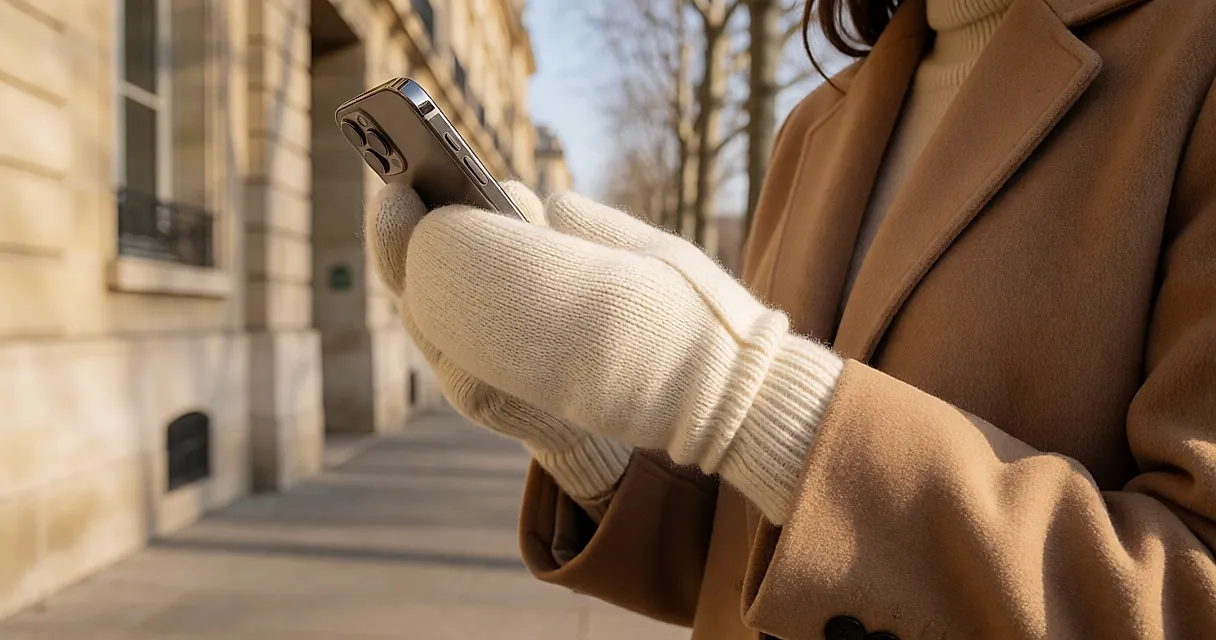
The message lands at 8.12am, just as the 8.07 bus finally decides to turn up. Hands in pockets, you extract one heroic thumb, type ‘I’m on my way’ with all the finesse of an emoji, and blow on your fingers as if cooling a spoonful of soup that’s far too hot. Flap mittens are made to defuse this small November drama.
Five fingers, one shared pocket
A mitten is a small exercise in collective selfishness: the fingers stop going it alone. Packed together in their wool pocket, they keep one another warm, and the surface area exposed to the wind shrinks accordingly. Frankly, why insist on separating them into five compartments?

Then there’s the thumb problem. A classic mitten keeps your fingers happy and makes practical tasks impossible: you cannot unlock a phone, pull out a banknote or grab the Tube handrail without taking the whole thing off. Hence the flap: a wool lid that flips back over the back of the hand and uncovers four fingers in a second. Close it again with a flick of the thumb, and you’re set for winter and for National Rail.
The flap makes all the difference
So, magnet or press stud? This is the first criterion, and it rules out a fair few: the flap must close with one hand. A magnet set into the seam does this beautifully—the flap attaches to the back of the mitten in one movement, without you even looking. Small downside: the magnet also attracts keys, belt buckles and sometimes the oven door, which can leave you feeling oddly alone in the kitchen. A press stud is more decisive and usually longer-lasting, but often needs two hands; as for a sewn-on button, it looks like a lovely finishing touch and comes undone a little too quickly in the wind.
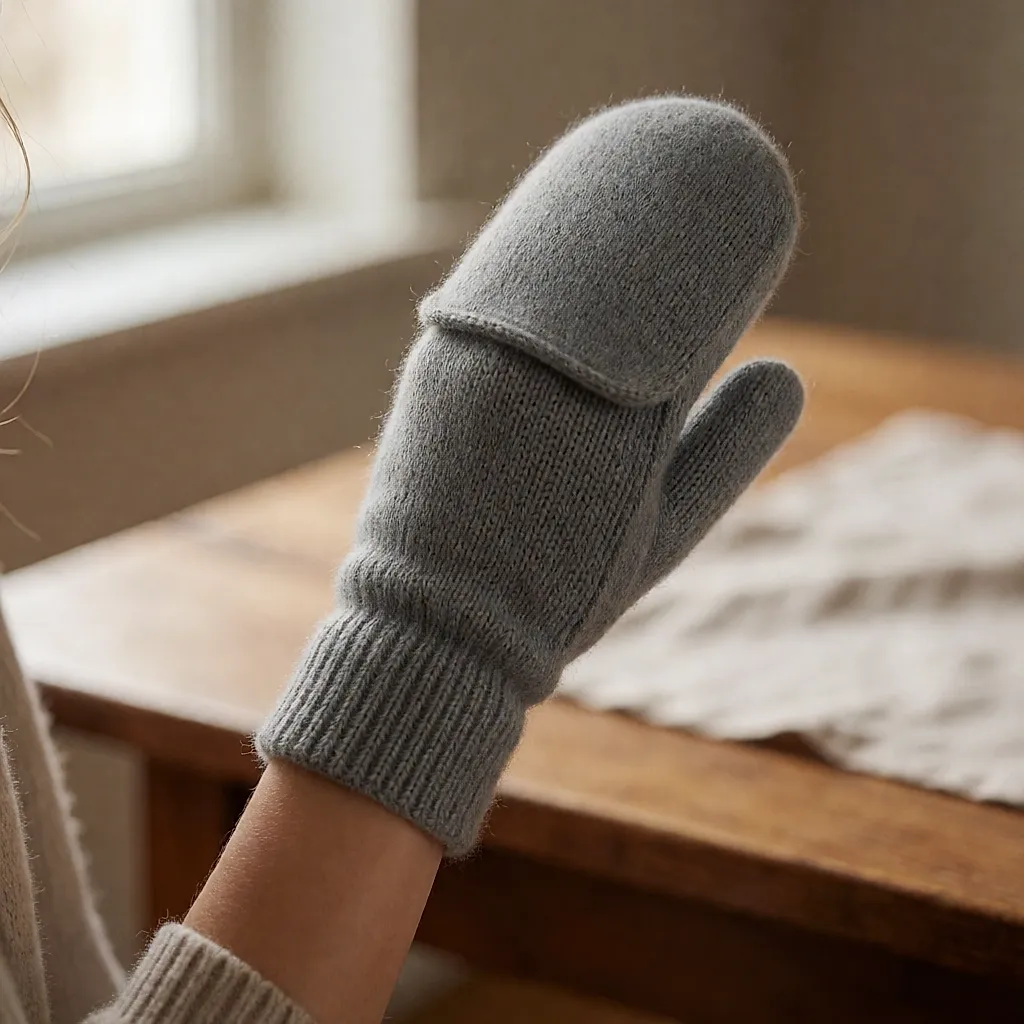
Next, look at the flap length: too short, and it barely uncovers the first knuckle, forcing you to wriggle your thumb; too long, and it dangles and catches on things. The right pair stops at the joint, with a roomy thumb—a squeezed thumb ruins all the comfort, and that’s that.
And who is it not for? If you plan to write proper messages in the street, an open flap lets the air in and your fingers will soon feel the cold. For cycling, choose a flap that fastens securely, or stick to gloves.
Wool, fleece and leather face the Tube test
The real test isn’t the mountains; it’s the Tube. You go from a cold platform to a heated carriage in minutes, and an over-lined mitten turns into a hothouse for clammy fingers. The best answer is often a wool mitten with a thin lining: merino or recycled wool on the outside, soft jersey or very fine fleece on the inside. It breathes, slides into a pocket without bulk, and can be hand-washed and dried flat.

Fleece, meanwhile, is warm and dries quickly—but it is very often polyester, so check the label before you fall for it, because a mitten that pills quickly is not a good buy. Leather, finally, has the look and the advantage of blocking the wind; on the other hand, it generally breathes less than wool, and the feel depends on the lining and the tanning. If you go for it, look for a fine wool lining and, when that information is available, vegetable tanning.
One sensible habit, too: dig out last year’s pair, sew the button back on, reattach the flap. A mitten repairs very well, and it is often one fewer pair to buy.
What to pay
Here are rough market ranges, not a precise price survey. Expect around £15–£30 for a mixed-wool flap mitten with a press stud, from a supermarket or online—fine for a mild winter, but it may wear out faster over time. Expect around £35–£70 for lined merino or recycled wool, with a tight knit and a magnetic flap: this is the bracket where cost per wear feels most comfortable. For wool-lined leather, budget more in the region of £80–£160, depending on the tanning and finish. Makers’ markets and second-hand shops remain good options for knitwear, as long as you check the condition of the flap and the strength of the stitching.
The fitting-room test without the fitting room: with one mitten on and your phone in the other hand, try to fold back and refasten the flap with the mittened hand. If you have to put the phone down, take the mitten off or use your teeth, then put the mitten back on the shelf.
Here is a piece that reinvents nothing and yet solves a real problem: the warmth of a mitten, the freedom of a glove. For a first buy, aim for thinly lined wool with a magnetic flap, in the middle price bracket: it is the compromise for the season, with no guarantee of how long it will last. And save leather for Sundays when what you really want is to look as if you are facing the cold with a certain elegance.


Comments
Your opinion matters: rate the article, react and reply to comments.
Comments are moderated; AI-assisted comments are flagged. Text emoticons (8-), :-), <3…) are automatically shown as images.