

A cotton poplin shirt and a jersey knit shirt have the same collar, the same white, more or less the same price on the tag. The first keeps a memory of every fold it met in your bag and demands an iron. The second finds its line again after a night on a hanger. The difference isn't in the cut. It's in the fabric.
Sportswear is what did the office wardrobe this favour. Not by putting us all in tracksuits — tracksuits at work remain a risky idea — but by lending its technical knit to a piece that has to take two days in a suitcase and a full day of meetings.
It's the knit, not the cut
A classic shirt is woven: the threads cross and tighten, and a crease settles in like the fold in a freshly pressed sheet. A knit is looped, exactly like a running top. You can't see the difference on the hanger. You see it three hours into a meeting, when your shoulder wants to move, and on day two, when the shirt comes back out of the bag.
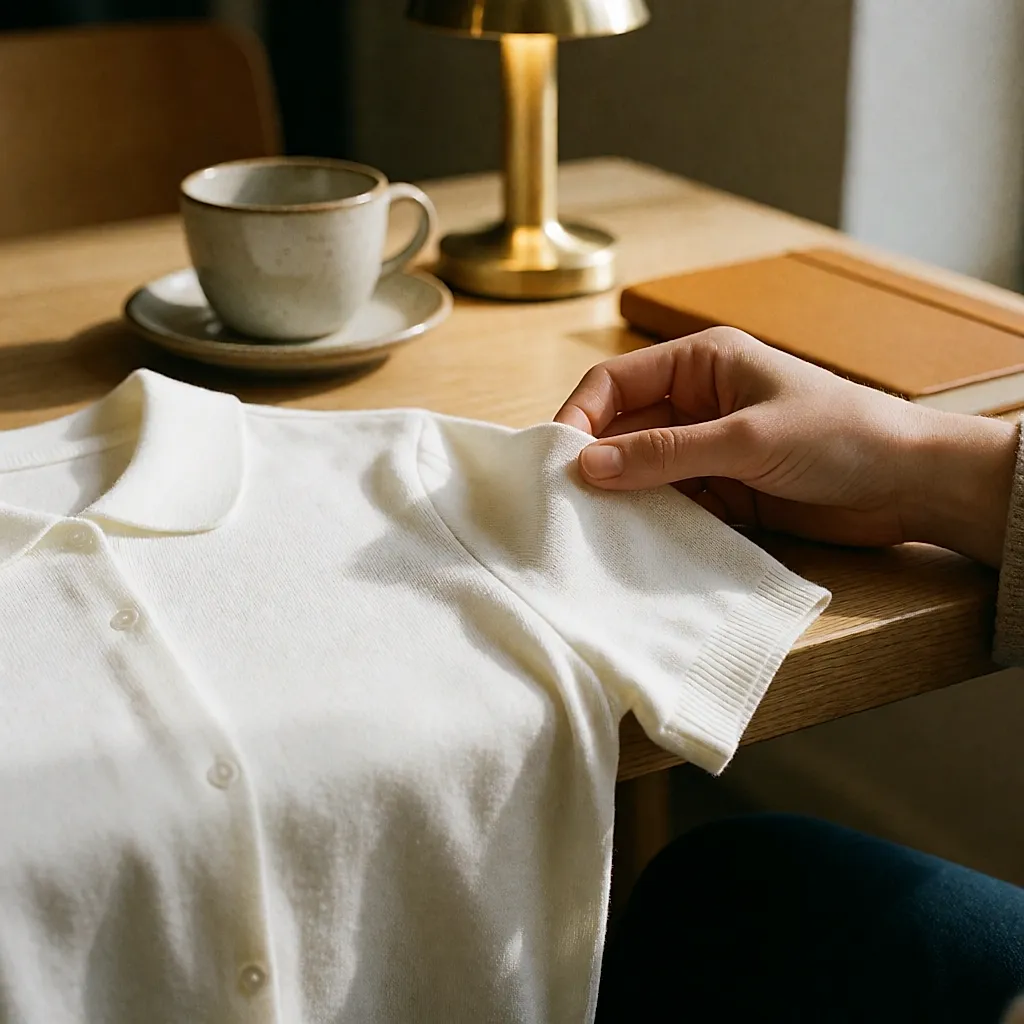
What you get is a softer drape, a shoulder that follows the movement, a back that doesn't pull when you hoist your bag into the luggage rack. What you give up is the military crispness of a starched poplin: a knit collar can go limp, a button placket can ripple if the knit is too fine. The right piece is the one with some body — pinch it between two fingers and it doesn't collapse, and it doesn't cling to your skin either.
Two days in a bag, in practice
Do the maths: one shirt instead of three, a weekend bag instead of a cabin case, and no 7.15am appointment with the hotel iron. In the evening, a rinse in cold water, a wring in a towel, the shirt hung near the window — by morning it's dry, or nearly. A fine knit dries faster than a heavy cotton; that's just physics.
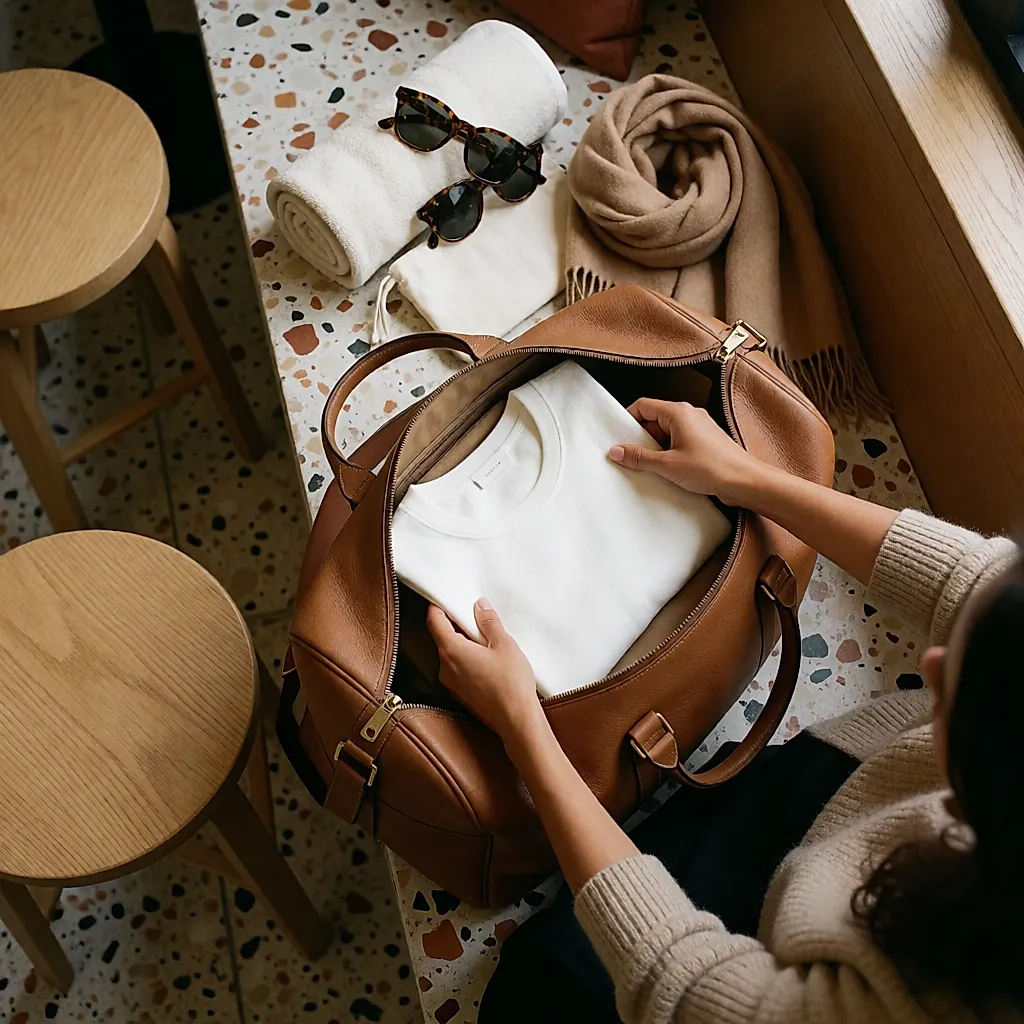
Then there's the honest part. If your day includes a pitch, an interview or a lunch with a client who notices everything, the woven shirt still has the edge: it structures how you look and holds its collar. The knit is the piece for the train, the conference that overruns, the dinner that happens on the way back after a long day. Which is already a lot.
Reading the label, in order
Three lines to check before you get your card out. First, the elastane content: a few per cent is enough for a knit to stretch and spring back — in practice you'll usually see 2 to 5%. Above 10%, you're looking at something close-fitting, more T-shirt than shirt. Next, crease-resistant or non-iron: that's a finish applied to the fabric, not armour, and it tends to fade with washing. Indulgent for the first few months, not a lifetime immunity. Finally, care: a dry clean only label drains the shirt of its whole point for travelling, between the trip to the dry cleaner's and the bill that comes with it.
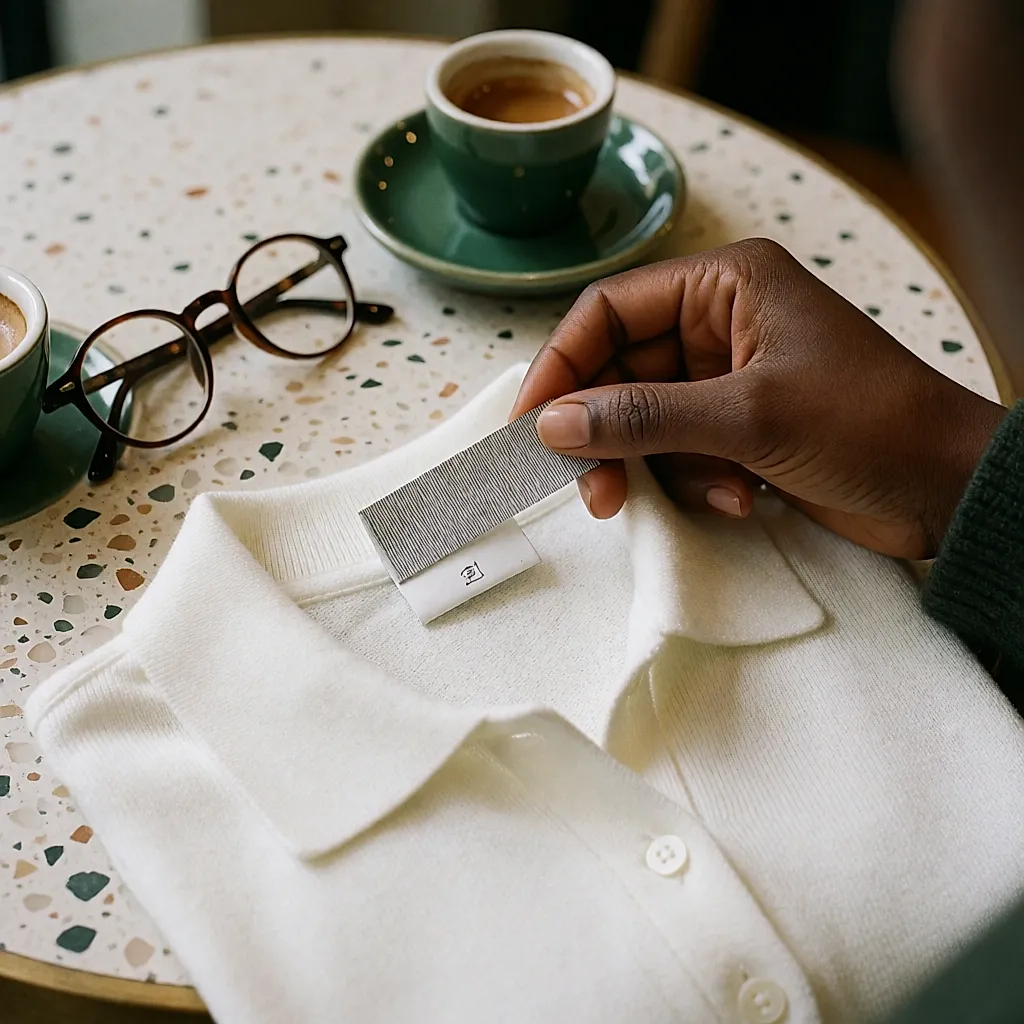
On fibres, natural does very well: a fine merino wool regulates temperature and takes several wears between washes, and a cotton with a touch of elastane does the job for far less. And check how much synthetic fibre is in there: that's where you find the knits that shine under office lighting and hold on to the smell of a long day. A very synthetic knit is still a very synthetic knit, whatever the performance talk says.
The fitting-room test. Squeeze the sleeve in your fist for about ten seconds, let go, look: the knit should spring back without keeping the mark of your grip. Then check the collar — if it's already flopping on the hanger, it will flop on you. Finally, turn the piece inside out: a clean shoulder seam and a neat hem tell you more than a nicely printed label.
Budget
Expect £20 to £40 for a cotton knit shirt from a high-street chain or a fast-fashion label: enough to try the idea over a weekend without spending a month's salary. Between £60 and £110 you're into better-cut pieces, in denser cotton or a wool blend — and that's where most of the so-called travel shirts sit. Above £130 you're paying for merino, the collar finish and a piece cut to last several winters. Prices move with city, brand and sale season.
Where to look? The travel rails in department stores, labels that specialise in knitwear, and second-hand — a pre-loved merino shirt at £35 is still a better buy than a new one at £150, provided you check there's no pilling at the cuffs. Online, always ask for a photo of the composition label: that's what decides it, not the pretty shot of the model.
And if you never travel for work? The knit is still comfortable in the office, but it won't transform your life: a good poplin and a fast-heating iron do the job very well. For everyone else, the £25 knit is enough to test the idea; from two or three trips a year, the £60–£90 version pays for itself in hotel nights without ironing. As for merino, save it for the day you want a piece that goes across seasons — and that forgives you for rolling it into a ball at the bottom of your bag.

Comments
Your opinion matters: rate the article, react and reply to comments.
Comments are moderated; AI-assisted comments are flagged. Text emoticons (8-), :-), <3…) are automatically shown as images.