
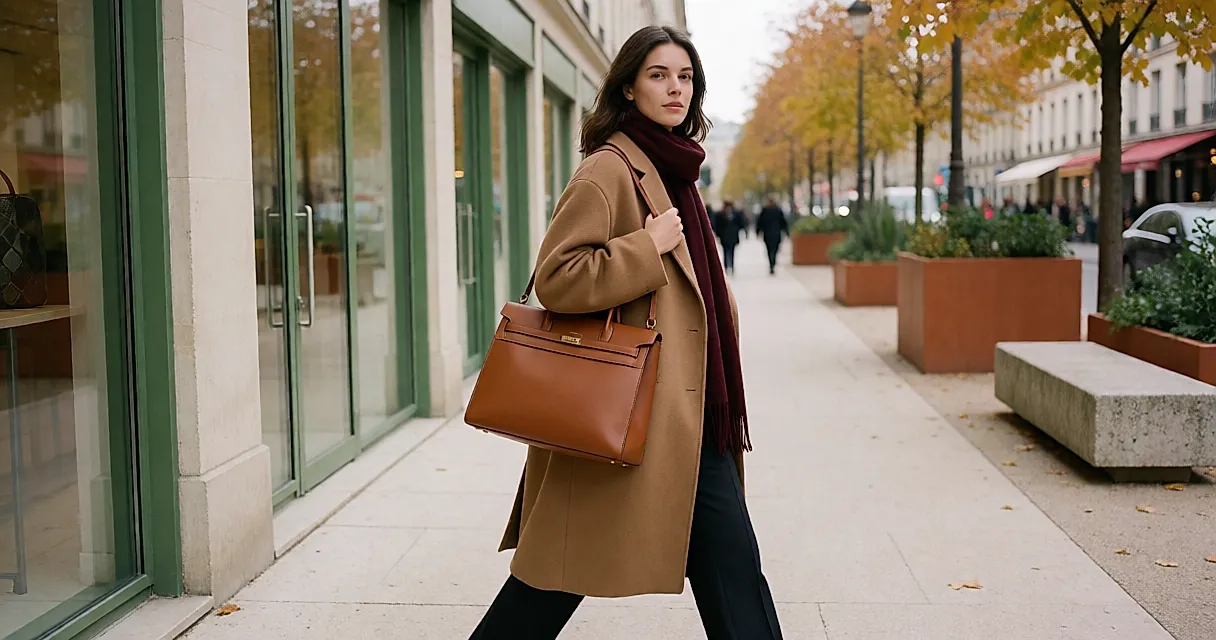
A large bag isn't simply chosen; it's negotiated. On one side, the freedom to carry a charger, a novel and a second pair of shoes; on the other, a shoulder that aches and a handle that cuts into the drape of a coat. Where October's work tote followed the shoulder, this one steps away from it: the shapes are getting wider, and the bag settles under the arm. It isn't just a change of side: you have to weigh up the load, test the elbow in the changing room and check the line under a coat.
What a larger bag makes you leave behind
The bigger the bag, the less it actually gives you. Odd logic, but that's how under-arm carrying works: a medium-sized structured tote will hold a wallet, a pouch, a notebook, a paperback and sunglasses. It is unlikely to take a 15-inch laptop, a one-litre water bottle or a long umbrella. Those stay at home, or in a foldaway tote at the back of the wardrobe that will never make it onto your arm.
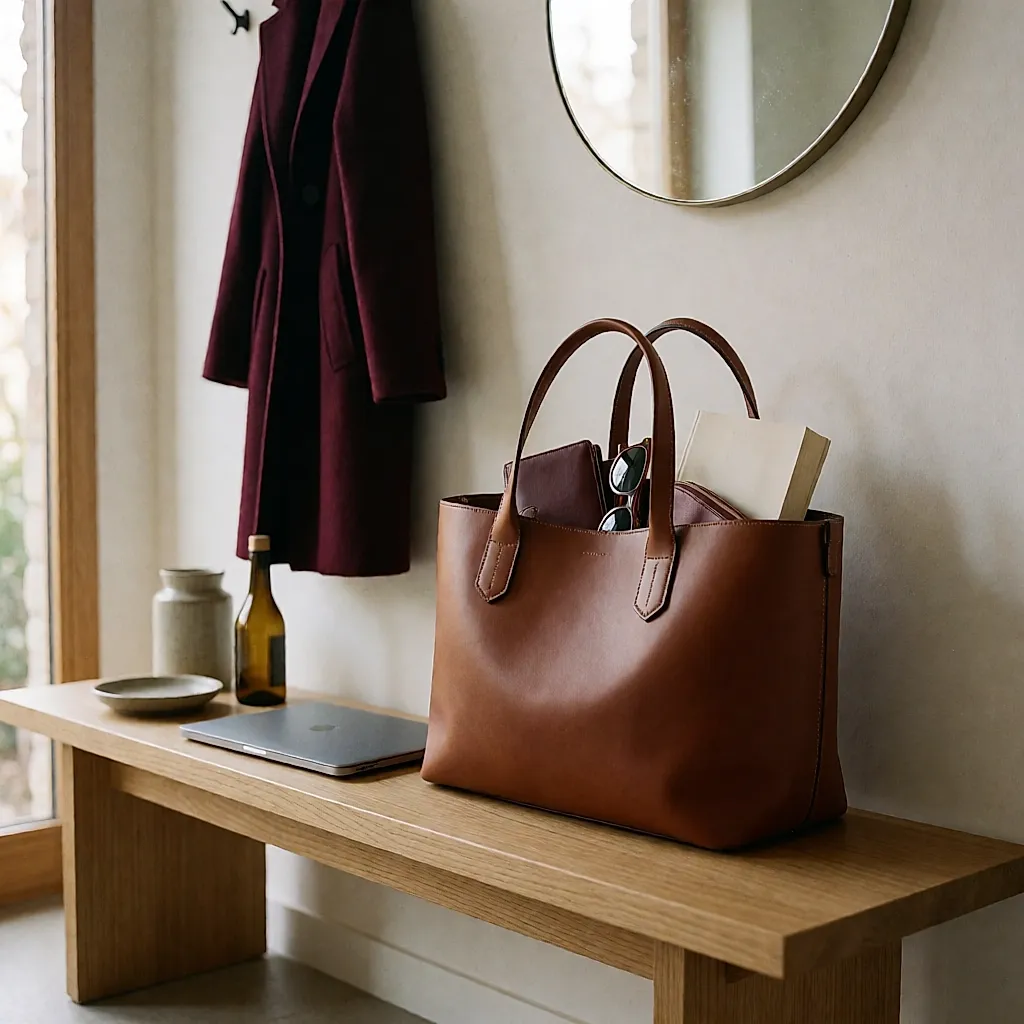
Then there's weight. On the shoulder, you can spread the load; under the elbow, you carry it. A bag packed any old how quickly turns into a disguised gym session, and the elbow is not patient: it gives up long before your willpower does. So you edit twice, once at the till and then every morning in front of the open bag. The result: a bigger shape doesn't let you carry more. It makes you choose better.
In the hand, under the elbow, never on the shoulder
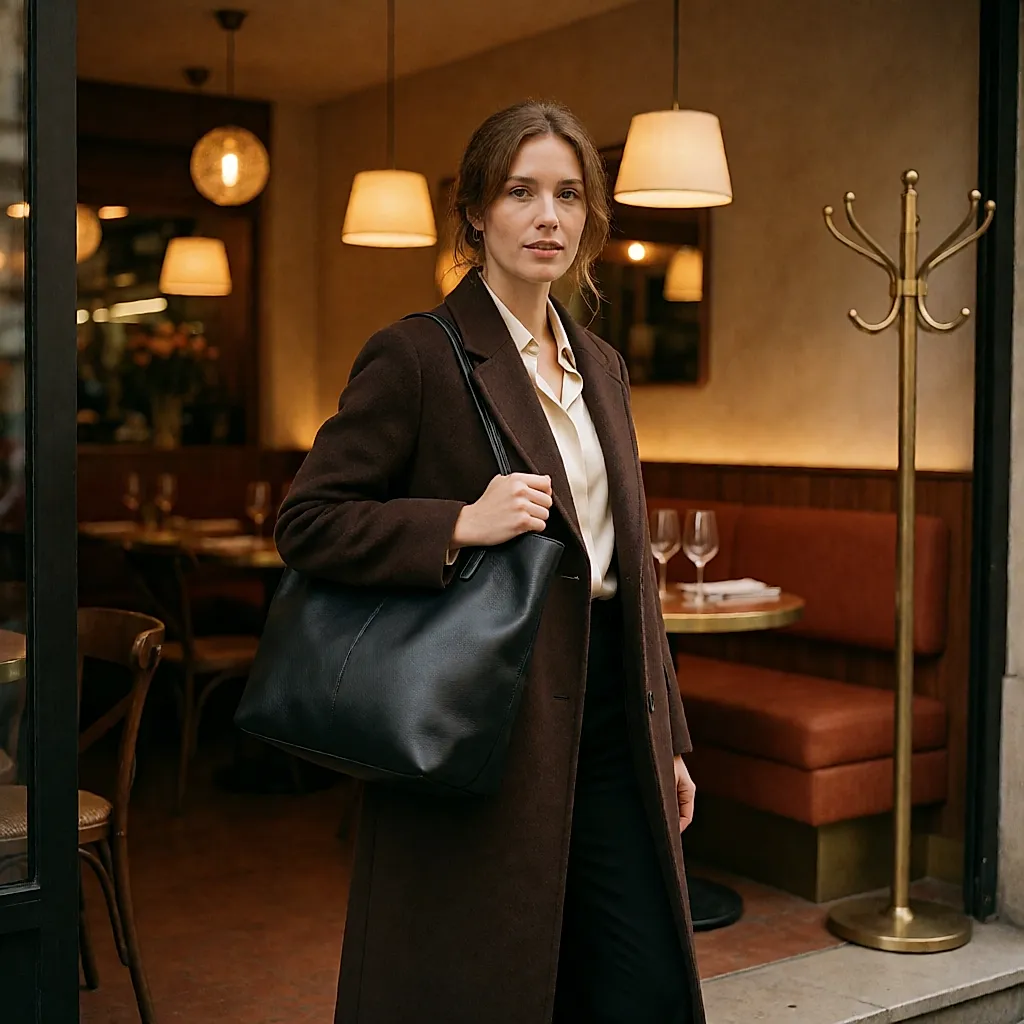
In the hand first: both handles gathered in your fist, wrist relaxed, the bag hanging at thigh height. It's the most elegant way to carry it, and the most demanding. It lengthens the arm and the silhouette, but it ties up one hand. For dinner or a quick lunchtime errand, perfect. For a three-hour walk, think again.
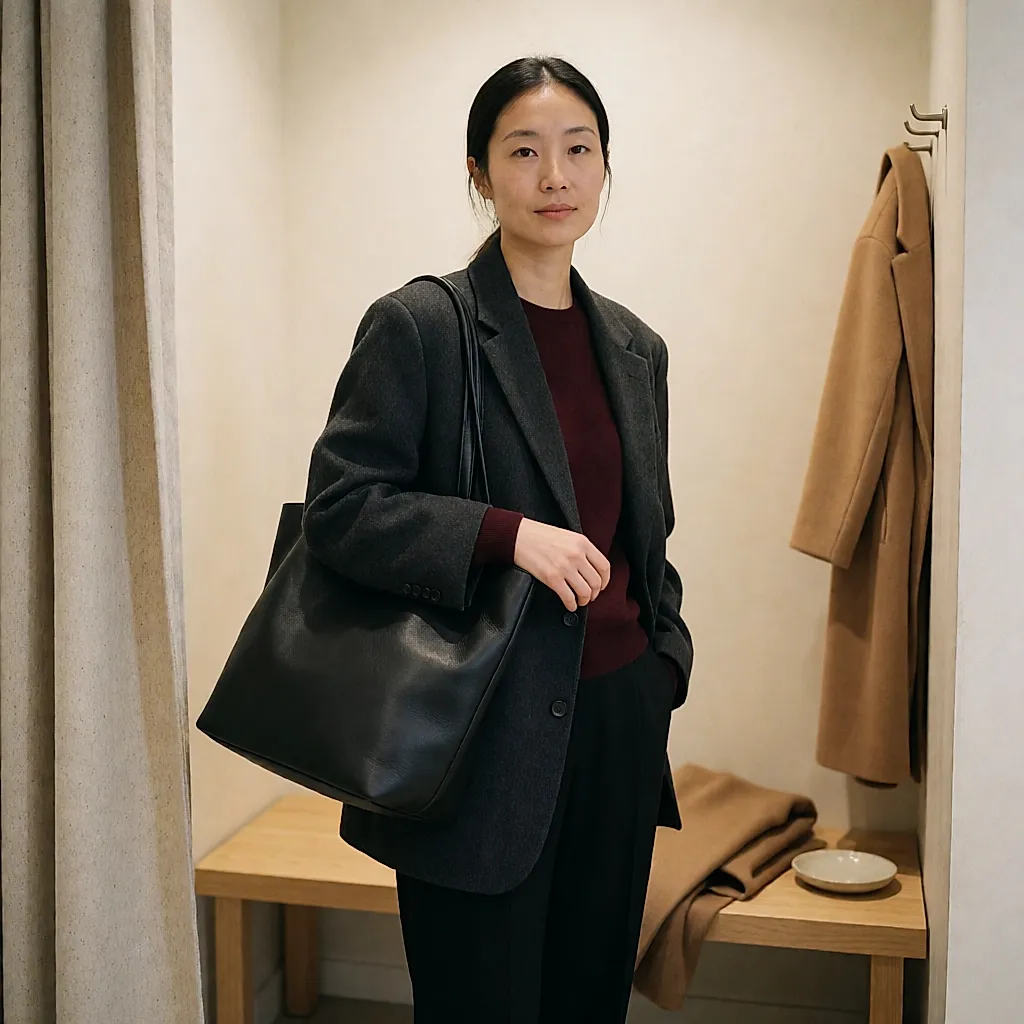
Under the elbow next: bend your arm and slide the handles inside the crook, palm facing your hip. The bag rests against your waist, wedged between arm and body. This is where it all happens: too low and it knocks against your hip with every step; too high and it rides up under your armpit and presses on your arm. The right adjustment comes down to a few centimetres of handle, and you find it in the changing room, not in a photograph.
Never on the shoulder, finally. Not as a rule, but for consistency: a handle that presses in breaks the line of a blazer, marks wool and pulls your walk off balance to one side. Need both hands, on a crowded train, with an umbrella or a suitcase? Cross the bag against your body, handles gripped in your fist, and leave your shoulder to do what it does best: carry the jacket.
The elbow test, in three moves. In front of the mirror: slide the bag into the crook of your elbow, lift your arm as if reaching for a ticket, walk three steps. If it slips, if your fingers tense, if the bag knocks your hip, the handle is too long, or the shape is too big for you. Then sit down: a bag that forces you to hold your elbow away from the table at lunch will spend its life on the floor.
What it does to your look
Freeing your shoulders changes your posture more than you might think: you tend to stand a little straighter, your chest opens, you look ahead. You seem a little less rushed, a little more in charge. And because one hand is occupied, your phone tends to stay at the bottom of the bag. Anyone who isn't scrolling often looks better.
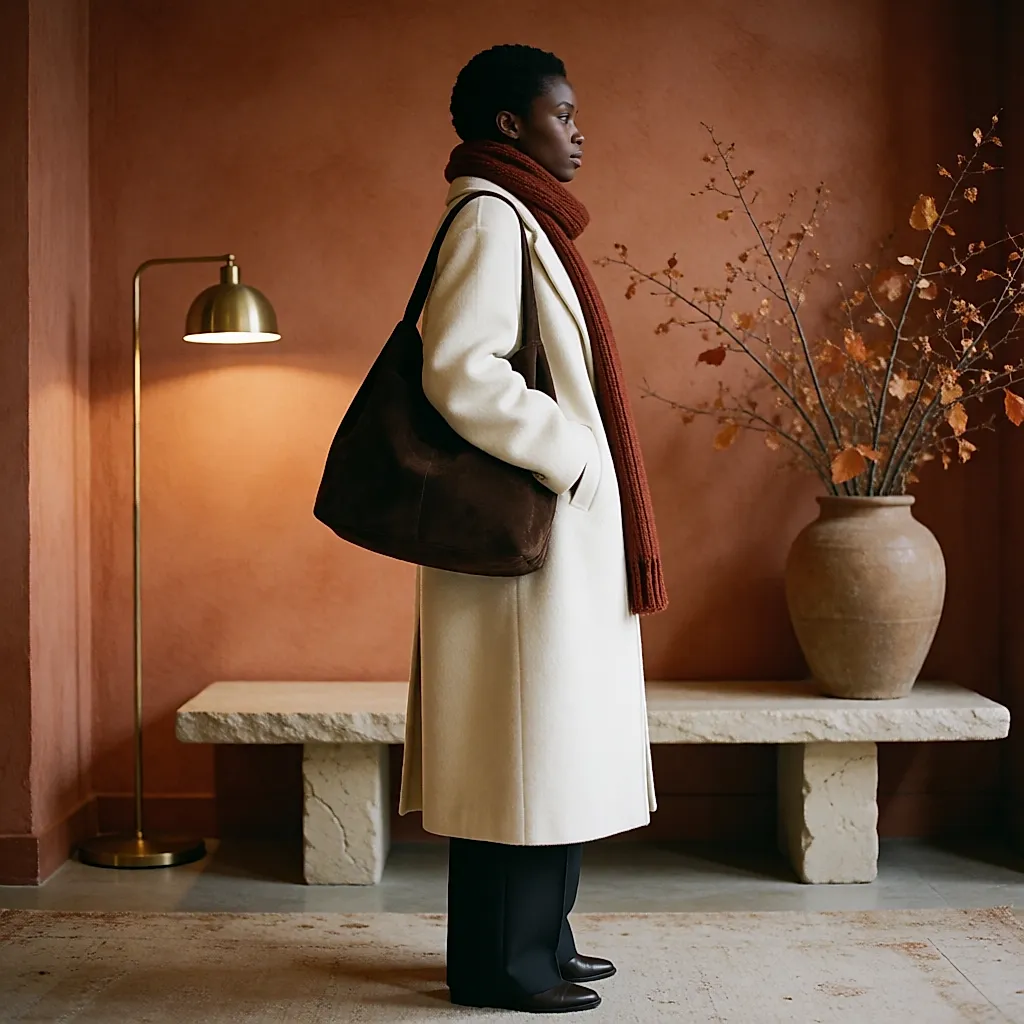
Then there's the line. Carried under the arm, the bag draws a horizontal at waist or hip height, cutting across the silhouette exactly where you'd rather it ran on. Two fixes: a more compact style carried high, against the waist, or a soft bag that follows the body and moves with your walk. With a long coat, carried in the hand with the handles together, it does the opposite and stretches the whole line. Where does your eye land when you catch sight of yourself in a shop window?
What to spend
The budget for an under-arm bag isn't just about the price: leather that's too heavy can tire the elbow quickly, and very stiff canvas may not sit flat against the hip. In France, expect roughly €120–€350 for a new soft calfskin bag from a high-street label or department store, and €350–€800 for full-grain leather, vegetable tanning or artisan construction. Coated canvas usually sits lower, around €60–€200. Soft leather remains the most flattering under the elbow: it moulds to the hip and develops a patina. Full-grain leather sits at the top of the range, and you'll pay more for larger sizes, vegetable tanning (pricier and more restrained) and careful construction; an artisan or a local leather shop will usually cost more than a high-street label. Soft calfskin in department stores is a more affordable step down. Coated canvas is the lightest and the easiest to wipe clean if you're caught in a shower, but it won't develop the same patina as leather.
For second-hand, expect roughly €80–€300 for leather in good condition, with designer names and rare vintage pieces often far above that, whether from a well-curated vintage shop or a resale platform. But here the elbow test matters as much as condition: check the handle stitching, the lining and the base, and take three steps with the bag on your arm before you pay. A worn corner is charming; a stretched handle that makes the bag knock against you is much less so.
The right balance
If you carry a laptop every day, keep a tote or a slim backpack for the office and save the under-arm bag for the rest of your life. If you want a calmer look for dinners, weekends and days when you're not hauling your life around, it may be the right find, provided you do the elbow test in the changing room, with your winter coat on.
As for the bag waiting in your wardrobe that slips as soon as you walk, it still deserves one last try. An accessory that forces you to keep your arm still is no longer an accessory; it's a constraint, and fashion already has quite enough rules.


Comments
Your opinion matters: rate the article, react and reply to comments.
Comments are moderated; AI-assisted comments are flagged. Text emoticons (8-), :-), <3…) are automatically shown as images.