
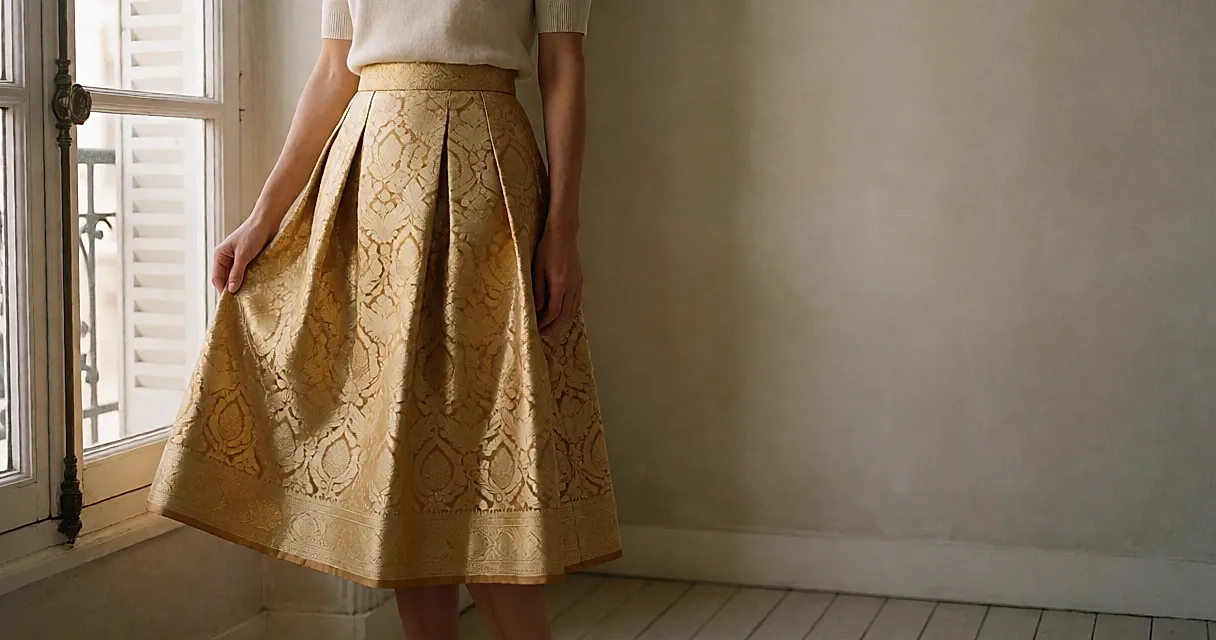
A Banarasi silk skirt isn't the sort of thing you pull on like a pair of jeans: it has weight, a swish, a way of falling that tells you how it was woven. You've probably seen skirts like this at a wedding or on a red carpet without guessing that a sari came first. And that's where it gets interesting.
From sari to skirt
Banarasi and its zari are worth a closer look, but what matters here is what the weave becomes once it's cut into a skirt.
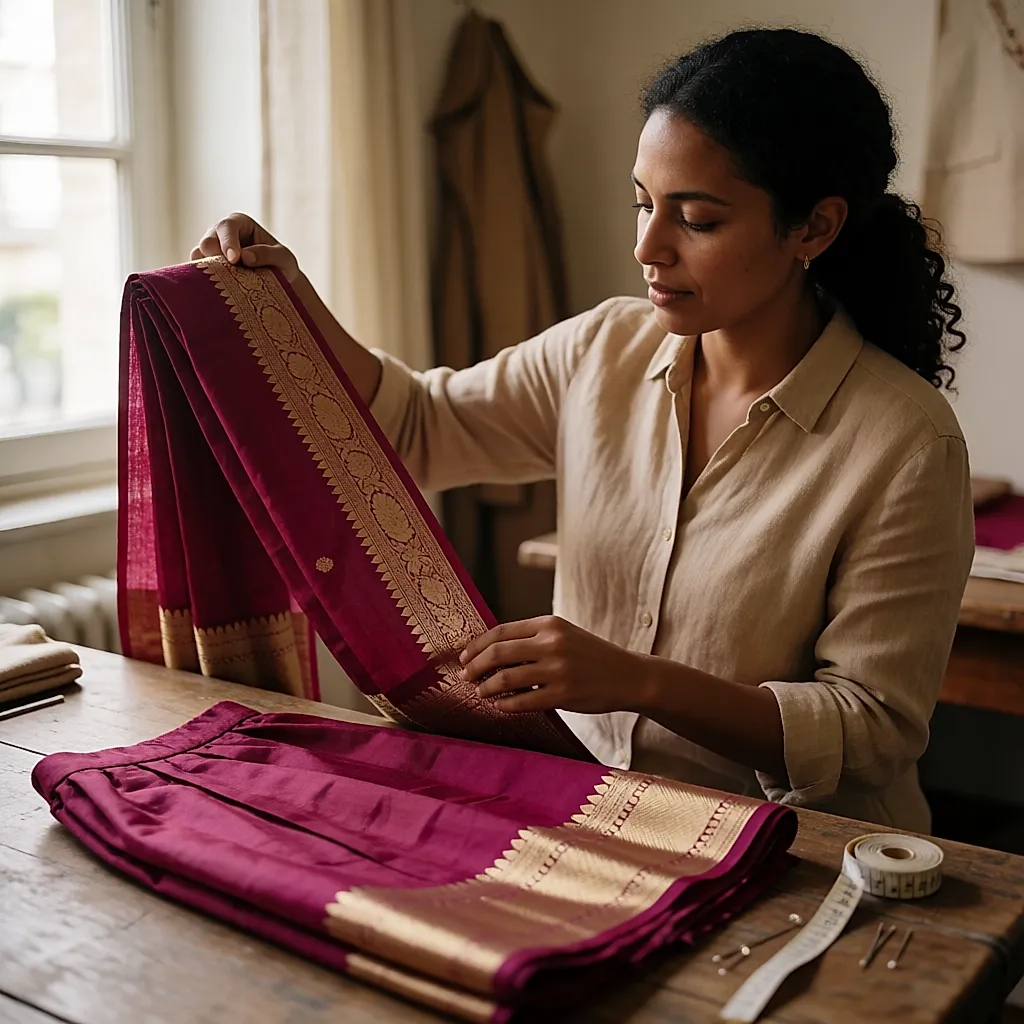
When a sari becomes a skirt you keep all the richness of the pattern but change the body language. A sari is draped, pleated, re-pinned; a skirt zips up, sits at the waist and works with a T-shirt. The garment loses a little ceremony and gains everyday life — as long as you accept that it isn't an all-rounder. A Banarasi skirt is a statement piece, not the basic that rescues a Monday morning.
The drape, or fabric with a memory
On drape, Banarasi silk is usually more structured than a fluid silk: it holds a pleat, gives the silhouette shape and won't forgive a sloppy cut. If you like skirts that move like water, you may find it disconcerting. If you like silhouettes that hold their line, it's on your side.
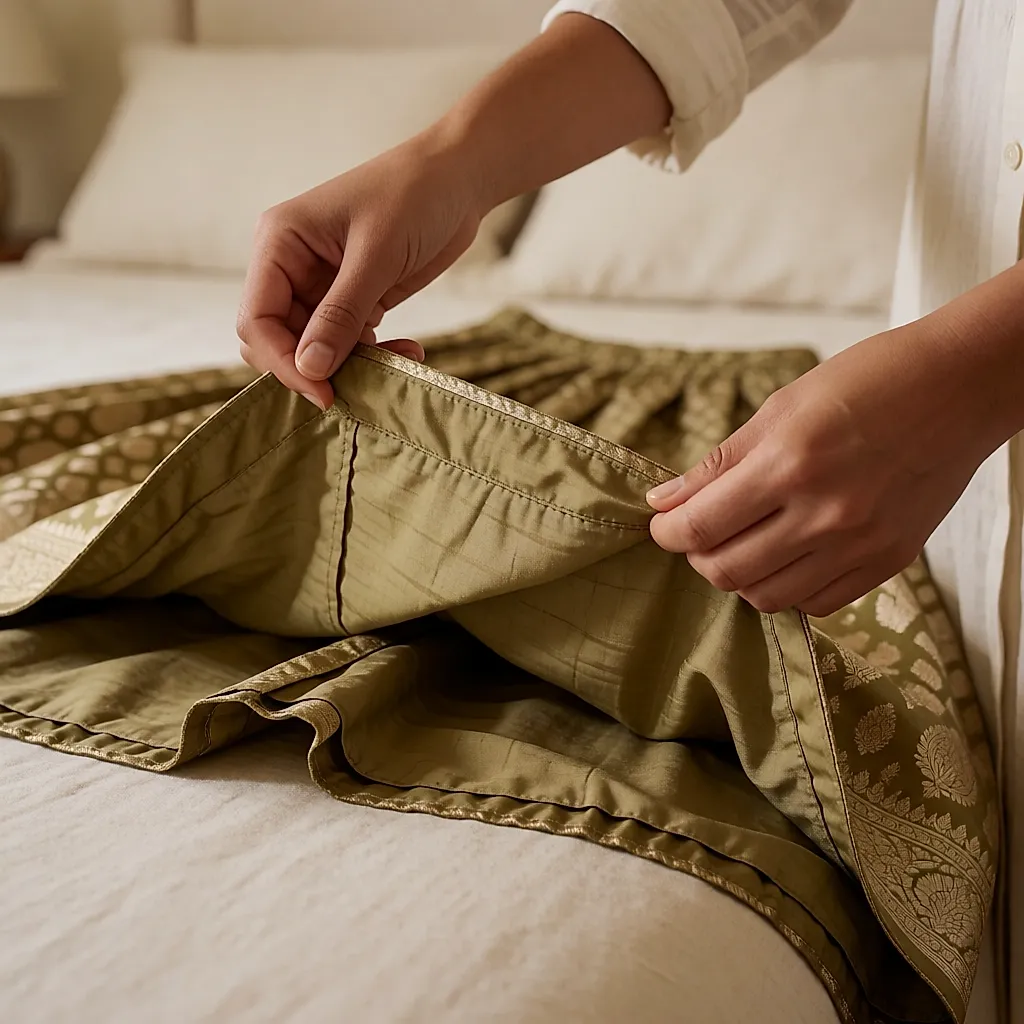
Then there's the lining. On a skirt it does everything: it stops the silk being see-through, protects it from rubbing and adds body. A fine cotton or silk lining lets the fabric breathe; check how much synthetic fibre is in there if you overheat easily. And look at the hem: a heavy Banarasi needs a clean finish, not a bonded hem that drags on the motif.
Before you buy, turn the skirt inside out: check that the lining is long enough, that the seams lie flat and that the zip isn't pulling on the motif. If the skirt was cut from an old sari, ask what happened to the rest of the fabric — good reworking doesn't hide the offcuts.
Care is where the hidden cost lies
Care-wise, this is not a silk for a wet November day: dry cleaning remains the cautious choice for pieces with metallic threads, and the care label on the skirt always has the final say. Avoid spraying perfume directly onto the fabric, and don't store it squashed at the bottom of a bag.
And the care budget? As a rough guide, dry cleaning a skirt usually costs somewhere around £15 to £30, depending on the cleaner and what the label says. That's not nothing, but it's the price of a piece that can last for years — provided you don't wear it in a downpour.
What a Banarasi skirt costs
Expect roughly £150 to £400 for a new skirt in artisanal Banarasi, depending on the density of the weave, whether there's zari, the lining and the finish. Second-hand, or made over from an existing sari, prices often drop to between £50 and £150 — sometimes less if you already have the fabric and are only paying for the making up. Alterations run to about £30 to £80 depending on the hem and the fastening.
Where to look? Independent designers, tailoring studios that rework saris, second-hand rails and specialist markets. The name on the label doesn't tell you everything: a small brand may charge a fair price for the weaving, while a big house may add its own. The right question isn't 'what does the brand charge?' but 'how many hours of work are in this skirt?'
So, tempted? Yes, if you want a skirt with character and you're happy to deal with a lining, the dry cleaner and proper storage. No, if you want to bung it in the machine on Sunday night and forget about it until Monday. The beauty of Banarasi is precisely that it won't be treated casually: it asks for a little care and gives a great deal back in presence. A skirt made from artisanal weaving isn't worn like a basic — it's worn like something you chose.



Comments
Your opinion matters: rate the article, react and reply to comments.
Comments are moderated; AI-assisted comments are flagged. Text emoticons (8-), :-), <3…) are automatically shown as images.