
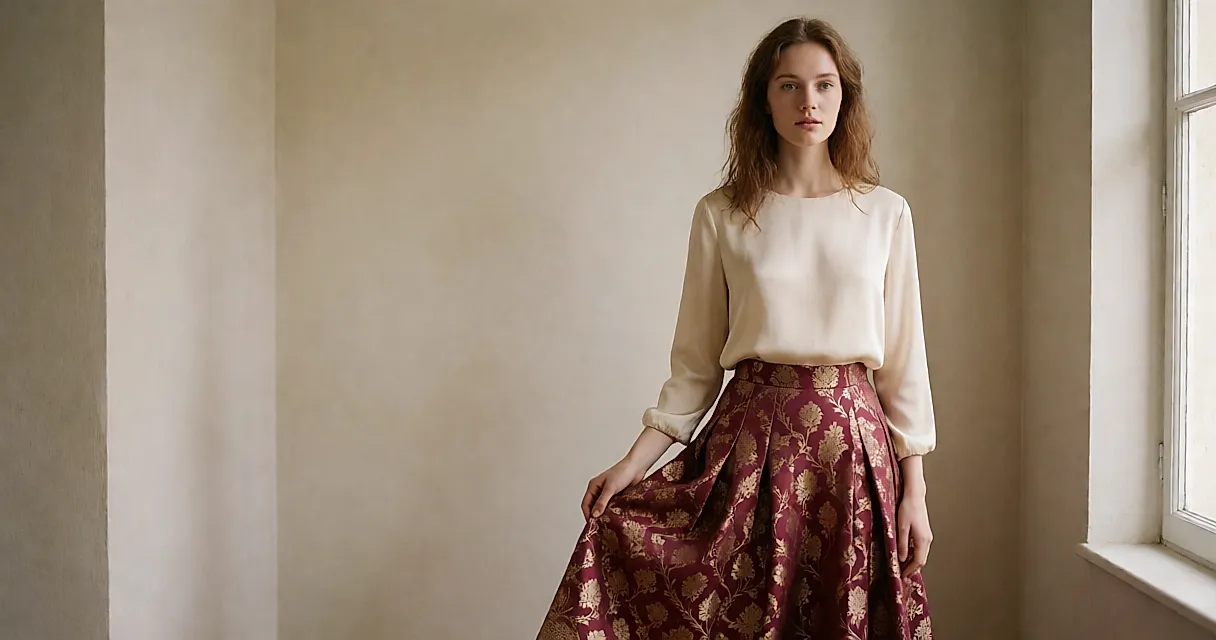
You know the scene: the party piece ordered a little late, tried on under the white light of a hallway, and a motif that shines more than you bargained for. Banarasi brocade has that gift — it catches the eye before reason has had its say. Then you lift it, and everything changes. This isn't a silk that runs through your fingers; it's a fabric with some heft to it.
The architectural motif counts, but not first
Arches, jalis, temple motifs and stylised flowers give brocade its immediate presence. On a hanger it's a statement piece; in a photograph, it's the detail that carries the whole look. But is a good motif enough to make a good piece? Not always. A skirt with an arch motif can look superb laid flat and turn into a lampshade the moment it's worn, simply because the fabric doesn't follow the body.
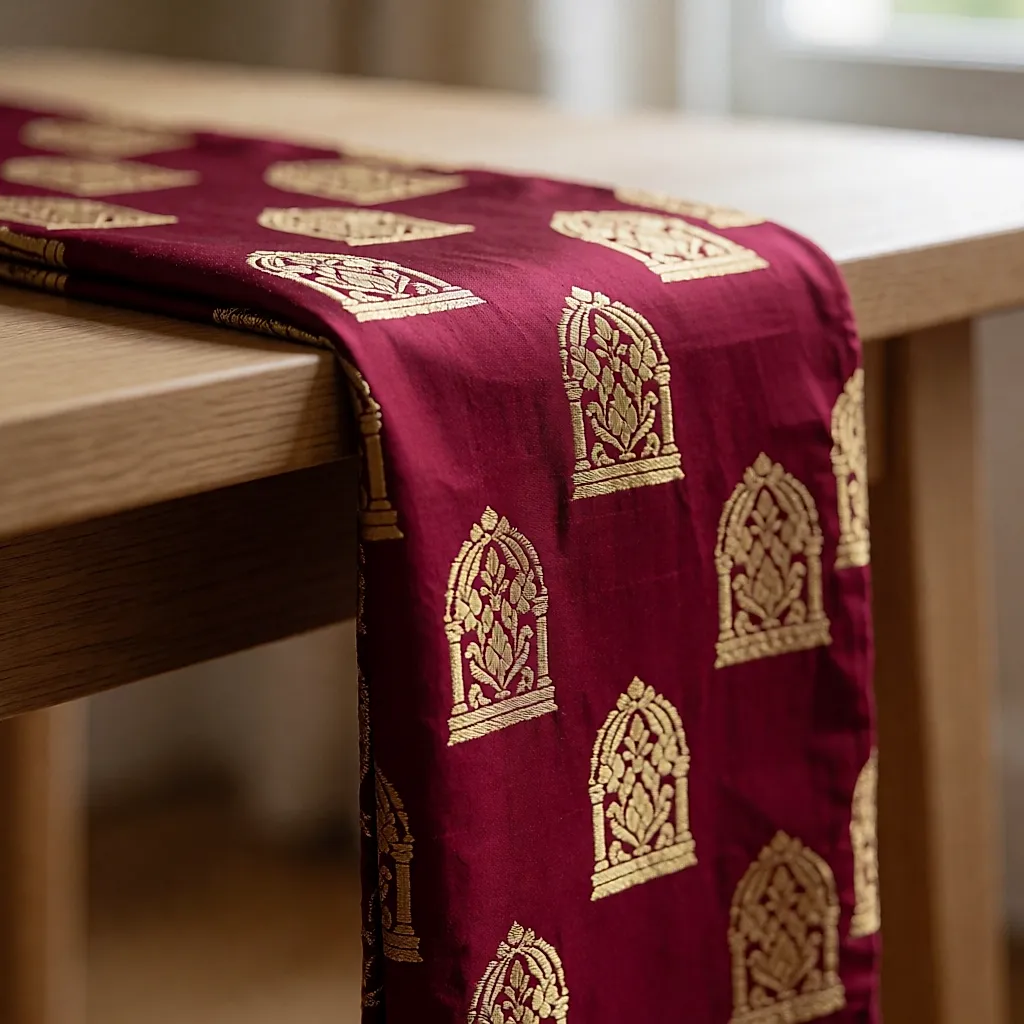
Because here the motif isn't printed: it's woven, with extra threads that add substance and therefore weight and structure. That's what gives brocade its presence, and sometimes its stiffness. Before you fall in love with the design, turn the fabric over, let it hang, and watch what it does when nothing is holding it up but the hanger. That's usually where the real character shows.
How density, weight and drape read through your fingers
Weft density — the threads running across — decides how firm the fabric feels. The tighter it is, the more the brocade holds its shape, sculpts and takes a crease; the looser the weft, the more the piece floats, but the more likely it is to snag or lose its shape. A dense brocade doesn't crease easily, but it can be warm and less comfortable over a long evening. A lighter brocade is more forgiving of movement, provided you accept a less crisp drape.
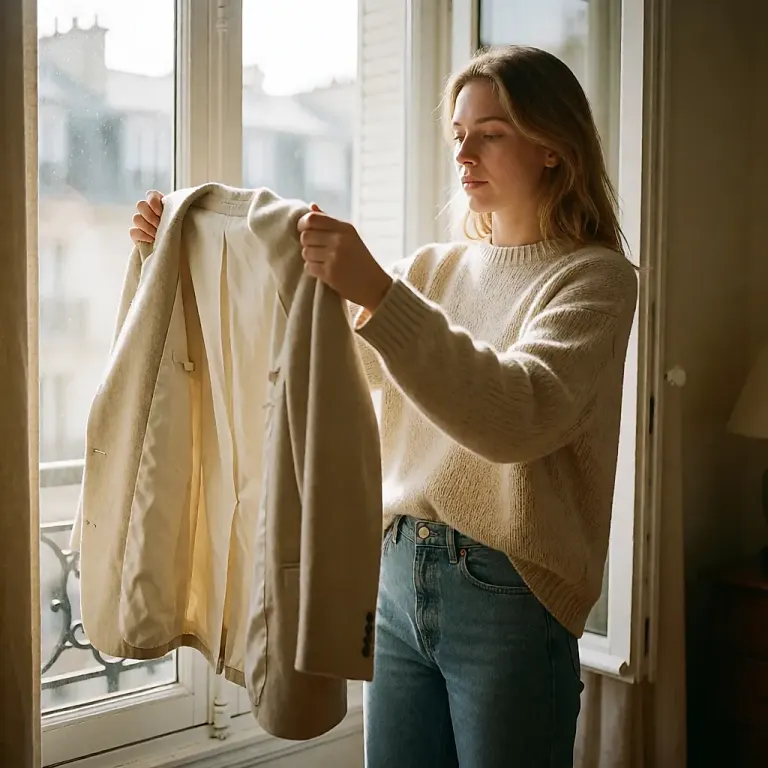
Drape is judged standing up, not in a rushed fitting-room mirror. Hold the piece by the shoulder or the waistband: does it fall straight, or open like a bell? Neither is a fault. A heavy brocade skirt gives an architectural, almost ceremonial silhouette; a softer brocade dress is easier to dance in and less dramatic at rest. Reign or twirl — your call.
The right piece for the life you actually lead
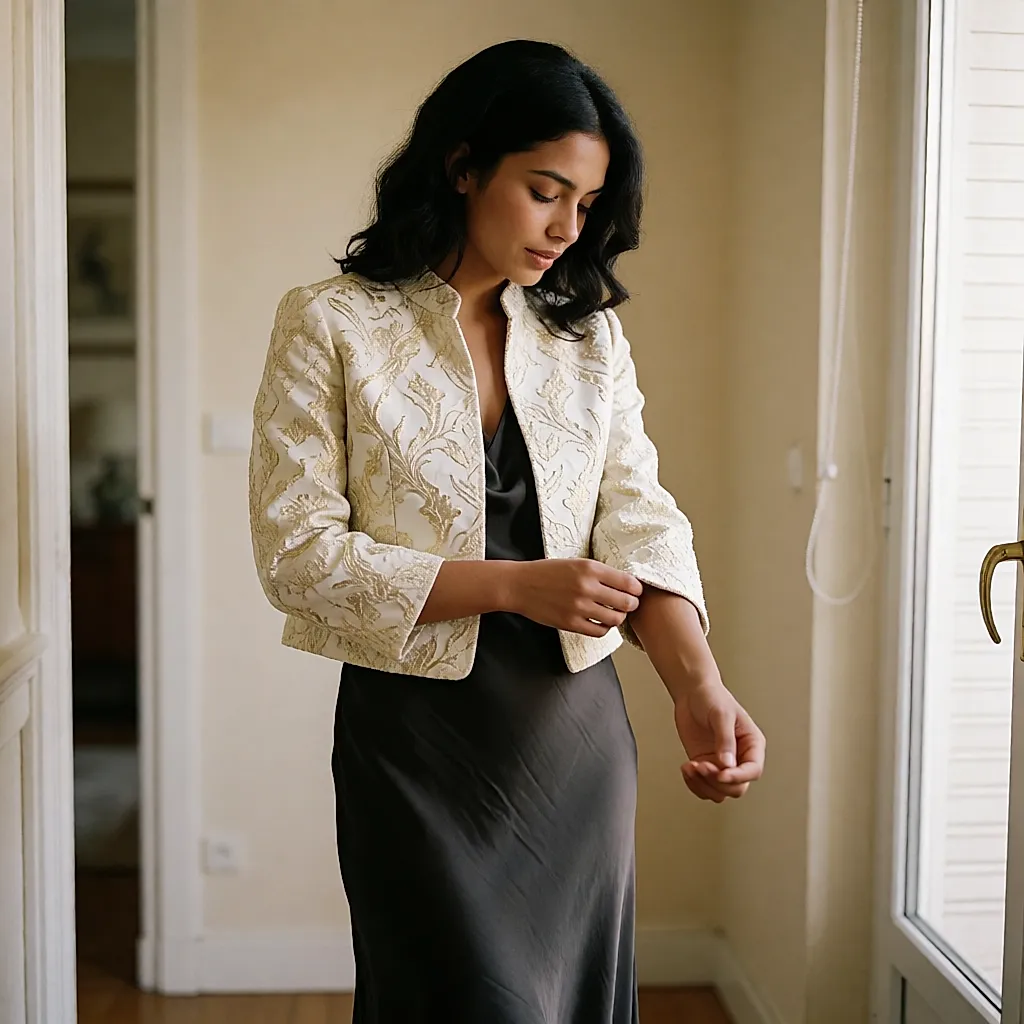
For a November wedding, a cropped brocade jacket over a fluid dress works well: the texture brings the occasion, the cut keeps things light. For an evening where you'll mostly be sitting down, a straight dress in dense brocade holds the line without any effort. If you're after something to wear in the daytime, though, or you don't like feeling slightly 'dressed', brocade isn't the basic you sling under a coat without thinking. It asks for a bit of commitment to volume.
Look at the lining and the finishing too: brocade snags, and a badly set lining ruins the drape. So read the label. If the composition lists a large share of synthetic fibres, consider yourself warned: the handle and the drape won't be those of silk. That's not a verdict, just something to know before you get your card out.
The fitting-room check — Pinch the fabric between thumb and forefinger and let it drop. If it holds like a piece of card, the piece will have structure; if it collapses at once, it will be more fluid. Look at the reverse: the motif threads should be clean, not pulled or snagged. Then take three steps, sit down, raise your arms. That's where the drape tells the truth.
Where to look and what to check
How a Banarasi brocade performs comes down mainly to the quality of the silk, the fineness of the zari, the handwork and where you buy it. The weaving is slow and the motif is built thread by thread: at comparable quality, always ask for the exact composition and compare a few options before you commit.
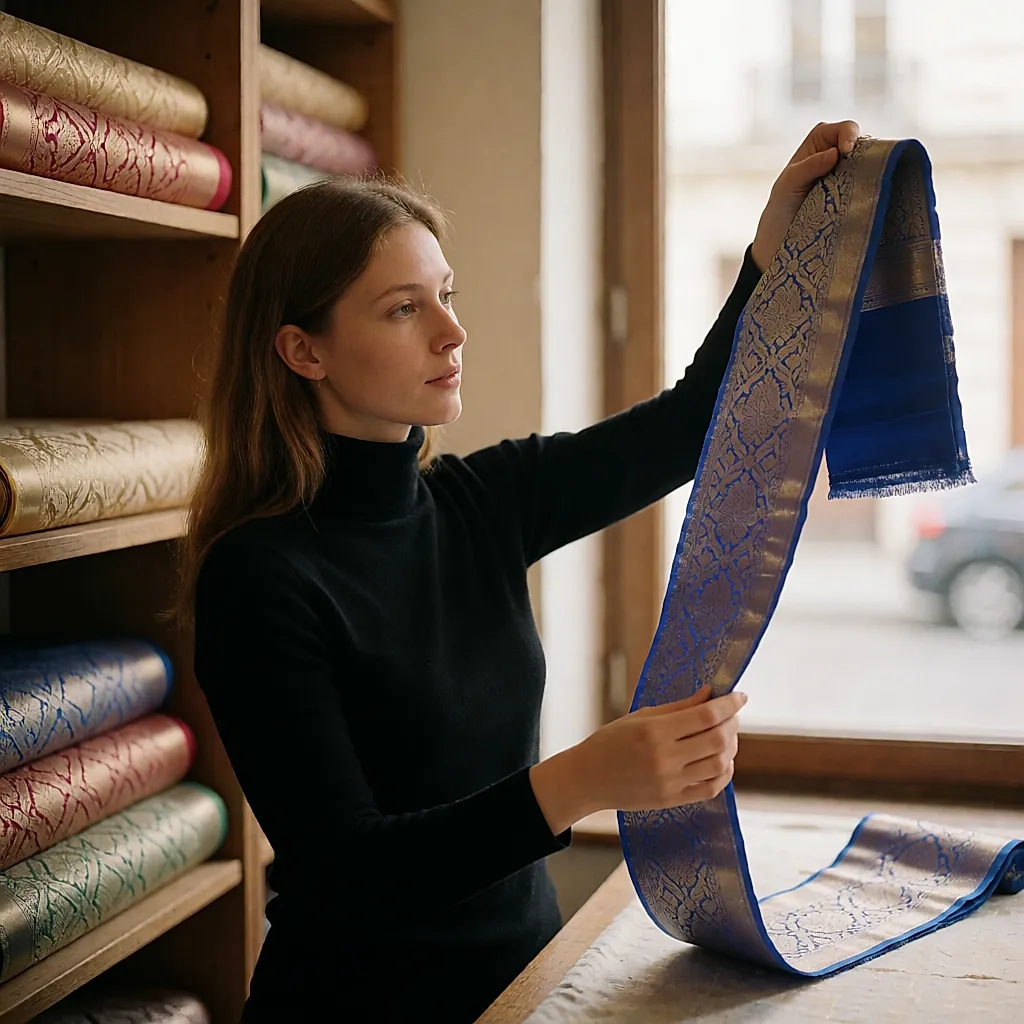
Where to look? Fabric shops, specialist Indian silk retailers, designers working in small batches, dressmakers. Second-hand and rental are genuine options for a ceremony piece: you wear it rarely, so there's little point in it sleeping in your wardrobe. If you do go that route, check the condition of the zari, because a snagging metallic thread can't always be repaired discreetly.
Banarasi brocade isn't a piece to choose for its motif alone. If you want a party piece that will see you through the years, look for a dense silk, a drape you like and a design you won't tire of by the third wedding. And if a motif does stop you in your tracks, ask yourself the right question: do I love it enough to carry its weight?
What to budget
There's no single price for Banarasi brocade. In the UK it depends on the silk content, the fineness of the zari, the handwork, how many metres you need and where you buy. As a rough guide — and the spread between shops is wide — reckon on somewhere around £30 to £120 a metre for a standard brocade, and more for handwoven silk with fine zari. For a finished piece, a skirt or a waistcoat often sits around £150 to £400, a dress more like £300 to £600. Second-hand, budget roughly £50 to £200 depending on condition and the quality of the weave; renting a ceremony piece usually comes in at £60 to £180. Treat all of these as starting points: always ask the price per metre or per piece, lining and alterations included, and compare shops, independent designers and rental services before you commit.


Comments
Your opinion matters: rate the article, react and reply to comments.
Comments are moderated; AI-assisted comments are flagged. Text emoticons (8-), :-), <3…) are automatically shown as images.