
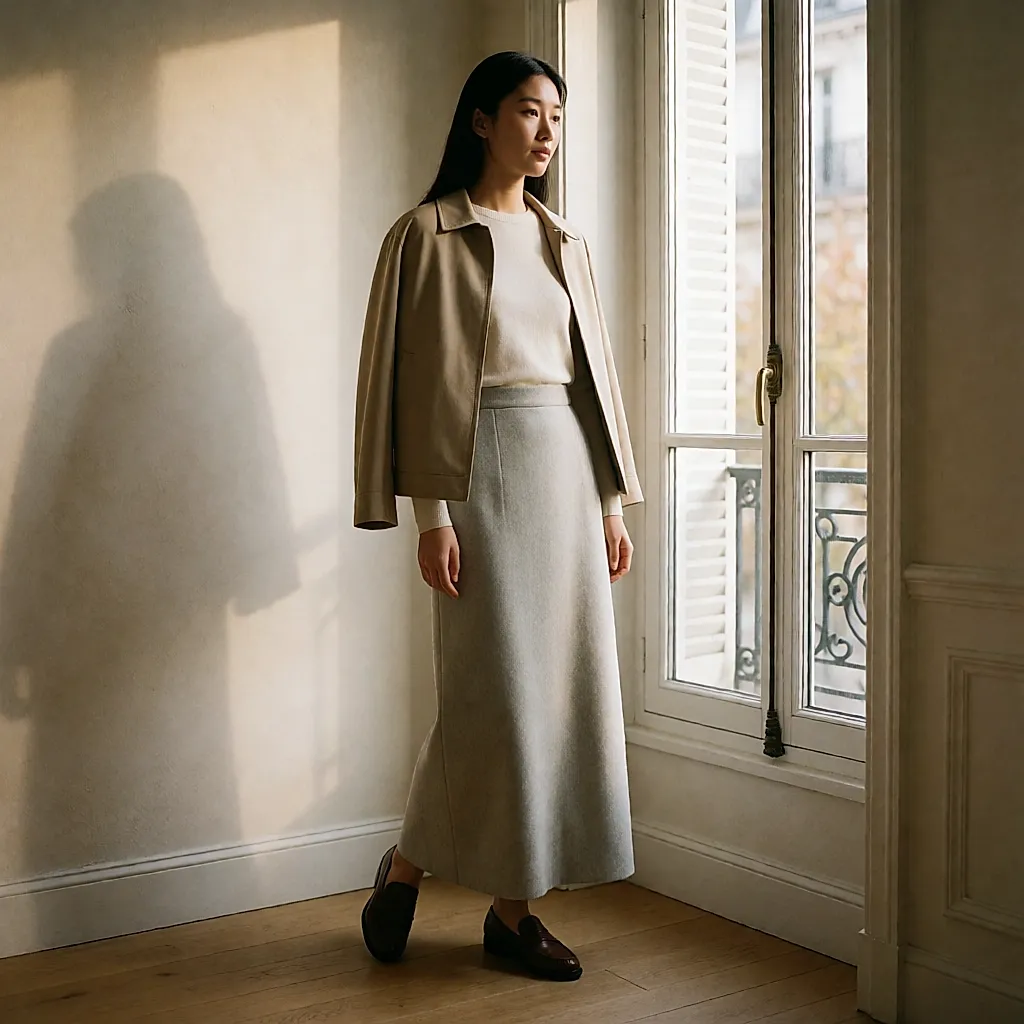
Sunday night, 10.47pm, you're getting ready for Monday and your hand skips the jeans without a second thought. For a few weeks now, it's a long skirt that's been going to the office — the one bought for a wedding in June, which turns out to work perfectly for the tube-office-desk commute. A wardrobe foundation piece, in short: long and simple, it becomes the base of the silhouette and carries the rest of the look.
The skirt moves from option to anchor
It's the kind of shift that takes two seasons to see coming. You start from the bottom — long more often than not, straight or pleated — and build the rest around it. Lean on pieces you can mix rather than a full look: a tucked-in shirt, fine knit, white T-shirt, a straight-cut jacket over the top. In other words, the top half becomes simple and the look happens below.
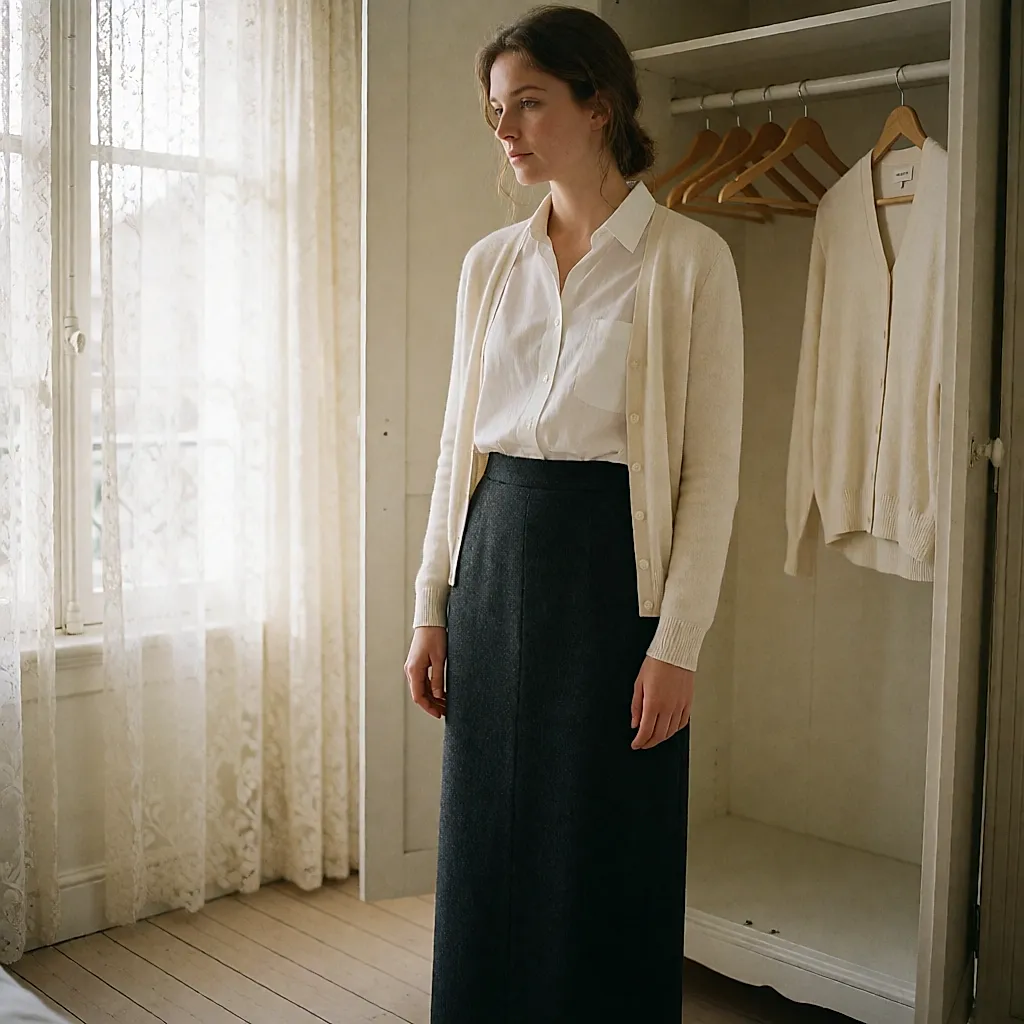
So are jeans out? Not quite, but they're taking a break. The skirt has one advantage over them: it forgives. A good drape rescues a slightly dull jumper, where a badly cut pair of trousers forgives nothing. A drape that falls cleanly, a waistband in the right place, and you have a silhouette that reads in three minutes in front of the mirror. It's less spectacular than a statement piece, but it's exactly what keeps a wardrobe standing.
Straight and pleated: two different moods
Start with the long straight style, the more understated of the two. It lengthens the leg without fuss and asks for one thing: a clean drape. Fluid, it moves with your stride; denser, it structures and is unforgiving about a wonky hem — five centimetres too much and it sweeps the pavement. A vent, subtle or bold, decides how freely you move: without one, climbing stairs takes a bit of technique.
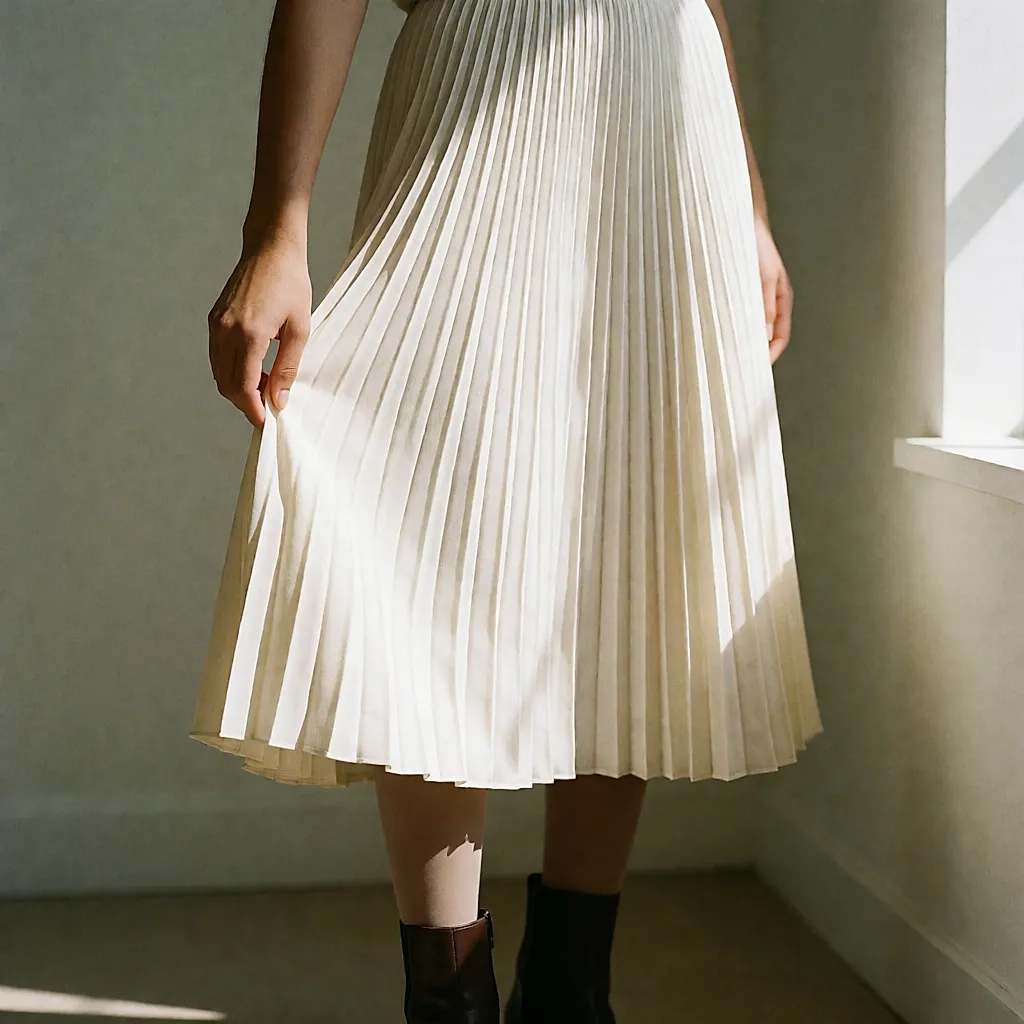
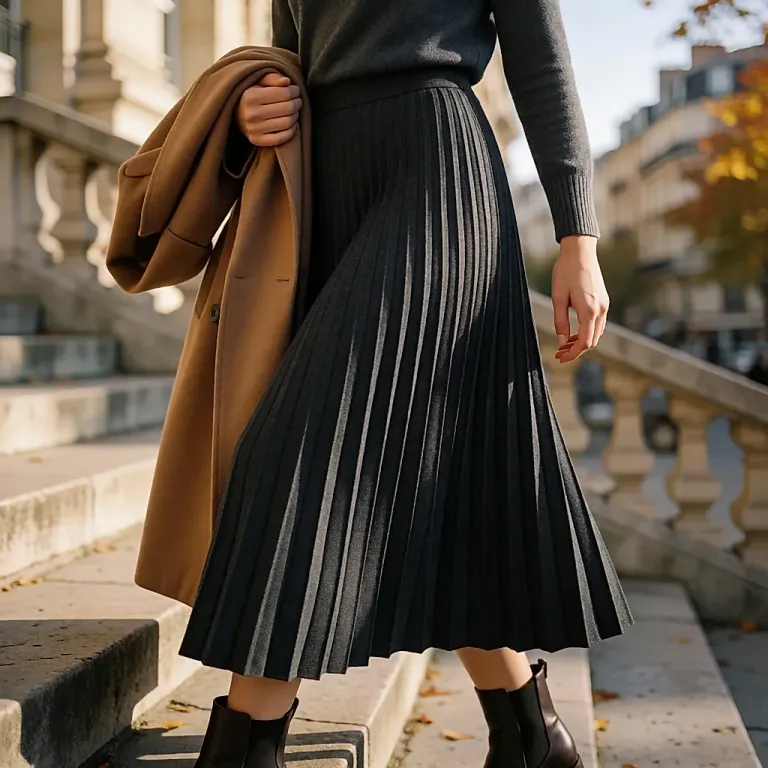
Pleats, then, play a different tune. Sunray, accordion, wide or narrow: pleating catches the light, which adds texture even in a solid colour, and it works as well with boots in October as with flat sandals in April. Two honest caveats: if you want to avoid drawing attention to your waist, skip belted styles — pleats tend to highlight it. And for a very active daily routine — cycling, stairs, long journeys — a narrow long skirt without a vent quickly becomes a pavement hazard; a fuller cut is a better bet.
Three tries in the changing room and you'll know. Sit down: if the waist rides up or gapes, the cut won't hold up all day. Climb a few stairs: the length should move with you without making you lift your knee like you're doing the steeplechase. Stand in daylight, near a window or outside: that's where the fabric shows its true drape, not under the blue spotlights of the changing room.
Buy in October, wear in April
A piece that crosses two seasons should be chosen for its fabric before its colour. Lightweight wool, cotton gabardine, slightly dense cotton jersey can be worn now with boots and opaque tights, then into April with a T-shirt and sandals. Linen bought in October may seem like an odd idea; by April it will be the most useful piece in your capsule wardrobe. One check before you commit: look at the percentage of synthetic fibres on the composition label.
And before you reach for your card, shop your own wardrobe before the shops. A slightly short skirt that just needs re-hemming, a belt that lifts a slightly low waist: the cheapest move is often the one that changes the most, and it has the advantage of being instant. On care, a gentle wash and drying flat preserve pleats better than an over-generous machine cycle.
What a skirt that really works costs
In practice, expect around £35–£55 for a long skirt from a high-street chain or online, £80–£180 for a piece whose fabric should last several seasons, and from £220 at designer level. Alterations often cost £10–£25 at a local tailor — not much to turn a too-long skirt into one that fits properly. Second-hand, expect £15–£70 depending on brand and condition: for a straight wool style, that's often where the best bargain is.
Where to look, in practice? High-street chains and department stores for simple lines, mid-range brands for fabric, a local alterations tailor for fit, second-hand platforms and charity shops for wool and silk. Price doesn't tell the whole story: a £40 skirt in thick, well-cut cotton will earn its keep more than a delicate piece costing three times as much. And if you're tempted online, choose a retailer that accepts returns — a skirt has to be judged standing up, sitting down and walking, never by a tape measure on a screen.
If you remember one thing, make it this: the skirt of the moment is not a spectacular piece, it's a foundation piece. Long, straight or pleated, it carries the rest of the look without demanding the spotlight, and slips just as easily under a November coat as under a May T-shirt. A smart buy for your wardrobe, on one condition: aim for your length and your life, not the catwalk's.
Comments
Your opinion matters: rate the article, react and reply to comments.
Comments are moderated; AI-assisted comments are flagged. Text emoticons (8-), :-), <3…) are automatically shown as images.