
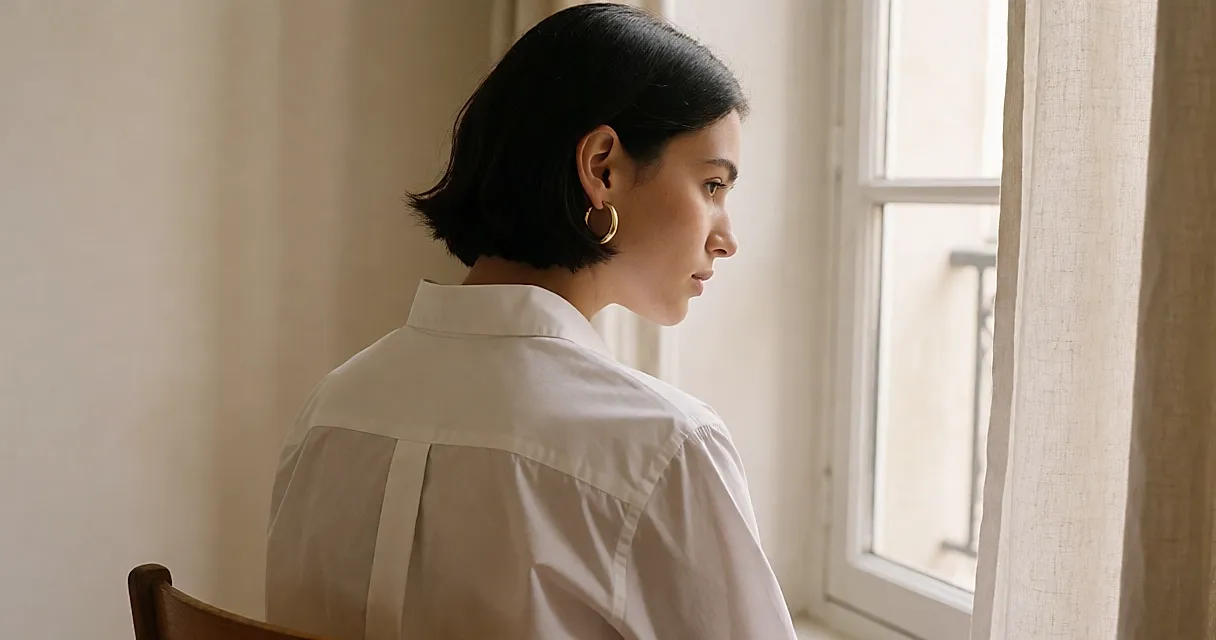
Have you ever swept your hair up with one hand at the mirror, just to see? That is the effect of Anya Taylor-Joy's short bob: one movement, the nape is free, the ear appears, and the whole top half of your wardrobe is suddenly on show. Nothing needs throwing out — it just needs rethinking.
With the nape on show, the collar takes over
When hair no longer draws a frame around the face, something else has to do the job. That job falls to the collar. A high collar — a shirt buttoned to the top, a fine merino roll neck — draws a clean line under the chin and gives the face back the outline that a mass of hair used to provide. Against an exposed nape, crisp poplin almost behaves like jewellery.
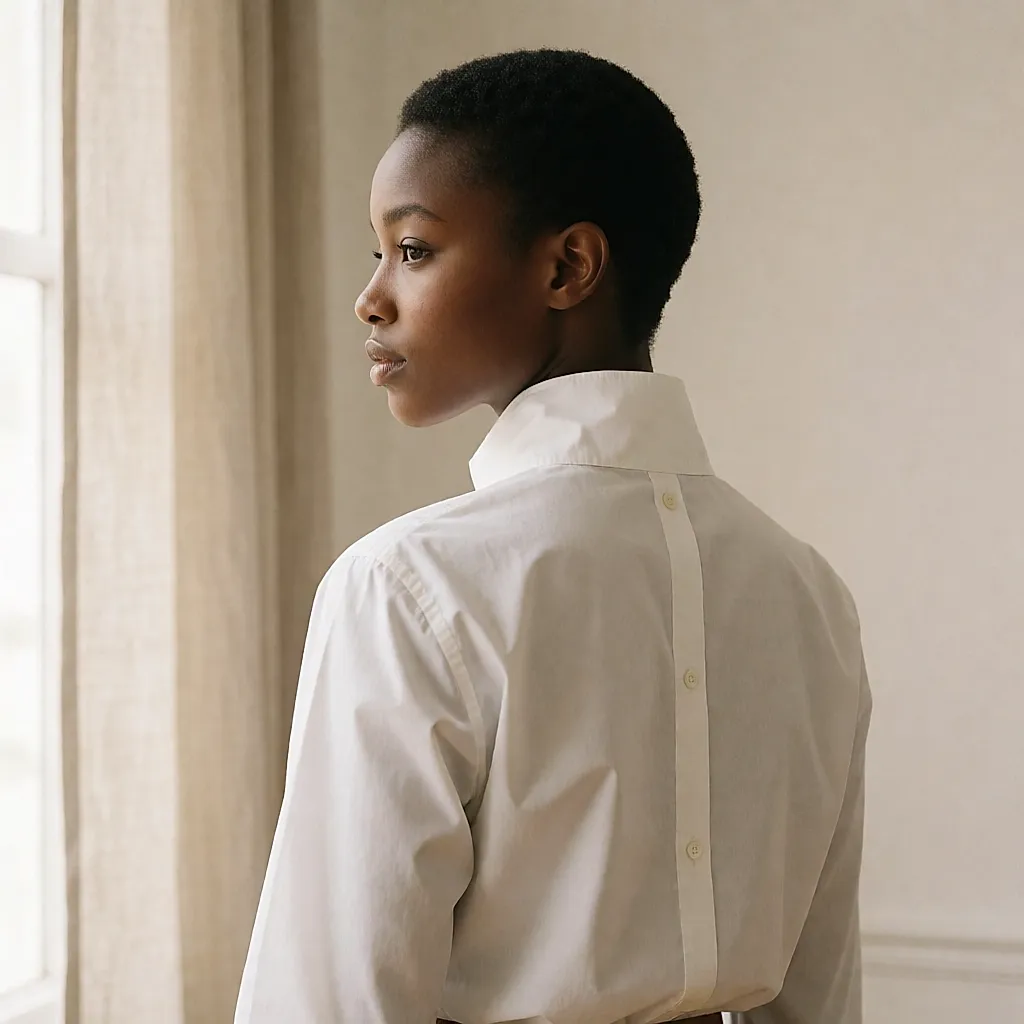
Fabric decides everything, even more than the cut. Slightly stiff organic cotton, silk or fine wool will hold their shape; a soft collapsing collar gives nothing back. For proportions, if you want to lengthen the neck, a flat Peter Pan collar or a shirt opened by one button will be kinder than a very high roll neck. And there is the detail we forget: back buttons, a slightly scooped back neckline, all that knitwear that used to be hidden under your hair. Now it shows.
The ear becomes the focal point
With the ear visible, the earring needs to read clearly. This is the moment to bring out pieces with a bit of presence — a large gilded-brass hoop, a sculptural clip-on, an ear cuff on the helix. One strong piece per ear is enough: with a high collar, two focal points compete for the face and nobody wins.

Very fine drop earrings and tiny studs lose a great deal. They are no longer lost in hair, but they no longer say anything either: save them for days when everything else is already busy. One practical point: with a chunky knit scarf or bouclé wool, earrings that snag quickly become unbearable. Make sure the fastening is secure and the surface smooth before you head out.
Scarves and coat collars: drawing the neck line
The scarf changes role. Tied high, as a silk square or a rolled bandana, it replaces the volume lost above the shoulders and draws a frame around the face rather than drowning it. A turned-up coat collar has the same effect, more soberly — and winter offers plenty of chances, from rainy Sundays in November to chilly mornings.

Don't overlook what the cut reveals at the back: a fine chain with its clasp falling at the nape, a choker worn as back jewellery, an exposed nape that finally shows what you used to put on without anyone seeing. These are tiny details, but they make the difference between an outfit that is merely worn and one that is finished.
What loses its point
The oversized chunky roll neck comes first: it climbs up, swallows the chin, and without a mass of hair to balance it, becomes a block. A fine roll neck stays perfect; keep the thick one for very cold days when you are not seeing anyone. Next, the snood — a professional nape-swallower. And fluid drop earrings, which swing about, catch and end up inside the collar.
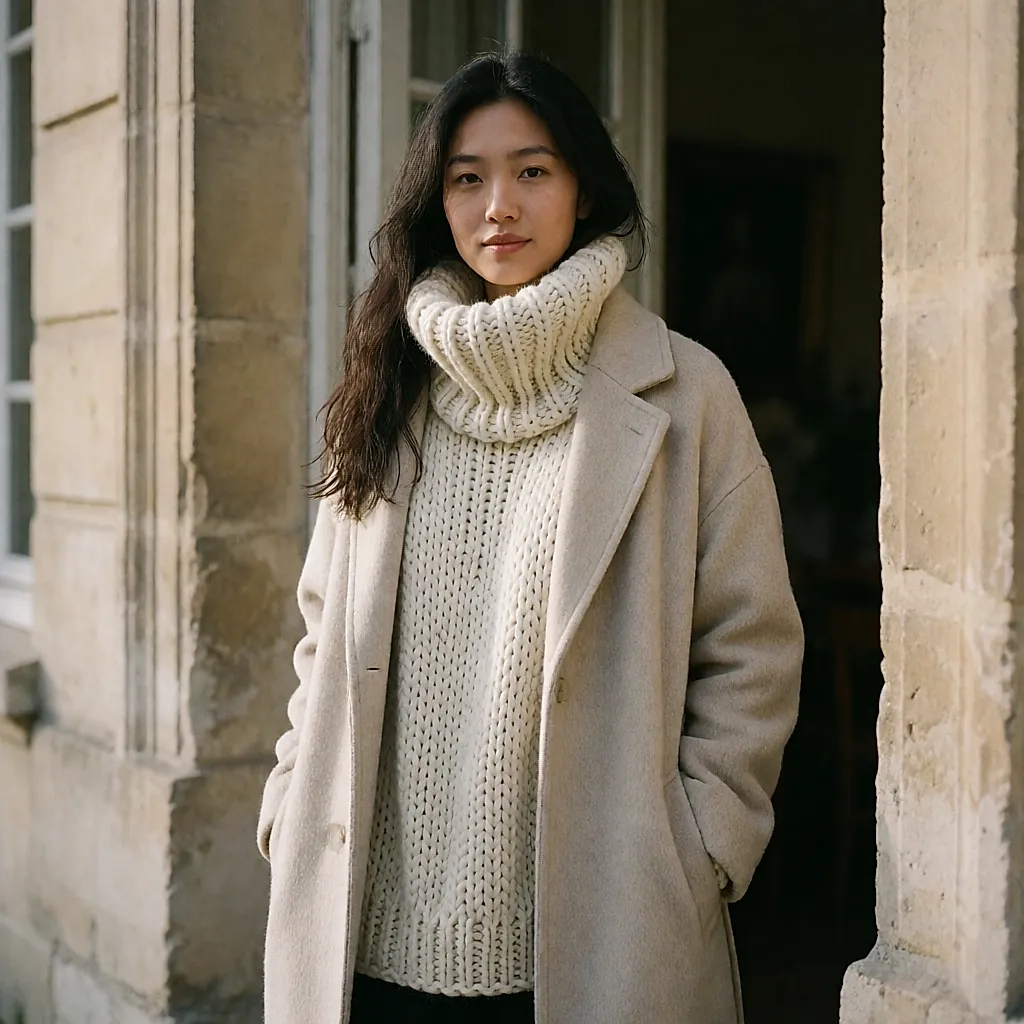
Does that mean everything has to go into storage? No. These pieces have not disappeared; their role has changed. A snood over a hooded coat, a thick roll neck with curls tucked away out of sight, still work very well. It is accumulation that no longer forgives.
What to budget
Expect to pay in the region of £12 to £35 for gold-tone fashion earrings (market stalls, costume jewellery shops, high-street brands), £35 to £80 for gold-plated pieces and £70 to £180 for vermeil or silver; prices rise with the weight of the metal and where you shop. For tops, a well-cut collared shirt sits around £25 to £70, and a fine merino wool jumper around £60 to £140. For scarves, vintage silk from charity shops or online is usually £20 to £60, while new silk is more like £80 to £160.
Three checks before you leave: button the collar to the top and make sure it holds its shape; tie the scarf close enough to the neck to frame it rather than swallow it; keep to one strong piece — collar or earring — and let the other answer quietly. The rest is a mirror and five minutes.
If you take only one thing from this, make it this: the shift happens above the shoulders, not on your head. On a small budget, a white Peter Pan collar and a gold hoop are enough to test the idea; on a mid-range budget, a silk shirt and a pair of vermeil earrings can last for years; and if you're still unsure, trying it on in front of the mirror will settle it in ten seconds — sometimes less!

Comments
Your opinion matters: rate the article, react and reply to comments.
Comments are moderated; AI-assisted comments are flagged. Text emoticons (8-), :-), <3…) are automatically shown as images.