
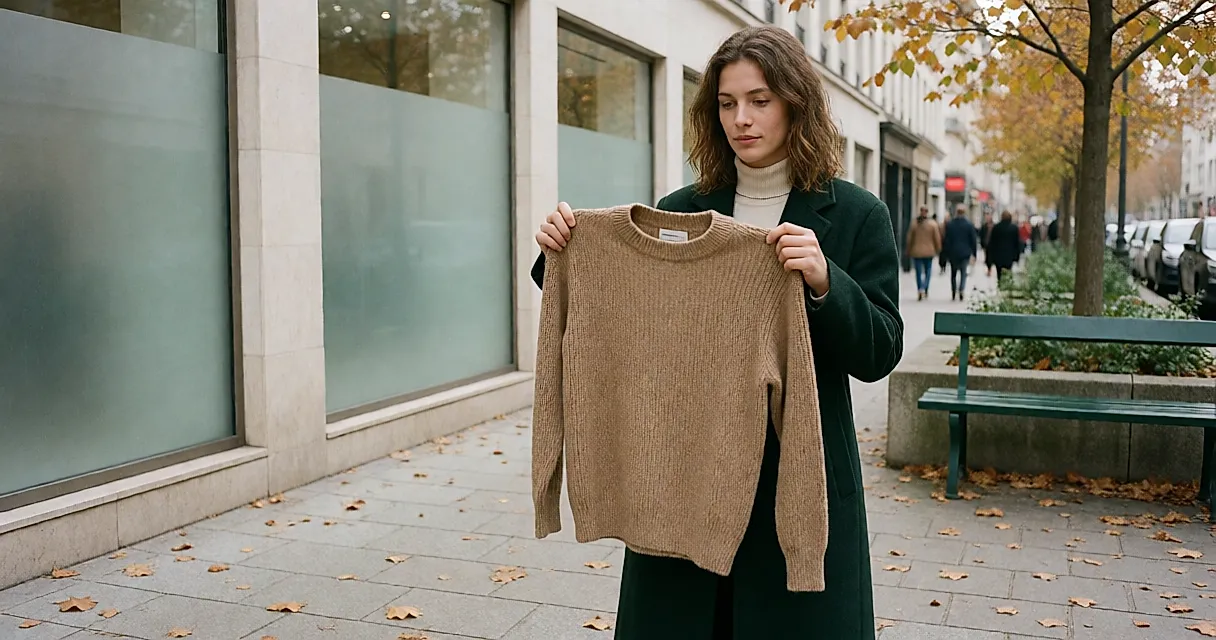
An acrylic jumper that's been worn twice has no business going in the machine. It goes in anyway — and with every cycle it leaves a little of itself in the water: fibres so fine you never see them go. That's not a figure of speech. It's the act of washing that wears the knit out.
Inside the drum, the knit works against itself
A wash means water, detergent, movement and a spin. On a synthetic knit — acrylic, polyester, polyamide, elastane — that mechanics pulls microfibres loose from the places that rub: collar, cuffs, hems, seams. The looser and fluffier the knit, the more it sheds; a tight knit holds up better, but eventually it gives too.
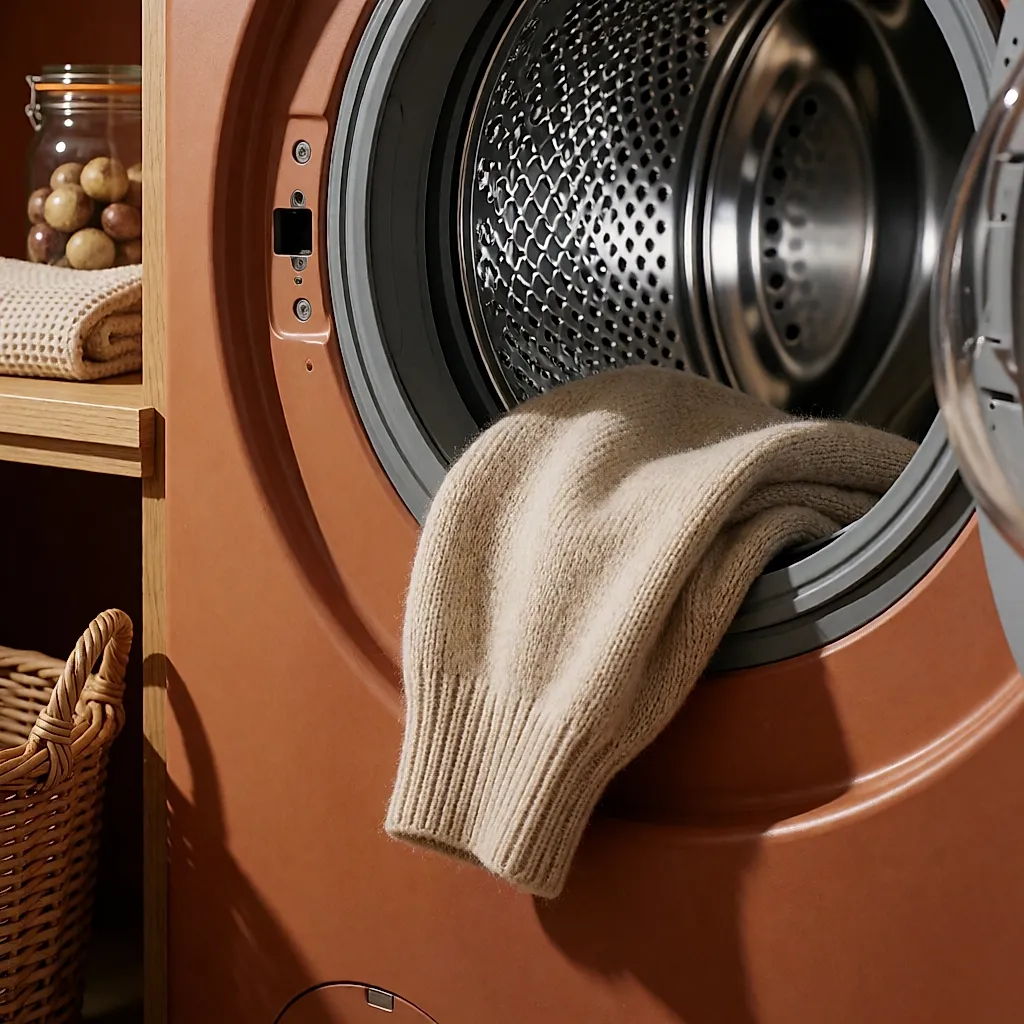
The load matters as much as the fibre. A drum packed to the brim means more friction, less rinsing and a spin that roughs the knit about. A half-full drum, a short cycle and a low spin: that trio won't fix anything for good, but it does spare the fibre. And a cold wash tires the knit less than a 40 °C programme, which helps the bill along the way.
Wash less, wear more: the balancing act
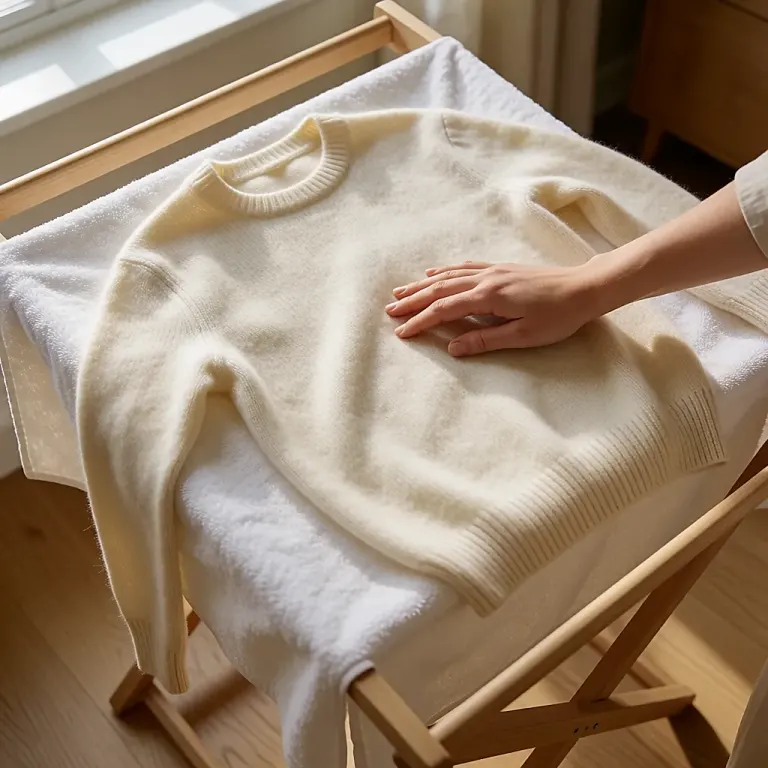
This is where it's all decided. An outer layer — a jumper, a cardigan, a jersey dress — doesn't need the machine after every wear. In between, you air it: leave it overnight on a hanger near a window, or for as long as it takes; fresh air helps yesterday's smell fade. A quick brush over the sleeves, a spot clean with a mild soap if needed, and the knit goes another round. Why wash a piece that has done nothing all day?

The caveat: polyester holds on to sweat smells far more stubbornly than wool does. A synthetic knit worn against bare skin on a gig night doesn't deserve the same treatment as a cardigan thrown over a shirt. The simple rule: wash what touches your skin, space out what covers it. In practice, two or three wears between washes is often enough for an outer layer — go by nose, not by calendar.
The filter: a net, not an absolution
Filtering laundry bags and the filters you plumb into the machine catch some of the fibres that get pulled loose. That's not nothing: once captured, those fibres head for the bin rather than the waterways. But a filter doesn't make a knit immortal, and it won't catch everything. It's a stopgap, not a solution — and it's no substitute for airing, or for washing less.
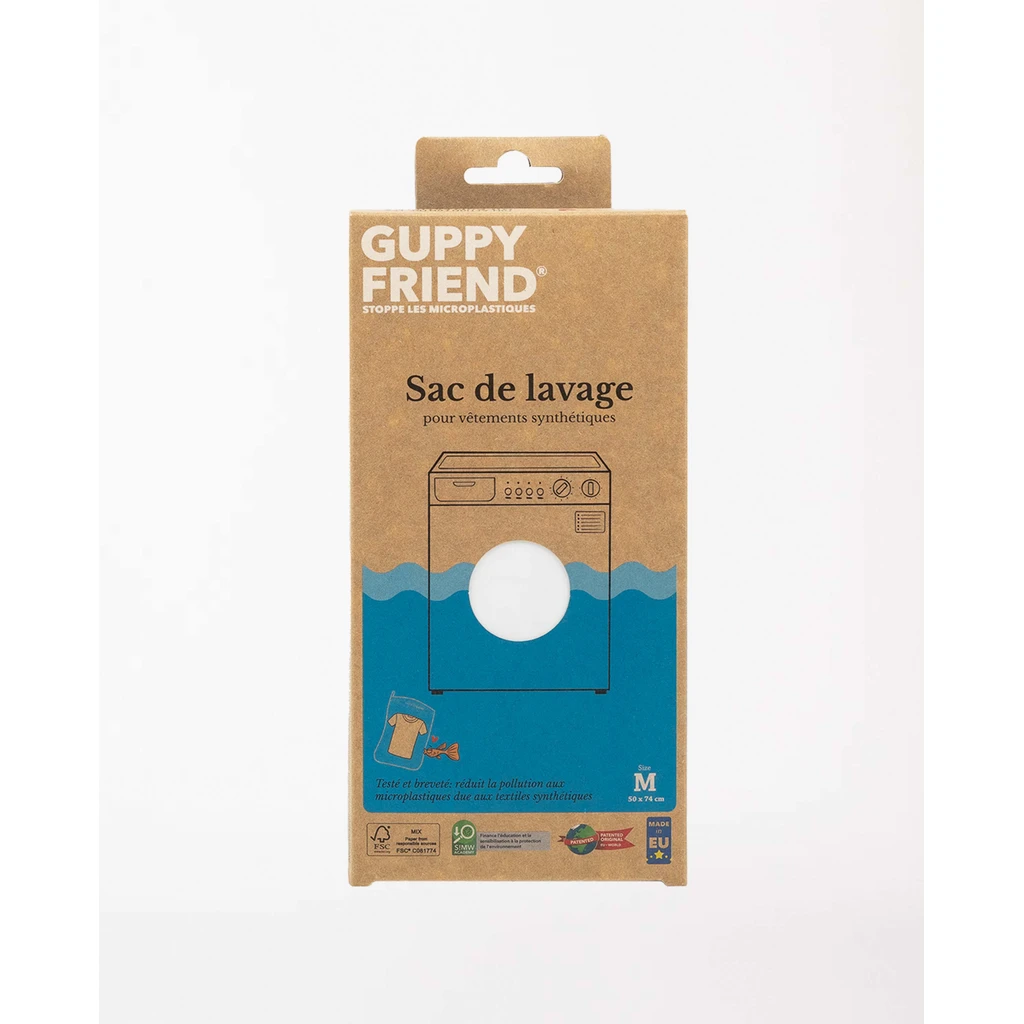
The catch is the upkeep. A bag nobody empties, a filter everyone forgets: the whole setup quickly turns into a small damp dumping ground that smells of forgotten laundry. Empty the bag or the filter regularly, after every use if you can, following the manufacturer's instructions. And the filter that comes built into your machine — the one protecting the pump — isn't designed for this. Don't count on it.
What the label tells you before the first wash
The fibre composition is printed inside the garment, and it's often the most useful information on the whole piece. A knit heavy on acrylic or polyester tells you what's coming: it will shed fibres, wash after wash, and age by pilling. That's no reason to throw out what you already own — far from it. Wearing, caring for and keeping things longer is still the single most effective move, and it's free.
If you're filling gaps in your wardrobe, look instead at merino or recycled wool, organic cotton, linen. These fibres have their own demands — wool felts if it gets too hot, linen creases the moment you move — but they can be repaired, darned and kept. The lowest-impact option is still secondhand: a jumper that's already been worn has already taken the washes that would have damaged it.
What it costs
A filtering laundry bag usually comes in somewhere around £15–£30 at a hardware shop, a DIY store or online; the models are much of a muchness, and the difference comes down to how fine the mesh is and how the closure works. A filter that plumbs into the machine costs more: roughly £50 to £130 depending on the system, plus cartridges at about £10 to £25 each, to be replaced regularly. Prices vary by retailer, so check before you commit.
On detergent, don't overdo it: a gentle liquid detergent, around £4 to £12 in the supermarket, does the job. And if you're torn between buying a filter and replacing your wardrobe, start with the thing that costs nothing: washing less often.
The collar test. Before you start a load, sniff the collar and the underarms — not the whole garment. If it still smells clean, it is. A hanger, an open window, and it goes again tomorrow.
Next time your hand hovers over the drum, remember this: the best washing machine is still the one you run less often. Your jumper will thank you, your bill will too — and so, a little, will the river down the road.


Comments
Your opinion matters: rate the article, react and reply to comments.
Comments are moderated; AI-assisted comments are flagged. Text emoticons (8-), :-), <3…) are automatically shown as images.