
That cashmere jumper you snapped up last winter has come out of the machine looking like it was made for a child, and you definitely didn't order that. Before you say goodbye to it — or palm it off on a smaller friend and call it a clear-out — let's look at what actually went on in that drum. Because the culprit isn't the one you think.
Water isn't the culprit
Under a microscope, wool is covered in tiny scales, like roof tiles. At rest they slide over one another and the knit keeps its soft drape. Add heat, moisture and movement and those scales lift, catch on each other and don't lie back down. The fibres lock, the piece shrinks, its surface loses its softness: that's felting. Water on its own doesn't set it off — it's the trio of heat, friction and moisture doing the damage.
So why does water always get the blame? As a precaution, we avoid sudden temperature swings, but friction is still the main offender. And friction doesn't only come from the drum — a vigorous spin cycle, a zip in the same load, a slightly rough pair of jeans, and your everyday basic becomes a museum piece. Wool felts when it's knocked about, not when it gets wet.
Step by step: the wash
First move: read the care label, not the machine's manual. If it says hand wash, hand wash. If it doesn't, use the wool cycle (or delicate, or hand wash): cold water, 30°C at the absolute most, short cycle, gentle spin.
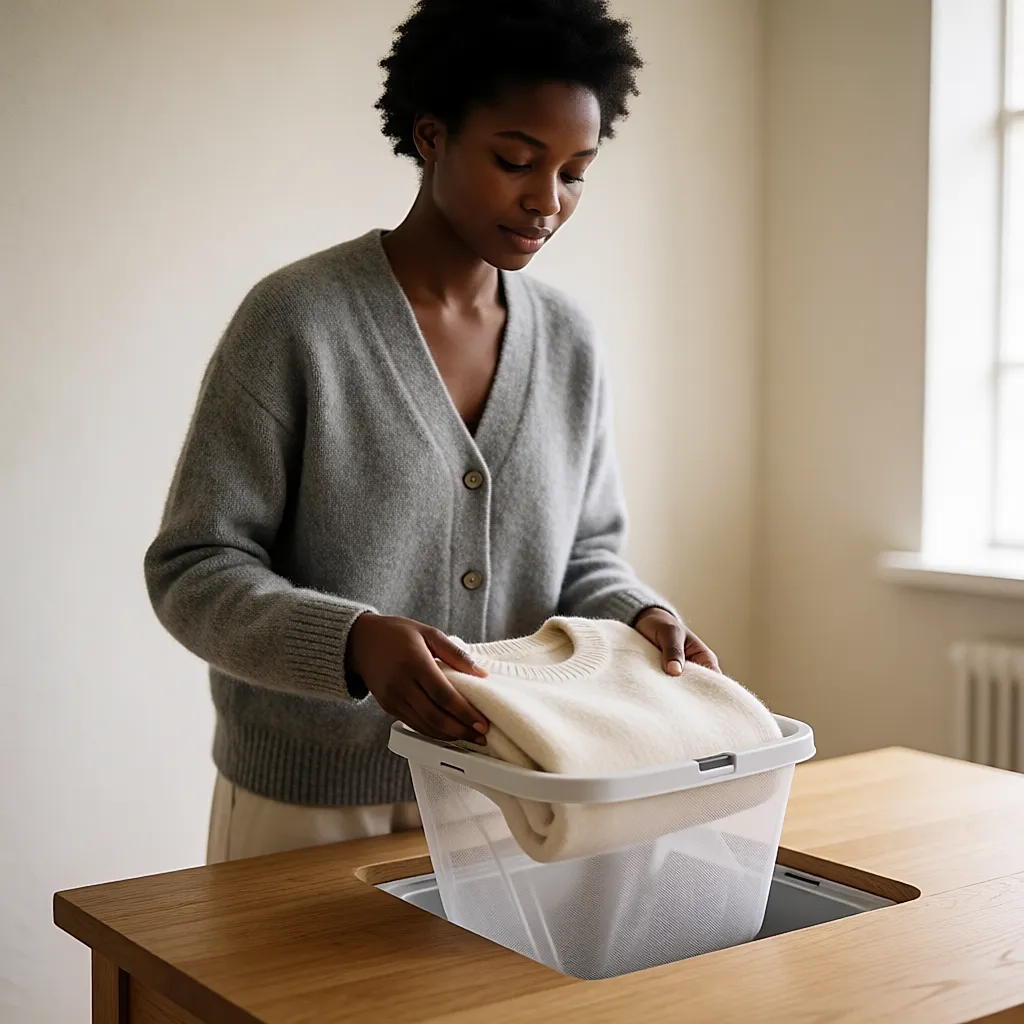
Then turn each piece inside out and slide it into a mesh laundry bag. It's the unglamorous detail that makes a real difference: less friction, no seams pulled out of line, no collar stretched. If you don't have a mesh bag, a knotted pillowcase does the job perfectly well.
The three rules that save a knit Cold and short. Inside out, in a mesh bag, drum half empty. Dried flat, never on a hanger or on the radiator.
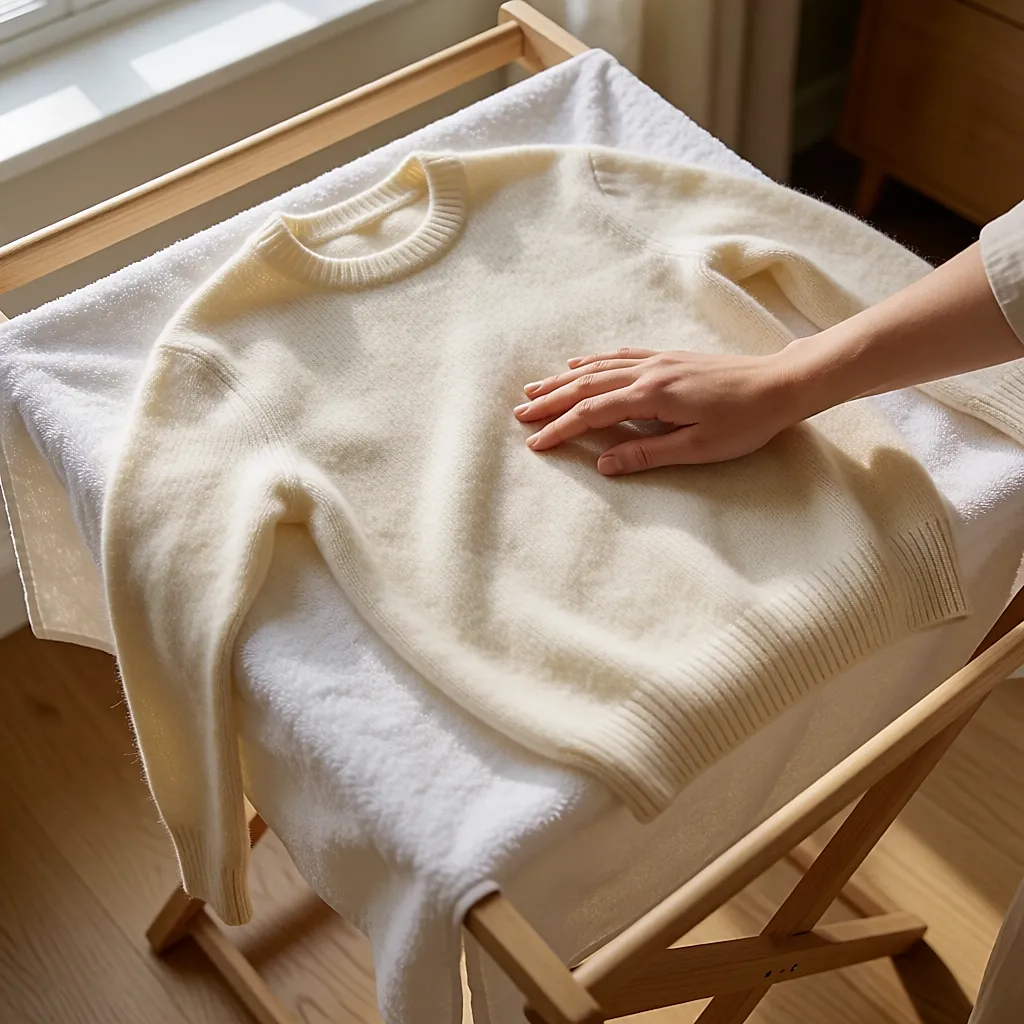
Drying deserves its own moment. Never on a hanger: soaked through, a knit is heavy and stretches until it hangs like a three-quarter-length coat. Never in the tumble dryer either — heat and tumbling in a single programme. Roll the piece in a towel without wringing, then lay it flat, out of direct sun, easing it back into shape by hand. A clean towel or a drying mat is all you need.
Merino, alpaca, cashmere: three temperaments
Merino is the most accommodating of the three. Its fine, crimped fibres cope better with a wool cycle, and some pieces are labelled machine washable — still check the care label before you risk it. That doesn't mean washing it every Sunday, though: a knit doesn't need a bath after every wear, airing it between outings does a lot of the work, and wool isn't known for holding on to odours. In practice, a wash every two or three wears is already generous.
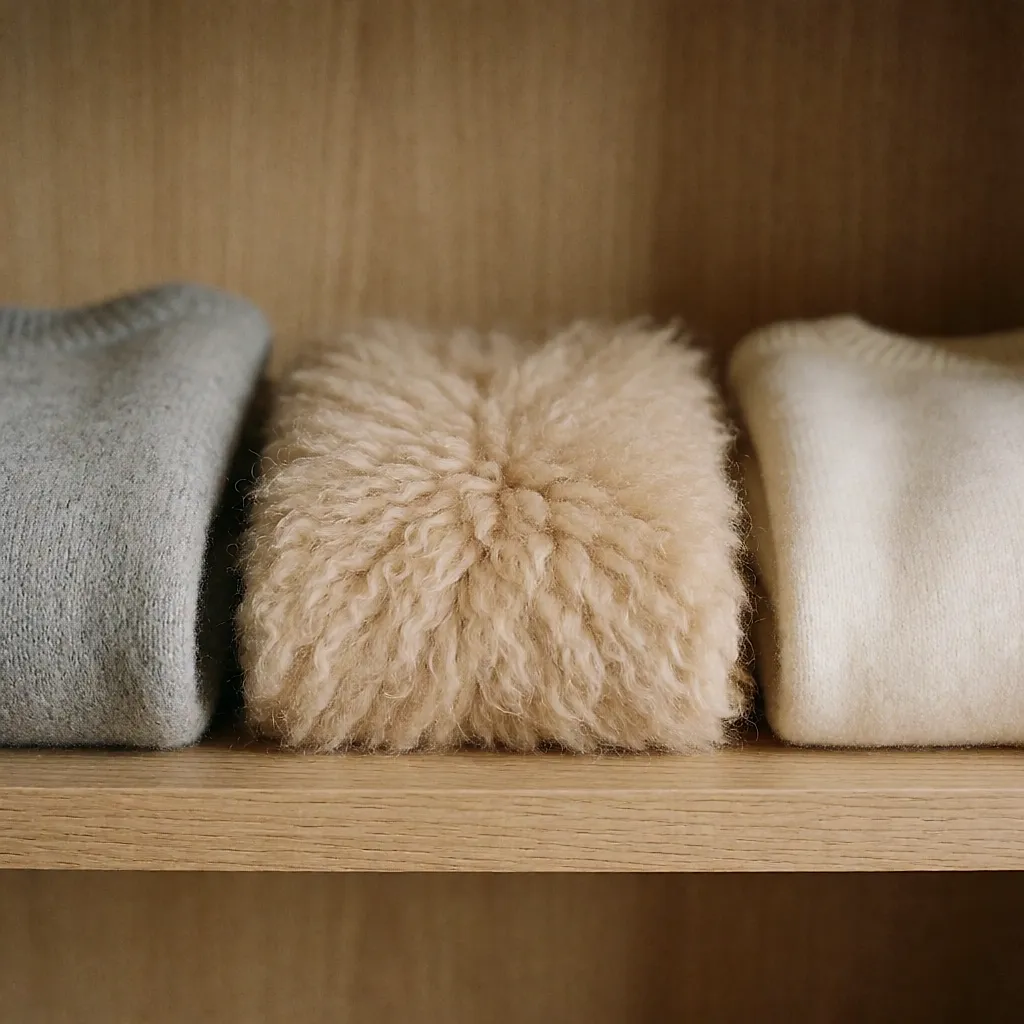
Alpaca and cashmere are more sensitive, with a clear preference for barely warm water and slow movements. A machine is possible if it really is the wool cycle, cold, with minimal spin and a mesh bag; otherwise hand washing is the safer bet. A look at the composition matters too: these yarns are often blended, and spotting how much synthetic fibre is in there saves unpleasant surprises.
The detergent does half the work
The second thing that counts: pick a detergent made for wool, pH neutral and enzyme-free. Standard detergents are often alkaline and contain enzymes designed to break down proteins — and wool is a protein. The result is that the fibre tires faster. Fabric conditioner, bleach and aggressive stain removers: put them away. A gentle shampoo makes a perfectly decent stand-in at a push.
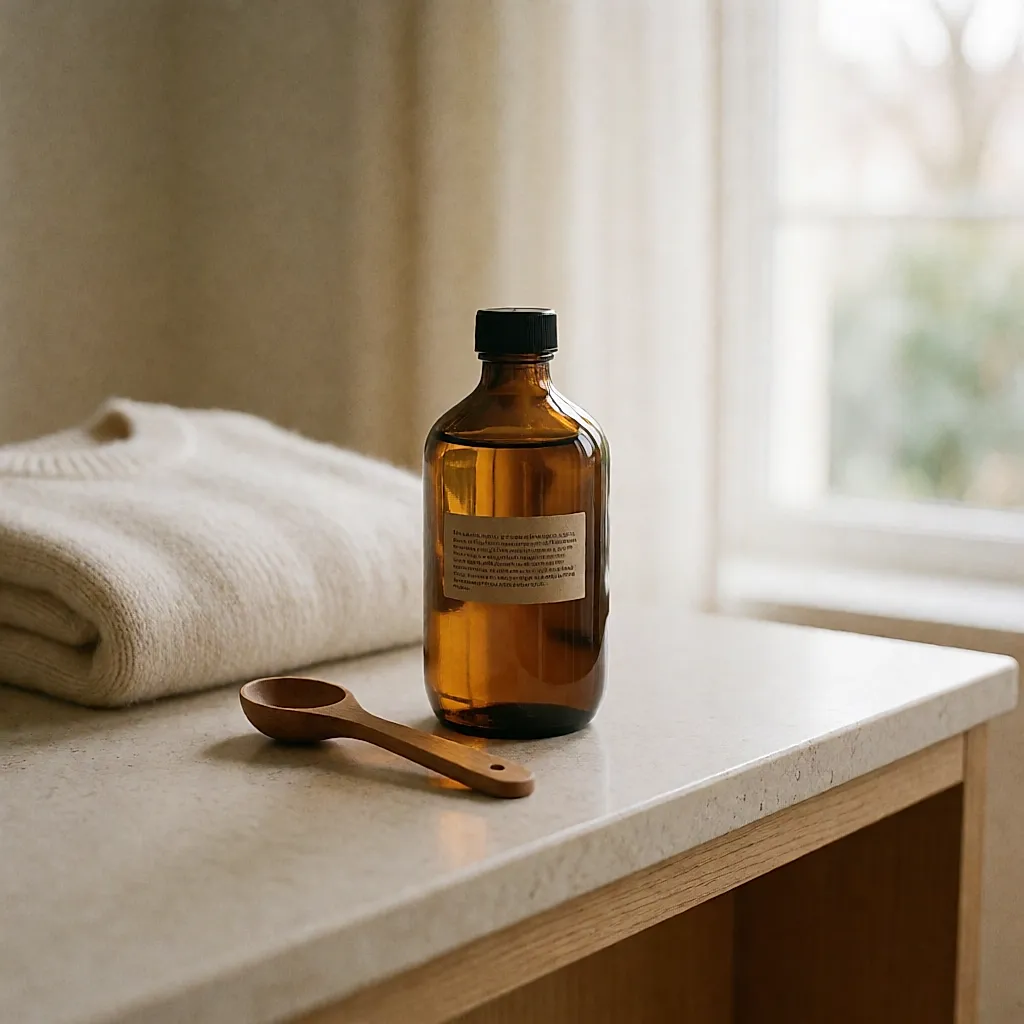
On formulations, concentrated detergents sold as refills or in glass bottles often tick the right boxes, and a bottle goes a long way because you dose it by the spoonful. Environmental certifications such as the EU Ecolabel set standards for biodegradability and impact on aquatic environments — a good pick for wool and for the rest of your delicate load.
What it costs
A mesh laundry bag runs to around £5 to £15 depending on size: it's the real bargain here, and it'll do for silk and tights too. Wool detergent, whether in a bottle or a refill, usually sits somewhere between £8 and £20 a litre, a little more from a specialist retailer than from a supermarket. A flat drying mat, if you want one, costs around £15 to £30.
And if a piece is genuinely fragile, a dry cleaner or an alterations service can take over on a delicate cashmere: expect roughly £8 to £20 for a clean. It's the safety net for a wardrobe you'd rather keep than replace.
A jumper that sees you through five winters is five winters of jumpers you don't have to buy again. Knitwear is one of the few materials that can be washed, mended and kept — as long as you treat it as a piece of your wardrobe rather than a dishcloth. Cold, short, flat: three words, and your cashmere will thank you for a long time.



Comments
Your opinion matters: rate the article, react and reply to comments.
Comments are moderated; AI-assisted comments are flagged. Text emoticons (8-), :-), <3…) are automatically shown as images.