

The basket has been sitting there since Tuesday. The story comes up often, almost too neatly: the cotton blouse you spotted last year, same cut, same brand, campaign photo a little mistier, now priced at a figure that bears no relation to the old one. You close the tab, reopen it on Sunday night, and wonder whether the price has gone up or whether you have started counting differently.
Mid-priced fashion has taken the lift
There used to be a comfortable place between the £10 T-shirt that does not survive three washes and the designer piece you look at in a window like a painting. That place is shrinking. Brands you used to buy with your eyes closed have moved their marker: better-sounding fabric names, more pared-back stores, prices that have shot up two floors without warning.

Not all of them are the same. Some have genuinely changed how they make clothes, how they wash and wear, how long they last. Others have mainly changed the set, the packaging and the spiel — and the only thing that has gone up is the bill. Online-born labels that launched with very accessible prices now have physical stores and a very different price list. Which brings back the question in the fitting room: pay more, yes — but for what?
Why everyone is looking upwards
The brands' argument can be summed up in a few lines: materials, energy, transport, stock, sales eating into margins. Because the very cheap end crushes prices, volume no longer pays. So sell fewer pieces, at higher prices, to a customer who buys less often — the logic holds, on one condition: that quality really follows.

The result is a gap in the middle. Those looking for something solid without spending three weeks' rent turn to second-hand, end-of-line or quiet labels — or they wait. And price can become an argument in itself: more expensive, therefore better. Except that the label says nothing about how a piece hangs or how it is stitched.
In the fitting room, judgement replaces habit
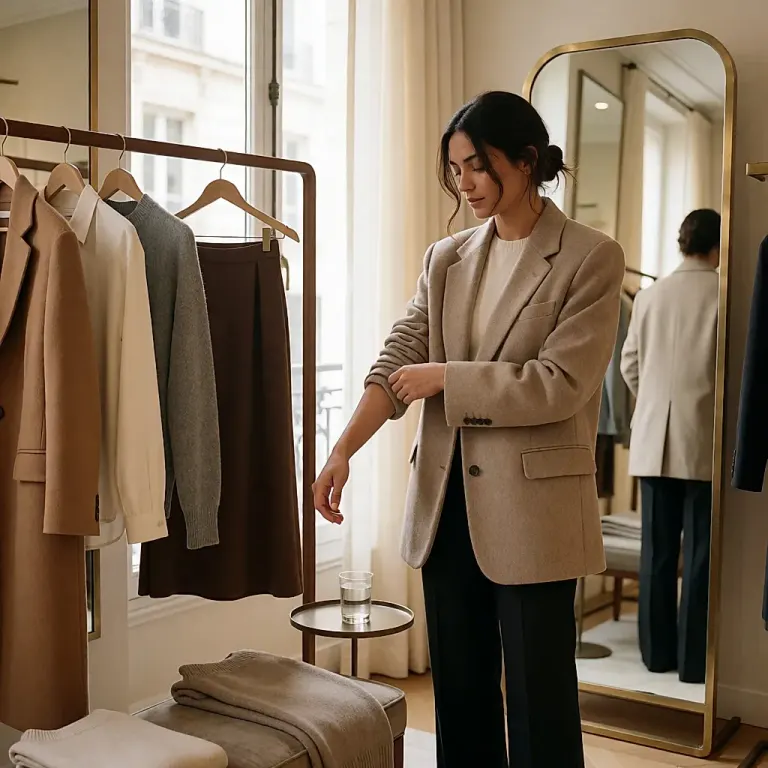
Before, you had 'your' brand and went back without thinking. Now you compare. You look at composition before the logo, the feel of the cloth before the image, the cut before the name. The wardrobe narrows: a few impeccable basics, one statement piece, layering that does the work, and the whole look almost builds itself.

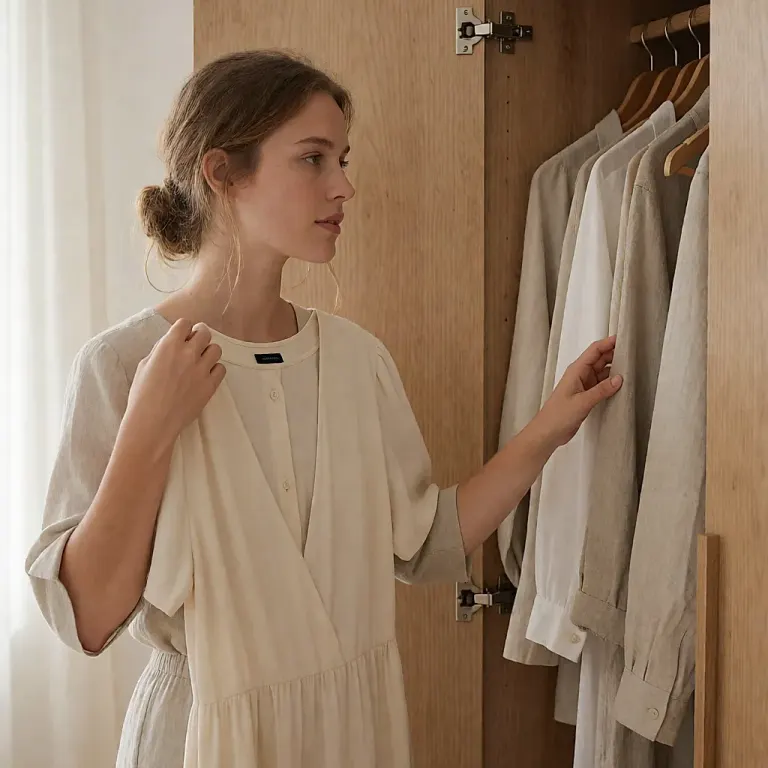
It is almost good news. An edited wardrobe ages better than an accumulated one. Ask two questions instead of ten: does this pair of trousers work with what I already own? Will I wear it in November, on a Monday morning, on a Sunday night? And often, the piece forgotten at the back of the wardrobe has the same effect as something new — for nothing.

Budget: the goalposts have moved
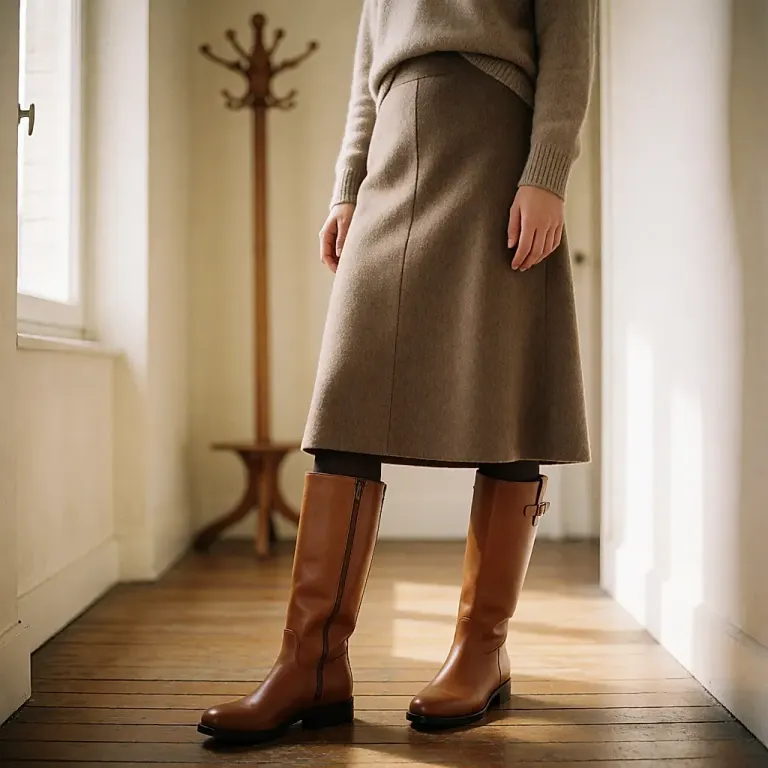
On the UK high street and online, rough price markers for womenswear that is built to last are: a merino or recycled wool knit, £95–£230; a cotton or linen shirt, £60–£140; well-cut trousers or a skirt, £90–£190; a cotton trench, £220–£480. Below that, it all depends on fabric and construction; above it, you are in the territory of pieces you keep for ten years — or regret for ten years.
In terms of where to shop, the brand's own store and website remain useful benchmarks, but department stores and multibrand retailers let you try several labels in one afternoon. And second-hand still has good pickings: platforms such as Vinted or Vestiaire Collective, consignment stores, charity shops and vintage shops — where pre-upmarket pieces regularly turn up at the old prices. Think about alterations, too: expect roughly £12–£30 for a hem, £20–£50 for taking in a waist. Enough to turn a nearly perfect piece into a perfect one.
Three checks before you pay. Fibre composition first: as a rule, the label lists the fibre composition; check it before you look at the campaign photograph. Drape next: give the piece a shake, inspect the inside seams, buttonholes and lining. Service last: alterations offered, repairs, and whether they take back pre-owned pieces. And a fitting-room habit: try it at the end of the day, with the shoes you'll wear with it.
What if the gap is doing us a favour?
A middle that empties is not only bad news for your wallet. It is also what pulls us out of reflex buying: two pieces you actually wear are worth more than six waiting their turn in the wardrobe. The brand is no longer the guide; you are.
So the next time a price makes you raise an eyebrow, ask the only question that matters: will I still have it in three winters? If yes, it may be worth its label. If no, leave it in its basket — and go and have a look in your own wardrobe instead: sometimes there is enough in there to dress you until March!
Sources
- Vinted — second-hand platform, consulted on 15 October 2026.
- Vestiaire Collective — second-hand platform, consulted on 15 October 2026.
Comments
Your opinion matters: rate the article, react and reply to comments.
Comments are moderated; AI-assisted comments are flagged. Text emoticons (8-), :-), <3…) are automatically shown as images.