
A silk kimono is sewn stitch by stitch across metres of fabric, then unpicked to be washed. A pair of trainers comes off the production line without a hand ever holding the needle. Between the two sits a very old gesture — and fashion has decided to turn it into decoration.
Contrast thread is doing the logo's job
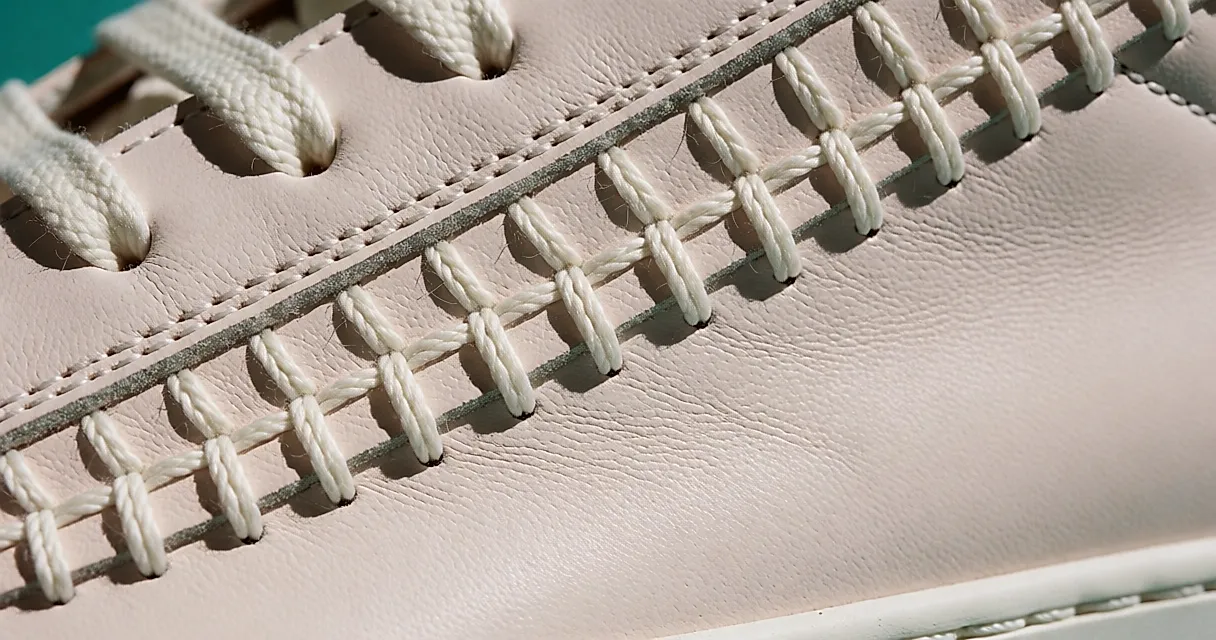
Look at a pale leather upper striped with ecru thread, deliberately thick, with stitches that are not quite regular. At three metres, you no longer read the brand: you read the stitching. That is where the shift happened. The logo said 'here is the brand'; visible stitching says 'here is the time someone spent on it'. Two very different promises for the same object made in thousands of units.
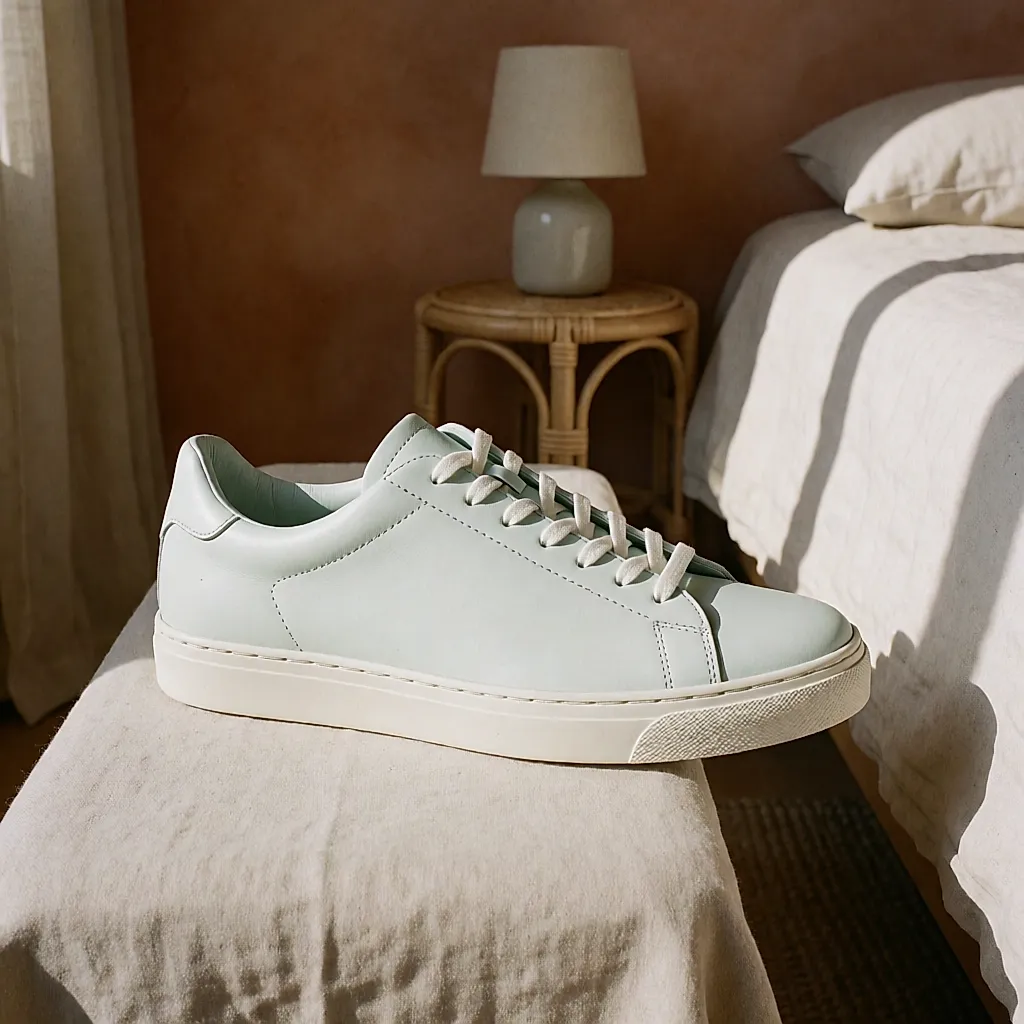
To be honest, on some contrast-stitch models the stitching is mainly decorative. It sits on an assembly that is already glued, moulded and machine-finished. It doesn't reinforce; it tells a story. It is not a sleight of hand — embroidery has never claimed to hold up a wall — but you need to know what you're buying: a story, not structure. And you pay for that story, often at a price that could have bought a better-finished piece.
Why spend more on a piece that looks less 'clean' than a smooth model? Because perfect regularity has become free. Any machine can lay down a flawless straight stitch. The slight offset, the uneven tension, the needle mark: those are what a machine cannot quite fake.
What trainer stitching borrows from the kimono is repair
The kimono is a folded object, cut into rectangles and assembled with flat stitches. It is unpicked to be washed, resewn, passed on. In Japan, sashiko — a regular running stitch — was used to reinforce workwear; boro, those pieces patched and darned over generations, is its worn, holey, beautiful version. There, stitching is first of all a repair.
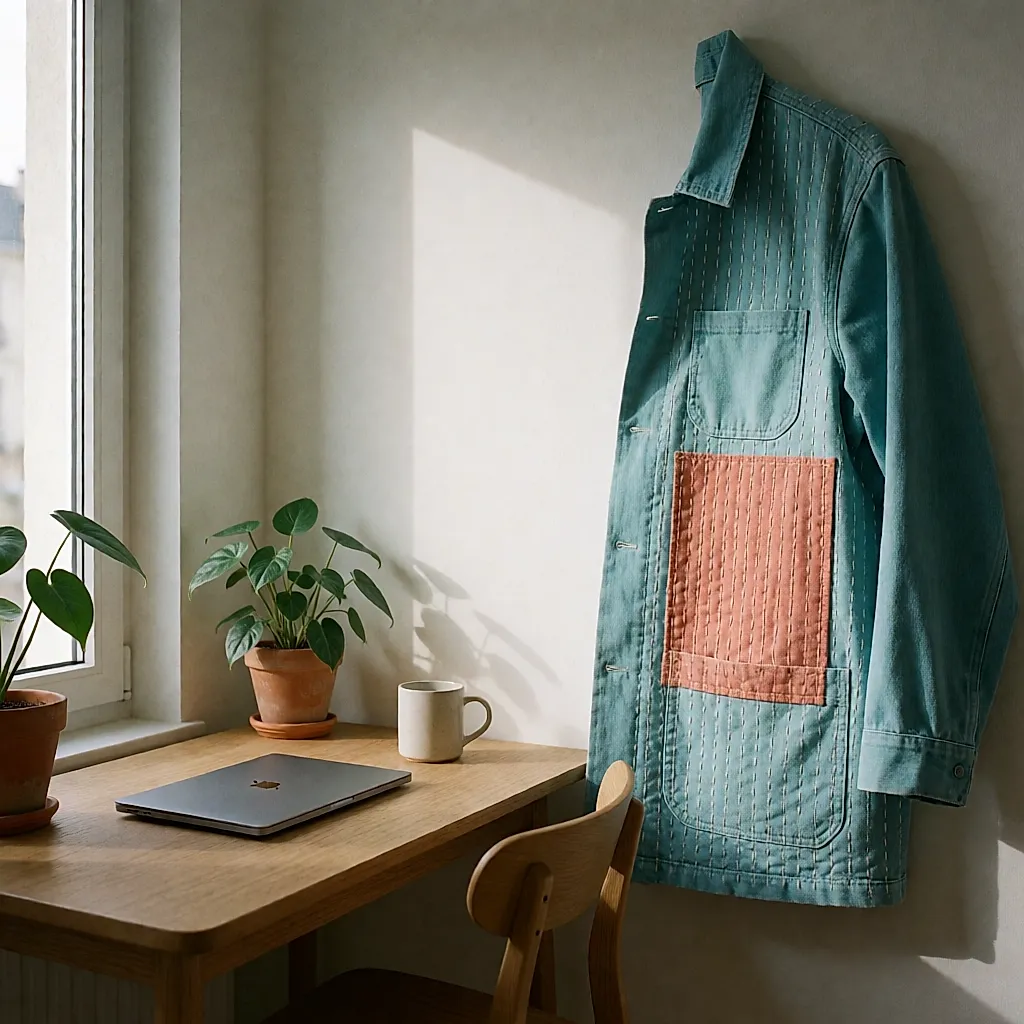
That is where the transfer to the trainer gets interesting. Most trainers are not designed to be taken apart and repaired like a garment; a lifted sole can sometimes be glued back, but repair often remains limited. Stitching them with big stitches therefore quotes a longevity practice on a replaceable object. The gesture is pretty; the logic is slightly contradictory. Some workshops go further and genuinely dismantle the upper to rebuild it — there you leave decoration and enter craft.
Does that mean you should shun them? No. A pair decorated with stitching won't save the planet, but it is a reminder that a garment can be looked at closely. And that reflex — repair rather than replace — deserves to be cultivated somewhere other than on a £200 pair of trainers.
Hand or machine: the eye catches it quickly
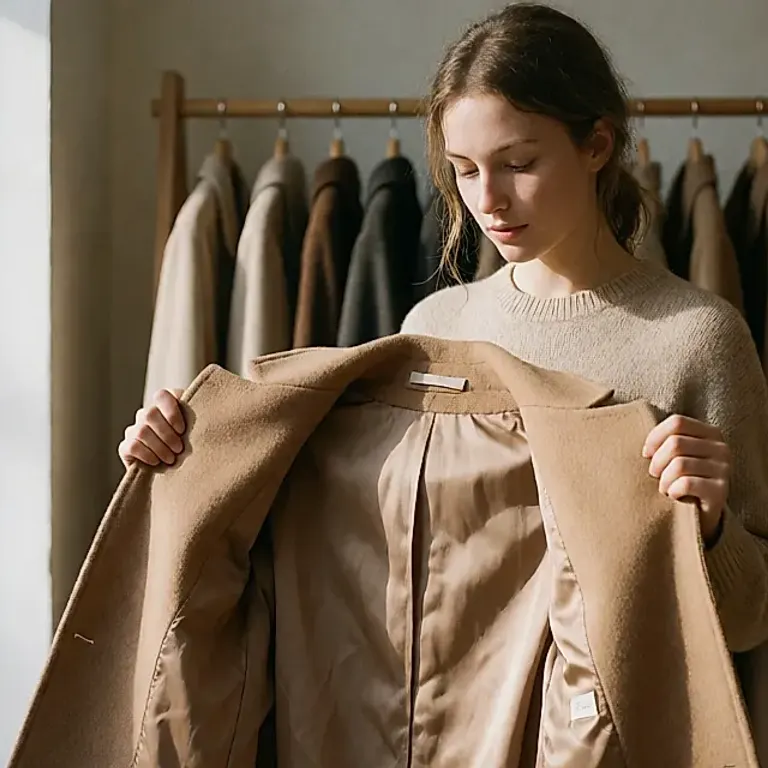
Not all visible stitching is equal, and the price gap isn't always justified. Machine embroidery imitating hand stitching is excessively regular, often with finer thread and a flat back, without knots or backstitching. Real hand stitching leaves stitches of uneven length, a thread that twists slightly, a messier back. Turn the piece over: that's where the truth hides, as always.
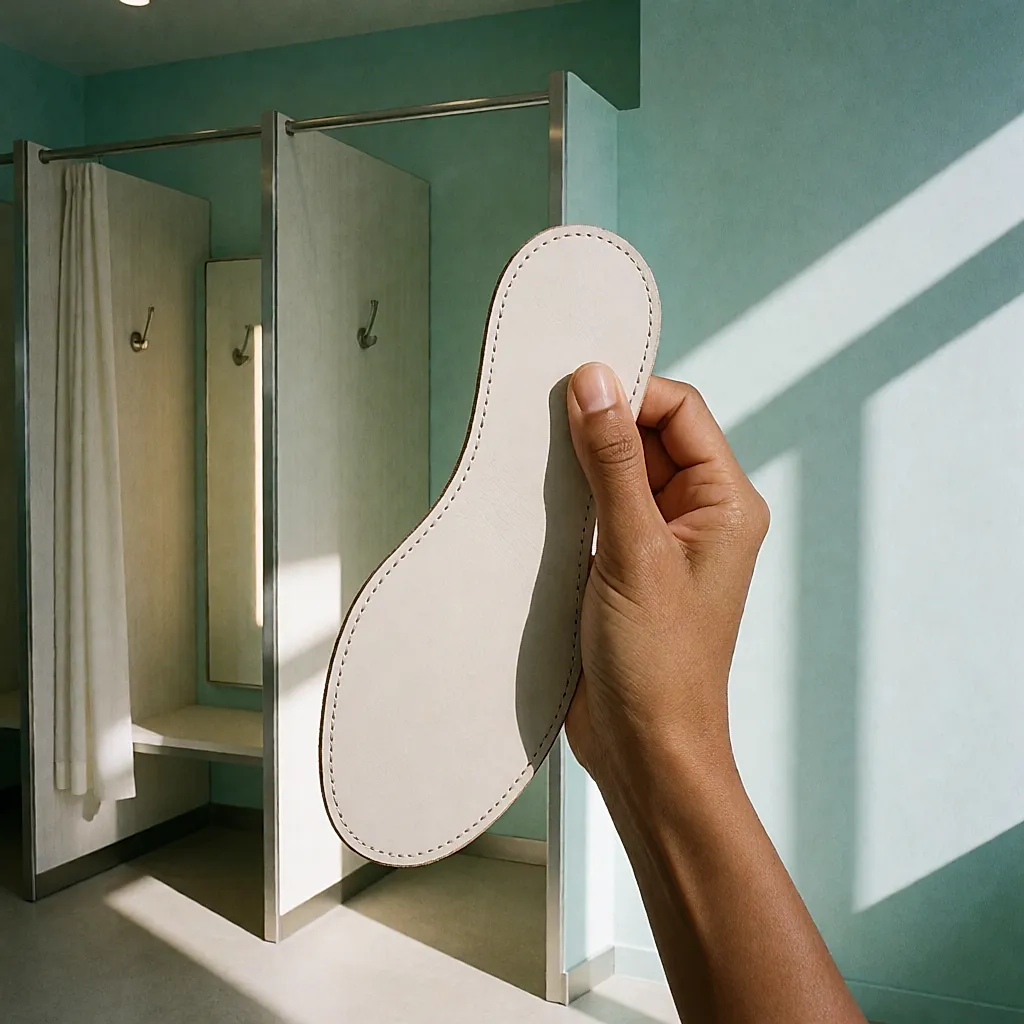
Three checks before you pay artisan prices: Does the stitch length vary slightly? Is the thread thick enough to see from a metre away? Does the back show knots, stops and repairs — or an immaculate overlock? Hand stitching is recognised first by its controlled imperfections.
A second question to ask: will this stitching last? A cotton thread on patent leather, exposed to rain and road salt, won't age as it would on silk. Ask what the thread is made of, and whether the piece is designed to be worn outdoors.
Budget
Prices vary widely because practices do. As a rough guide, a Nike By You customisation on a standard model usually sits somewhere around £130–£220 depending on the model and options — you're customising colours and materials, not the stitching. A pair reworked by a customisation studio, with the upper taken apart and resewn, tends to start around £350 and can reach £1,000 or more, with lead times of several weeks.
The most sensible version, if you like the gesture, is visible repair: £30–£80 at a seamstress or mending studio to consolidate a seam, darn a tear or add a decorative stitch to a piece you already love. And if you want to try it yourself, a reel of sashiko thread costs £6–£12, and a long needle a few pounds. The time, cost and pleasure equation is frankly hard to beat.
If, on the other hand, you're after a waterproof shoe that's easy to clean and wear in the rain without thinking about it, look elsewhere: visible stitching dislikes standing water and vigorous brushing.
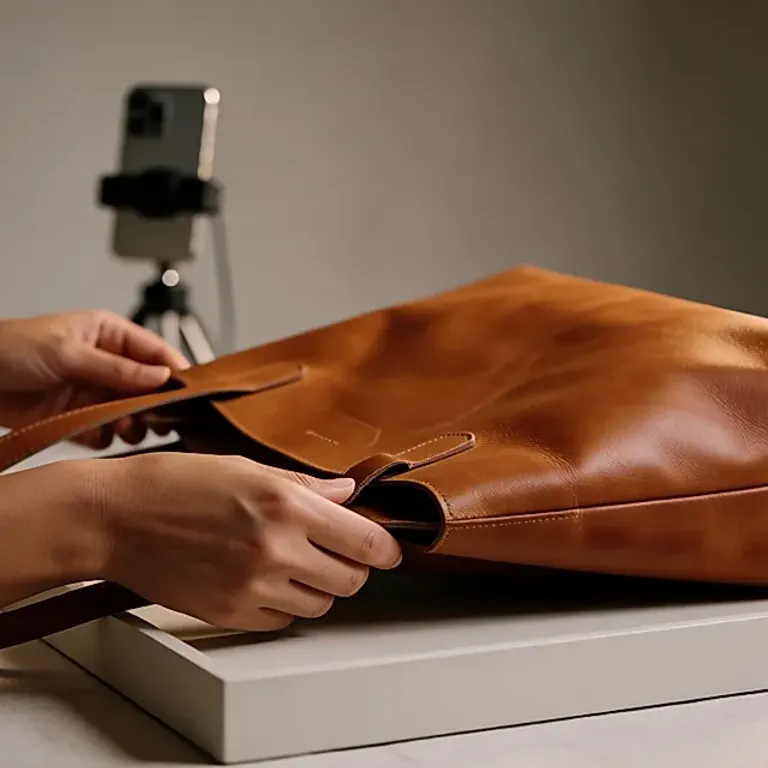
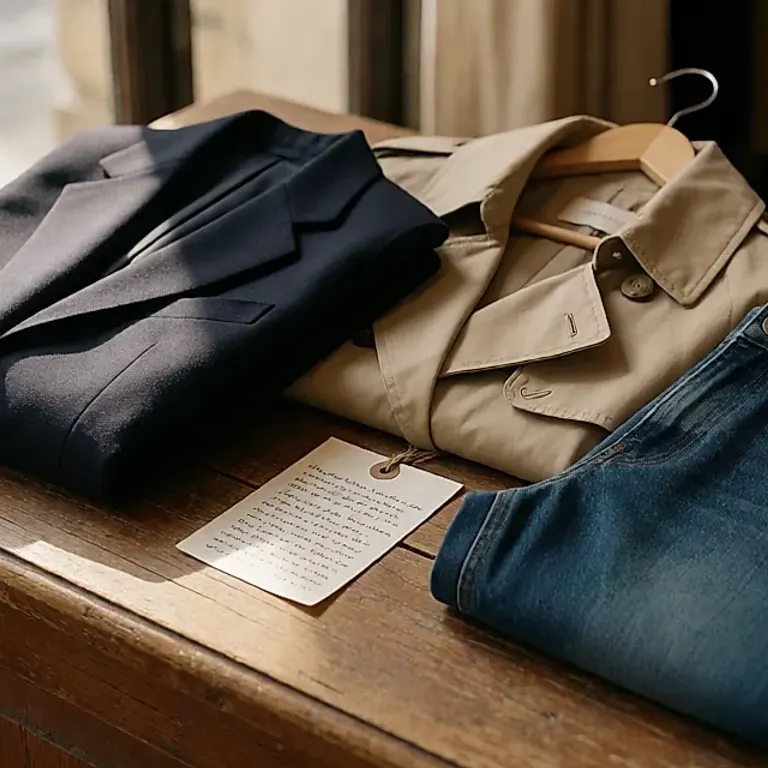
One simple idea to take away from all this. Visible thread doesn't make a piece better — it makes visible what we want to value: time, a hand, attention. So apply it to what really deserves it: the jacket you've worn for four winters, the bag whose seam has split, the jeans you no longer dare wear outside. Add a contrast stitch and you own a one-off piece, without joining any waiting list.
Comments
Your opinion matters: rate the article, react and reply to comments.
Comments are moderated; AI-assisted comments are flagged. Text emoticons (8-), :-), <3…) are automatically shown as images.