
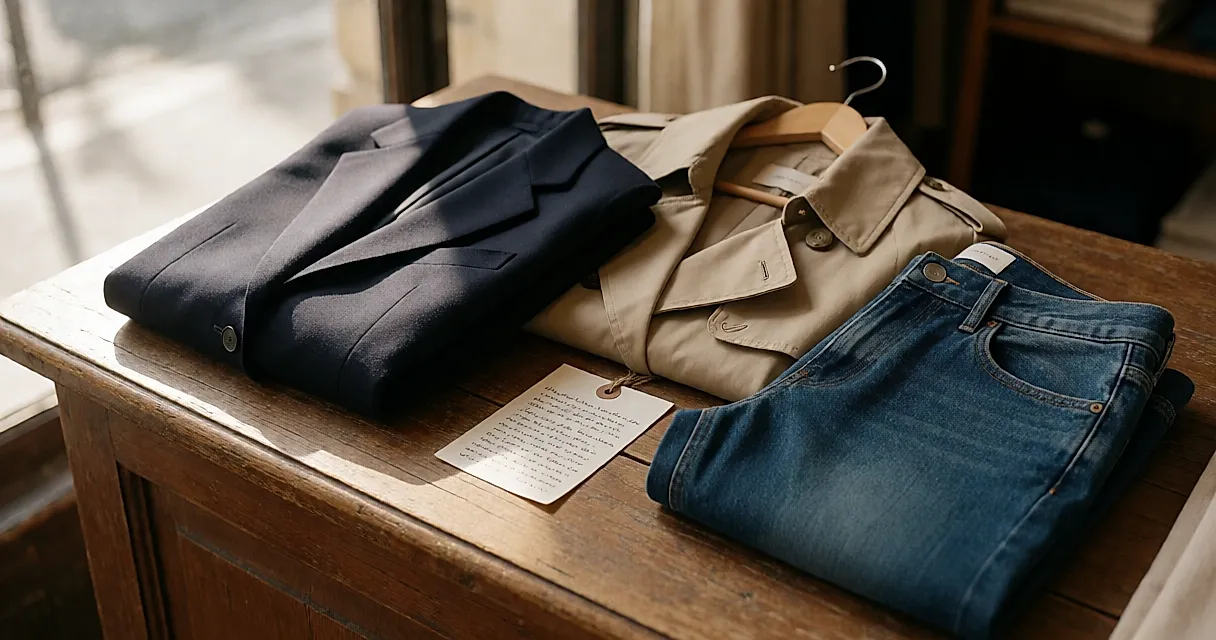
Three pieces on the counter, all looking very sure of themselves, and then the verdict lands: "We don't take that." The jacket is lovely, too. It cost as much as a decent dinner out, has been worn five times, and is being handed back without much discussion. The buyer flips over the label, shrugs, and you are left with a crash course in fashion — free, but a bit humbling.
You can treat that rejection as a favour. What a resale shop passes on is rarely a question of taste: it is tired fabric, a cut that dates, or wear that is already showing. In other words, exactly the sort of thing that ends up at the back of your wardrobe without ever being worn. So why not flip the logic? Shop by asking yourself, there in the changing room, what a buyer would still want in three years' time.
The cut, or the art of lasting three winters
Two pieces at the same price, in the same condition: the one that sells will almost always be the plainer of the two. A very pronounced shape — XXL shoulders, dropped armholes taken to the extreme, a busy print — tells the story of one particular season, and a season dates quickly. A straight blazer, a cotton trench, a pair of raw denim jeans: these are the things people buy secondhand, because these basics are just waiting to be worn again.
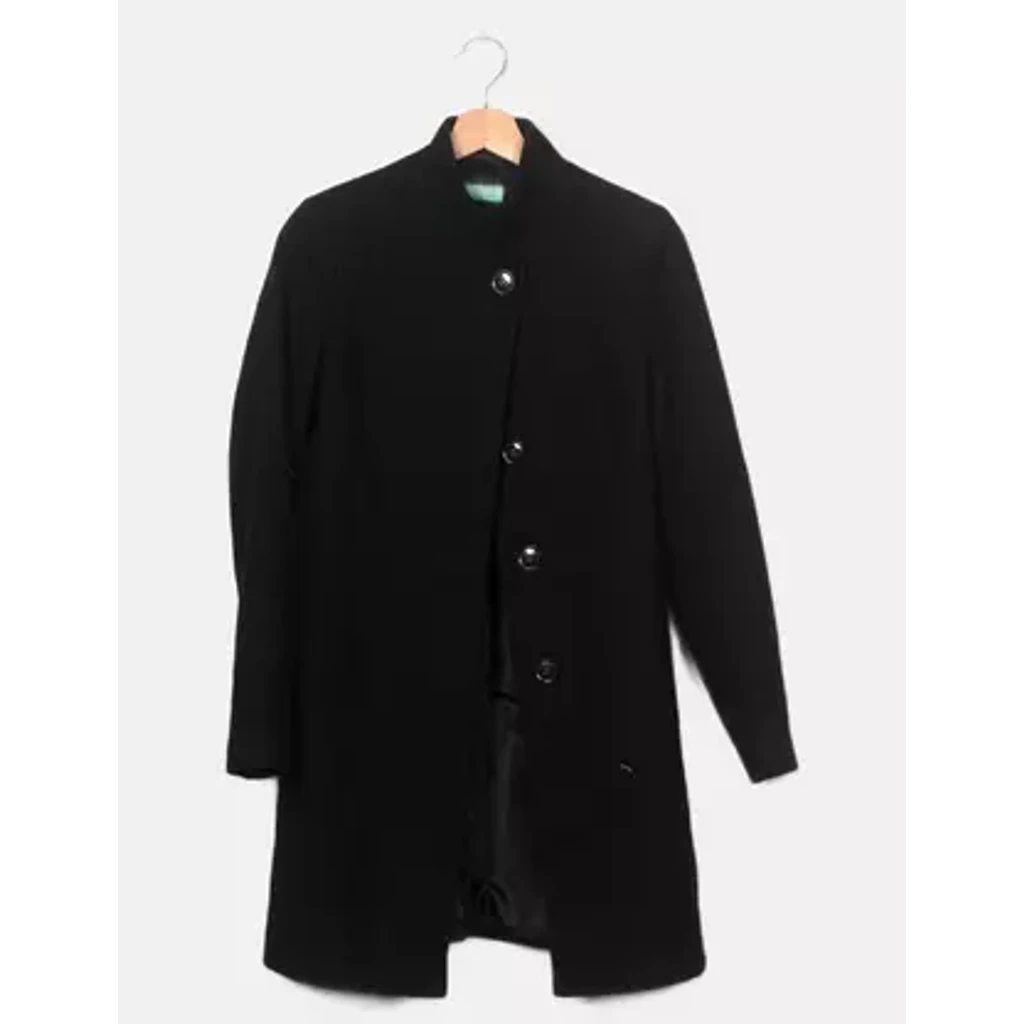
One question remains, and it is best asked in front of the mirror: does this piece work with three tops and two pairs of shoes you already own? If the answer is no, it will not make it through the change of season with you. A statement piece is a keeper; a basic resells — the resale shop is simply applying that rule before you do.
Budget: cost per wear, not the price on the ticket
This is where the reasoning flips. In a resale shop or a local vintage place, expect broadly £25 to £70 for a wool blazer, £35 to £80 for a cotton trench and £50 to £150 for a wool coat, depending on condition and label. Jeans usually sit somewhere between £10 and £35. Charity shop rails pull those figures down; carefully curated secondhand boutiques push them up.
Bought new, the same pieces in natural fibres often cost a good deal more. This means the thing that changes everything is not the ticket price but cost per wear: the price divided by the number of times you will actually put the piece on. A £60 blazer worn forty times is a very good buy. A £20 print worn twice is not.
Three questions before you reach the till: is the fabric natural, or mostly natural? Does the cut work with what you already own? Does the condition need an alteration you will genuinely get done? Two yeses and you are good to go; one, and it goes back on the rail.
Then it comes down to which camp you are in. Tight budget: a pair of raw denim jeans and a straight blazer, hunted down in a resale shop, at a car boot sale or through a resale app, are enough to build a base that resells without any drama. Room to spend: a secondhand wool coat at around £100 to £150, kept for several winters, works a lot harder than an impulse buy. Either way, the rule is the same: you are not buying an investment, you are buying a piece you will enjoy wearing — and the resale shop is just reminding you of that a little early.



Comments
Your opinion matters: rate the article, react and reply to comments.
Comments are moderated; AI-assisted comments are flagged. Text emoticons (8-), :-), <3…) are automatically shown as images.