
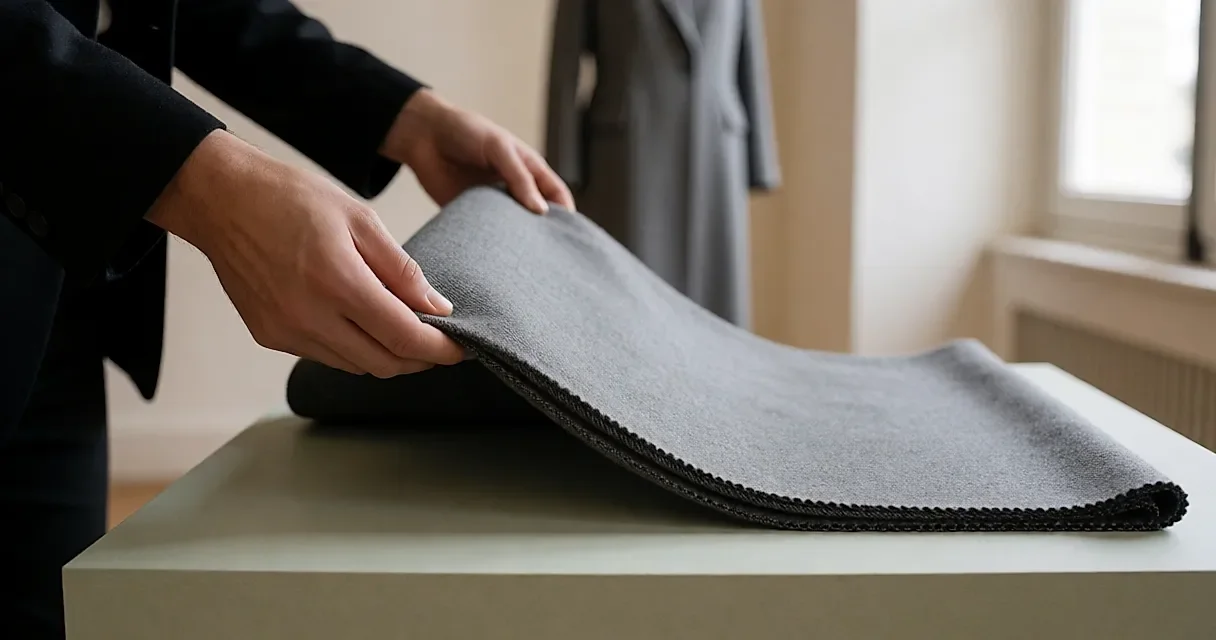
Your basket holds a dress in "fluid crepe", four and a half stars, and you still can't tell whether that crepe will hang like a theatre curtain or a dishcloth. The screen gives you the colour, the price, the sleeve length. It doesn't give you the weight. Which is why, this month, we're swapping the new-in calendar for a gallery: in Paris in November, fashion rewards close looking — from about 30cm away.
This isn't about general knowledge, it's about your eye. A garment seen up close is a fabric lesson at full scale: you work out what "hangs well" actually means, and afterwards you recognise it on a product page the way you recognise a voice on the phone.
What a photograph can't tell you
Online, a garment is often pinched, draped and lit to flatter — sometimes clamped at the back of the mannequin with a clothes peg, a studio classic. Nothing dishonest about that, but you're only seeing an image: fabric has mass, stiffness, a way of springing back into place when you crumple it. Besides, how many pieces have you ordered without knowing whether they'd feel substantial or fly up in the first gust of wind?
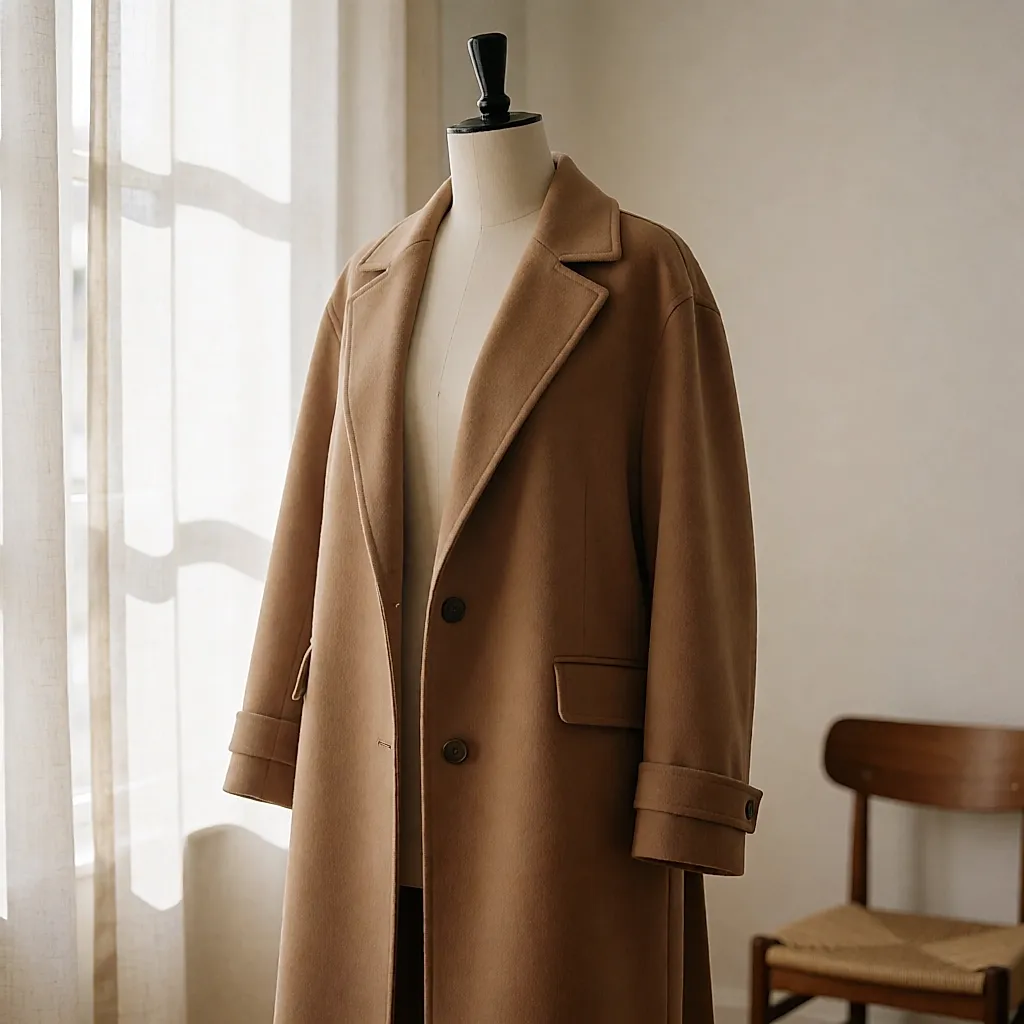
In the room, the first thing your eye catches isn't colour, it's structure. A jacket whose shoulder holds itself up, a straight skirt that doesn't cling to the thigh, a sleeve whose hem keeps its line under raking light. None of which survives a photograph — you'd have to move the piece.
Weight, drape, edge
Three reference points are enough, and they take a couple of minutes.
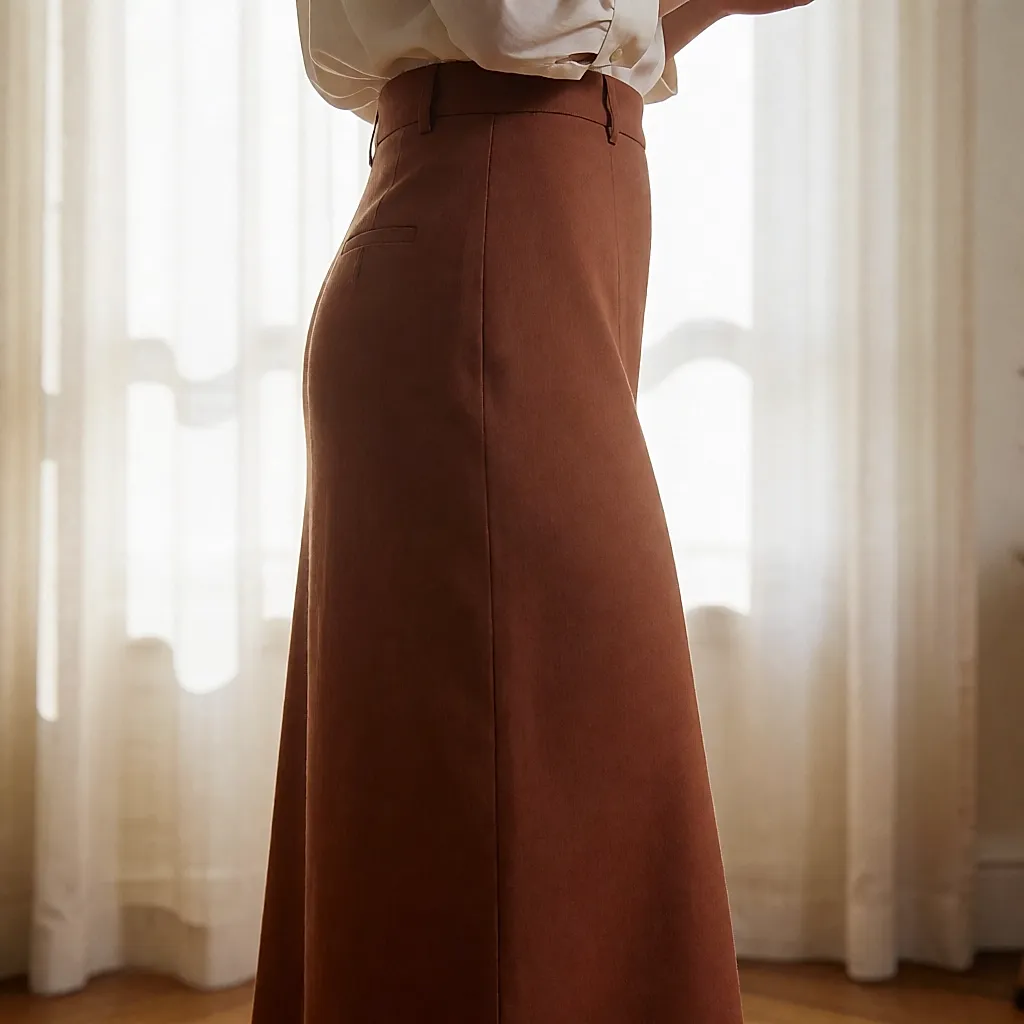
Weight first: in a shop, lift the piece by the shoulder and let it hang. A coat that swings straight on the hanger gives you a visual clue to how it falls; if it barely buckles once it's off the rail, it's worth looking at the fabric, the lining and any water-repellent claims — without inferring how long it will last or how it would cope with rain. Drape next: a skirt or trousers should fall in one clean line, without stopping dead at mid-thigh — and you'll see that better in profile than head-on.
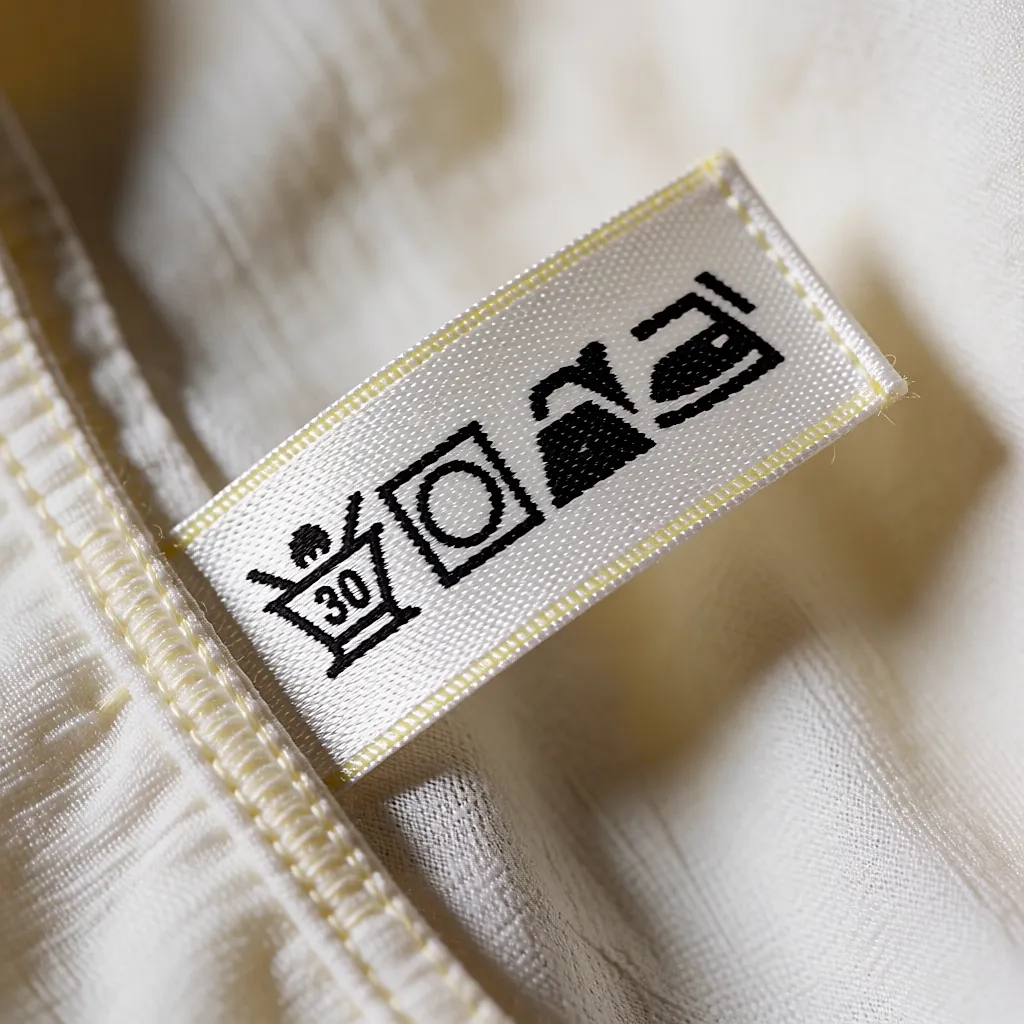
The edge, finally: the most talkative detail and the least looked at. A hand-finished hem is barely visible; an overlocked edge shouts. It isn't a matter of taste, it's a matter of time spent — and therefore of price. Which is exactly what you compare later between two pieces that look alike.
Visit the way you'd try things on
A Tuesday morning beats a Saturday afternoon: you can step close, step back, move to the side without elbowing anyone. What you're there for isn't the backstory — the ball gown, the stage coat — it's the making. The inside, when it's visible, hems at eye level (sit down, nobody will judge you), and three words noted on your phone rather than fifty blurry photos: "warm wool, soft shoulder, silk lining".
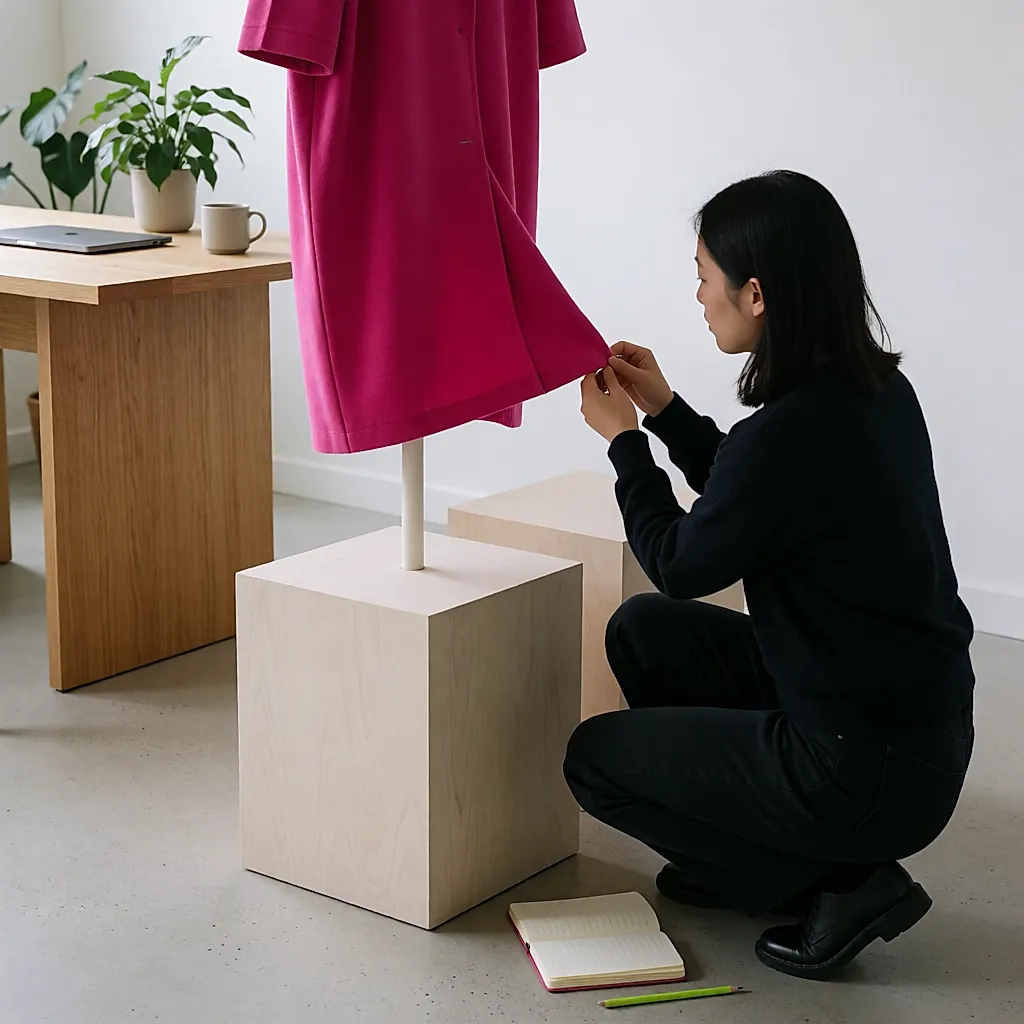
One caveat, though: a museum piece is shown on a very thin mannequin, under flattering light. What transfers isn't the silhouette, it's how the fabric behaves. And if you're only after looks to copy, look elsewhere: this isn't a catwalk, it's a class.
Back in front of the screen
And now it all earns its keep. You'll read "100% viscose lining" with different eyes, you'll actually check the synthetic fibre content instead of skimming past it, you'll hunt for the hem in the third photo. You'll also walk away sooner: a garment whose description says nothing about drape, fabric weight or lining rarely deserves a round trip.
Returns, while we're here: often charged a few pounds when they aren't free, they eat into the bargain. Three disappointments and you've paid for four museum tickets — before alterations, £15–30 for a hem depending on the piece and where you go.
Budget
On the ticket side, prices vary by museum and exhibition: check each venue's prices and conditions page before you book. A concession may be available on proof — asking costs nothing.
If money is tight, one full-price ticket beats three exhibitions rushed. If you have a little more, the catalogue, around £30–50, is worth leafing through come the sales and ages better than most impulse buys.
Three moves to take into the gallery: lift the piece by the shoulder and watch how it falls back; then look at the hem, the lining and the buttonhole, in that order; then glance at the inside, which is often more revealing than the display case.
Then there's the main thing, which is very simple: an exhibition doesn't tell you what to buy, it teaches you how to look. After a while in front of clothes that don't move, a slightly stiff pea coat will suddenly feel unbearable and a properly heavy skirt obviously necessary. The fabric lesson doesn't expire — unlike the parcel on its way back.



Comments
Your opinion matters: rate the article, react and reply to comments.
Comments are moderated; AI-assisted comments are flagged. Text emoticons (8-), :-), <3…) are automatically shown as images.