
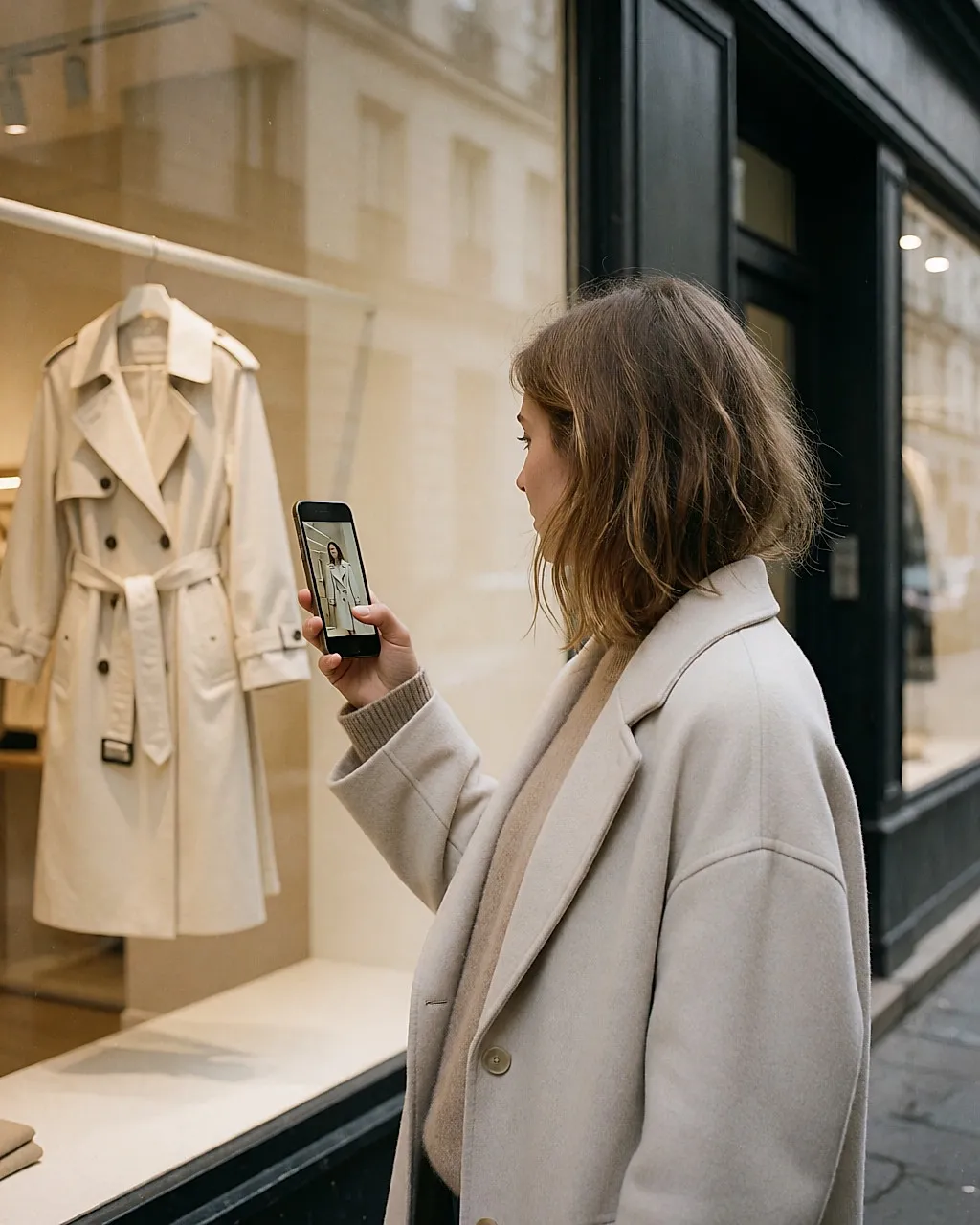
A cream trench coat spotted at a small designer's studio, £220 on the tag, and one question going round: does that drape really justify the price? Before reaching for the card, we'd love to compare. Except opening fifteen tabs is nobody's idea of a good time. That's exactly the gap shopping search engines came to fill — and we're sold on the idea: they pull catalogues together, match similar cuts and send you to the retailer that actually holds the piece.
Image search, the shortcut that changes everything
The gesture is simple, and it has become second nature. You capture a piece spotted in the street, click on a photo you like, and the engine surfaces close matches. Visual similarity compares shape, colour, sometimes texture — not just the word "trench". The result: you land on brands you'd never have thought to type in.
Google Lens, Pinterest Lens and built-in comparison tools have made this way of reading an image mainstream: from one photo, you get a list of similar pieces to buy. In practice it works better on an item with a clean silhouette — coat, bag, chair — than on a busy print, where the engine scatters and drowns you in near-clones.

Browsing by colour and fabric
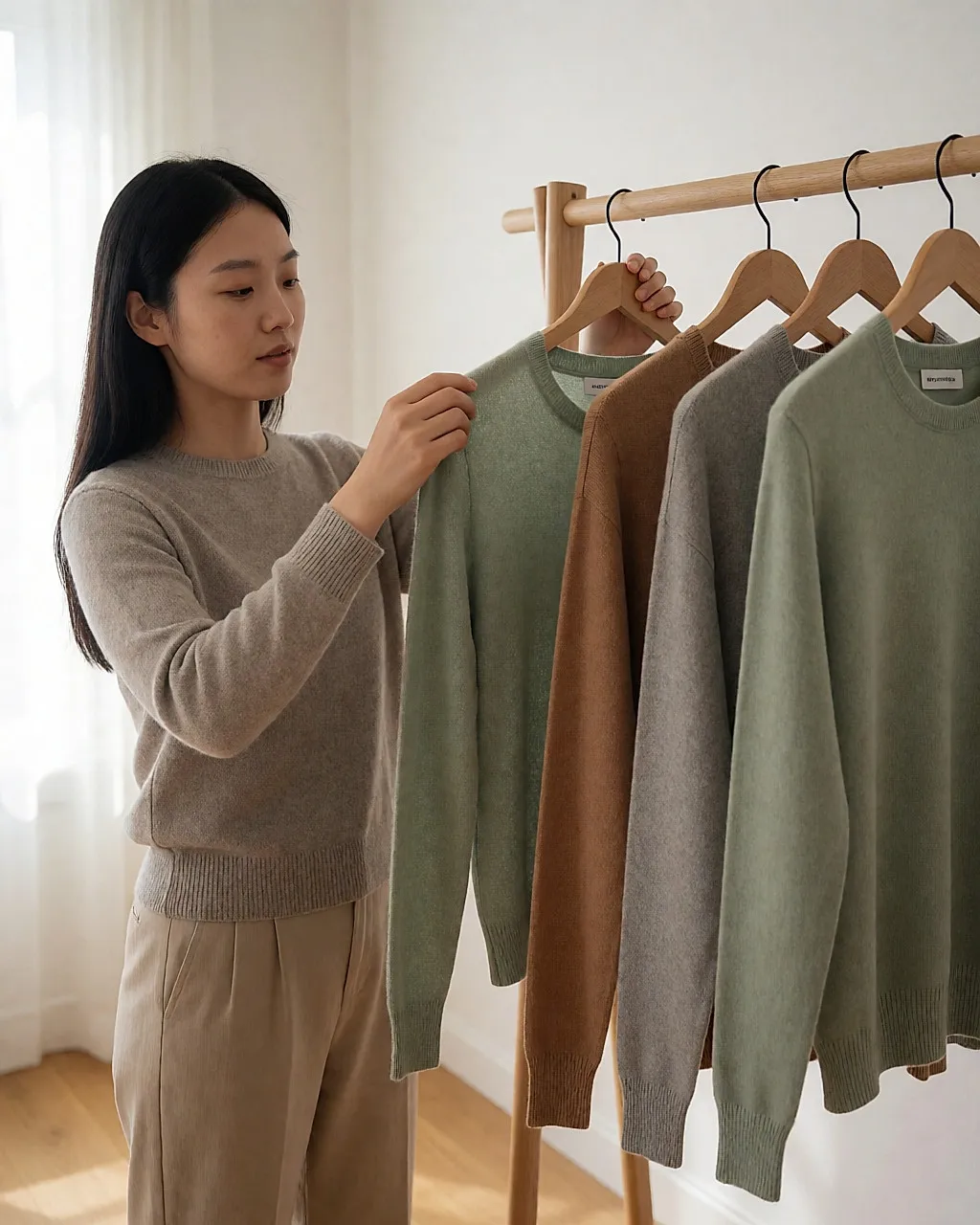
Filtering by shade is still the most underrated tool of the lot. You build a whole look around one family — camel, warm grey, sage green — instead of buying at random. Add the fabric (wool, linen, denim) and the outfit holds together on its own.
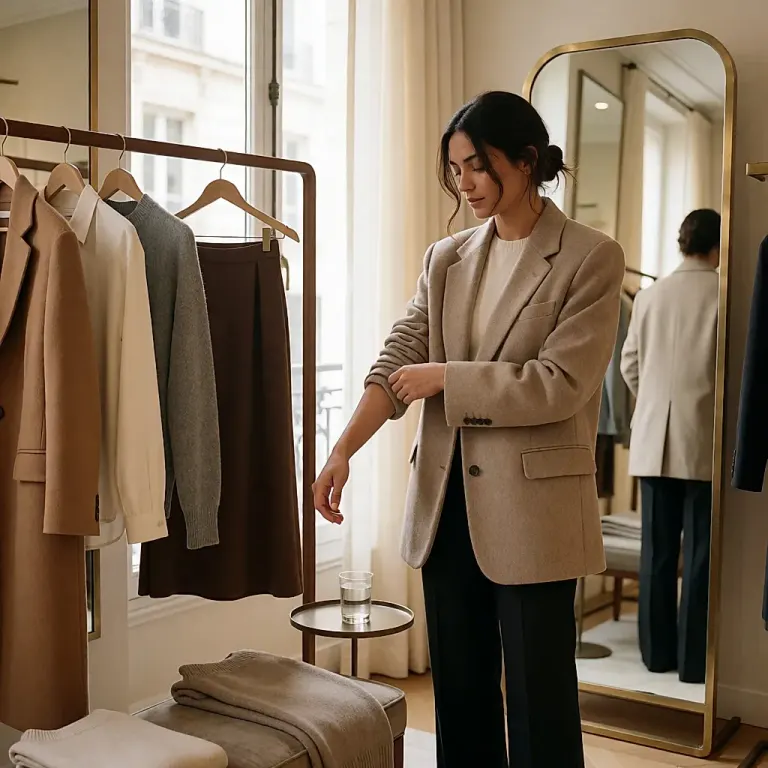
Layering gets easier too: you spot a fine knit to slip under a jacket already in your wardrobe, then accessorise from there. One statement piece is enough; the rest follows.
The filters that really matter
Before clicking, check three things. Composition first: read the fabric label, not the website's sales pitch. Then the certification, and above all what it genuinely guarantees — GRS-certified recycled cashmere, GOTS organic cotton, RWS wool all trace a supply chain. What no label can guarantee, though, is how many times you'll actually pull the piece out of the wardrobe.

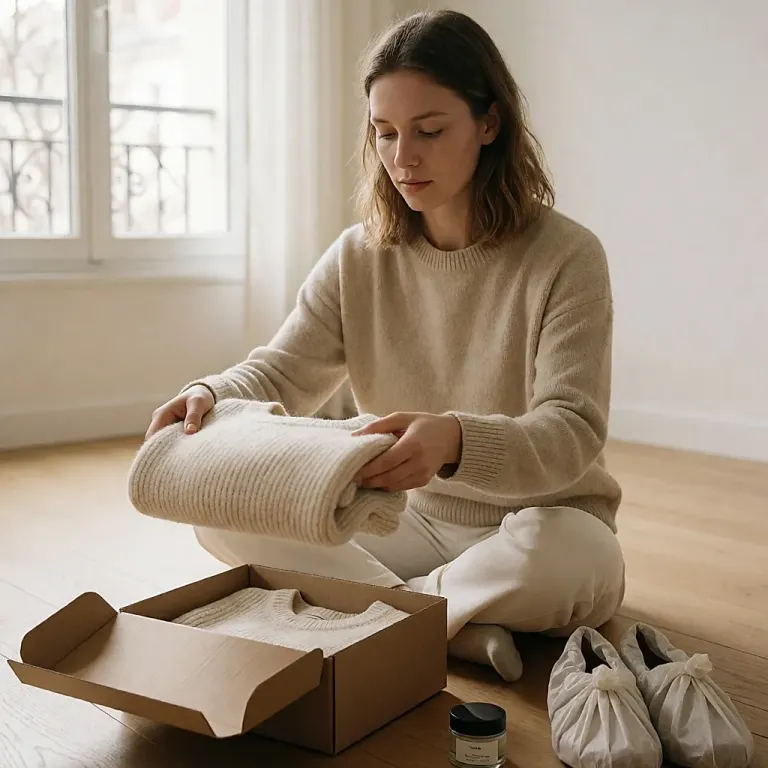
Think about end of life too: a glass container, a refill, plastic-free cardboard packaging — all of it weighs in the balance. And accept the compromise where it exists. If the eco-designed version costs twice as much and doesn't sit right, keep your money. Let's be honest: a basic that fits beats a label that stays in the wardrobe.
The three-outfit test. Before you commit, count the outfits this piece can join. Fewer than three combinations and it goes back on the shelf: it'll end up at the back of the wardrobe, label or no label.
Budget
On budget, expect roughly £35 to £100 for a decent knit, £70 to £260 for a leather bag, £130 to £430 for a wool coat, £25 to £170 for a lamp or a second-hand armchair. The spread comes from the fabric, where it was made, the certification, and when you buy — sales, end of line and second-hand all price differently.
Add the extras: £0 to £5 for delivery depending on the retailer, and a returns policy running from free to £4 charged. You'll find these pieces through a comparison site, on the brand's own website, on a marketplace, in a beauty hall for cosmetics, or in store when you want to judge the fit in person.
One last tip: screenshot, then sort. Keep the three you'd actually wear, compare once, and close the tabs. Your silhouette wins — and so does your budget.
Sources
- Google Lens, official overview — lens.google.com
- Global Organic Textile Standard (GOTS), certification framework — global-standard.org
- Textile Exchange, Global Recycled Standard (GRS) — textileexchange.org
- ADEME, French environment agency, guide to environmental labels — ademe.fr
- DGCCRF, French consumer and competition authority, rules on reference prices and promotions — economie.gouv.fr/dgccrf

Comments
Your opinion matters: rate the article, react and reply to comments.
Comments are moderated; AI-assisted comments are flagged. Text emoticons (8-), :-), <3…) are automatically shown as images.