
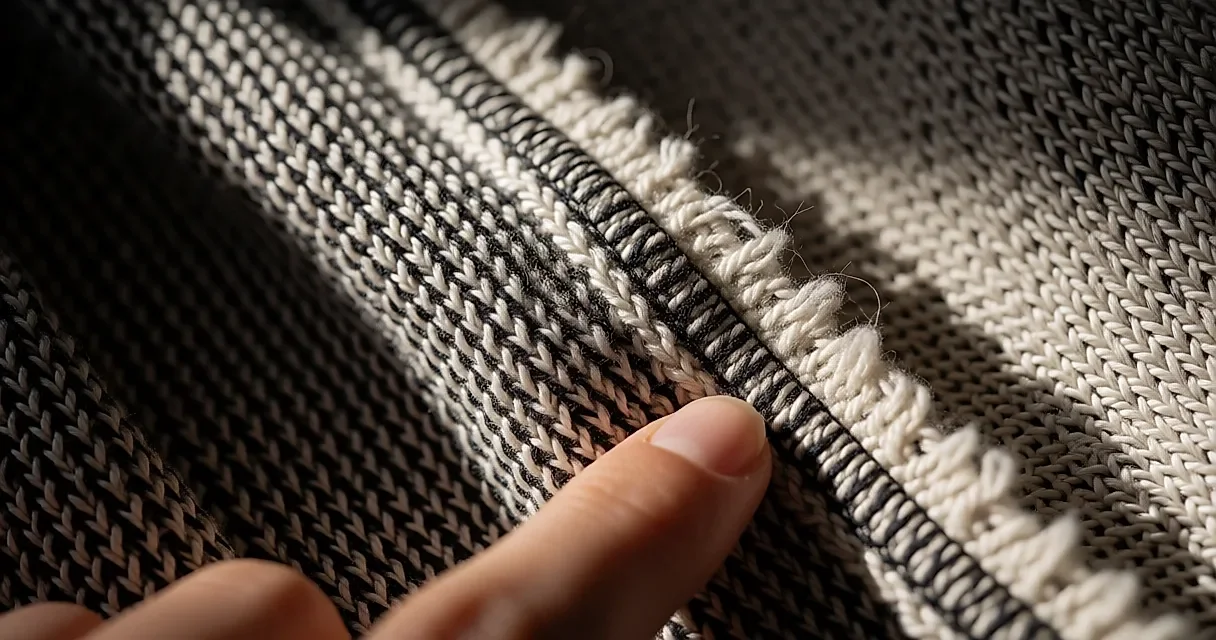
Two jumpers in the same colour, about £10 apart, and two very different futures. What separates them sits on a percentage line sewn into the neck. Most of us check the price, the cut and the colour, then leave the fabric until later, even though the fabric is what decides whether a piece will still be darned in ten years or end up a balled-up item in a clothing bank bag. For what to look for on the rail, our article How to spot a quality garment before you buy it (27 September) gives the method; here, the focus is what fibre content changes at the end of a garment's life: single-fibre recycling streams, repairability and the cost of darning versus buying new.
One fibre or several? Two very different afterlives
A garment made from a single fibre — 100% wool, 100% linen, 100% cotton — and a blended garment can look like two siblings on the rail. Blends are not nonsensical: they help hit a price point, give a knit some structure, add a little give to trousers. The trouble is what comes next.
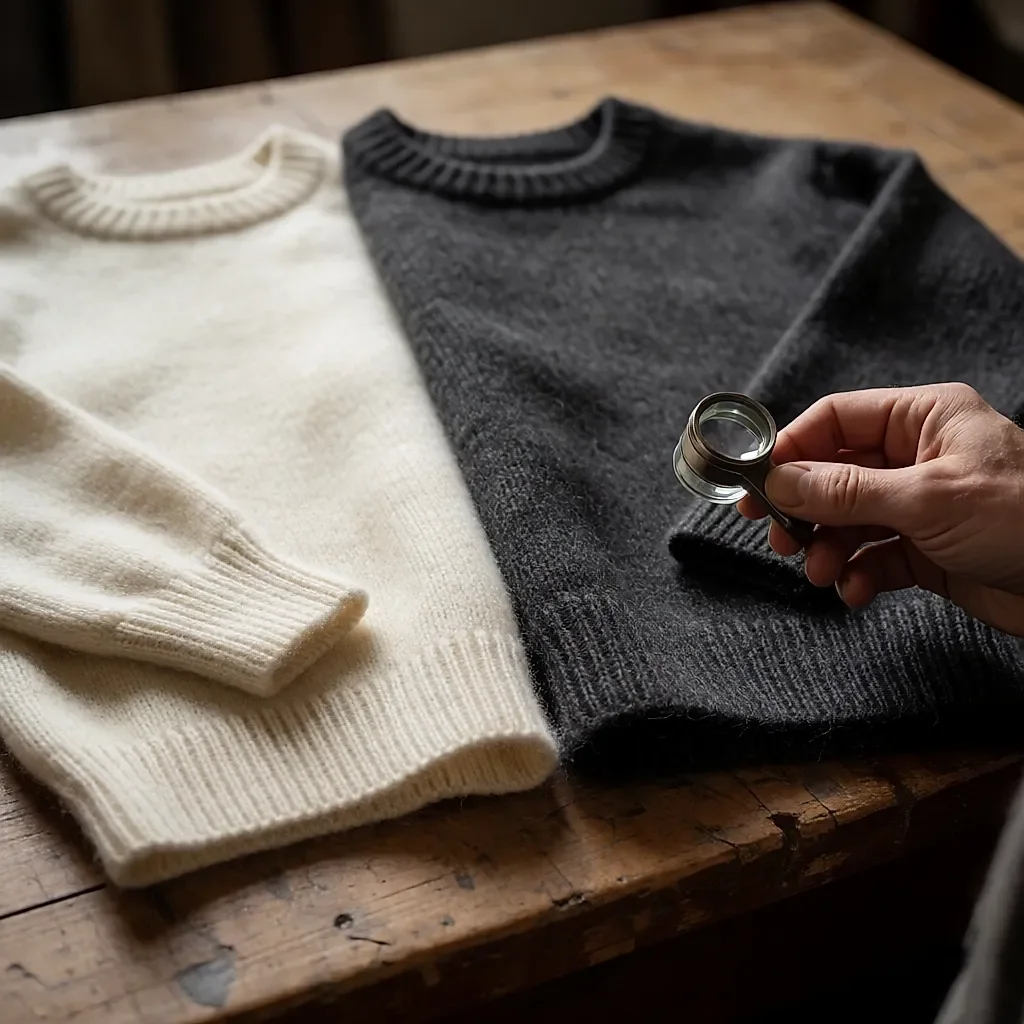
At end of life, the logic is simple: textile recycling routes work more easily with homogeneous waste streams. A single-material piece is easier to sort and feed back into recycling than a knit where wool, polyamide and elastane are all holding hands. A blend isn't a crime, but once it's worn out it often needs more detours to be recycled.
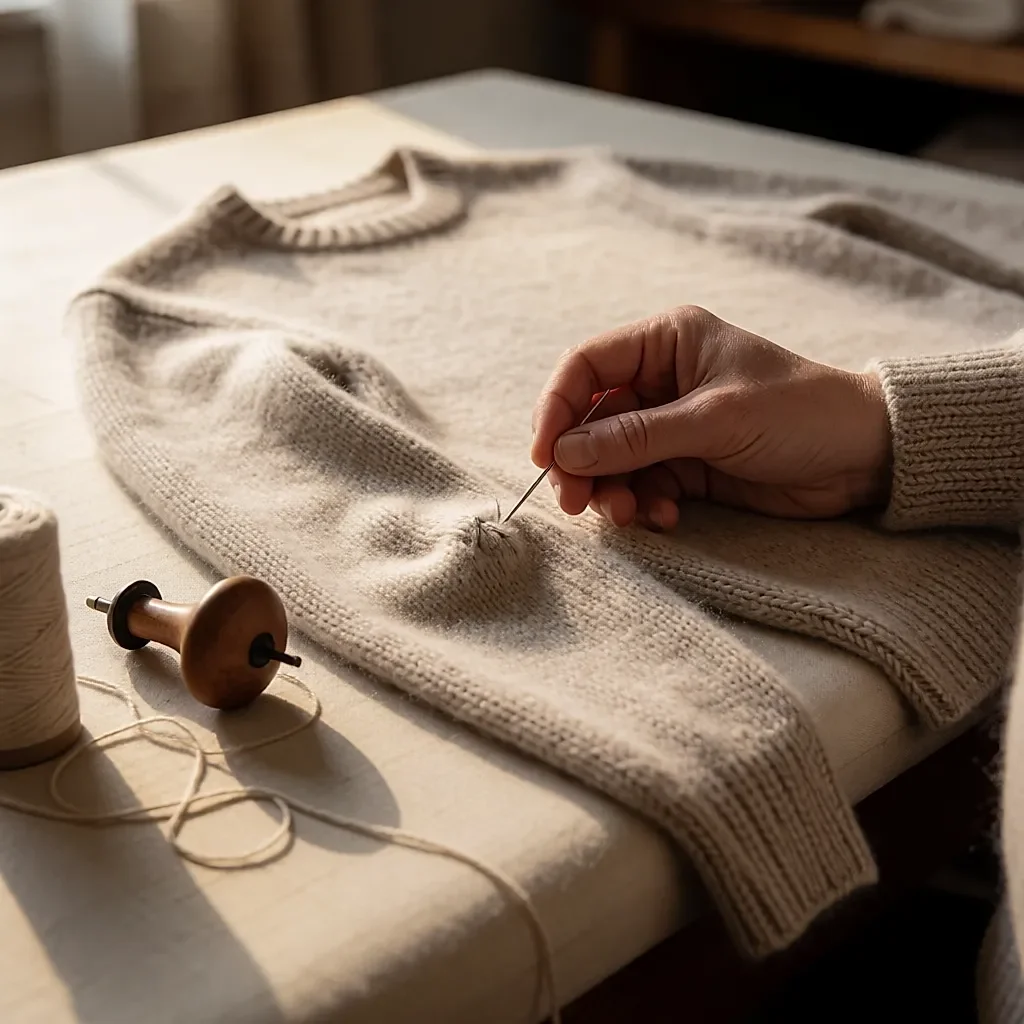
And before recycling comes repair. Pure wool can be mended; a blend that bobbles can wear out before its time: the cut can still look sharp while the bobbles are indestructible. We've all got a jumper like that in the wardrobe, haven't we?
The jumper: what pure wool can take
Take a merino wool jumper out of the winter pile: it keeps you warm without feeling stifling, has a reputation for holding on to odours less — so it goes through the machine less often, which does it no harm — and it can be saved. A snag at the elbow? A seamstress can darn it. A moth hole? You see it coming, you repair it, you keep wearing it.
A wool-acrylic blend, by contrast, appeals on price and immediate softness. But it bobbles quickly, loses shape in the wash and wears out before the cut does. How many jumpers have you given up on while the shape was still holding? That is exactly where the difference lies: a piece that can be repaired versus a piece that wears out.
The trousers: the comfort case for elastane
A pair of jeans that is 98% cotton and 2% elastane gives immediate comfort: it holds you in, moves with your knee and forgives a long car journey. You can see the appeal. Except that even a small proportion of elastane can complicate recycling; over time, elastane can lose its stretch and the fabric can relax — hello, baggy knees.
100% cotton, or linen for summer, often needs a few wears to relax. In return, it can be taken in, darned at the knee and resold. Honestly? If you spend the day on your feet or stuck on public transport, elastane remains a real comfort argument: it's up to you whether that's worth it at end of life. A compromise to make with your eyes open, not out of ignorance.
The ten-second label check
Before you head to the fitting room, turn the label over. Two pieces of information matter: the dominant fibre, the one listed first, and the total number of fibres. Two or three is readable; beyond that, reading gets harder, and so does end-of-life handling. Nobody is asking you to give up style, just to know what you're buying.
This trade-off pays off most on pieces you wear a hundred times: a coat, a pair of trousers, a jumper. With a very dated printed dress, you can afford to be more relaxed; with the knit you want to keep for three winters, fibre content comes before colour.
Before you get to the till, three checks: is the first fibre listed natural? How many fibres in total? And will the piece take an alteration or a darn? If you're hesitating, the garment may not last either.
Budget
For a new 100% merino wool jumper, expect to pay roughly £80 to £160 depending on the brand and the fineness of the knit; a wool-acrylic blend is often around £35 to £60. Second-hand, pure wool can be found for around £18 to £45 — check the label, obviously.
For 100% cotton or wool trousers, budget around £70 to £180, plus £10 to £25 for alterations at a seamstress for the hem or waist. Darning a jumper costs around £18 to £35 depending on the damage: far less than a new jumper, and the piece can go on for years.
Three winters, five winters: longevity is what really brings down the cost per wear. So next time you're torn between two pieces that look alike, turn the label over. Ten seconds, one line of percentages — and maybe a jumper that stays with you far longer than the one next to it.



Comments
Your opinion matters: rate the article, react and reply to comments.
Comments are moderated; AI-assisted comments are flagged. Text emoticons (8-), :-), <3…) are automatically shown as images.