
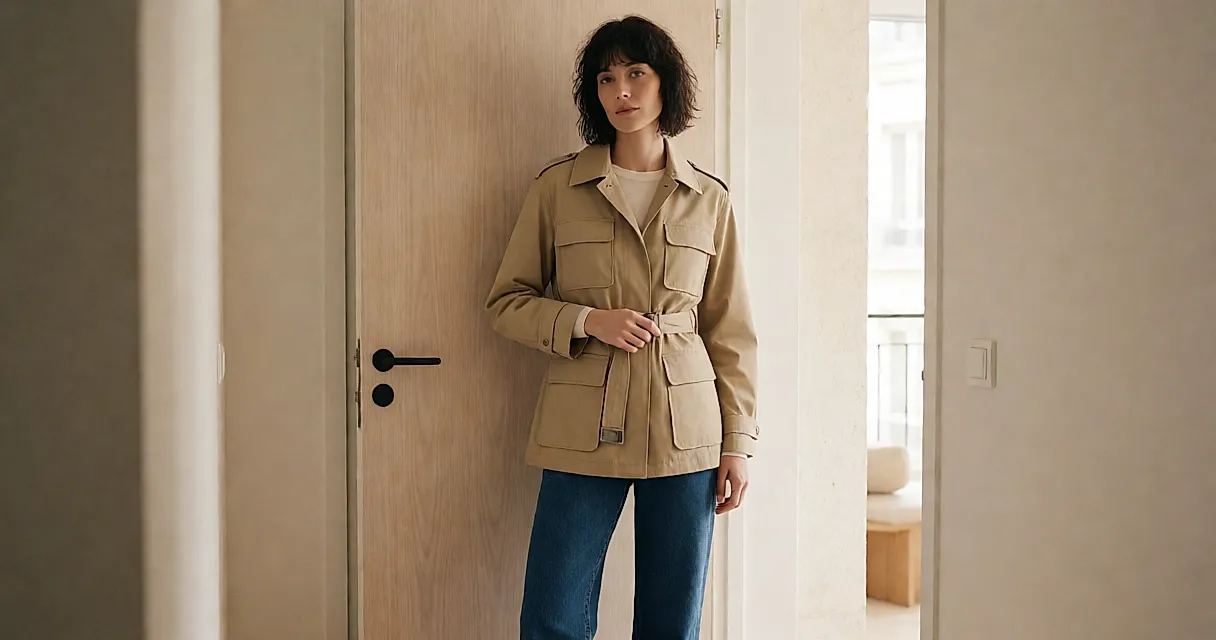
You saw it on the catwalk — belted, sharp at the shoulder — and thought: that's the one. Then you pulled the high-street version over Tuesday's knit and the verdict landed fast: collapsed shoulders, a silhouette in freefall, the general air of a summer-camp uniform. The safari jacket can be the most flattering piece of the season… as long as you look at one specific spot before you reach for your card: the shoulder.
The shoulder, the detail nobody checks first
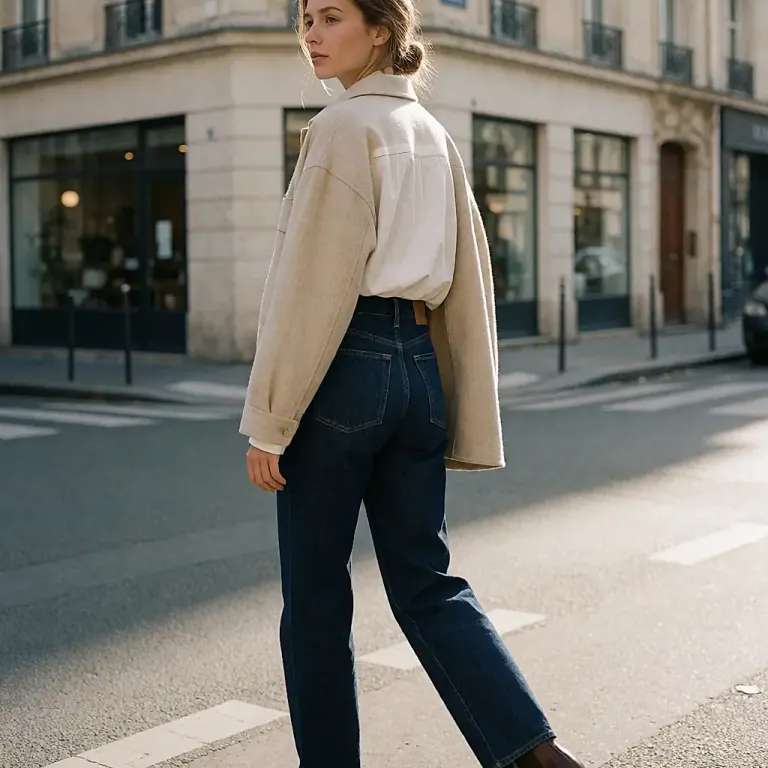
On a properly built safari jacket, the shoulder seam sits at the edge of the bone, about a centimetre in from the outer edge. The back yoke, the epaulette, the small reinforcement slipped under the lining: none of it is decorative — it is the scaffolding. A sharp shoulder holds the jacket clear of whatever you're wearing underneath, and that is exactly what separates a piece with presence from a fancy cagoule.
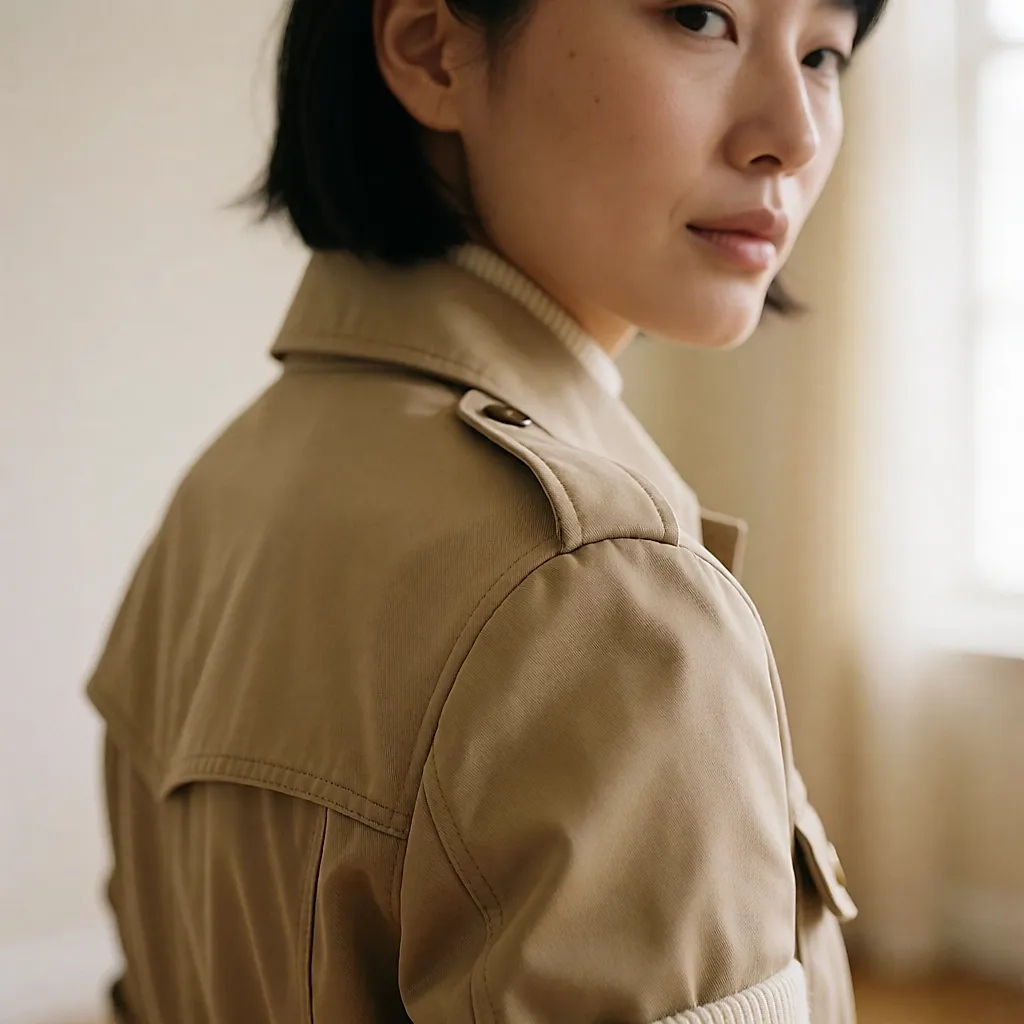
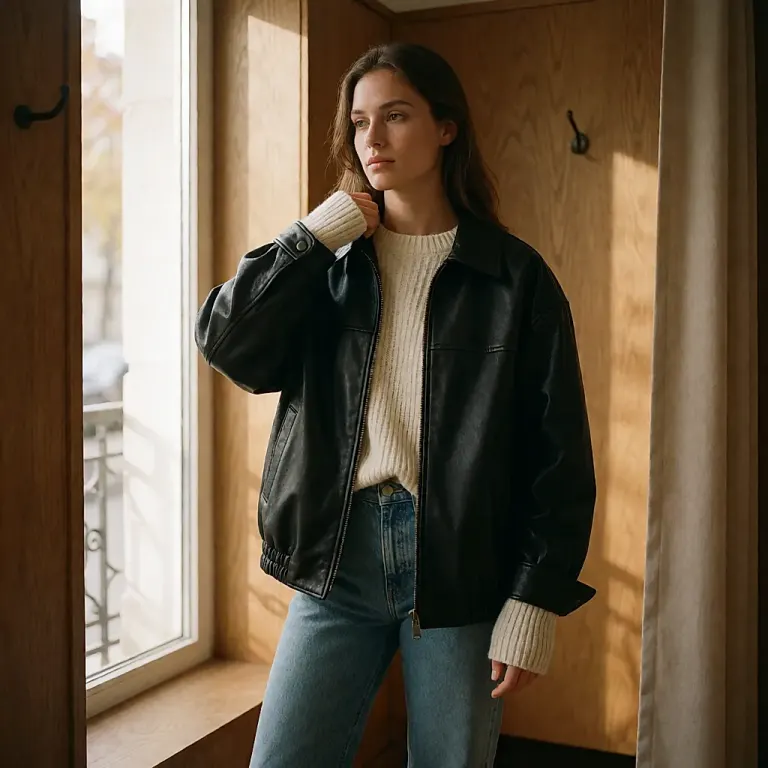
A soft shoulder, by contrast, collapses onto the knit. The jacket follows every fold of the jumper, the front ripples, and the belt you fastened with some pride hangs there with no conviction. You'll be comfortable — that isn't the question. You lose the line. Does that mean it's stiff? Not necessarily: it's the line that's crisp, not the way it feels to wear. The flip side is that a built shoulder is far less forgiving of a near miss — it's all in the line, a bit like eyeliner.
Is an archive pattern reissued exactly as it was still wearable?
That's the real question this season. A house dusts off a pattern from its archives, everyone applauds the idea, then you try it on and discover that the shoulder of the period was cut wide — because people wore a blouse underneath, a cardigan, sometimes both. Today we wear two millimetres of wool and expect to be able to breathe.
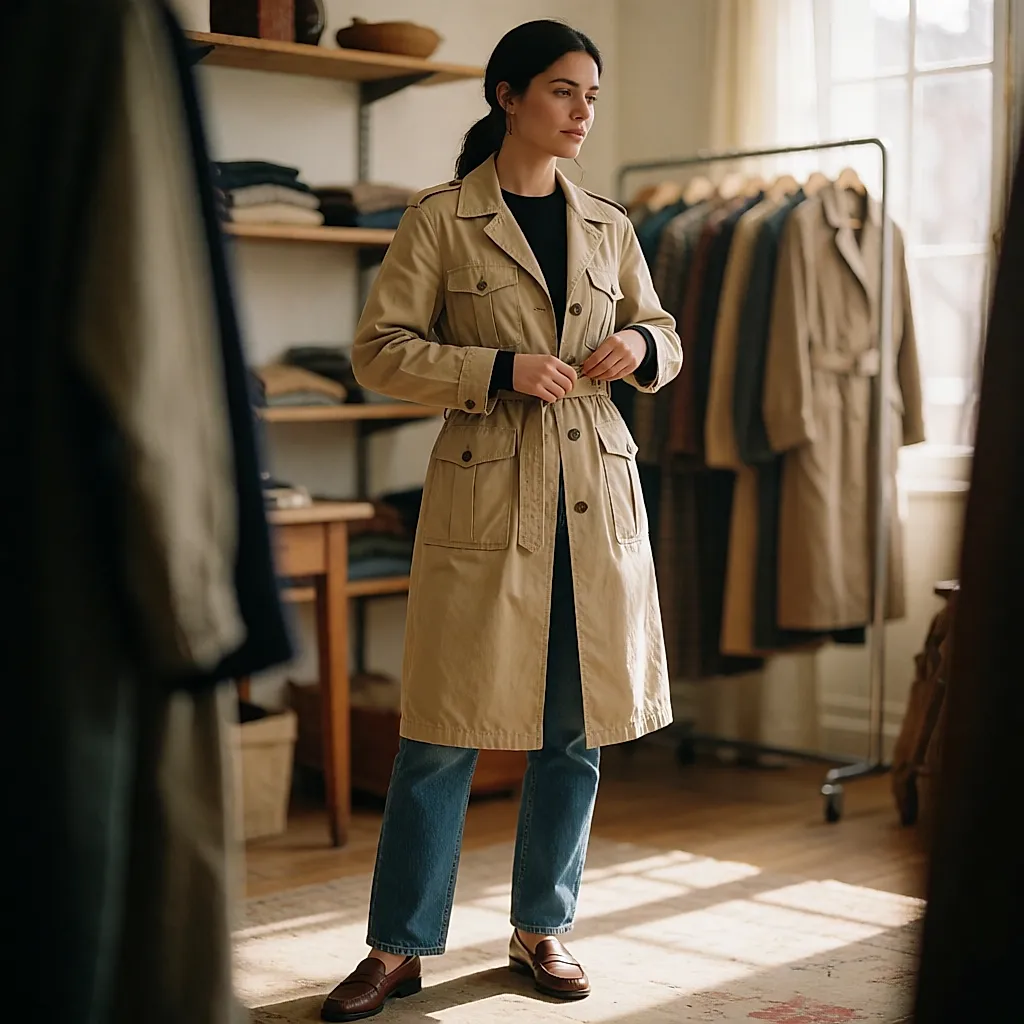
So: museum piece or something to wear? Both, provided you try it on. The pattern can be reinterpreted (shoulder narrowed, length brought to below the hip, belt raised), and it can also be worn exactly as it comes — confident, deliberate, with straight jeans and loafers, as a relaxed statement piece. The question to ask in front of the mirror is this: do I love the jacket, or the idea of the jacket?
Three moves to settle it in the changing room
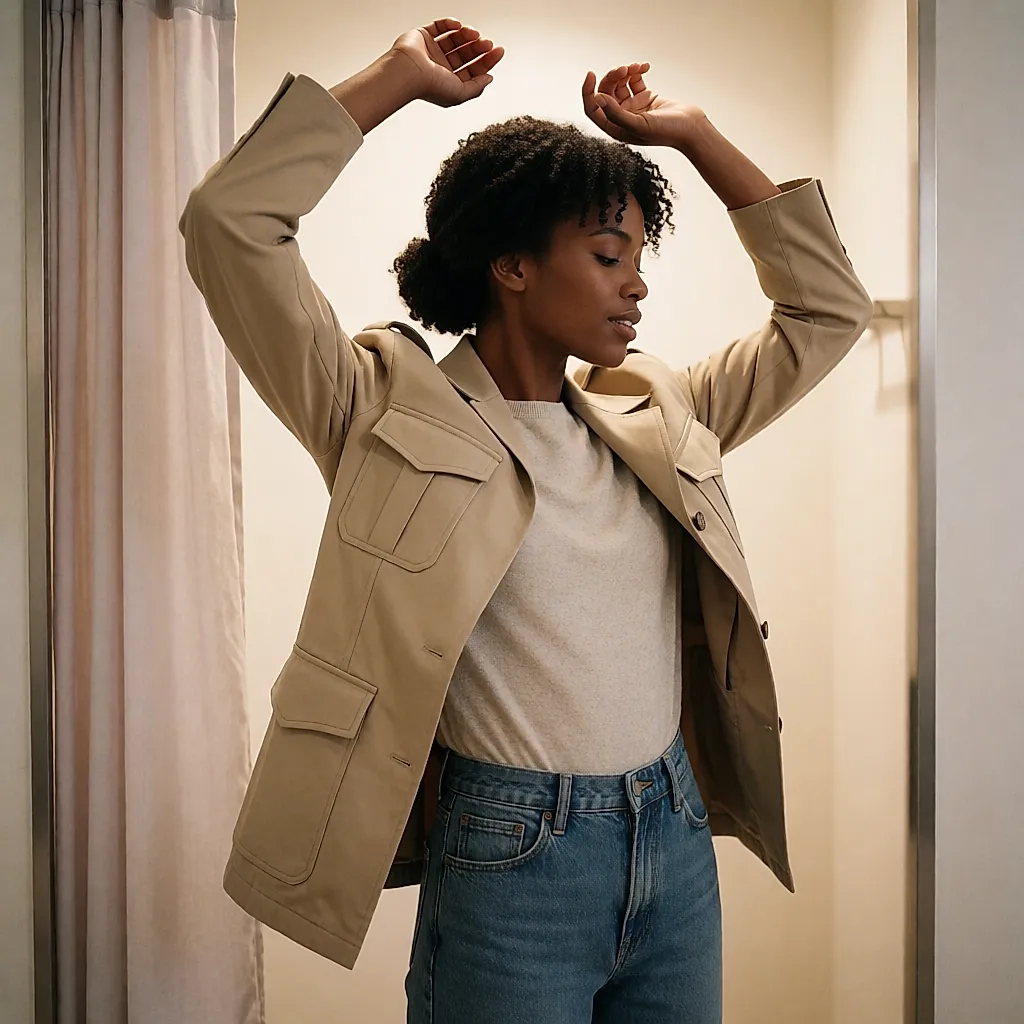
Move one: put it on over the fine knit you actually wear in October, not the T-shirt you happened to be wearing when you walked in. Move two: raise your arms to the ceiling, as though someone had just given you good news. If the whole jacket rides up with them, the armhole is too tight. Move three: sit down. The collar should settle back at your neck, the lapel should lie flat, and the back shouldn't pull.
Next, the label. A dense cotton gabardine, an organic cotton, a linen blend: these are the fabrics that hold their shape and take on a good patina over the years. Have a look at the synthetic fibre content, particularly in the lining — a jacket that can't breathe soon becomes unbearable between a cold morning and a mild afternoon.
The three-second test: put the jacket on and let your arms drop. If the top of the sleeves concertinas across your arms, the shoulder is too soft to be worn over a fine knit. If the fabric stays straight, you've found the right structure.
Who it doesn't work on (we'll say it too)
A structured shoulder widens the line visually. On an already broad frame, go for a version without epaulettes, with a single row of buttons, or a softer utility jacket: you keep the spirit without the armour. Fuller bust: double-breasted styles tend to gape, so try sitting down in it before you cut the tag off.
Petite frame: watch the length, which works best falling at mid-hip so it doesn't swallow your leg; cropped versions also work well with high-waisted jeans. And if you hate the sensation of a shoulder that holds you up, no built safari jacket will ever suit you — better to accept that and choose a soft jacket than to buy a piece that will live on the coat rack.
What to pay
Prices run wide, and they mostly follow the fabric, the lining and the finishing (buttons, belt, loops). Expect roughly £60 to £120 on the high street for a decent cotton version, £180 to £350 mid-market once the gabardine gets denser, and £400 to £900 from a designer or for a genuine archive piece.
Second-hand is still a great hunting ground: £40 to £150 at a charity shop, a consignment store or on resale platforms, provided you ask for the shoulder measurement taken flat — it's the number that really counts. Having a shoulder or sleeve altered at a tailor usually costs £30 to £60, which is worth factoring in before you get carried away.
If you're making only one purchase this autumn: a cotton safari jacket, sharp shoulder, belted, under £200, worn over a fine knit and jeans. Tight budget? Hunt, measure, alter. Bigger budget? Look at reissued archive pieces, keeping in mind that heritage is no substitute for trying something on. And if the shoulder doesn't please you, put the jacket back without guilt: the one you never wear always costs more than the one you would have chosen properly.
Comments
Your opinion matters: rate the article, react and reply to comments.
Comments are moderated; AI-assisted comments are flagged. Text emoticons (8-), :-), <3…) are automatically shown as images.