
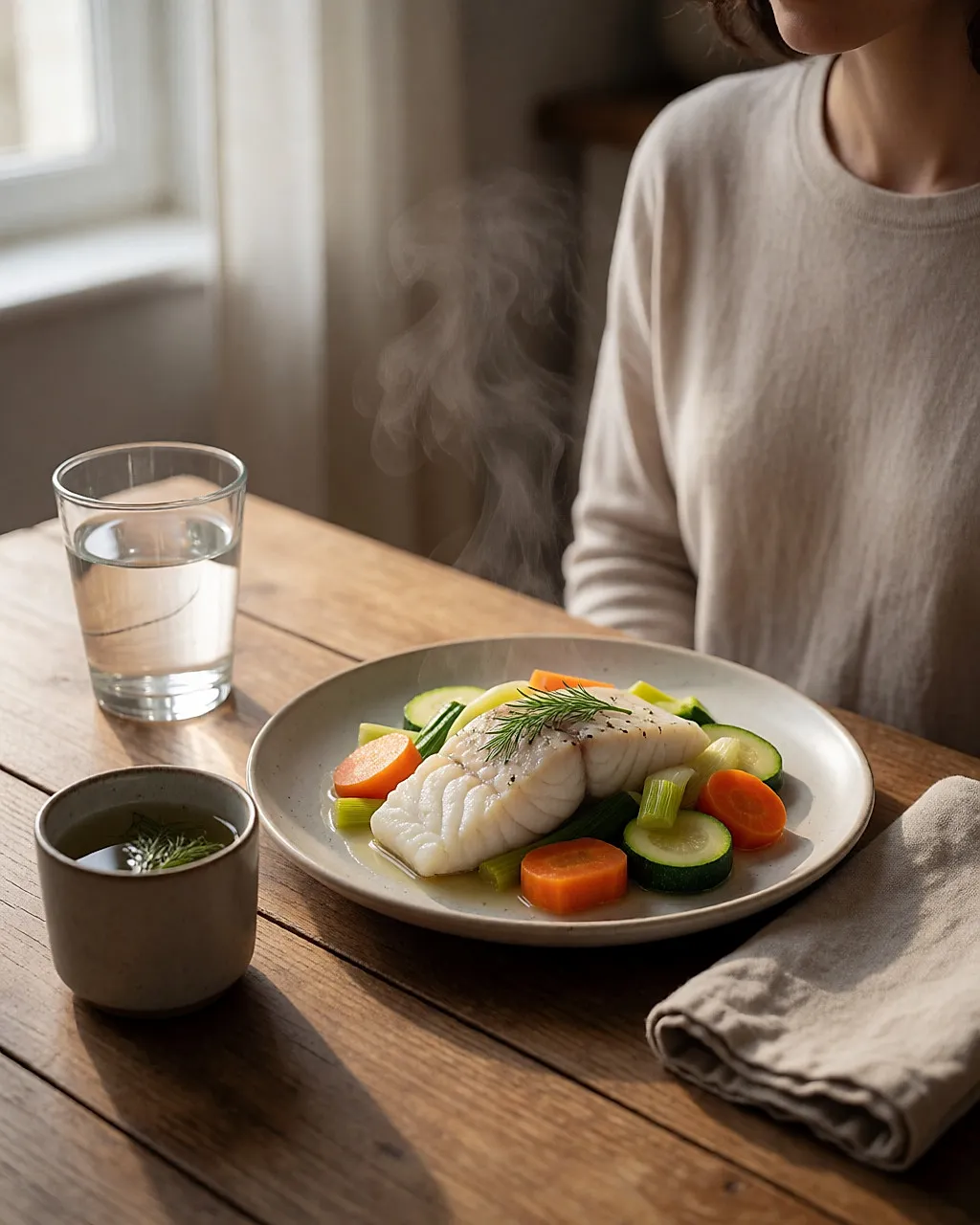
You know that feeling of having swallowed a balloon, just after a meal. A stomach that feels tight, acid reflux, wind that turns up uninvited — many people live with this day in, day out. And what if no magic diet could make it go away? What really helps are small tweaks to your plate, and to the way you eat.
What we know, and what we don't yet
To get a clear picture, it helps to see digestion as a journey. The stomach churns food, the small intestine absorbs nutrients, and the colon ferments the fibre that's left. Three mechanisms come up most often in discomfort: gastric emptying slowed by fat, overactive fermentation in the colon, and reflux made worse when you lie down.
Current data suggest the culprit isn't "fibre" in general. It's mainly certain highly fermentable fibres, such as fructans or oligosaccharides, which produce gas in sensitive people. Other fibres, the soluble ones, soothe the gut. The nuance matters: cutting everything out would be a mistake.
Foods that go down more easily
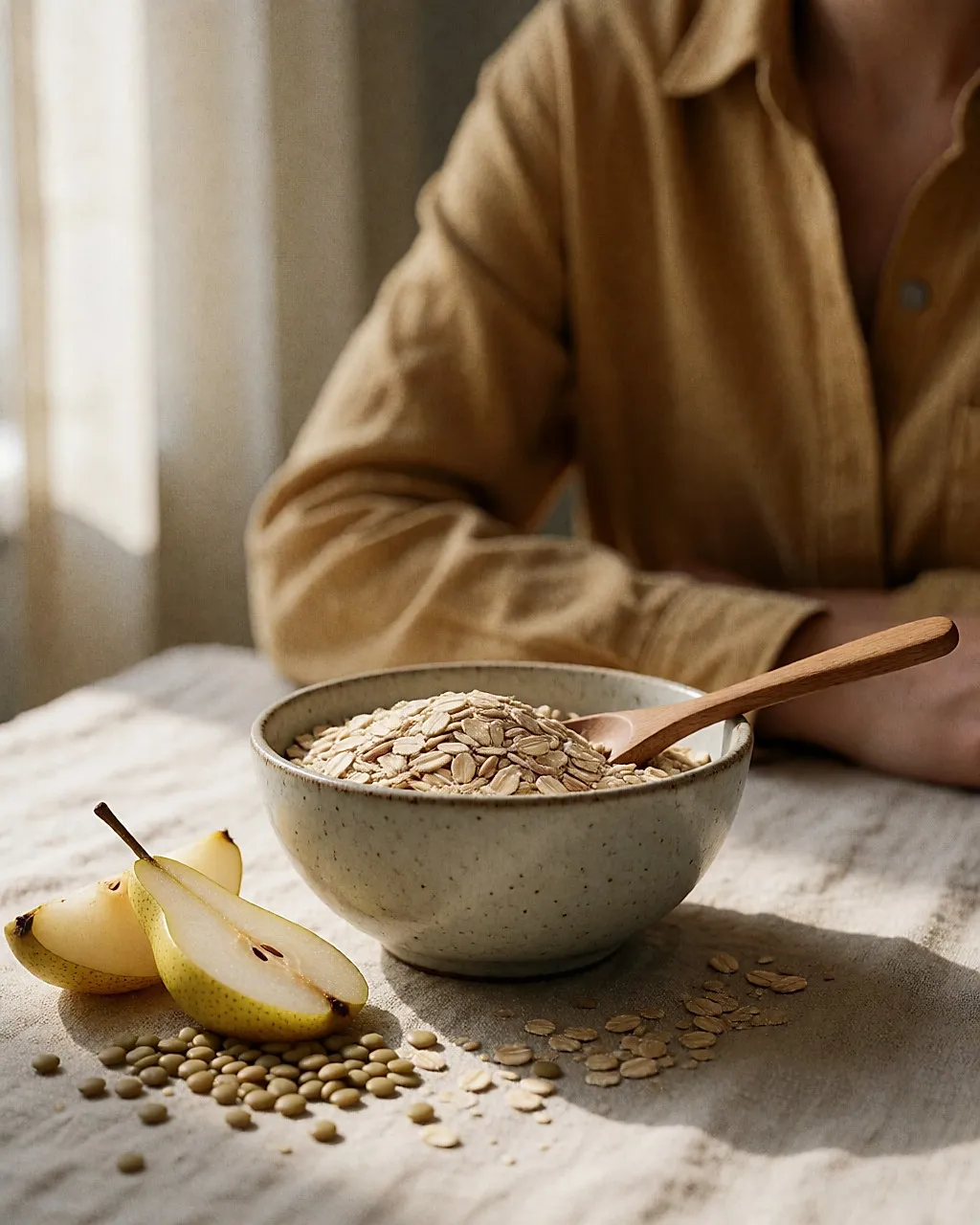
Start with light proteins: eggs, white fish, skinless poultry, tofu. For vegetables, go for the ones that cook well — carrots, courgettes, leeks, squash, spinach — and aim for soft, tender textures. Wholegrains (semi-milled rice, oats, quinoa) provide soluble fibre that feeds the microbiome without producing too much gas, provided you increase the amounts gradually.

Ripe fruit — banana, melon, berries — a few dried fruits and a square of dark chocolate round off the plate. For drinks, water remains the foundation, with or between meals: contrary to an old belief, drinking while eating doesn't "drown" your food. Fennel or peppermint infusions bring comfort, but no therapeutic feat.
What really slows things down
Rich sauces, fried food and fatty pastries delay the emptying of the stomach. Fizzy drinks add air and sugar. Sugar-free chewing gum, often recommended after a meal, makes you swallow air: that's aerophagia. Lactose bothers people who are intolerant; in that case, lactose-free versions and yoghurt, which are better tolerated, remain an option. Too much salt doesn't help either.

Careful: onions, artichokes, pears and pulses aren't "forbidden". In some sensitive people, they ferment and cause bloating. If that's you, reduce the portions rather than cutting them out, and talk to a professional.
How you eat matters as much as what you eat
In practice, make your meal a calm ritual: eat slowly, without rushing, chewing properly. Skipping a meal and then making up for it in the evening with a heavy dinner is the worst scenario for your stomach. Try to have a light dinner and leave two to three hours between the end of your meal and bedtime, especially if you get acid reflux. These simple habits often count for more than any single food.

Occasional bloating is normal. But if the discomfort lasts more than a few weeks, if you lose weight, if you notice blood, or if pain keeps you awake, see a doctor. It's up to a doctor to make a diagnosis and rule out a cause such as irritable bowel syndrome. No herbal tea can replace that advice.
Cost
Dietary tweaks cost little: fresh or frozen vegetables, wholegrains in bulk, tap water. For supplements (probiotics, infusions), allow around £5 to £15 for a packet of organic herbal tea, and £10 to £30 for a course of probiotics from a pharmacy. The price varies with the strain, the form (capsules, powders, ampoules), the number of doses and where you buy it: pharmacy, health and beauty shops, health food shops or online. A glass container or a refill format cuts down on packaging. Ask for advice before starting, especially if you're taking any medication.
Sources
- Santé publique France — Manger Bouger, dietary recommendations: mangerbouger.fr
- ANSES — opinion on dietary fibre and the microbiome: anses.fr
- Assurance Maladie (Ameli) — fact sheets on digestive disorders and reflux: ameli.fr
- Société Nationale Française de Gastro-Entérologie (SNFGE) — patient information: snfge.org
Food supplements do not replace a varied, balanced diet and a healthy lifestyle.



Comments
Your opinion matters: rate the article, react and reply to comments.
Comments are moderated; AI-assisted comments are flagged. Text emoticons (8-), :-), <3…) are automatically shown as images.