
You've stockpiled the masks, oils and serums you snapped up in every offer going, and your mid-lengths and ends are still dull and snapping? Before you add another bottle to the pile, take a look at your plate. Hair is built from the inside, out of what you eat. Products are the finishing touch: texture, hold, immediate comfort. They never replace the raw materials. It's a bit like repainting a wall over crumbling foundations: it looks the part for a few days, then it starts to flake.
Protein, the raw material
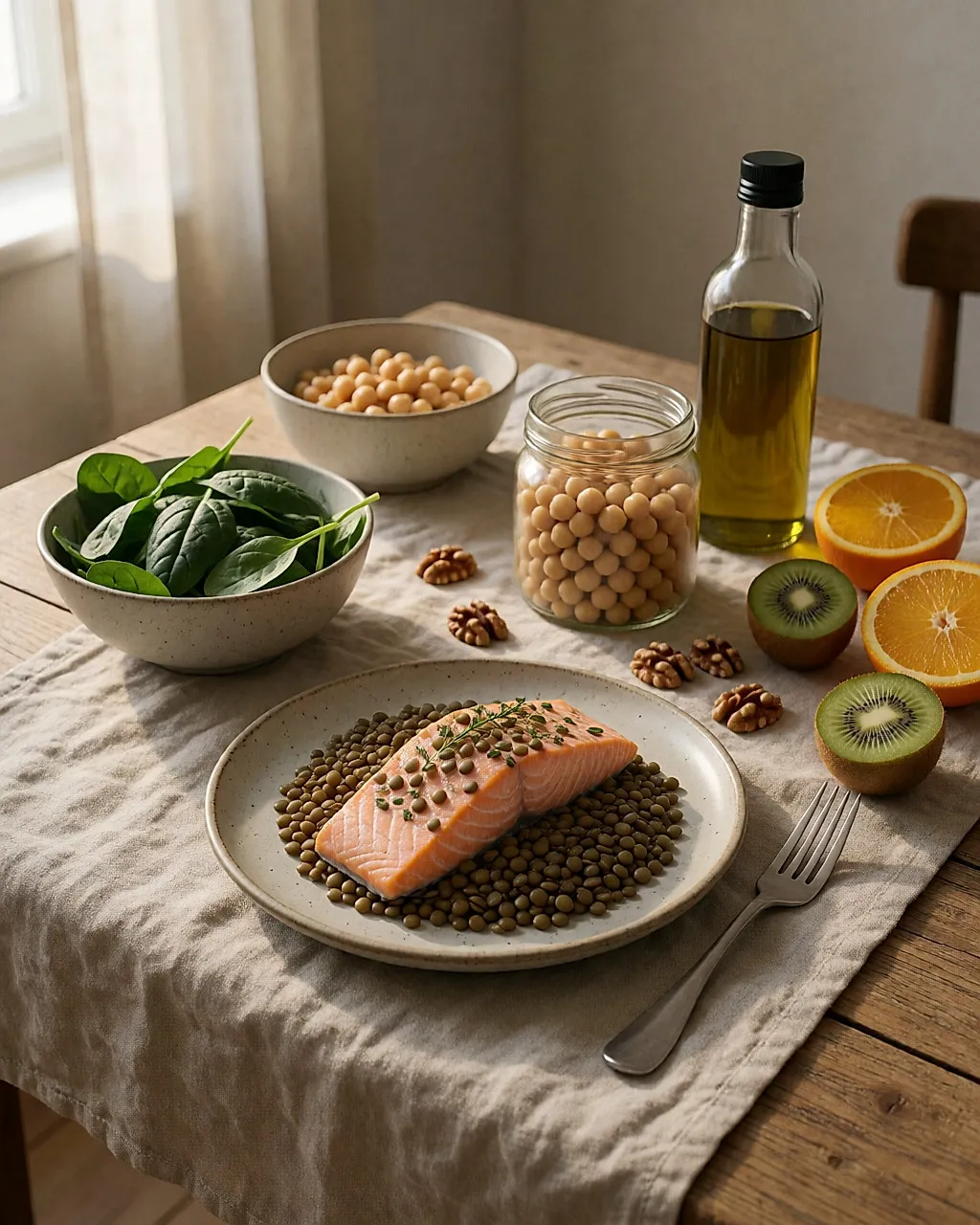
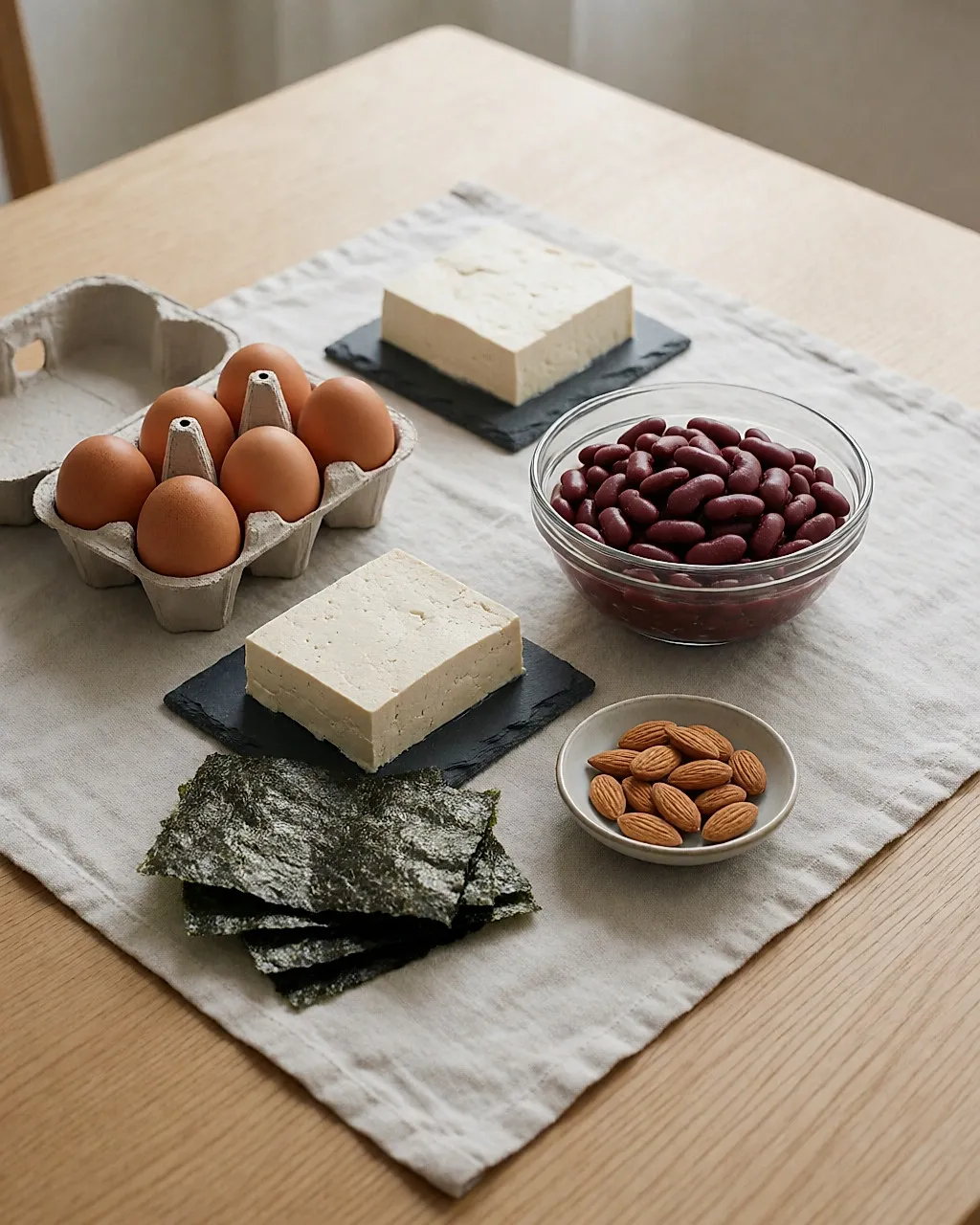
Hair is largely made of keratin, a protein. If your overall intake is too low, your body has no reason to send any to your lengths: it keeps its resources for vital functions, and hair comes last. Think eggs, poultry and fish first. On the plant side, go for lentils, chickpeas, tofu, kidney beans and seaweed. Animal proteins are generally absorbed more efficiently, but plant ones do the job perfectly well as soon as you pair a pulse with a grain: rice and lentils, couscous and chickpeas, sweetcorn and beans. Nuts and seeds round things off nicely — almonds, hazelnuts, cashews, walnuts. Buy them plain, unsalted and never roasted in oil: they taste better, and they're often cheaper from the loose bins.
Zinc, quietly pulling its weight
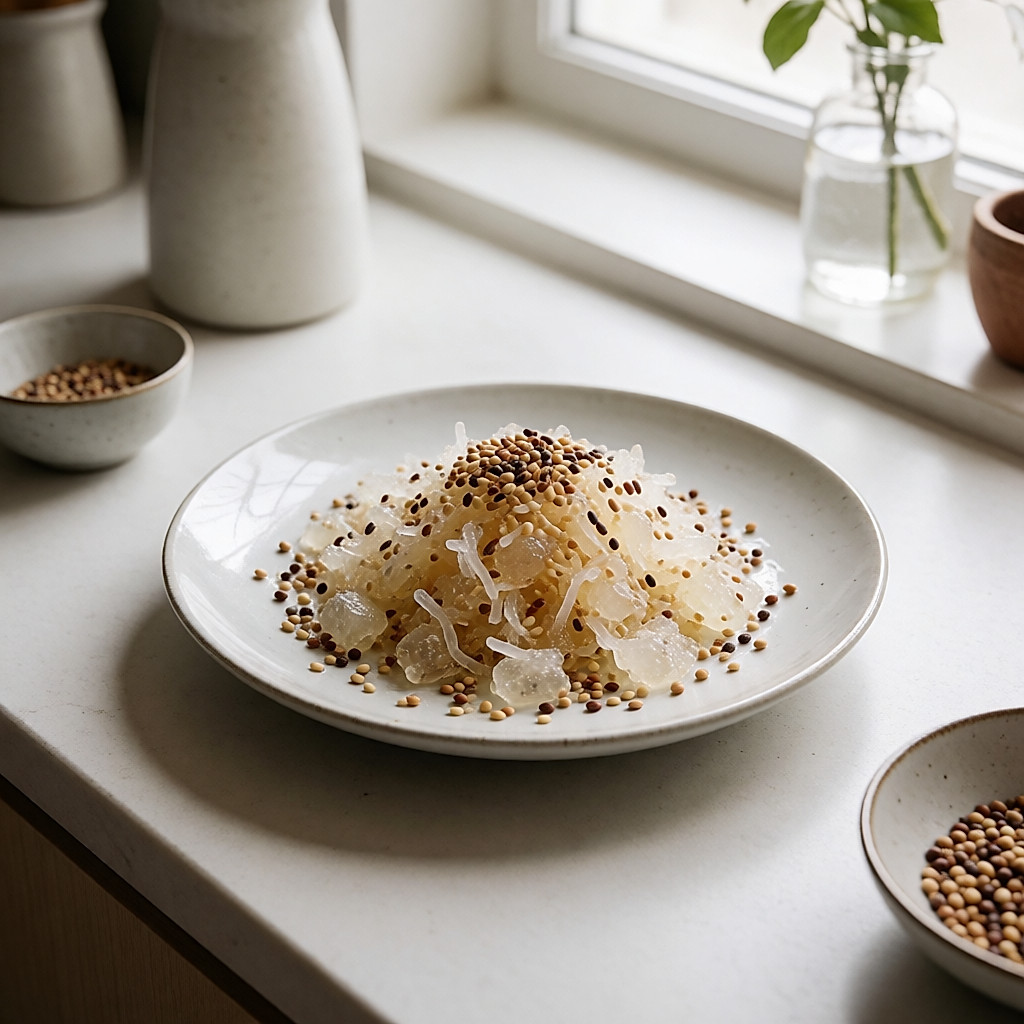
Your body can't make zinc, so it has to come from food. Seafood and oysters are the richest sources, followed by fish, meat, hard cheeses, wheat germ, sesame and cashews. Several studies link zinc deficiency to hair loss. Watch out for the tempting opposite reflex, though: too much zinc interferes with copper absorption. A blood test arranged through your GP beats guessing your own dose.
B vitamins, useful but not magic
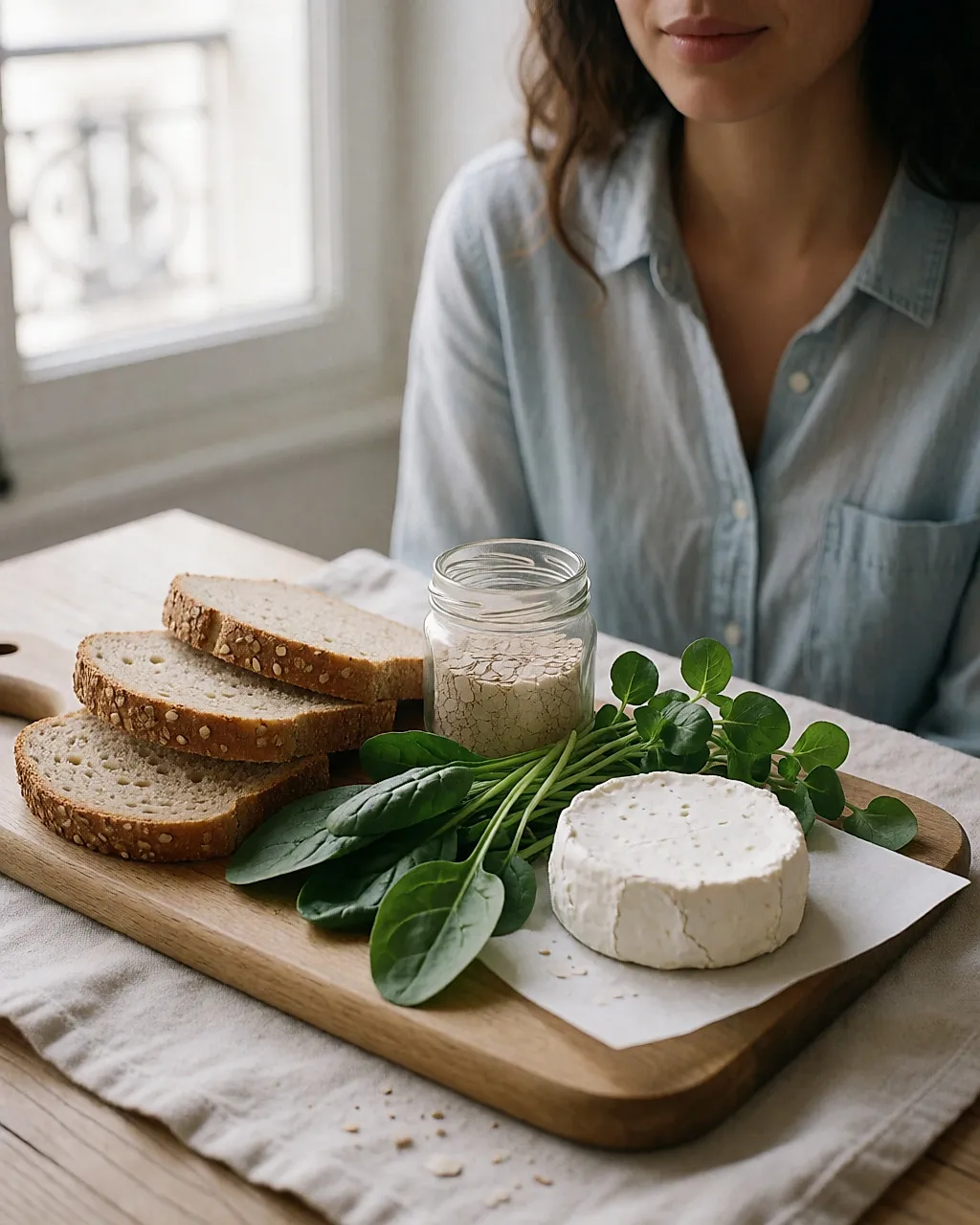
Almost every "hair" supplement contains them. In reality the question isn't how many more you can swallow, it's how to avoid falling short. Eggs, brewer's yeast, wheat germ, fish, meat, pulses, wholegrains, spinach, watercress, goat's cheese: enough to cover your needs without a single capsule. A word on biotin, which gets a lot of shelf space. Deficiency is rare, and there's no evidence that supplementing helps anyone who isn't deficient. Another practical point, the one everyone forgets: biotin can skew certain blood test results. If you take it, tell the laboratory before a blood test.
Iron, and the vitamin C that helps it along
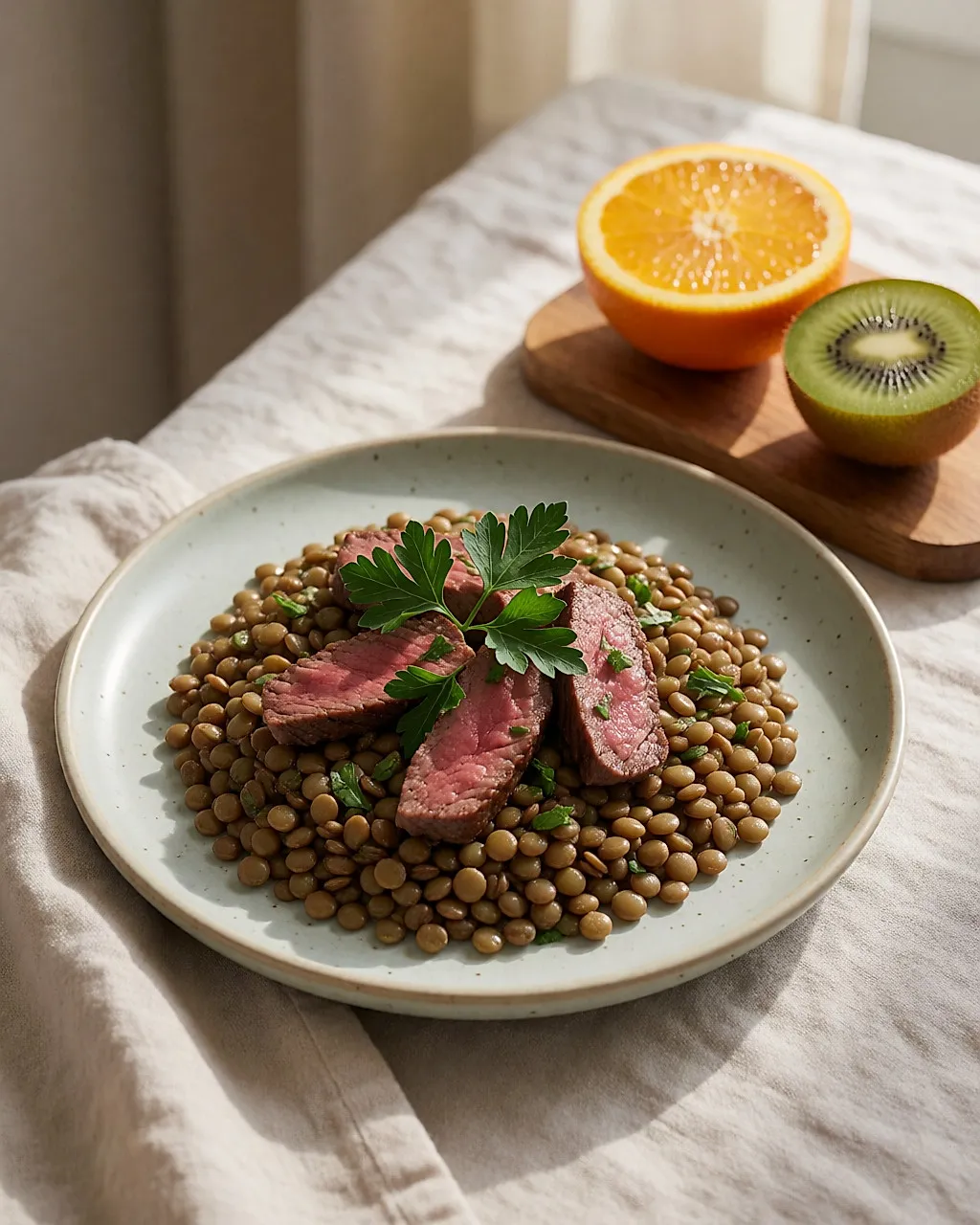
Iron is involved in hair renewal. The catch is that tea and coffee, which are rich in tannins, reduce how much of it you absorb when you drink them with a meal. Vitamin C, on the other hand, gives absorption a boost. The simple habit: a dish of lentils or beef with a kiwi, an orange or a little fresh parsley alongside. Cocoa, mussels and pulses add to the picture. If you're feeling tired and your hair is shedding, ask your GP for a ferritin test rather than buying iron off the shelf.
What doesn't help
Too much saturated fat, ultra-processed food, very restrictive diets, smoking and alcohol don't do your scalp any favours — and your scalp needs a good blood supply to feed the follicle. And the famous autumn shed? It's real, but it's usually mild and temporary. If the loss keeps going, or comes with patches or fatigue, it's no longer a question of what's on your plate: see your doctor.

A small tweak with real payoff: with every dish of pulses, add a source of vitamin C (lemon juice, raw pepper, parsley). You'll absorb more iron without changing anything else about the way you cook.
What it costs
You don't need a pharmacy-sized budget to feed your hair well. As a rough guide, UK prices currently sit around:
- dried or tinned pulses: about £2 to £5 a kilo, less if you buy loose;
- plain nuts and seeds: about £15 to £25 a kilo, worth buying loose to cut down on packaging;
- fresh or frozen fish: £10 to £25 a kilo depending on the species;
- organic rapeseed or walnut oil in a glass bottle: roughly £6 to £12 a litre;
- "hair" supplements: £10 to £30 a month, with no proven benefit if your diet already covers your needs;
- blood tests: arranged by your GP and free at the point of use on the NHS, though they're usually only ordered when there's a clinical reason.
These ranges shift with the city, the season and whether you're buying conventional or organic. You'll find most of it in the supermarket or the health food shop — look out for loose bins and reusable glass or cardboard containers — and in the pharmacy for supplements. I haven't tested the supplements sold online: these are ballpark figures, not brand recommendations.
Sources
- NHS — iron deficiency anaemia, healthy eating and blood tests (nhs.uk)
- NICE — clinical guidance on hair loss and nutrition (nice.org.uk)
- MHRA — regulation of food supplements and safety alerts (gov.uk/mhra)
- EFSA — dietary reference values for protein, zinc and B vitamins (efsa.europa.eu)
- FDA — warning on biotin and interference with certain blood tests (fda.gov)
Food supplements do not replace a varied, balanced diet and a healthy lifestyle.


Comments
Your opinion matters: rate the article, react and reply to comments.
Comments are moderated; AI-assisted comments are flagged. Text emoticons (8-), :-), <3…) are automatically shown as images.