

Beautiful winter hair takes work!
Wind that blows for three days straight, two commutes with lengths still damp, and the verdict lands: hair that feels rough under your fingers, ends snapping, a halo of static the moment you lift your hat. Winter doesn't go easy on your hair. The good news: it can be managed, and you don't necessarily need to buy the whole kit. You just need to know where to focus.
Wash less often, but wash better
For most hair, two to three shampoos a week is a good rhythm. One caveat: if your roots get greasy quickly, don't leave them dirty for three whole days in the name of a general rule. A suffocated scalp always gets its own back. Your comfort sets the pace, not some average you picked up somewhere.
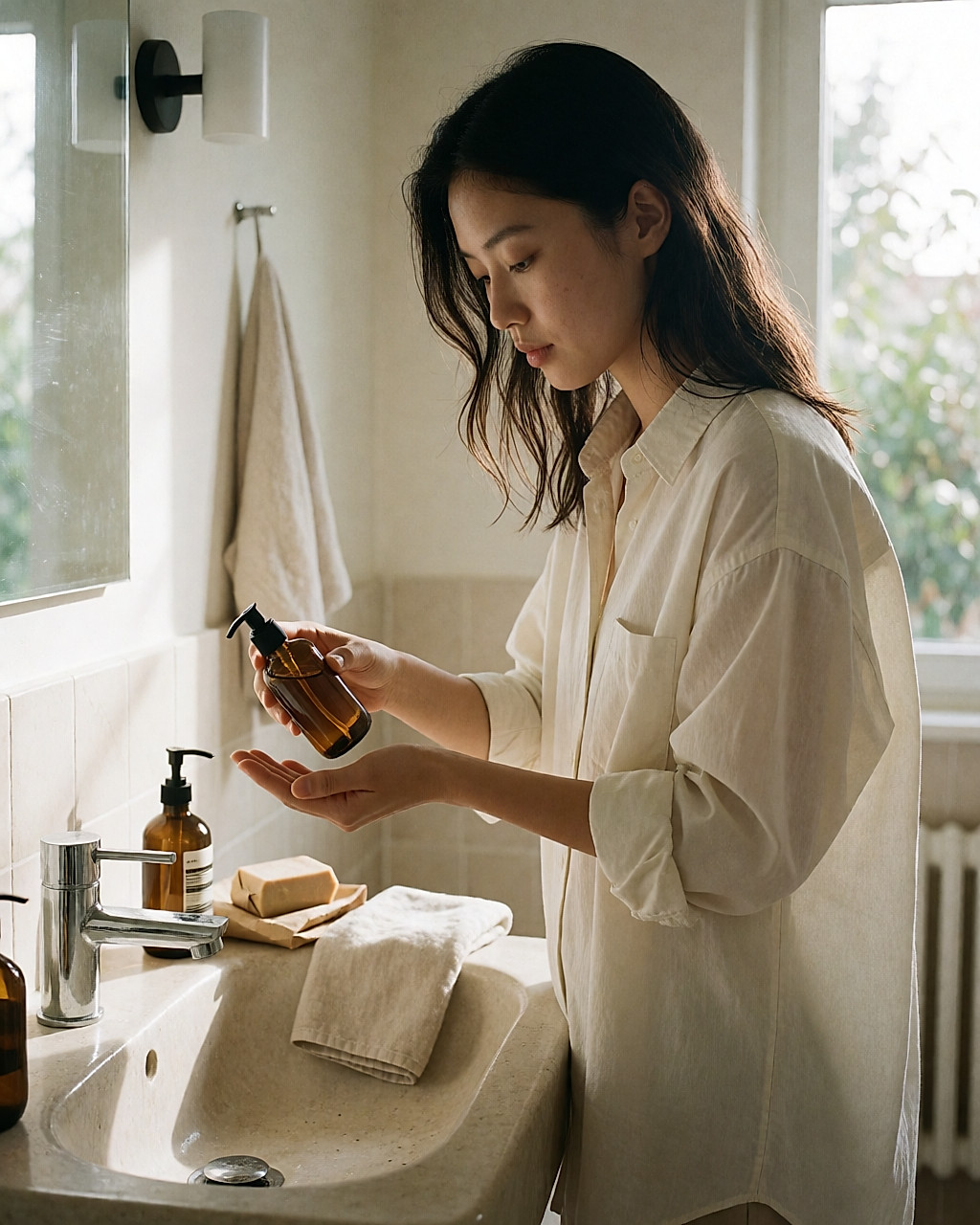
And forget the double shampoo. One clean pass is plenty; the second stripping roughens the fibre far more than it degreases it. The move that changes everything, though, takes a minute: massage with your fingertips, leave it to sit while you wash the rest of yourself, then rinse thoroughly.
When it comes to formula, look for a gentle cleansing base, with as few harsh sulphates as possible and a short ingredient list. Silicones aren't poisons, but they coat the surface and hide tired hair: the repaired feel is there, the problem remains underneath.
Rinse with lukewarm water
Very hot water strips the fibre and irritates the scalp. So stick to lukewarm, and save a cooler blast for the end of rinsing if you can bear it. The shine effect is real, but it disappears with the first brushstroke. Not worth freezing your scalp in January!
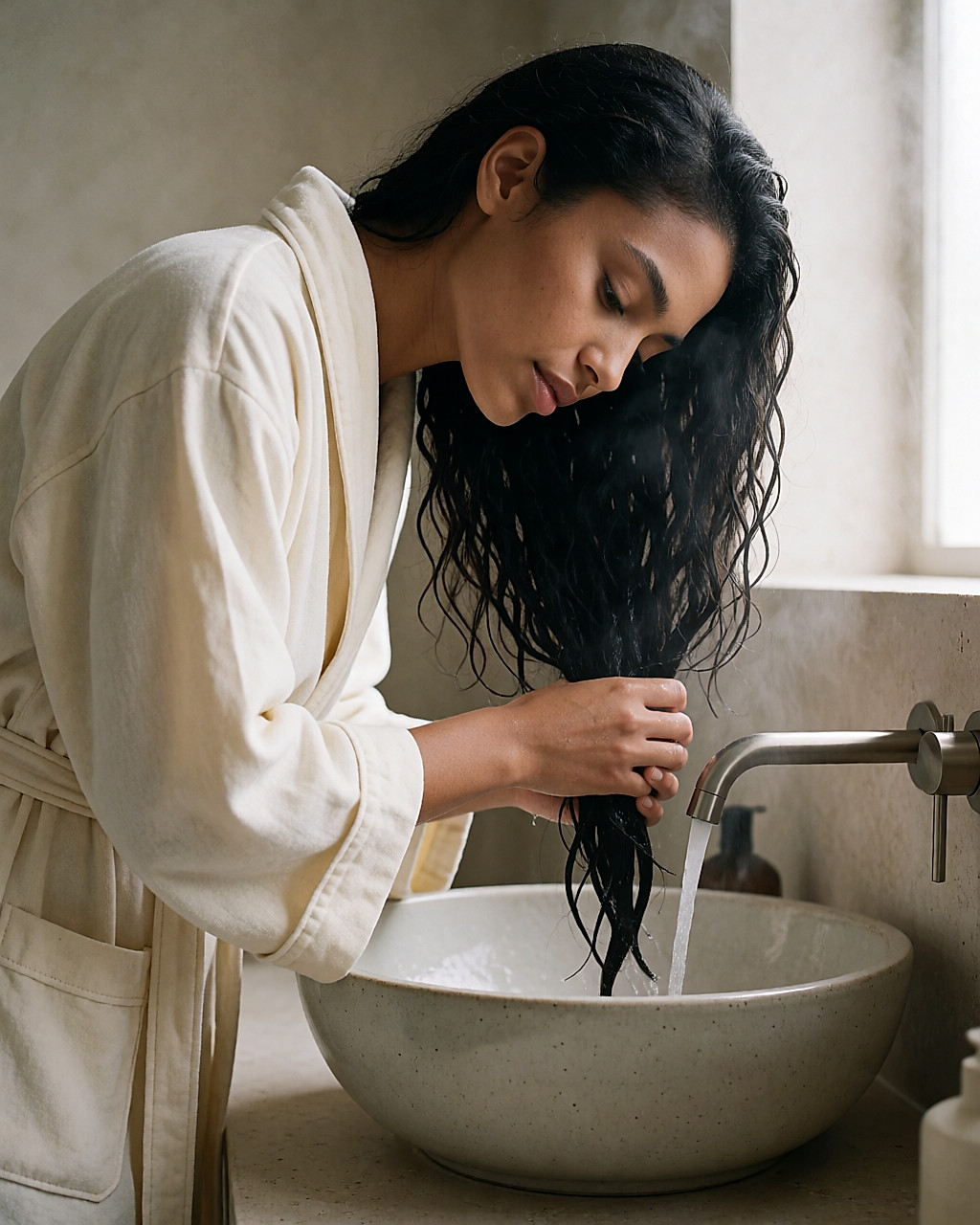
Drying: don't leave the house soaking wet
Wet hair is fragile hair — that's when it breaks most. Heading out with dripping lengths in 2 °C is therefore not a good idea. Pat without rubbing, with a microfibre towel or a cotton T-shirt. If you use a hairdryer, keep it on a medium setting, about 20 cm away, with the nozzle pointing downwards. The hottest setting adds nothing; it damages, full stop.

Brush twice, not thirty times
The idea that brushing 'stimulates growth' is a myth. Too much brushing breaks the lengths and pulls at the roots — and frankly, your hair didn't ask for it. Two gentle passes a day, morning and evening, are plenty. Always detangle from the ends upwards towards the roots, never the other way. As for tools, natural bristles or a wooden comb glide better and create less static than plastic. Wet hair: wide-tooth comb, and nothing else.
The mask: your weekly appointment
Once or twice a week, apply a nourishing mask for ten to twenty minutes, under a warm towel. A plant oil treatment works just as well too — argan, jojoba, camellia — applied to the lengths and ends thirty minutes before shampooing. Check the ingredients: a pure oil, ideally organic, in a glass bottle, and you're sorted.
Rinse lukewarm, squeeze out with a microfibre towel. In truth, the texture improves: less straw-like, more supple. Be careful though: nothing truly repairs damaged ends, and only a trim will solve the problem.
The tip that costs nothing: go to bed with your hair already dry, or at least with dry roots. A satin or silk pillowcase limits nighttime friction and static on waking — a small detail, but it changes how the next morning feels.
A hat, yes, but not just any hat
Woolly hat, hat, hood: in really cold weather, it's hard to do otherwise. Choose merino wool, organic cotton or silk, which let the scalp breathe and limit static. Synthetic materials and hats that are too tight, on the other hand, leave marks at the roots and weaken hair at the temples. Let's be honest: a hat that stays put is often a hat that's tight. Look for the compromise in the lining.
On your plate and in your head
Hair is protein. So aim for a varied plate: pulses, eggs, fish, nuts and seeds, green vegetables, wholegrains. No random food supplements, though — supplementation only makes sense after a deficiency diagnosis from a healthcare professional.
Stress, meanwhile, can cause diffuse shedding, often two to three months after a difficult episode. In most cases, it is reversible. Move, sleep, and keep some time just for you — your hair likes long weeks no more than you do.
Budget
Prices vary hugely depending on where you buy and the range. Expect roughly:
- Gentle shampoo, with a mild cleansing base: £4 to £10 in supermarkets or online, £9 to £22 for an organic brand (250-400 ml).
- Nourishing mask: £7 to £13 in supermarkets, £13 to £30 at beauty retailers or health food shops.
- Pure plant oil: £7 to £17 for 50-100 ml in health food shops or online.
- Natural-bristle brush or wooden comb: £9 to £30; soft detangling brush, £7 to £17.
- Hairdryer with temperature control: £26 to £85 in supermarkets, £100 to £215 for a salon model.
- Merino wool or organic cotton woolly hat: £13 to £43.
In a salon, a deep conditioning treatment at the basin is around £22 to £52, sometimes included in a cut package. Some offer a scalp diagnosis free or for a token price — useful before investing elsewhere.
Sources
- AAD — Public information on hair and scalp care, American Academy of Dermatology.
- SFD — Patient information, Société Française de Dermatologie.
- COSMOS — Reference standard for organic and ecological cosmetics, COSMOS-standard.
Food supplements do not replace a varied, balanced diet and a healthy lifestyle.




Comments
Your opinion matters: rate the article, react and reply to comments.
Comments are moderated; AI-assisted comments are flagged. Text emoticons (8-), :-), <3…) are automatically shown as images.