

Long confined to gyms and physiotherapy clinics, the vibration plate is slowly making its way into living rooms. And the promise is tempting: a few minutes a day, a body that reshapes itself, without lifting a single weight. Easy to believe, isn't it? Except that behind the polished marketing talk, there is a real physiological principle... and quite a few adjustments to reality.
A quick note upfront: no, we have not tested a vibration plate. This article brings together manufacturers' claims and what research says. Nothing more — and that is already quite a lot.
How does it actually work?
You stand on a platform that oscillates at adjustable frequency and amplitude, in a squat, lunge or plank. Depending on the machine, the movement is vertical (linear oscillation), rocking (pivotal) or combined across several axes. Nothing very dramatic to look at, and yet.
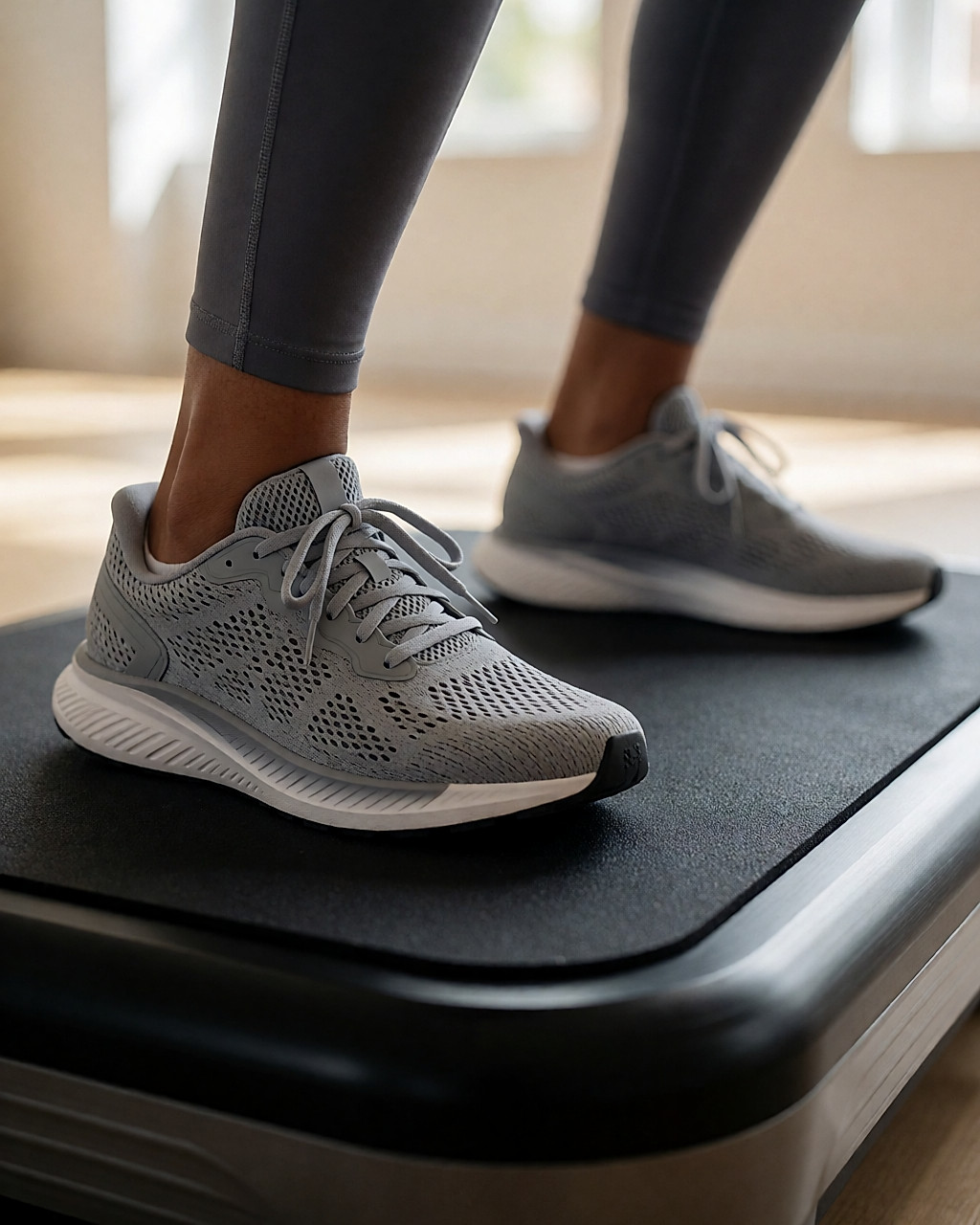
Because the movement changes everything: your body is subjected to a controlled tremor and has to adapt to it. In practice, the mechanical wave stimulates the muscle spindles, those receptors sensitive to stretch. Chain reaction: the muscle contracts and relaxes several times per second — this is the famous tonic vibration reflex. The demand therefore does not come from a weight being moved, but from the rhythm imposed on the fibres.
Which is where the positions come in: squat, lunge, plank, press-up, glute bridge... they can be endlessly varied, with or without a resistance band to make things harder. The principle: a short but intense ritual.
What the science really says
First, beware an argument that has been around since the 2000s: that high percentage of muscle fibres recruited, often put forward by brands, remains debated. Appealing on paper, it has mainly been spread by marketing, much less by the available data.

In the absence of solid evidence, it is better to aim for more modest and better-targeted benefits: a moderate gain in strength, especially if you are starting from a low base; real work on balance and proprioception, valuable if you move little or are over 60; and a possible effect on bone tissue, often highlighted but best treated with caution.
On cellulite, localised fat loss or 'express firming', the evidence remains thin. What really matters is your overall activity level and what is on your plate. In other words: the tool has its merits, but it replaces neither progressive load nor regular energy expenditure.
Vibration is not harmless for everyone. Before stepping onto the platform, it is better to ask your doctor's advice in certain situations: pregnancy, venous thrombosis or a history of phlebitis, symptomatic disc hernia, recent implant (hip or knee prosthesis), epilepsy, severe migraines, unstable cardiovascular conditions.
This list is not exhaustive. With age, if you have a chronic condition or are taking anticoagulant medication, personalised advice remains essential.
A typical session
Allow around fifteen minutes, two to three times a week. Start with a few minutes of low-intensity warm-up on the platform. Then alternate static positions held for around thirty seconds with a few dynamic movements. Finish with stretches, away from the vibration — never on it; that is the kind of detail that matters.

Progression is key: first the duration of the holds, then the frequency, and only after that the amplitude. Many gyms now offer group classes that combine vibration and functional exercises — enough to break the monotony and limit posture errors, which is no luxury when you are starting out.
Budget
For sessions, prices vary widely depending on the city and the level of supervision. Expect around £10 to £25 per session on a drop-in basis, and £30 to £70 per month for a membership that includes the platform. Group classes are often between £15 and £30 per session. Good news: sometimes it is already included in your standard gym membership. Always ask the price before committing, and try a session before signing up for a year.
For equipment, the same logic applies: between an entry-level machine (expect around £150 to £400) and a studio triaxial platform (often more than £1,500), the gap is huge. The price depends on the range, the city, how often it is used and maintenance — motors, anti-vibration mounts. You can find them in gyms, specialist fitness shops, online and sometimes second-hand.
If you go for second-hand, check the condition of the motors, the wear on the anti-vibration mounts and the availability of spare parts: that is what makes the difference over time. And if possible, try the machine before you get your card out.
A quick word on accessories: a mat or non-slip socks can transform comfort. Choose a natural rubber or cork mat, often more durable, rather than PVC. Nothing dramatic, but it is a choice that lasts.
Who is it for, and what for?
The platform makes most sense when you are coming back after a long break and want to restart without scaring yourself. It is useful for older adults who want to work on balance, for athletes doing activation before a session or active recovery, and in rehabilitation when a physio specifically prescribes it.
The verdict: yes, it is a good extra — on one condition. Do not expect it to do the work for you. Combined with regular cardio and a reasonably balanced diet, vibration can genuinely contribute to your overall tone and help you feel firmer. On its own, it reshapes nothing. With the right support around it, however, it does its bit.




Comments
Your opinion matters: rate the article, react and reply to comments.
Comments are moderated; AI-assisted comments are flagged. Text emoticons (8-), :-), <3…) are automatically shown as images.