
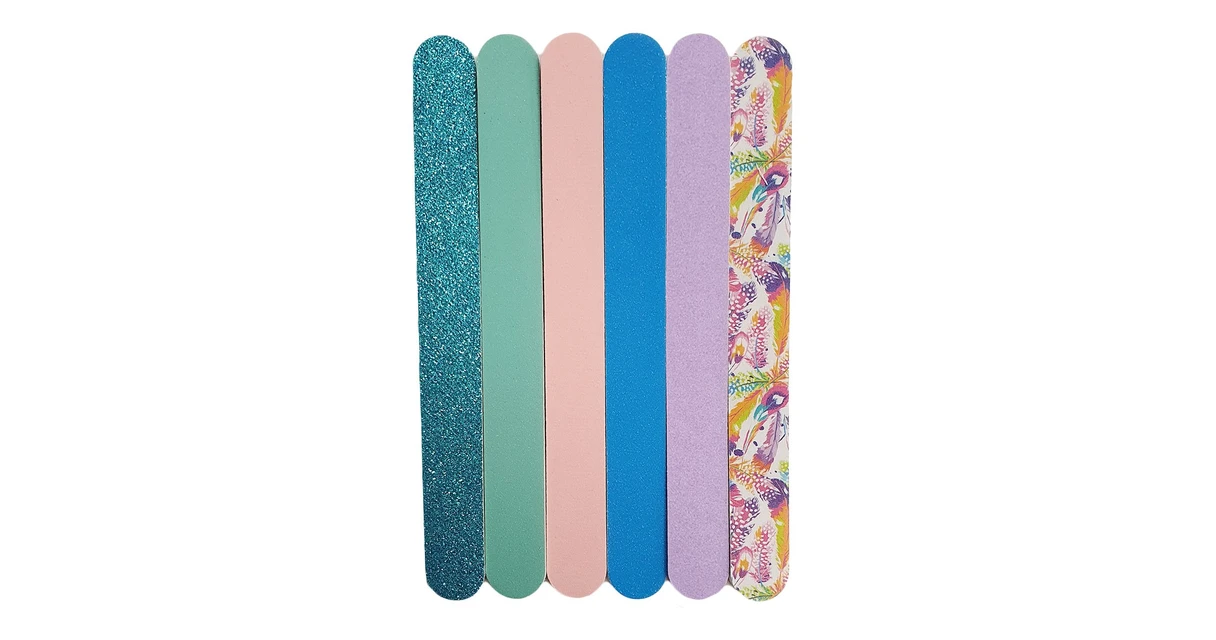
Two nails, the same file, the same starting length. One ends up neat, the other frayed. Often, the only difference is a matter of minutes — how long you leave the nail to dry, or don't. Because the file in your hand is rarely the real culprit.
Why a waterlogged nail can fool you
A nail straight out of the shower can be more pliable than a dry one. The file then bites into material that doesn't cut as cleanly, and the edge may be harder to round off. The image is easy to remember: you don't saw fresh bread with a blunt knife; it squashes instead of slicing.
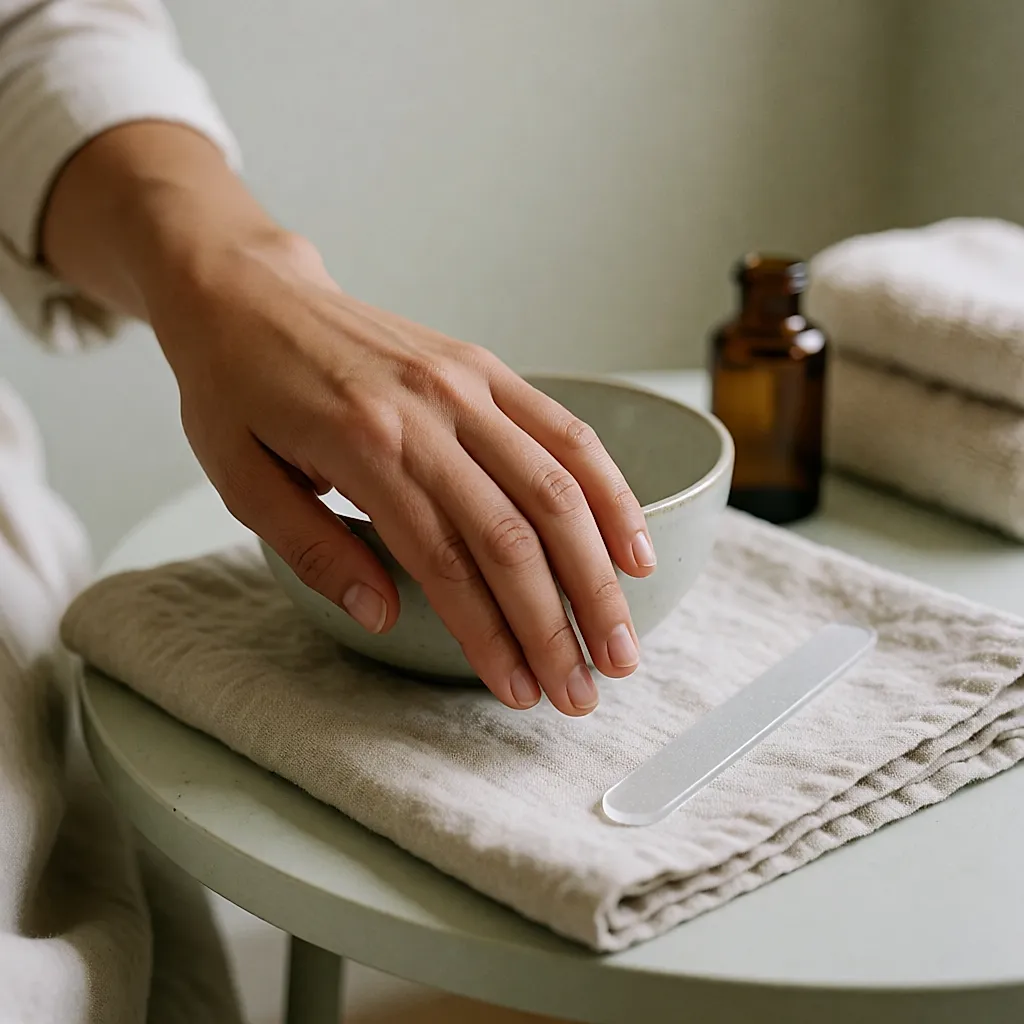
The result isn't always visible straight away, and that's where the trap closes. As a precaution, it's better to let the nail dry before filing. I don't have a microscope to lend you, but you can repeat the experiment in 30 seconds: file a soaked nail, let it dry, then run the edge over your fingertip. You may feel a snag.
One direction, all the way
The technique matters more than the tool, and remembering that will save you a tidy sum on 'specialist' files. One direction, from one corner all the way to the other, never going back. The back-and-forth motion we all do while looking somewhere else can leave the edge crumbly.
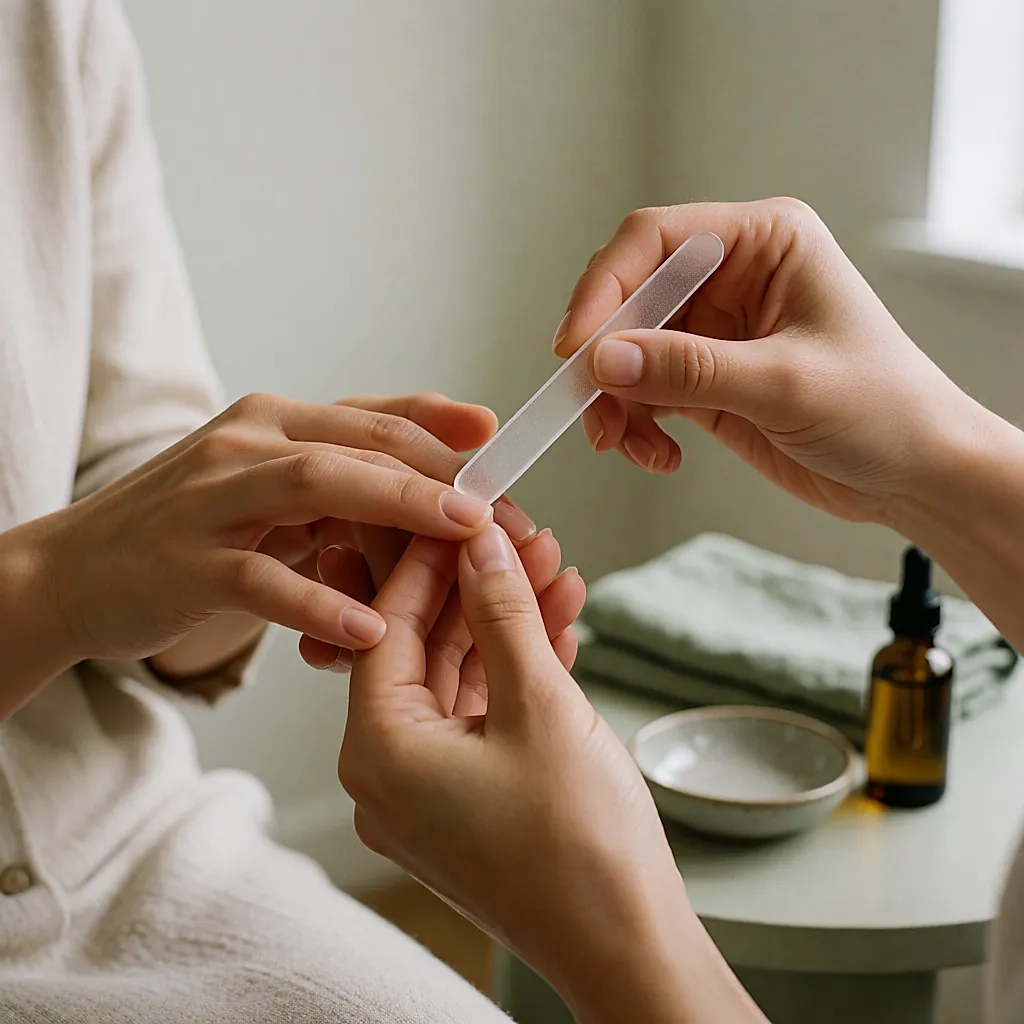
The corners deserve separate treatment. They're thinner, so more fragile, and oddly enough that's often where we file hardest, out of habit. Skim them with a fine grit rather than filing into them.
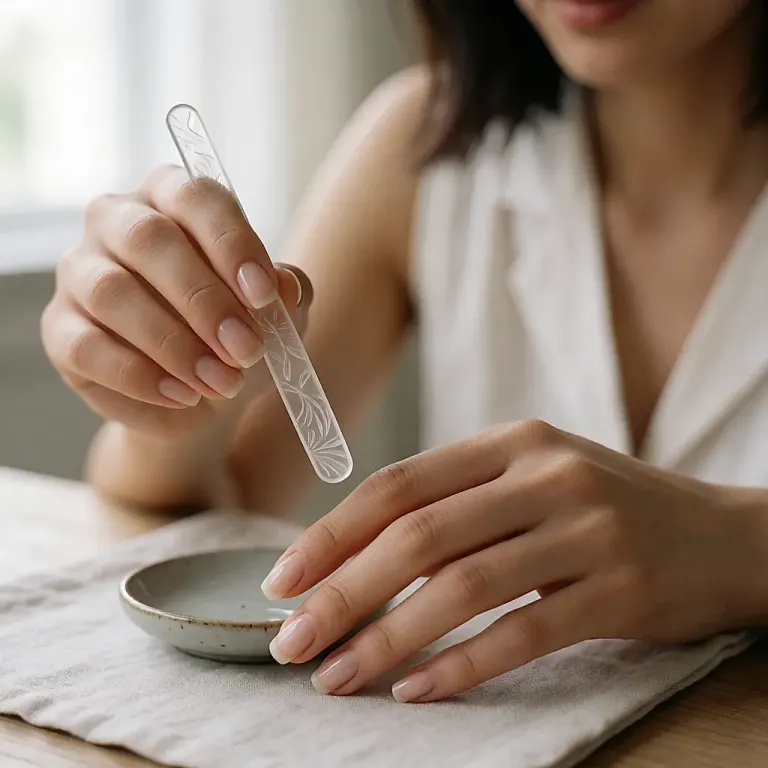
As for grit, choose it in two stages: the coarser one only if you're genuinely taking down length, the fine one for finishing and routine upkeep. It's also the grit to stick with when your nails are already splitting.
The worst time to file? Evening, when the house is quiet
Let's be honest, an evening manicure has an undeniable appeal: no one is asking for a snack, the house is quiet, and you finally get ten minutes to yourself. Except that's often the moment when your nails have already been soaked several times that day: shower, washing up, kids' bath time, three trips to the tap. Filing lands at exactly the wrong time.
The fix is simple: move the filing, not the manicure. Ten minutes the next morning, once breakfast is out of the way, and the nail has had time to dry. If evening really is your only slot, keep it to a very light pass with a fine grit and save the real shaping for the next day.
The order that works
What if we reversed the sequence? Wash, dry thoroughly — including between the fingers, where water lingers — then wait. In practice, allow a good ten minutes: enough time to get dressed, put away two or three things, reply to that overdue message.

Only then reach for the file. And oil last: as a precaution, apply oil after filing. A few drops of jojoba, sweet almond or castor oil on nails and cuticles, and the ritual is done.
The four steps, in order
- Wash, then dry your hands thoroughly.
- Wait about ten minutes, until the nail has regained its firmness.
- File in one direction, finishing the corners with a fine grit.
- Finish with plant oil as the very last step.
What to spend, from around £2 to £40
Expect to pay around £2–5 for a supermarket emery board. It does the job, but it wears out quickly and needs replacing often, which is hardly ideal on the waste front. A glass nail file, washable with soap and water, costs around £5–12 from a beauty retailer, a pharmacy or online. Its grit stays even for longer, and it's the more considered choice because you can keep it for years.
Further up the price scale, ceramic or crystal nail files cost around £10–20, and electric models around £20–40. They're often bulkier than they are useful once you've got the technique. Frankly, nothing on this list will replace the care of filing a properly dry nail.
So there it is: dry, wait, file in one direction. Three steps, no purchases, and edges that should fray less. And what if we moved Sunday-night filing to Monday morning, just to see?

Comments
Your opinion matters: rate the article, react and reply to comments.
Comments are moderated; AI-assisted comments are flagged. Text emoticons (8-), :-), <3…) are automatically shown as images.