
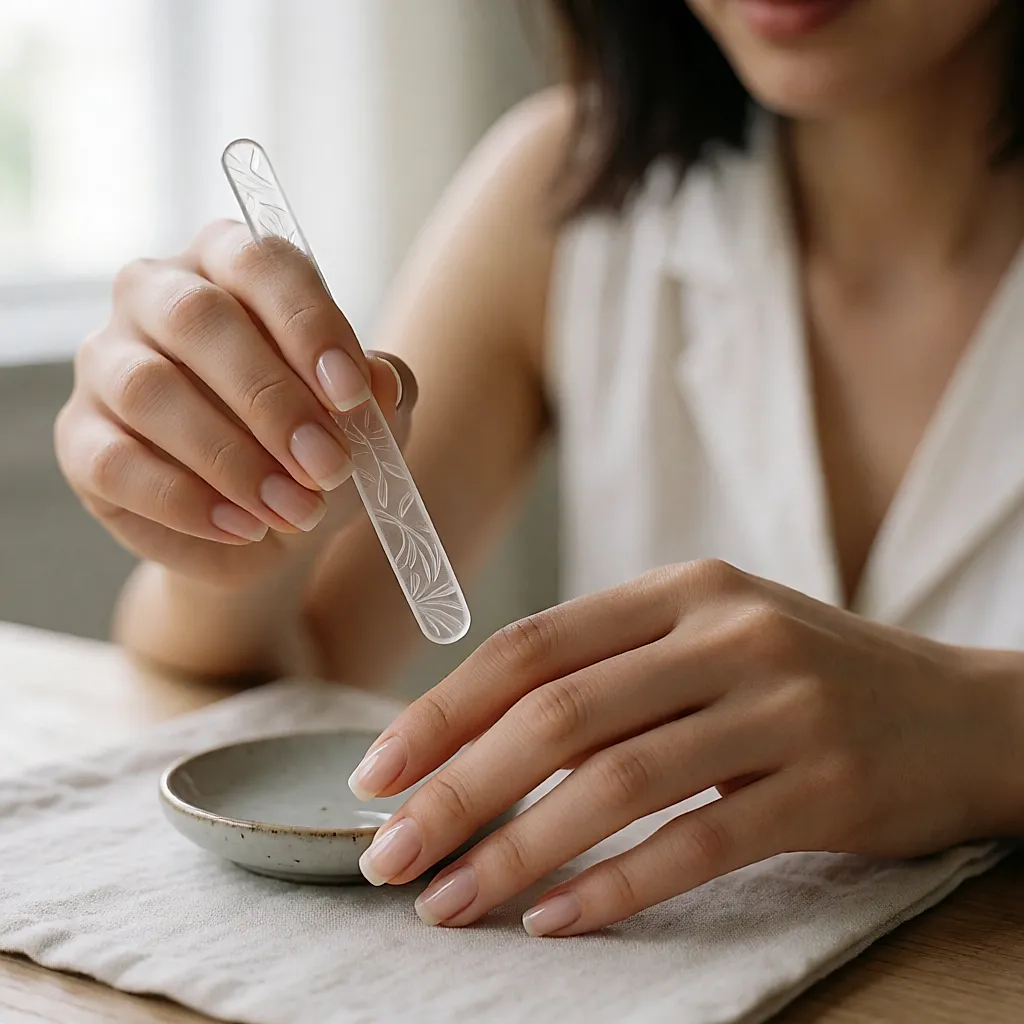
You know the scene: a jumper sleeve catches the corner of a nail, and you spend the rest of the day fiddling with it, hoping nobody notices the snag. It's not a tiny detail. A badly filed nail splits, frays, and polish lasts two days instead of a week.
The good news? In reality, it comes down to ten minutes and one tool. Here's how to choose your nail file, and the stroke that makes the difference.
The stroke that makes the difference
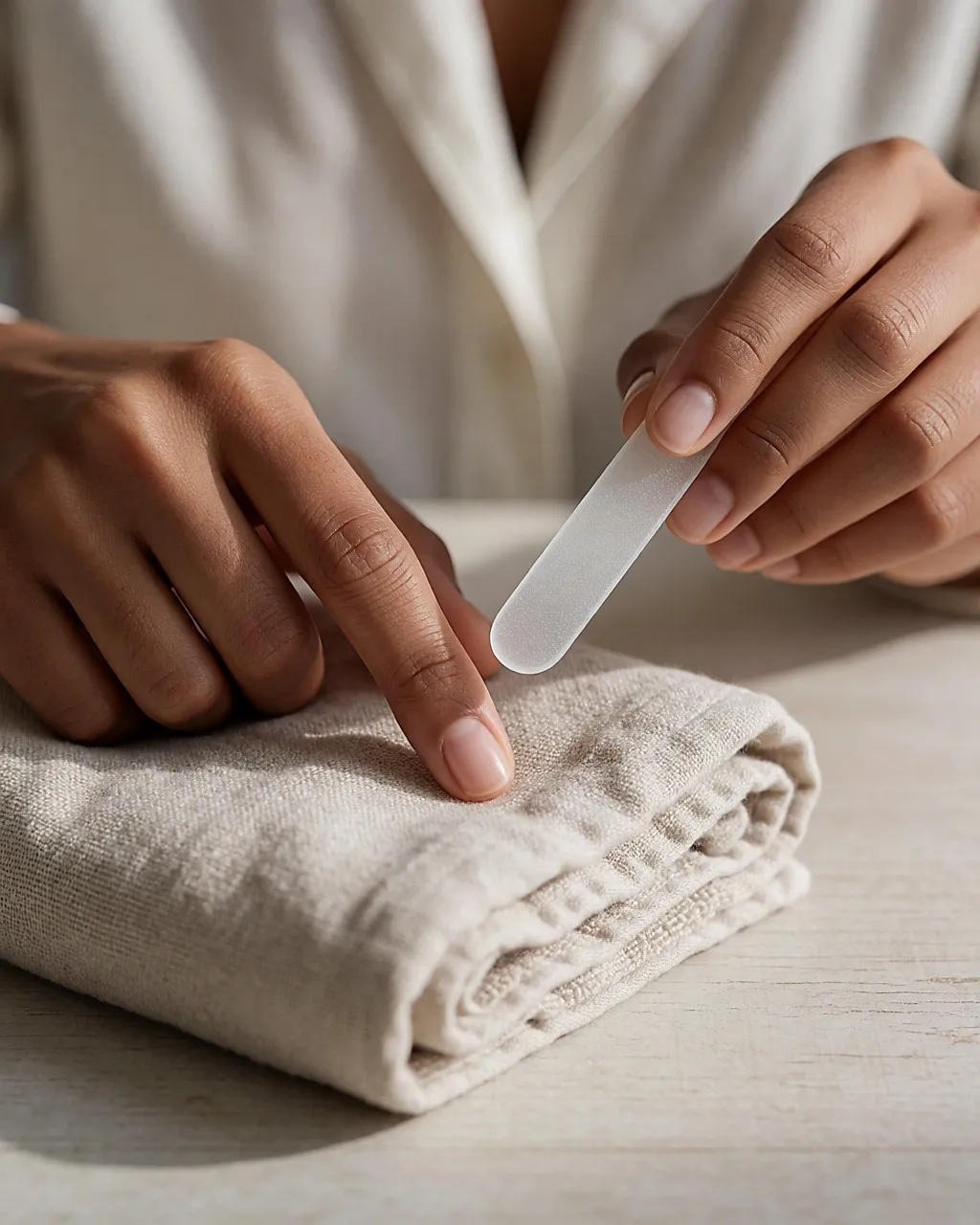
Nails are made of keratin, a material that can crumble if you saw it back and forth. So no back-and-forth. File in one direction, from the edge towards the centre, gently, without pressing. It's the grit doing the work, not your strength — if it sounds like a saw, you're pressing too hard.
Second rule: file dry nails, or nails that have just been wiped. A waterlogged nail is more flexible and tears more easily. And if a corner breaks, don't pull at the little bit sticking out: keep filing until you have a clean edge, even if that means going a little shorter than you planned.
Which shape suits your hands?
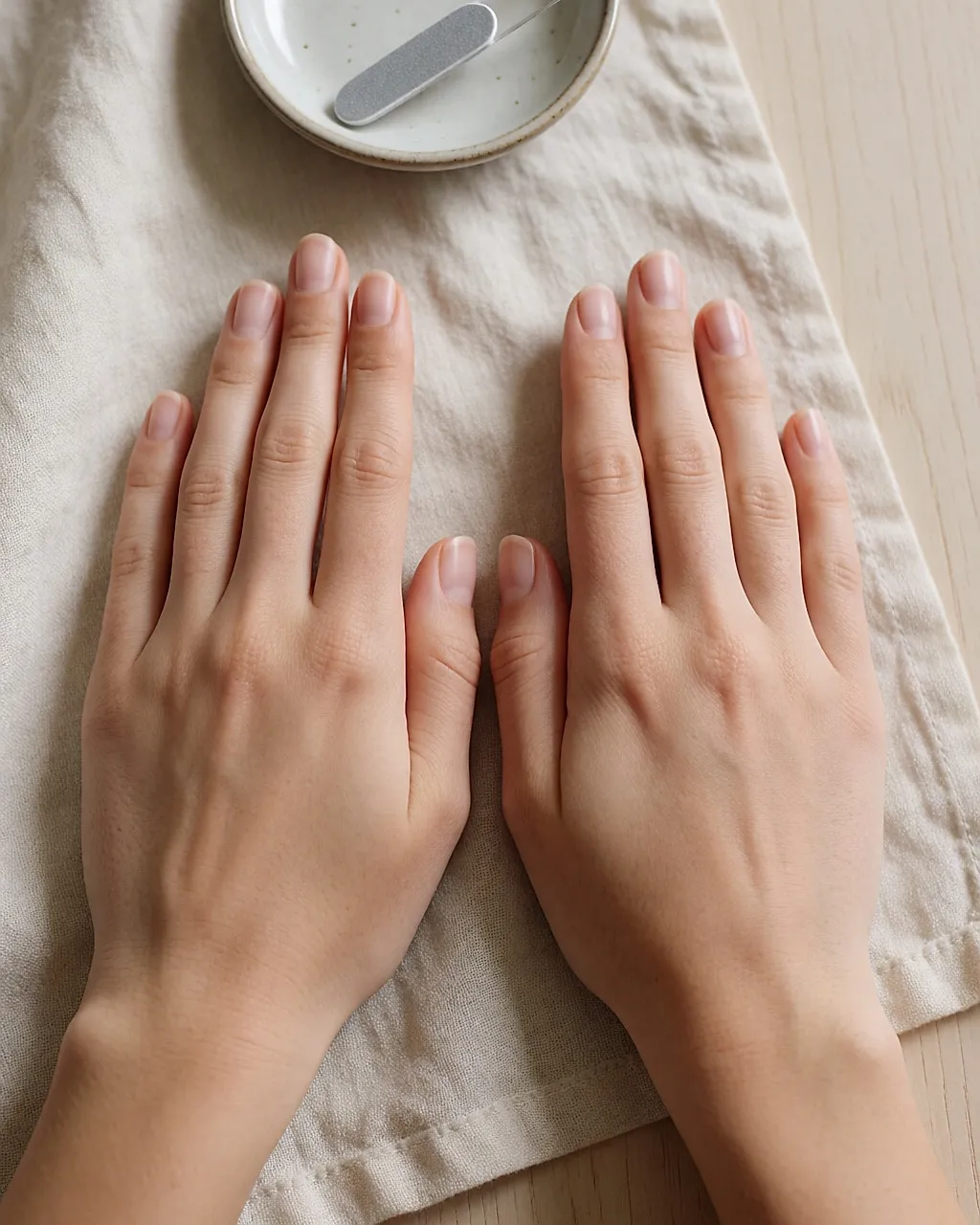
Look at the natural shape of your finger before you decide. A slightly rounded square suits most people and wears well on wider nails. Round or oval shapes suit slender fingers, following the curve of the cuticle. Almond elongates the finger visually, but be careful: over-filing the corners weakens the nail plate.
A simple rule: both hands should look alike. If you often break nails on one side, don't file the other side shorter to compensate.
Which file should you choose?
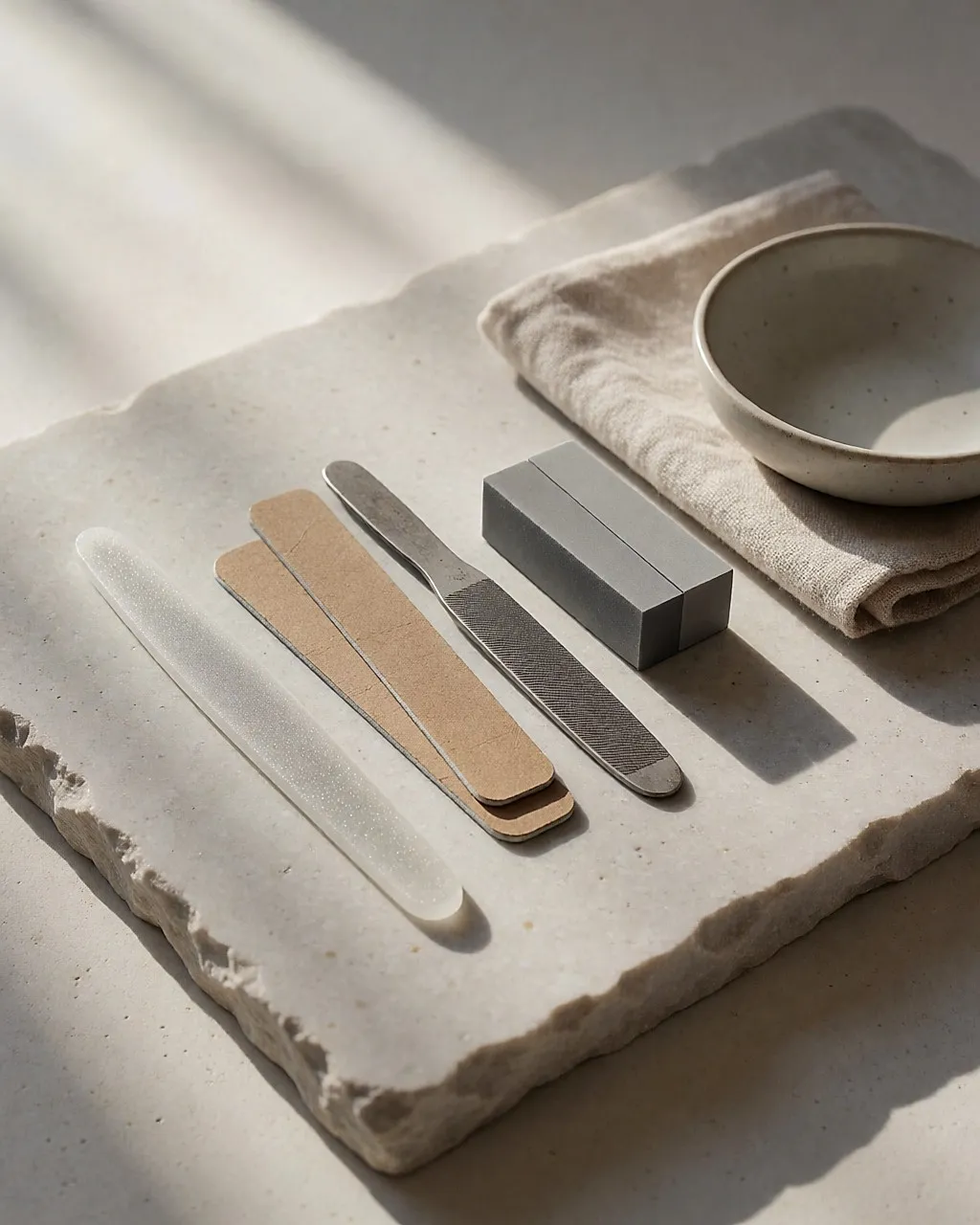
It all depends on what you need. A cardboard emery board is fine for a quick touch-up, but its coarse grit wears down keratin if you use it every day. A metal file lasts for years, but it's aggressive and easily splits thin nails — best kept for very thick nails.
A glass file is the happy compromise: fine grit, a surface you can wash in hot soapy water, and a very long life. At the end of its life, it won't go in your kerbside recycling, but it replaces dozens of disposable files. Look for a grit of 240 or finer, which is gentler on the nail plate.
A buffer doesn't file: it smooths the surface of the nail. Useful for levelling a ridged nail or prepping for base coat, as long as you go lightly and don't overdo it. Too often, it wears down the nail plate for no good reason.
The Sunday-night ritual
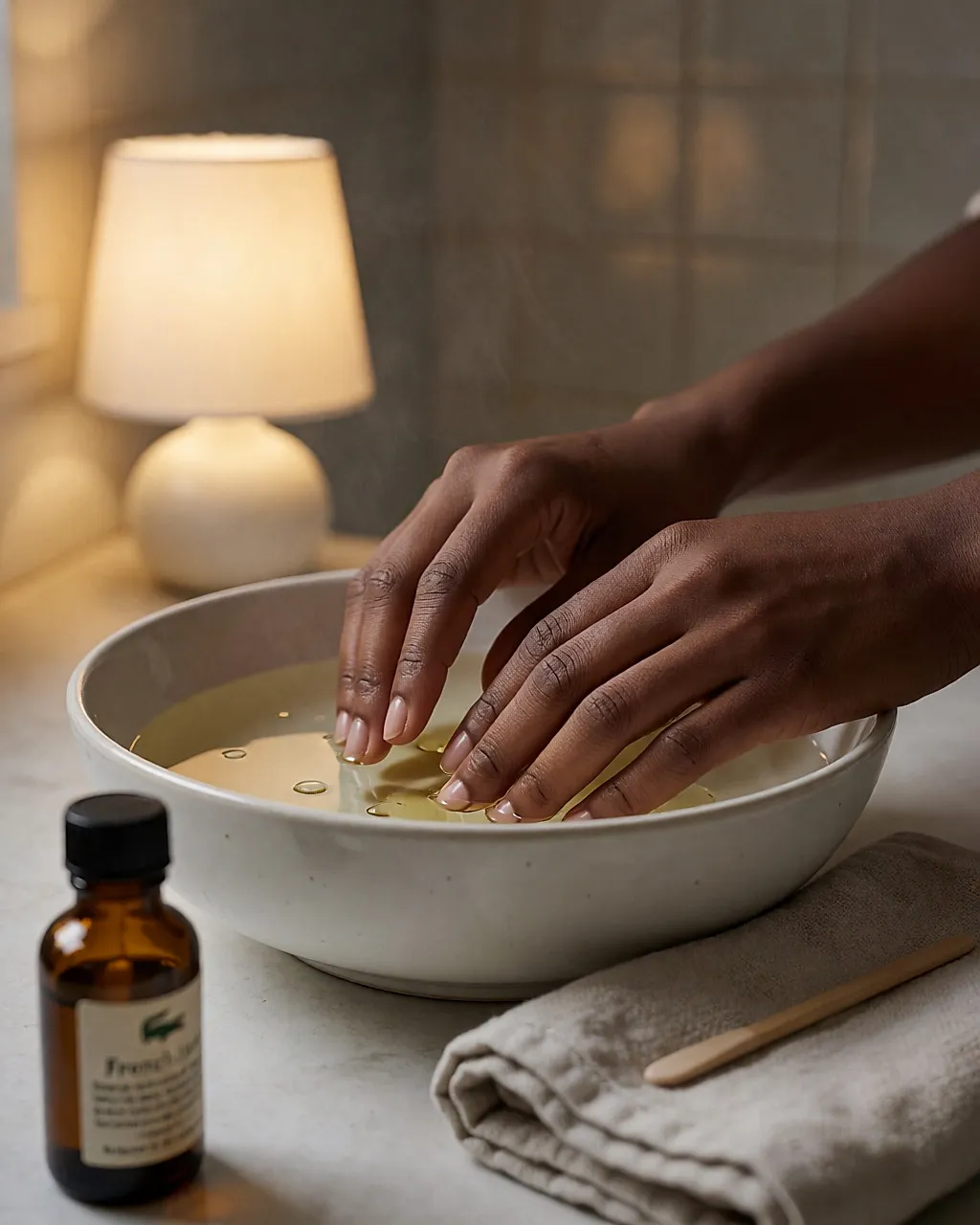
Soak your fingers for five minutes in warm water, never hot. Skip lemon juice: it's acidic, dries out the nail plate and can irritate sensitive skin. Instead, a drop of sweet almond or castor oil in the water does the same softening job while nourishing — and if you choose an organic one in a glass bottle, even better.
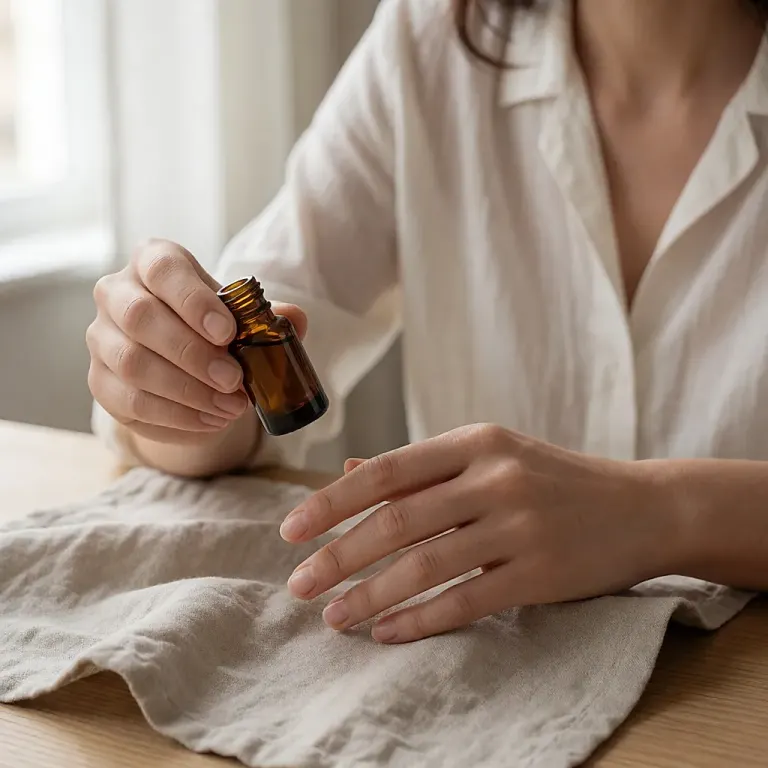
Dry well, then push back your cuticles with a wooden cuticle stick, towards the base, without forcing. Don't cut them: they protect the nail matrix. Finish with a rich cream or oil — a balm texture sinks in faster than a lotion. Massage the surrounding skin and the nail surface, wipe off the excess with a clean cloth, and you're ready for polish.
If you don't like polish, an almost transparent satin or matte base coat smooths the surface and gives a neat finish in thirty seconds.
Budget
Budget roughly £2–5 for a pack of cardboard files, £4–12 for a quality glass file, and £3–10 for a multi-step buffer. A full manicure kit — file, nail clippers, wooden stick, buffer — is more like £10–35. In a salon, a simple manicure usually costs £25–60, depending on the city and the type of salon.
What changes the price: the material, the fineness of the grit, the brand and, above all, where you buy it. Supermarkets and haberdashery counters for budget buys; beauty halls, pharmacies and specialist shops for longer-lasting kit; online for refills and sets. A glass file around £10 that lasts for years often works out cheaper than disposable files you buy again every month.
Sources
- NHS, nail problems and fungal nail infections (nail care, cuticles, when to seek help).
- British Association of Dermatologists, patient information on nail disorders (nail structure, cuticles, fungal nail infection).
- Office for Product Safety and Standards (OPSS), cosmetic product safety and regulation.

Comments
Your opinion matters: rate the article, react and reply to comments.
Comments are moderated; AI-assisted comments are flagged. Text emoticons (8-), :-), <3…) are automatically shown as images.