

A vitamin C serum is a bit like a lemon squeezed that morning: the colour gives the game away before you've even smelled it. Pale yellow and it's raring to go; amber and it's flagging; brown and it's had it. And yet we often keep pumping three drops every morning, out of habit, telling ourselves the bottle isn't finished.
The colour is the bottle's main visible signal
When you first open the bottle, a serum with L-ascorbic acid in a water-based formula usually looks very pale yellow, sometimes almost colourless. Then time passes, air gets in every time you open the bottle or use a pump that isn't airless, light does its work, and the shade moves towards a deeper yellow, then orange, then amber. That's oxidation, the same process as a cut apple going brown on the chopping board. Only here it isn't the apple losing its crunch: it's the formula losing its zing.
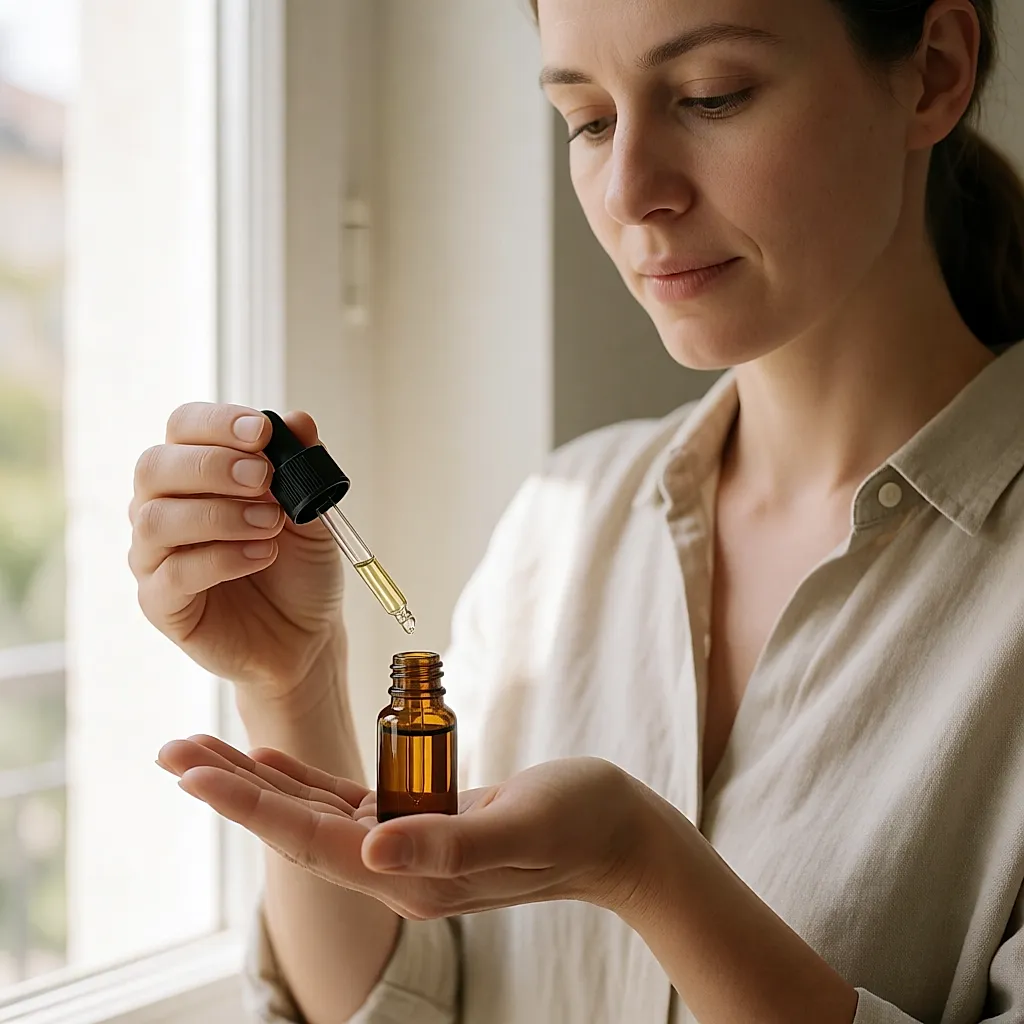
In practice, the darker the serum gets, the less you can count on it for the glow and more even-looking tone that brands like to promise. There's no point pretending: once it reaches brown, it's mostly there to look pretty on the shelf, and you're applying a liquid rather than a treatment.
A word of caution, though: don't appoint yourself an expert too quickly. Some formulas are deliberately tinted; others are anhydrous (water-free) and don't darken in the same way at all. A serum that stays clear isn't necessarily fresh. Colour is a clue, not a certificate.
A delicate ingredient, and packaging that makes the difference
Vitamin C hates three things: light, air and heat. Hence the amber bottle, which filters part of the light spectrum, and the airless pump, which limits contact with oxygen. A jar you dip your fingers into, however pretty, is one of the worst possible packaging choices for it.
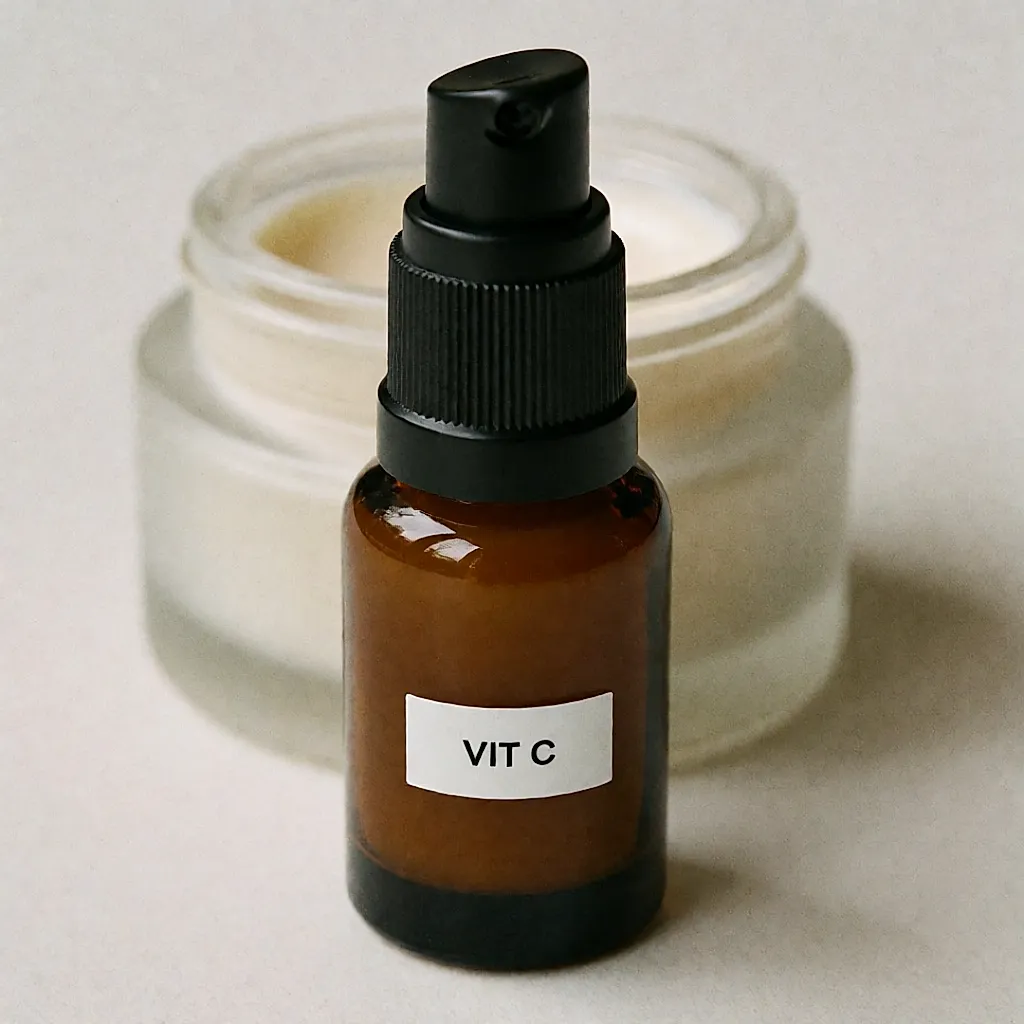
Format matters as much as material. A 30 ml bottle used at three drops in the morning works out, in practice, to several months of use: plenty of time to watch the colour change before the last drop. A small 10–15 ml bottle gets finished faster, often before oxidation takes over. It's less economical per millilitre, but better value in use.
One point we often forget: the 6M or 12M symbol printed on the back, which shows the period after opening. A large format can last longer than that period, especially in a warm bathroom; beyond it, the product may no longer be at its best, and its safety is no longer guaranteed. Follow the label and replace the product if the colour or smell changes.
Go small, go opaque, and accept the trade-off
The reflex that changes everything comes down to three words: small, opaque, pumped. Then store the bottle in a drawer rather than on a shelf, away from the window and the radiator. The fridge? Why not, but check that the formula can handle it, and don't leave it hanging around in the door every time you open it.
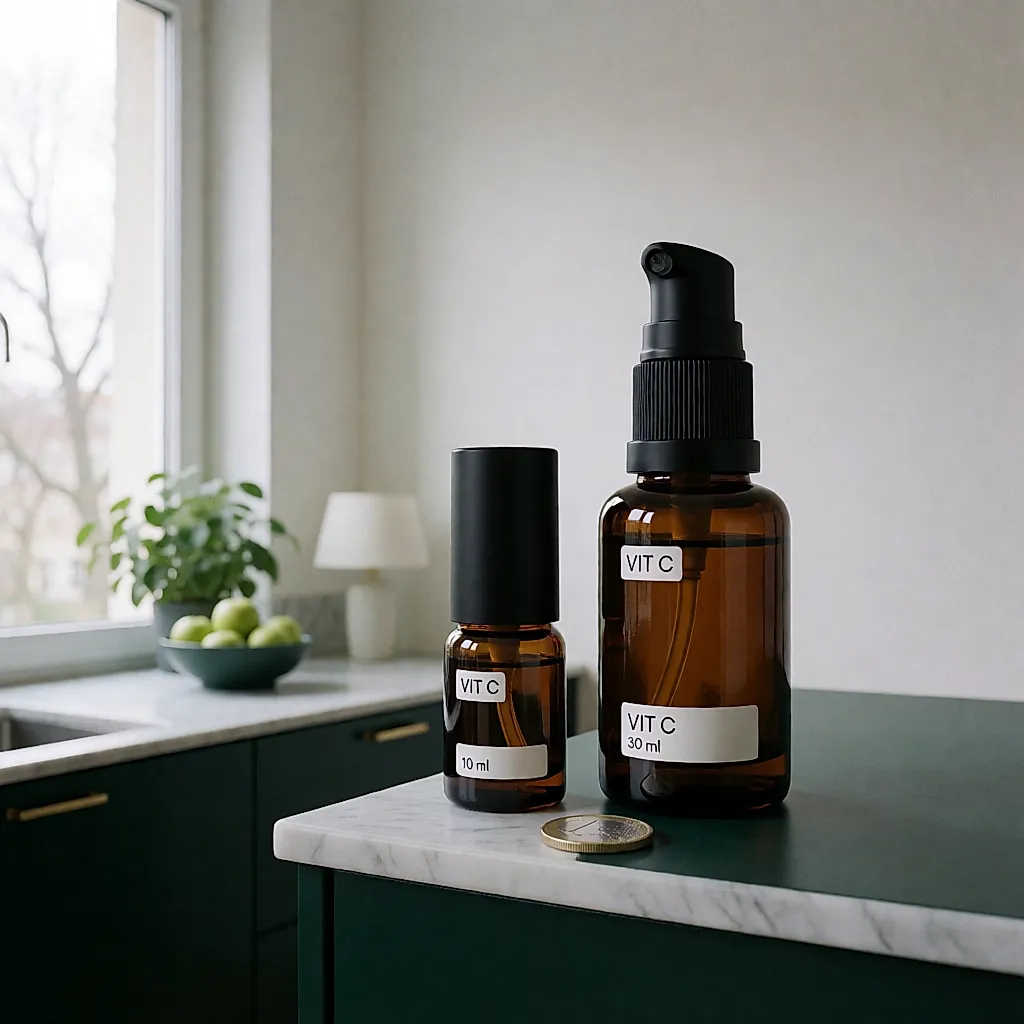
Accepting that a large format will run out of puff before the end also means accepting that you're paying a little more per millilitre for a treatment that works to the last drop. Is it really worth it? If you apply your serum religiously every morning, yes. If your bottle has been sitting behind the moisturiser for eight months, the problem isn't the price: it's consistency.
Three seconds before each application: a drop on the back of your hand. Pale yellow, carry on. Orange, you can finish the bottle on your body, avoiding your face if your skin is reactive. Brown, say goodbye. And if the smell has changed too, there's no point trying to negotiate.
What it costs
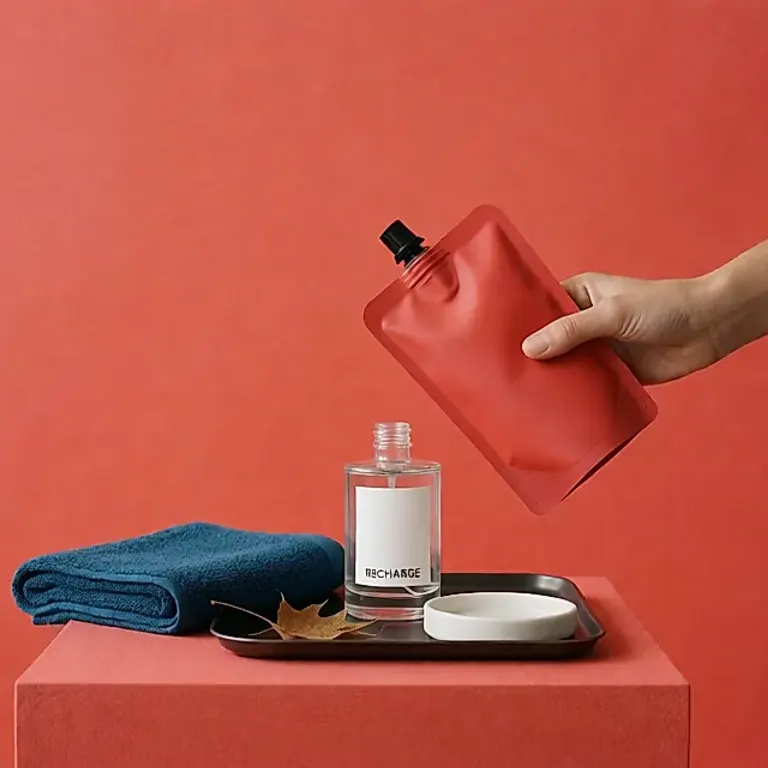
Expect to pay around £15–£30 in a chemist or health and beauty store for a small format, £35–£70 at a beauty counter for more elaborate formulas, and £80+ for premium concentrates that promise extra stabilisation. Where a refill exists and the container is amber glass, that's a real plus: you keep the bottle, cut waste and often the price per millilitre comes down. While you're at it, check the ingredients, the manufacturing date when it's legible, and how seriously the brand treats preservation: that's what makes the difference, not the number of promises on the box.
The one step worth keeping
We're not asking you to become a cosmetic chemist. Just look at your serum before you apply it, the way you look at milk before pouring it into coffee. A smaller bottle, a pump, a closed drawer, and colour goes back to being what it should never have stopped being: information. When you've only got five minutes in the morning, that's the one step worth keeping.
Comments
Your opinion matters: rate the article, react and reply to comments.
Comments are moderated; AI-assisted comments are flagged. Text emoticons (8-), :-), <3…) are automatically shown as images.