
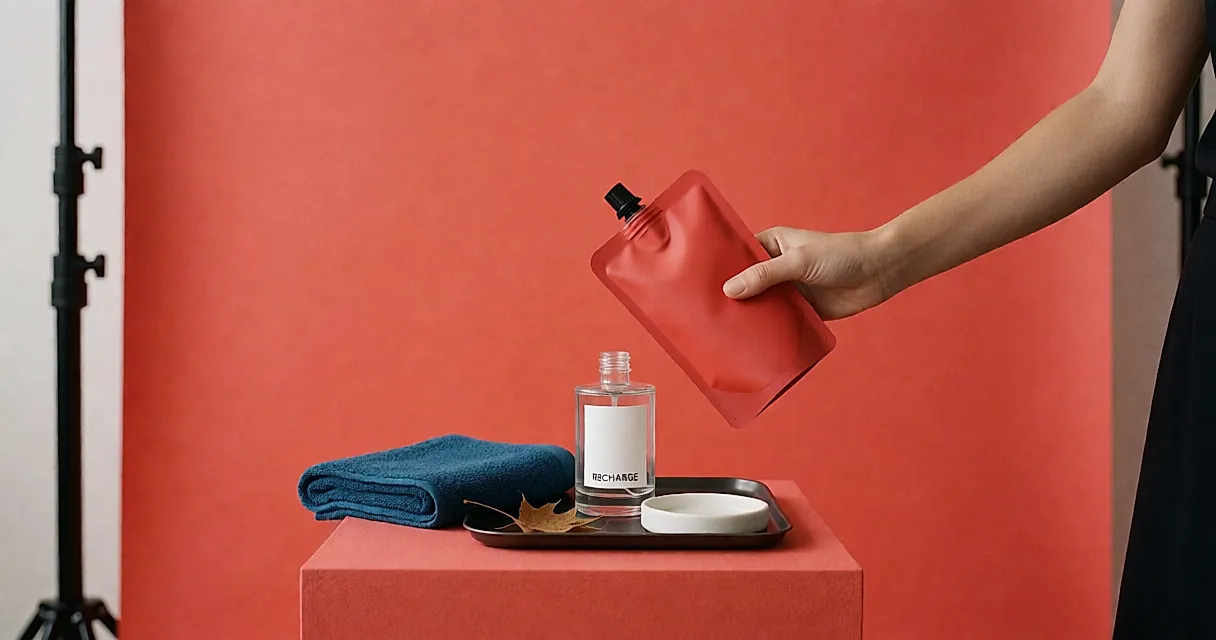
A refill and its bottle often share the same shade of plastic, the same flexibility, the same cap that clicks shut. Between the two sits a promise: 'less plastic'. How much less? The label rarely says so, and it is precisely that fuzziness that has made packaging the beauty aisle's best friend.
Why packaging makes such a convenient argument
Take a walk round the beauty hall of any department store: thick glass jars, cardboard tubes, solid bars set out like luxury soaps, refills lined up neatly beside the standard sizes. Packaging is visible, photogenic, summarisable in ten words. It is an argument that fits on a label — unlike the formula, which lives in an ingredients list that nobody reads while balancing on one leg at the bathroom mirror.
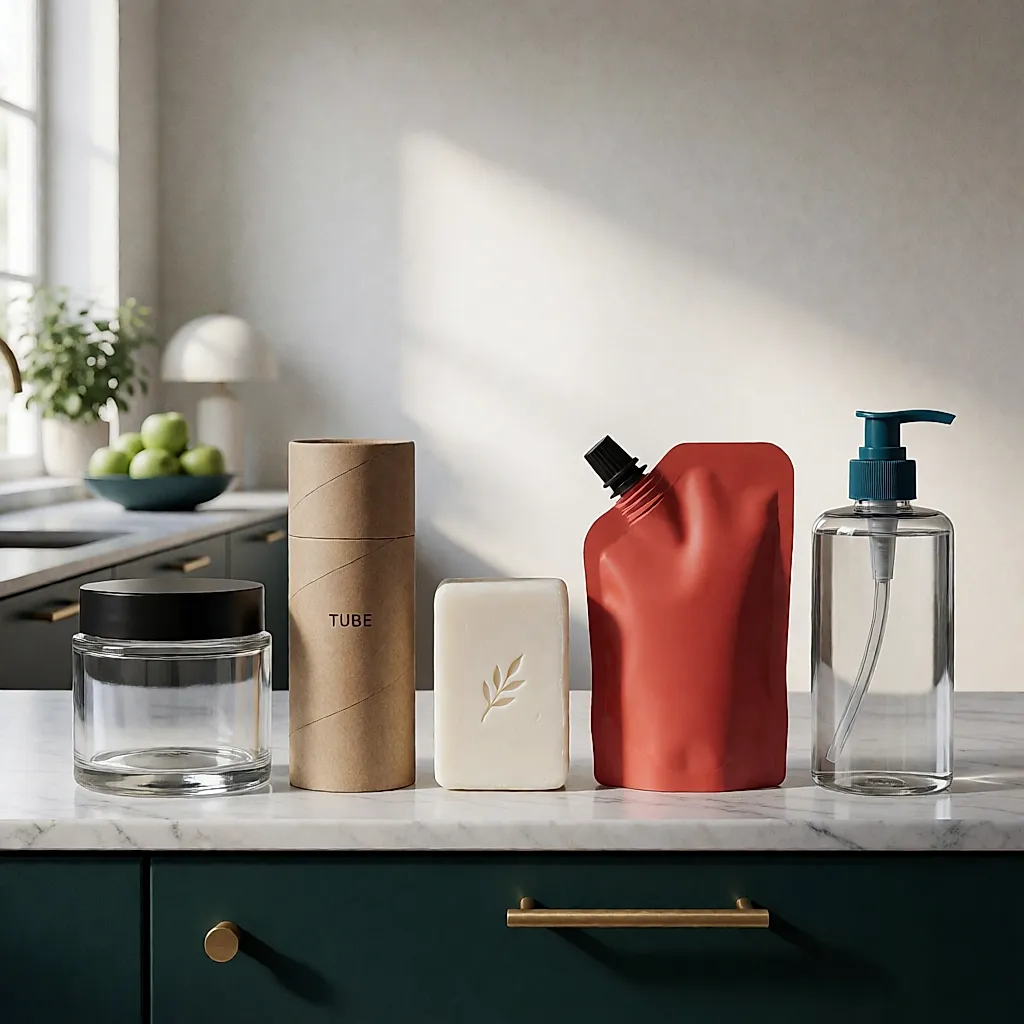
There is an even more prosaic reason for the triumph of the bottle: in practice, redesigning packaging is quicker than reformulating a product, with all its trials, stability testing and regulatory paperwork. That is not an excuse, it is an explanation. So we are sold visible progress rather than progress where it counts — and we want to believe it, because a glass jar does look better on the shelf than a tube that dents.
'Refill' says nothing about the weight you're saving
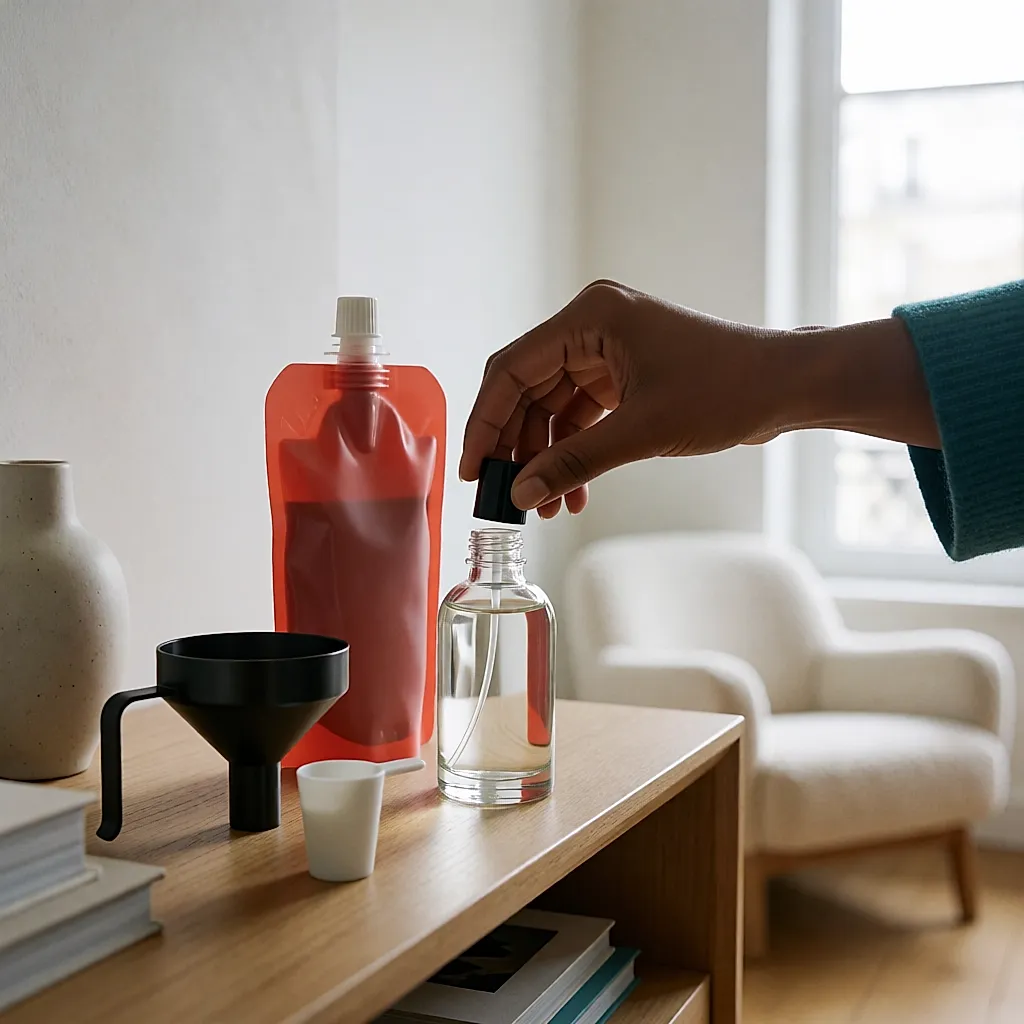
One word does all the work: refill. It suggests thrift, the clever move, the bottle you hang on to. It says nothing about the material of the refill, its weight, or what happens to it once it is empty. Flexible refills can be composites of several materials, plastic lined with a thin barrier layer — which does not exactly make recycling straightforward. Saving a rigid bottle in order to add a multilayer pouch: is that a win? The answer depends on the product, the weight and the waste stream near you. And the label rarely gives you that answer.
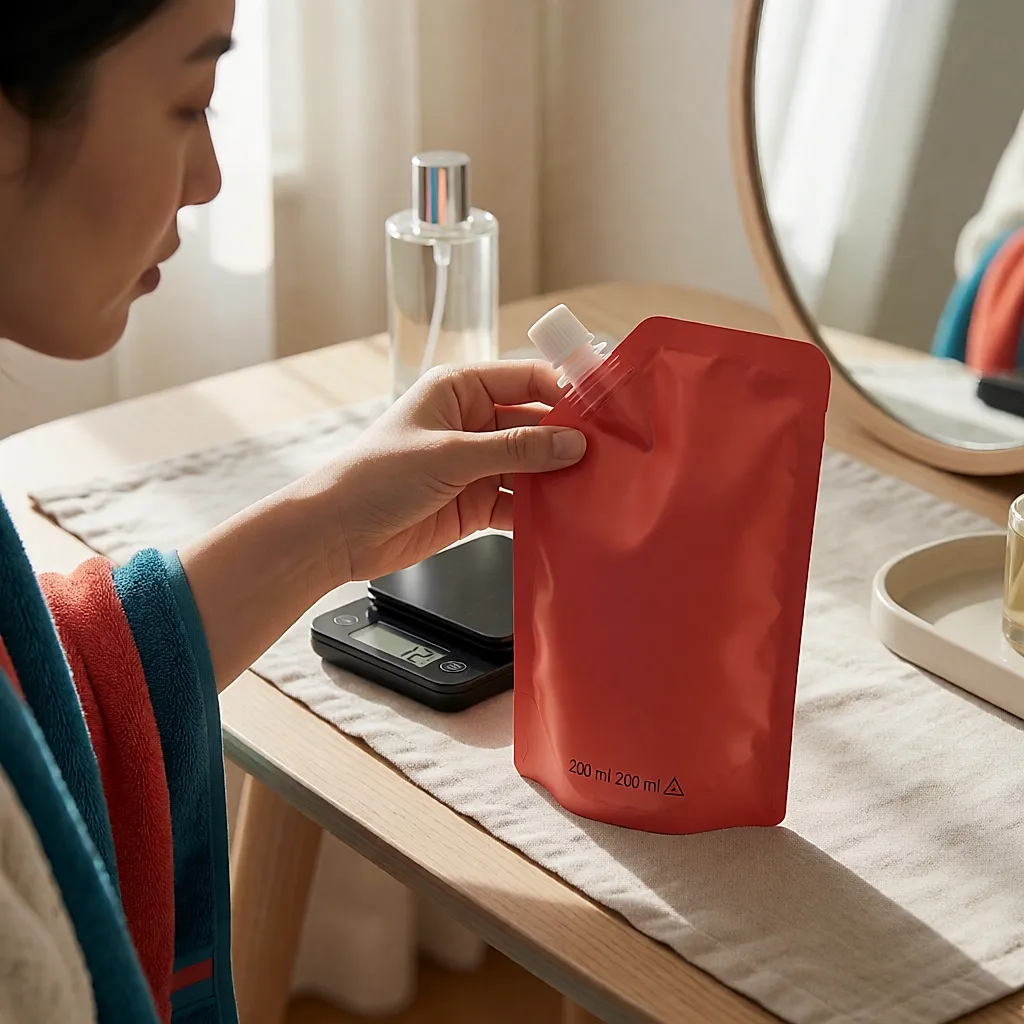
What you can check is what is printed. The net weight refers to the product, not the packaging. The exact material of a refill is often not spelled out beyond a recycling symbol. So to compare two refills you have to do the legwork: note the net weight of the product, hunt for the weight of the empty packaging — usually absent — and, failing that, weigh the empty refill yourself if you have one to hand. Without that number, the plastic saving remains an intuition, not information.
Then there is the bit that rarely gets advertised: rinsing out the bottle, decanting without losing half of it down the basin, keeping the empty refill until you get round to buying another. The first time, the basin remembers. You still do not know what your serum's refill weighs, and the label won't tell you: exactly the kind of number that is missing when you are choosing.
In food, the plastic hasn't gone anywhere
The big argument of green packaging is that it lets you believe the problem has been solved. Yet in food, plastic is still very much present, including where bulk aisles and returnable schemes are billed as the future. The constraints are not the same as in cosmetics — hygiene, use-by dates, transport, weight — and that is exactly what makes the mismatch interesting: one aisle is sold to us as a packaging revolution while another largely carries on as before.
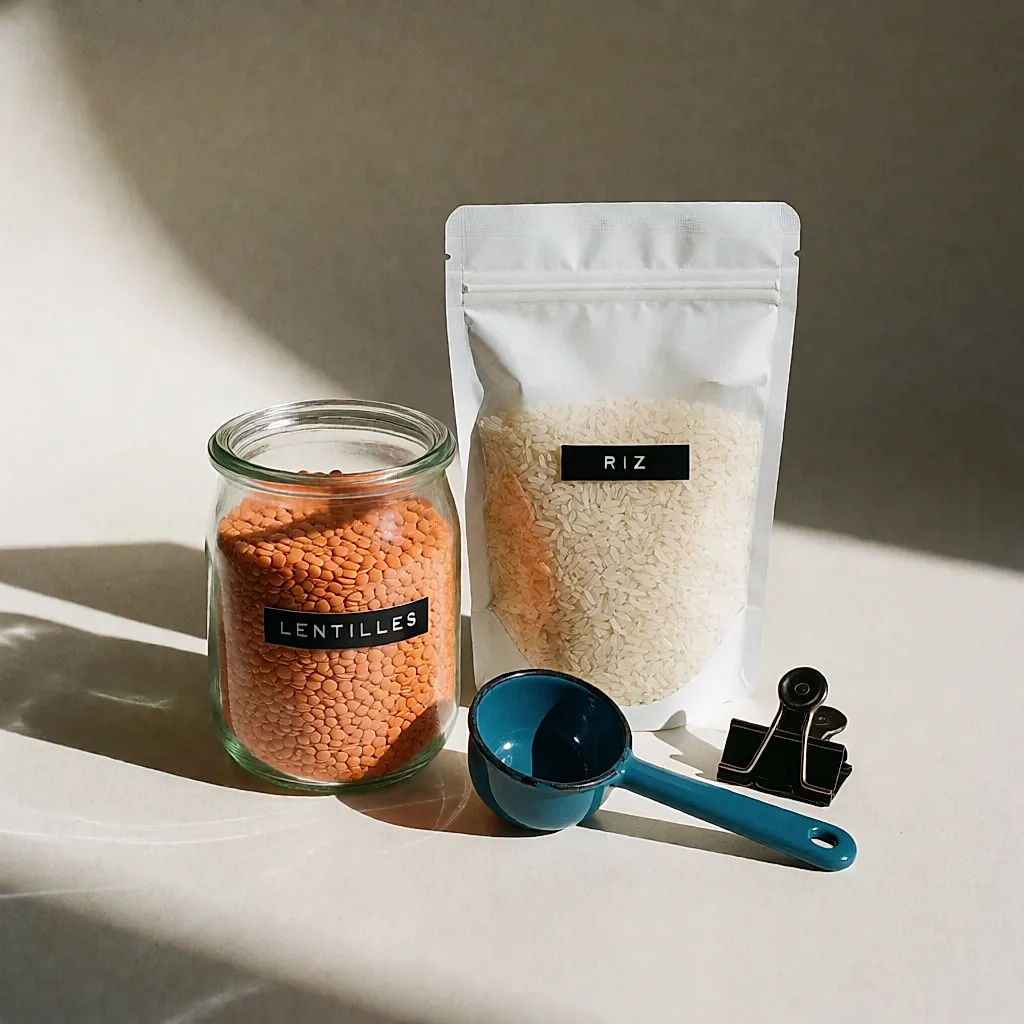
That gap is not a reason to throw everything out; think of it as an invitation to quiet scepticism. A glass jar is not proof. A refill is not a certificate. They are fragments of an answer, not the whole answer.
Nail polish plays the same tune
There is a tell-tale sign: when a nail polish brand puts its packaging at the heart of its marketing — the bottle, the cap, the way you keep it — rather than wear time or shine, the formula may have become shaky ground. Not that it is untrue, or badly made. It is just that the little bottle has a very handy role: it keeps the conversation busy. A container is not a formula, and a cleverly designed bottle does not make a polish greener by association.
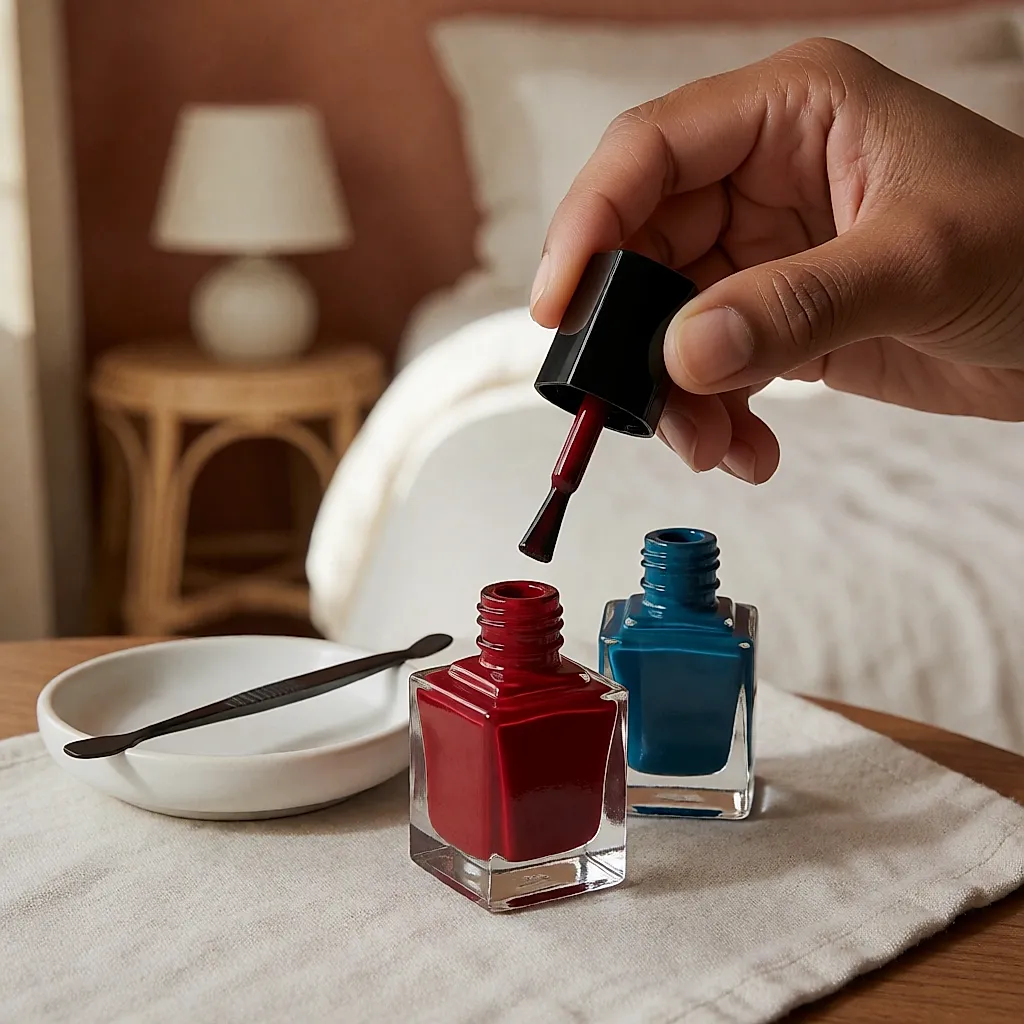
The good news is that all this chatter can have a real effect: it can push brands to offer formats you can keep, and that is something. The bad news is that it sends us to sleep.
Three questions before you pay. Is the refill made of the same material as its bottle, or of a composite that cannot be separated? Is the container refillable for the long haul, or just once, for the duration of a limited edition? And is the gesture simple — pour, screw, close without a fight? If you can't answer all three, that is your answer.
The part you actually do
Let's not pretend: packaging has become the beauty aisle's cover-up, and it does its job very well. But you now have three questions in your pocket, which is more than enough to stop buying a word. Next time, look at the bottle, then read the label — and if the weight of plastic saved is not stated anywhere, take that as your answer.
Comments
Your opinion matters: rate the article, react and reply to comments.
Comments are moderated; AI-assisted comments are flagged. Text emoticons (8-), :-), <3…) are automatically shown as images.