
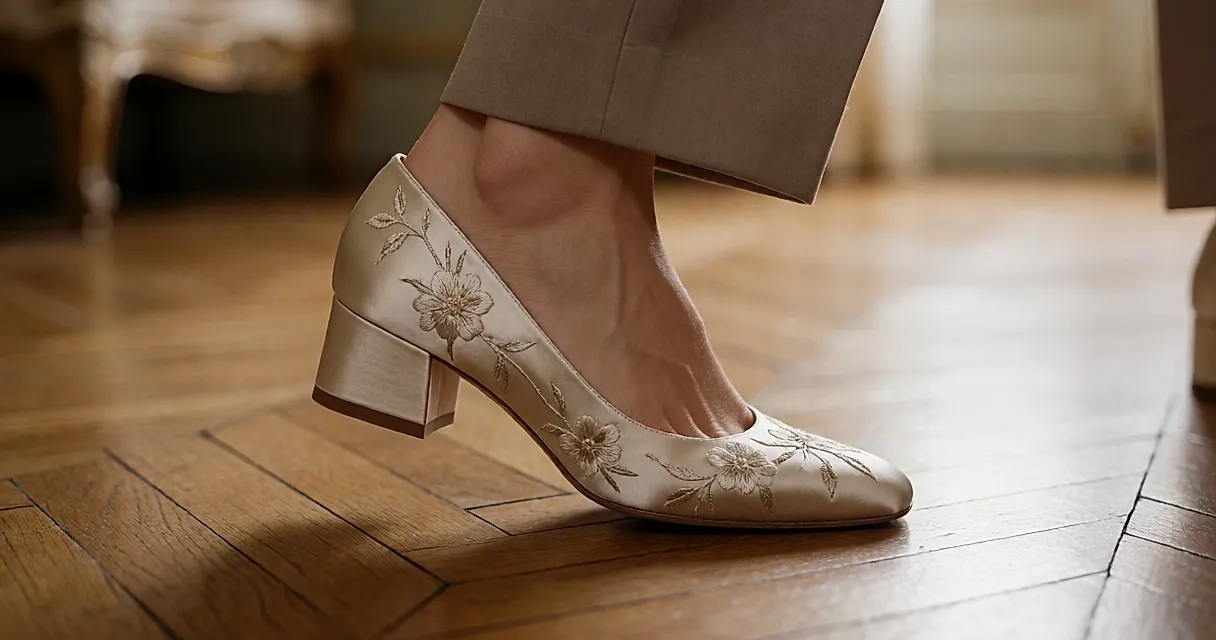
In the boutique, the light lands right across the vamp. The embroidery shines, the heel looks slender, and you can already picture yourself at your best friend's wedding. Then you take 20 steps across the parquet: the heel slips with every stride, and the spell breaks as fast as a pair of ballet flats in the rain. The embroidery didn't lie; it simply didn't answer the question.
Ornament sells the dream, structure does the walking
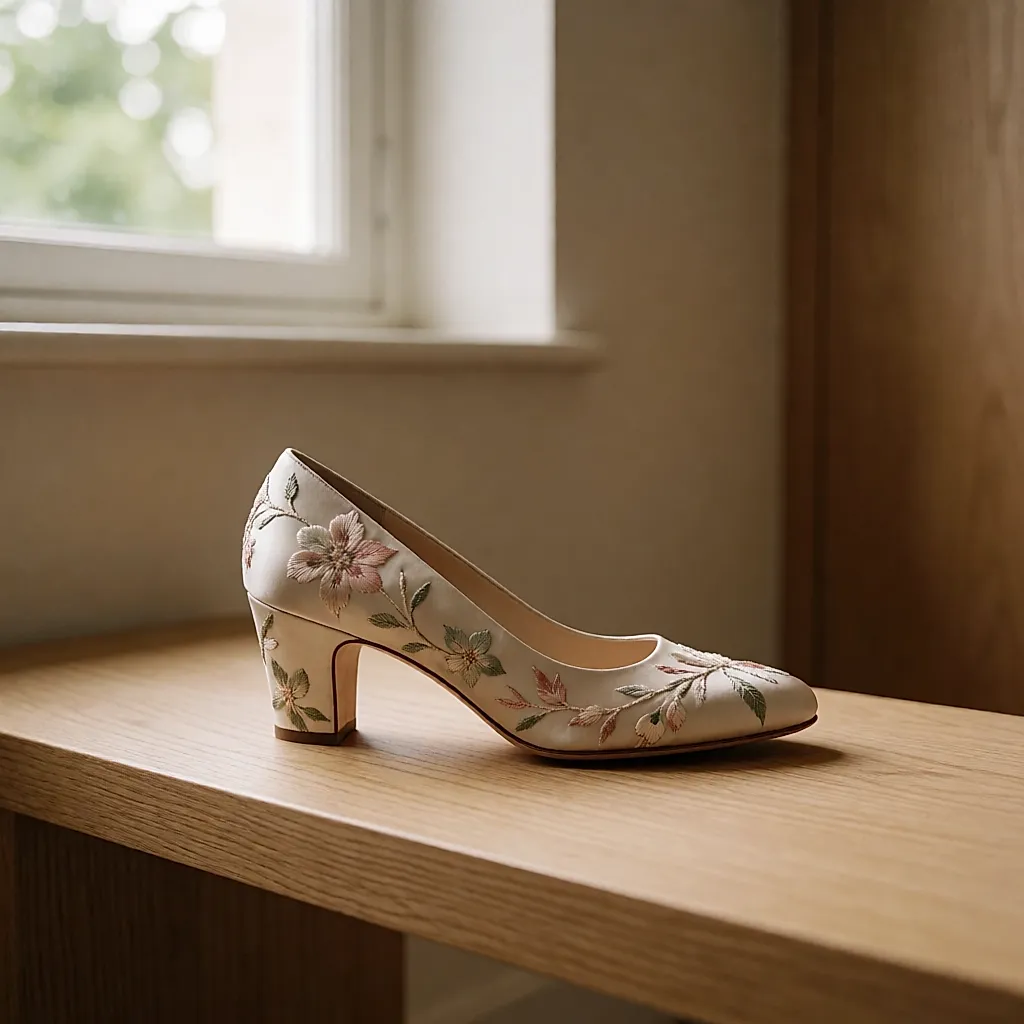
On a hybrid shoe — a sporty sole with a satin upper, a square-heeled ballet flat, an embroidered mule — embroidery, braid and the heel finish draw the eye; the structure hides in the last, the sole assembly, the heel counter and the way the upper holds the instep. Beautiful embroidery doesn't guarantee comfort, and the reverse exists too: judge ornament and construction separately, and don't assume the price settles the question.
Try shoes on later in the day
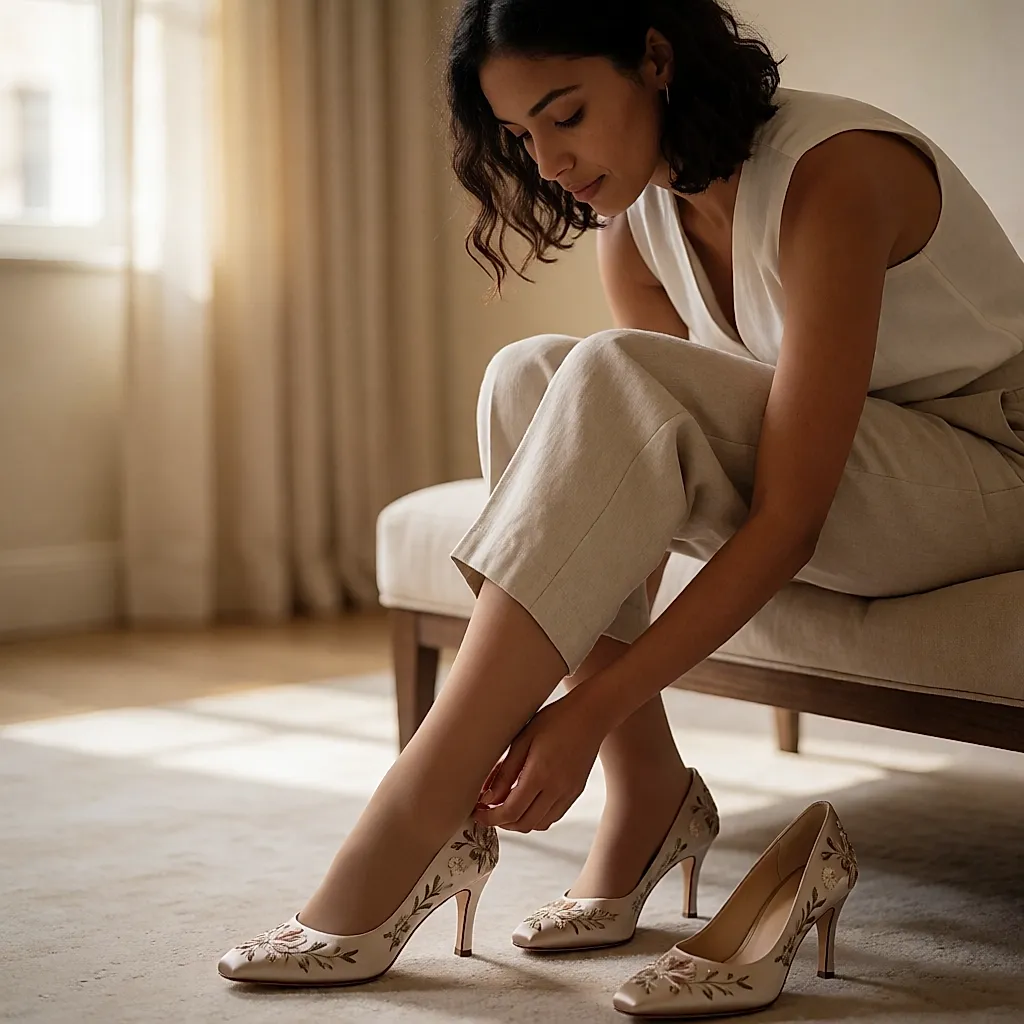
The right time to try on a shoe is the evening, when your larger foot — the one that takes the bigger size — has already had its day. By evening it is often slightly wider; you want the shoe to meet that version, not just the rested morning one. Put on the tights or socks you'll actually wear, and try both shoes, even if one foot feels perfect.
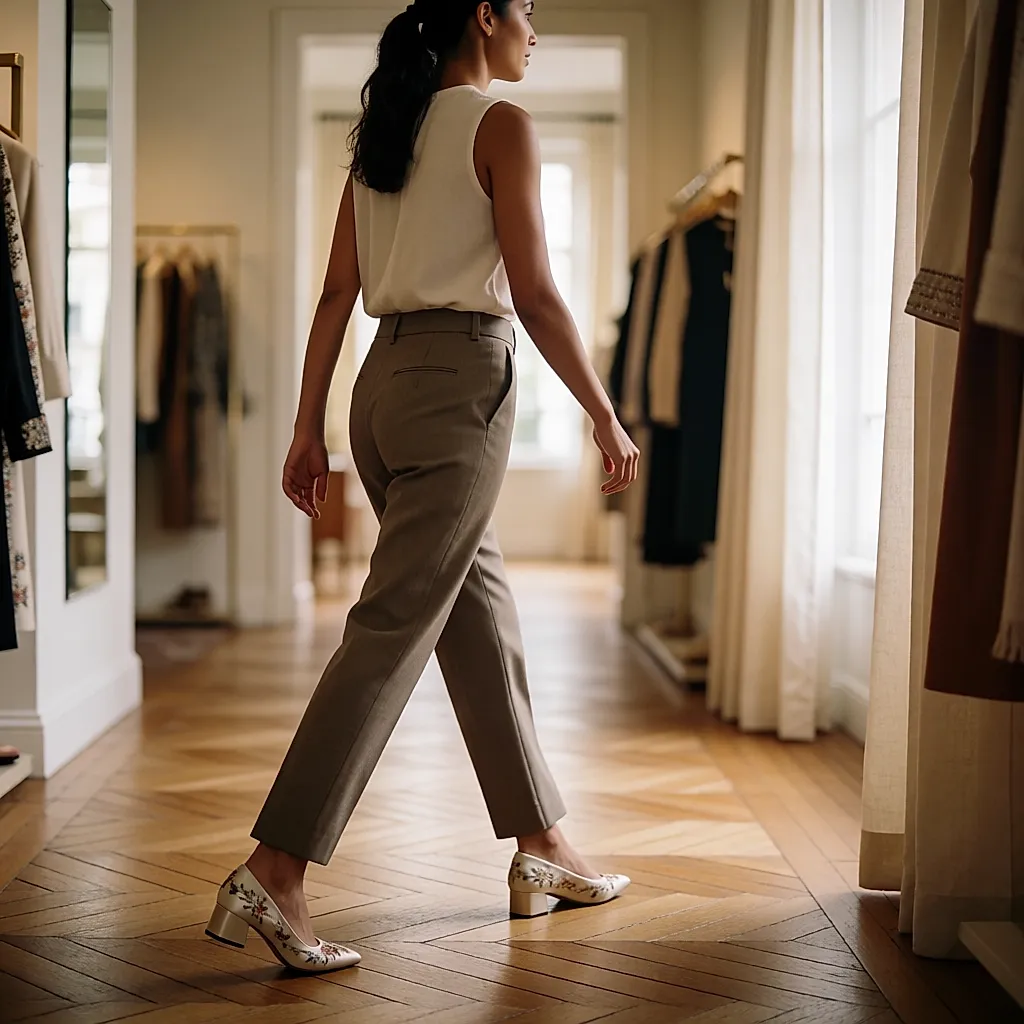
Then walk. Don't settle for three metres between the mirror and the till: in practice, walk for several minutes, not just a few seconds. If the shop allows, alternate between hard floor and carpet. Feel the heel counter, the piece at the back that should hold your heel without biting into it. Check that the sole flexes where your foot flexes, not across the middle of the arch. Does the heel stay put when you speed up? A photograph won't show a slipping heel, a toe pushing forward or a seam pressing underfoot.
The real test is walking
Start standing with your weight evenly distributed, then shift from one foot to the other. Your heel should stay stable without you having to curl your toes as you would in a dance shoe. Does the shoe hold your heel without squeezing it? Then walk at normal pace, then a little faster, as if you had a train to catch. If your heel slips with every step, embroidery won't save you; a half-sole can sometimes help, but it won't fix a last that's too long. Better to try another size or width.
And if you're torn between two pairs? Choose the one you can forget about after a few minutes. The other, however beautiful, may end up in the 'seated dinners only' category. That's not a crime, as long as you know it before you pay.
The habit that matters: try the pair with the outfit you plan to wear. A bare ankle, sheer tights or a sock will change how the heel sits and how the upper falls. And if the shop won't let you walk around, be wary: a shoe you haven't been able to test on the move may struggle through a day at the office.
Budget
As a rough guide, embellished designer shoes often cost between £300 and £900, depending on the house, the material and the complexity of the embroidery. You'll find them in boutiques, at multi-brand stockists or on the brand's own website. That price covers the ornament, but also the making. Before you commit, look at the construction: a stitched sole, a firm heel counter, a lining that doesn't gape. And ask yourself whether you'd buy it as much for the structure as for the motif.
On upkeep, budget around £15–£40 for sole protectors, £40–£90 for half-soles and £20–£50 for heel repairs at a cobbler, depending on the city and the work involved. These fixes won't make a too-small shoe comfortable, but they will extend the life of a well-chosen pair. What's the smart alternative? A less ornate but well-built pair you'll actually wear — and a pretty detail that does the visual work for you.
Embroidery is the cherry on top, not the framework. If it makes you smile, keep it; just put your feet first. By evening, they cast the deciding vote.


Comments
Your opinion matters: rate the article, react and reply to comments.
Comments are moderated; AI-assisted comments are flagged. Text emoticons (8-), :-), <3…) are automatically shown as images.